The Quick Verdict: A Sharper Cabin Meets Proven Efficiency
The refreshed Tesla Model 3 (internally dubbed "Highland") answers one of the longest-running complaints about the sedan: flat, unsupportive front seats. The updated Tesla bucket seats feature deeper side bolsters, revised foam density, and standard ventilated surfaces on Long Range and Performance trims. But comfort is only part of the equation. With an EPA-estimated 363 miles of range on the Long Range RWD variant, a peak 250 kW DC fast-charge rate, and a starting MSRP that keeps it within federal tax-credit reach, the 2026 Model 3 remains the benchmark compact electric sedan against which the Hyundai Ioniq 6, BMW i4, and Polestar 2 are measured.
This review covers every spec that matters to a real buyer — from the chemistry inside the battery pack to the actual miles you'll see on a cold January commute — and explains where the new seats fit into the broader ownership picture.
Range, Battery, and Real-World Efficiency
The 2026 Model 3 lineup uses two distinct battery chemistries depending on trim, a distinction that affects everything from daily charging habits to long-term degradation.
| Trim | Battery (usable kWh) | Chemistry | EPA Range | MPGe (combined) | kWh/100 mi |
|---|---|---|---|---|---|
| RWD (Standard Range) | 57.5 | LFP (CATL) | 272 mi | 132 | 25 |
| Long Range RWD | 75.0 | NMC (LG/Panasonic) | 363 mi | 132 | 25 |
| Long Range AWD | 75.0 | NMC | 341 mi | 125 | 27 |
| Performance AWD | 75.0 | NMC | 315 mi | 115 | 29 |
The EPA 363-mile figure on the Long Range RWD is achievable in mild-weather city and suburban driving at moderate speeds. On a 75°F day with a mix of 55-65 mph highway driving, expect roughly 310–330 miles before hitting 10% State of Charge. In freezing temperatures (below 32°F), highway range drops to approximately 250–275 miles due to battery internal resistance and cabin heating load, even with the standard heat pump. City driving in cold weather retains more range thanks to regenerative braking recapturing energy at lower speeds.
The LFP battery in the base RWD trim is worth understanding. Lithium iron phosphate cells tolerate regular 100% charging without the accelerated degradation that NMC cells experience at full State of Charge. Tesla recommends charging the RWD to 100% at least weekly to keep the battery management system calibrated. The trade-off: LFP has lower energy density, which is why the RWD carries a smaller pack and delivers 272 miles rather than 363. LFP also loses more range percentage in extreme cold compared to NMC — plan for roughly a 30–35% range reduction in sub-freezing highway driving on the RWD.
Charging Speed: DC Fast, Level 2, and the Curve
Charging speed is where the Highland Model 3 shows its age relative to 800-volt competitors like the Hyundai Ioniq 6 and Porsche Taycan. The Model 3 runs on a 400-volt architecture, which caps its peak DC fast-charge rate.
| Charging Method | Power (kW) | Speed / Notes |
|---|---|---|
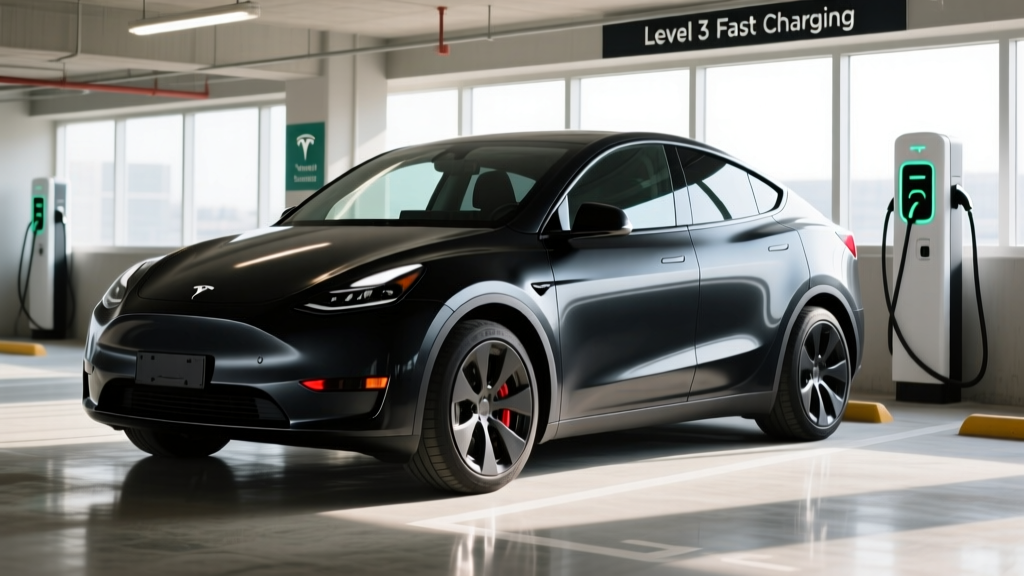
| DC Fast Charge (Supercharger V3/V4) | Peak 250 kW (LR/Perf), 170 kW (RWD) | 10–80% in ~25 min (LR); ~28 min (RWD) |
| Level 2 Home (Tesla Wall Connector, 48A) | 11.5 kW | ~44 mi/hr added; full charge in ~7–8 hours |
| Level 2 Home (32A mobile connector) | 7.7 kW | ~30 mi/hr added; full charge in ~10–11 hours |
| Level 1 (120V household outlet) | ~1.4 kW | ~5 mi/hr added; emergency/trickle only |
The 250 kW peak on Long Range and Performance trims is exactly that — a peak. The charge curve tapers significantly above 50% State of Charge. In practice, you'll see 250 kW only between roughly 10–30% SoC on a preconditioned battery at a V3 or V4 Supercharger. From 50–80%, the rate drops to approximately 80–100 kW. This is why the 10–80% time is ~25 minutes rather than the theoretical ~18 minutes a sustained 250 kW would deliver.
For home charging, the Tesla Wall Connector at 48 amps on a 60-amp circuit is the practical sweet spot. It adds roughly 44 miles of range per hour, meaning an overnight charge from 20–80% takes about 10 hours on the Long Range. Most owners charging nightly from 50–90% will wake up to a full battery every morning. Installation costs for a 240V/60A circuit typically range from $800–$2,000 depending on panel proximity and local permitting — factor this into your purchase budget.
The Seats, Cabin, and Interior Tech
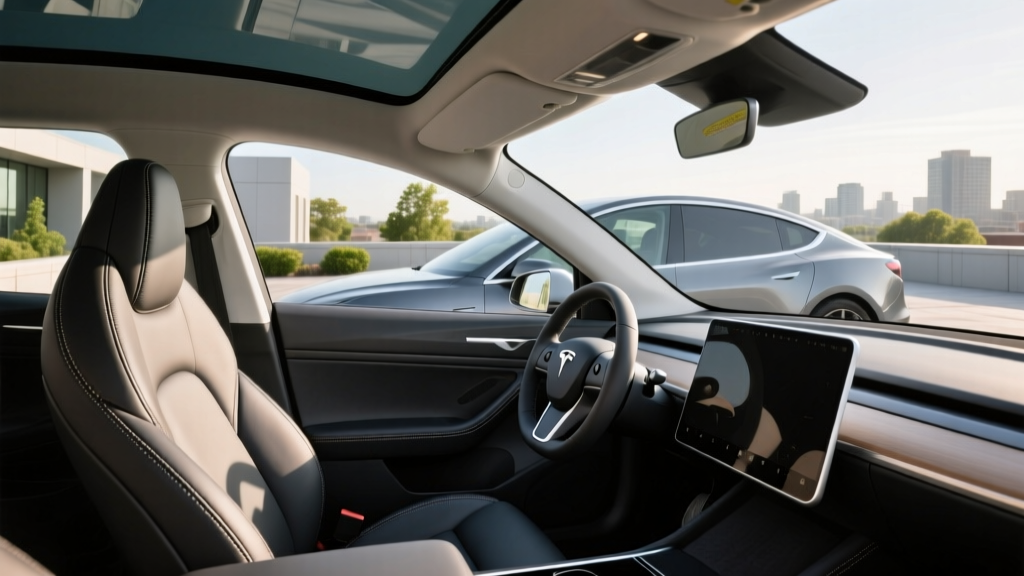
The headline interior change is the redesigned front seating. The new Tesla bucket seats feature pronounced lateral bolsters at the shoulder and thigh, a contoured seatback that follows spinal curvature more closely than the flat previous-generation units, and multi-layer foam that reduces pressure points on drives over two hours. On Long Range and Performance trims, ventilated seat surfaces are now standard alongside the existing heating elements.
Rear passengers get a marginally improved experience. Rear legroom measures 35.3 inches — adequate for adults under 6 feet but tight for taller passengers on long trips. The rear seatback now reclines slightly more than the pre-Highland model, and rear-seat heating is standard across all trims. A rear 8-inch touchscreen controls climate, seat heating, and media for back-seat occupants.
Cargo space remains unchanged at 23 cubic feet combined (trunk plus frunk), with the trunk offering a wide, practical opening and a flat load floor when the 60/40 rear seats are folded. The frunk holds roughly 3.1 cubic feet — enough for a charging cable bag and a small grocery run.
Infotainment runs on Tesla's proprietary 15.4-inch center display with no Apple CarPlay or Android Auto. Navigation, media, and vehicle controls all route through the touchscreen, including climate adjustments (no physical buttons). The Highland refresh adds ambient lighting, power-folding side mirrors, and acoustic glass on all windows, reducing cabin noise at highway speed by a measurable margin over the pre-refresh car.
Driver assistance is handled by Tesla's Autopilot suite, a SAE Level 2 system that requires continuous driver supervision. Full Self-Driving (Supervised) remains an optional $8,000 add-on or $99/month subscription. Despite the "FSD" branding, this is not autonomous driving — the driver must keep hands on the wheel and eyes on the road at all times. The system handles highway lane-keeping and navigation-based lane changes competently but struggles with unmapped construction zones, faded lane markings, and complex urban intersections.
Performance and Drivetrain
The 2026 Model 3 lineup spans a wide performance envelope:
- RWD (Standard Range): 271 hp, single rear motor, 0–60 mph in 5.8 seconds
- Long Range RWD: 271 hp, single rear motor, 0–60 mph in 5.8 seconds
- Long Range AWD: 346 hp, dual motor, 0–60 mph in 4.2 seconds
- Performance AWD: 510 hp, dual motor, 0–60 mph in 2.9 seconds, top speed 163 mph
The Performance trim includes Tesla's Track Mode, adaptive dampers, high-performance brakes, and staggered 19-inch wheels with summer tires. The Long Range AWD strikes the best balance for most buyers: dual-motor traction in snow and rain, sub-4.5-second acceleration, and 341 miles of EPA range.
Pricing, Tax Credits, and Ownership Cost
| Trim | Base MSRP | As-Tested (typical) | §30D Credit Eligible? | Effective Price* |
|---|---|---|---|---|
| RWD | $38,990 | $39,990 | Yes (if sourcing + income rules met) | ~$31,490 |
| Long Range RWD | $42,490 | $43,490 | Yes | ~$34,990 |
| Long Range AWD | $47,490 | $48,990 | Yes | ~$39,990 |
| Performance AWD | $52,990 | $54,990 | Yes | ~$45,490 |
*Effective price assumes full $7,500 federal tax credit applied as a point-of-sale reduction. Actual eligibility depends on buyer income, battery sourcing, and MSRP caps per IRS §30D rules.
All Model 3 trims fall under the $55,000 MSRP cap for sedans under §30D. However, the full $7,500 credit requires meeting two sub-requirements: critical minerals sourcing ($3,750) and battery component manufacturing ($3,750). Tesla has historically sourced enough to qualify for the full amount on US-built Model 3 vehicles, but these requirements tighten annually. Buyer income caps also apply: $150,000 single / $300,000 joint modified AGI. Always verify current eligibility on fueleconomy.gov before purchasing, as battery sourcing rules can shift mid-year.
The $7,500 credit can now be transferred to the dealer at point of sale under the Inflation Reduction Act, effectively reducing your purchase price on day one rather than waiting for a tax refund. Tesla applies this as a direct price reduction at checkout.
Five-year ownership costs benefit from low electricity expenses. At the US average residential rate of $0.17/kWh, charging a Long Range Model 3 from 10–80% at home costs roughly $8.85. A comparable gas sedan averaging 30 mpg at $3.50/gallon would cost about $14.50 for the same distance. Over 15,000 miles annually, that's roughly $850/year in electricity vs. $1,750 in gasoline — a savings of approximately $4,500 over five years before factoring in reduced maintenance (no oil changes, fewer brake replacements due to regenerative braking).
Warranty, Safety, and Long-Term Durability
Tesla's warranty coverage is competitive but not class-leading:
- Basic Vehicle: 4 years / 50,000 miles
- Battery & Drive Unit (RWD): 8 years / 100,000 miles, minimum 70% capacity retention
- Battery & Drive Unit (LR/Performance): 8 years / 120,000 miles, minimum 70% capacity retention
The 70% retention threshold is standard across the industry. Real-world data from Tesla's own fleet reports show NMC packs retaining approximately 85–90% capacity at 100,000 miles under normal use. LFP packs in the RWD trim show even lower degradation rates in early data, typically retaining 90–95% capacity at equivalent mileage, owing to the chemistry's inherent cycle-life advantage.
Safety ratings are strong. The Model 3 earned a 5-star overall rating from NHTSA and a Top Safety Pick+ designation from IIHS with Good ratings across all crash-test categories. Standard active safety includes automatic emergency braking, blind-spot monitoring, lane-departure warning, and rear cross-traffic alert.
Pros, Cons, and the Competition
Pros
- Class-leading efficiency (25 kWh/100 mi on Long Range)
- 363-mile EPA range on Long Range RWD
- Extensive Supercharger network with reliable plug-and-charge
- Redesigned bucket seats with ventilation on LR/Performance
- Strong performance across all trims; 2.9s 0–60 on Performance
- Over-the-air updates continuously add features
- Qualifies for full $7,500 federal tax credit (subject to sourcing rules)
Cons
- No Apple CarPlay or Android Auto
- 400V architecture limits DC fast-charge speed vs. 800V rivals
- All climate and vehicle controls routed through touchscreen
- Rear seat space tight for tall adults (35.3" legroom)
- FSD (Supervised) is Level 2 only — not autonomous despite the name
- Build quality inconsistencies still reported by some owners
- Turn-signal stalks removed; signals on steering wheel buttons
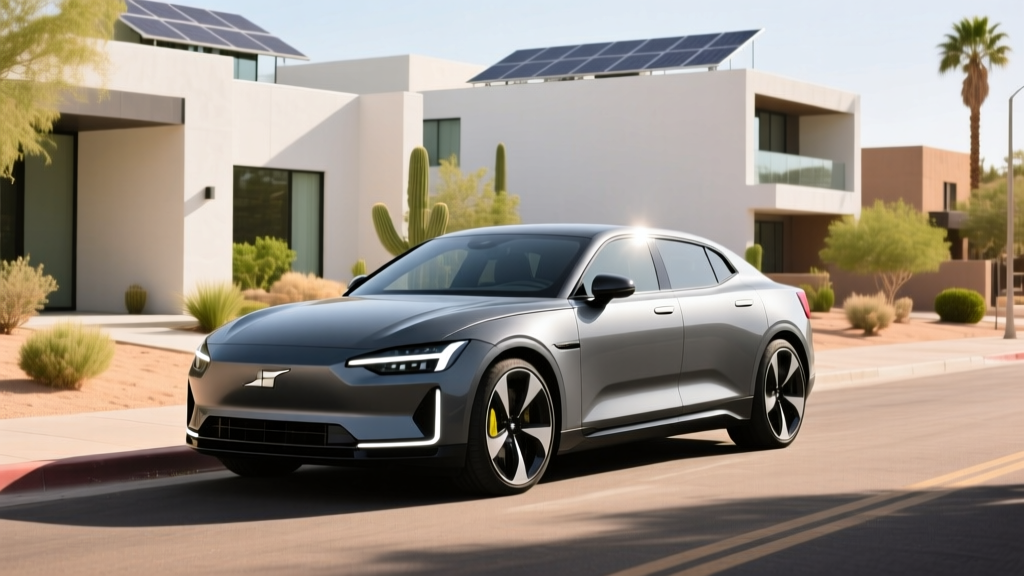
Against the Hyundai Ioniq 6 (EPA 361 mi, 800V architecture enabling 10–80% in ~18 min), the Model 3 trades slightly slower charging for a more mature charging network and better software integration. The BMW i4 eDrive40 (EPA 301 mi) offers a more traditional luxury cabin and CarPlay but can't match Tesla's range or efficiency. The Polestar 2 Long Range (EPA 320 mi) provides a more driver-focused interior with physical controls but trails on range and charging speed.
Who the 2026 Model 3 Suits Best
The Model 3 Long Range RWD is the value pick: maximum range, lowest price in the Long Range family, and sufficient performance for most drivers. It's ideal for commuters covering 40–80 miles daily who can charge at home overnight and want minimal public-charging dependency.
The Long Range AWD earns its premium for buyers in snow-belt states who need dual-motor traction without sacrificing significant range. The Performance trim is a niche pick for driving enthusiasts who want sports-car acceleration in a practical sedan — but the range penalty (315 mi) and stiffer ride make it less suited as a daily commuter.
The RWD with its LFP battery is the right call for budget-conscious buyers, urban commuters, and those who can charge to 100% regularly. It's also the strongest choice for buyers in warm climates where cold-weather range loss is minimal.
Frequently Asked Questions
What is the real-world range of the 2026 Tesla Model 3?
The Long Range RWD achieves its EPA 363 miles in ideal conditions. Real-world highway driving at 70 mph in mild weather yields approximately 310–330 miles. In freezing temperatures, expect 250–275 miles on the highway. The RWD's LFP battery delivers roughly 272 miles EPA, with real-world highway range around 230–245 miles in mild weather and 190–210 miles in freezing conditions.
How fast does the Model 3 charge at home and on the road?
On a Tesla V3 or V4 Supercharger, the Long Range and Performance trims peak at 250 kW, achieving 10–80% in approximately 25 minutes (the rate tapers above 50% SoC). The RWD peaks at 170 kW with a 10–80% time of roughly 28 minutes. At home on a 48-amp Level 2 Wall Connector, all trims add about 44 miles of range per hour, fully charging overnight.
Does the 2026 Model 3 qualify for the $7,500 federal EV tax credit?
All trims fall under the $55,000 sedan MSRP cap and are assembled in the US, making them potentially eligible for the full $7,500 credit under IRS §30D. However, eligibility depends on battery critical-mineral sourcing and component manufacturing requirements (which tighten annually), plus buyer income limits ($150K single / $300K joint). The credit can be applied at point of sale. Verify current status at fueleconomy.gov before purchasing.
Are the new Tesla bucket seats a meaningful improvement?
Yes. The redesigned seats offer noticeably deeper lateral support, better lumbar contouring, and improved long-drive comfort over the pre-Highland Model 3. Ventilation on Long Range and Performance trims is a welcome addition for warm-climate buyers. They still aren't as adjustable or plush as a BMW i4's seats, but they close the gap significantly.
Is the Model 3 worth buying over the Ioniq 6 or BMW i4?
If you prioritize range, efficiency, Supercharger access, and software, the Model 3 is the strongest overall package. If 800V fast-charging speed (18-minute 10–80%) is your priority, the Ioniq 6 wins. If you want a traditional luxury interior with physical controls and Apple CarPlay, the BMW i4 is the better fit. The Model 3's advantages are its charging network, over-the-air updates, and class-leading kWh/100mi efficiency.