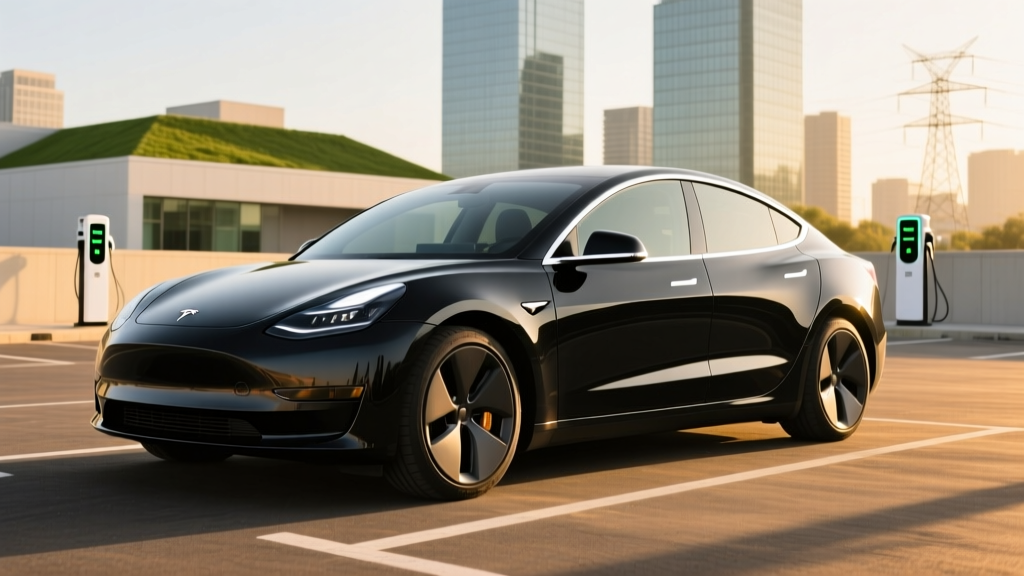
Searches for the Tesla Model 3 height and overall dimensions spike every year, and for good reason: this sedan packs long-range EV tech into a footprint that slips into tight garages and urban parking spots. But dimensions only tell part of the story. The refreshed Model 3 (often called "Highland" and its subsequent updates) brought meaningful changes to ride quality, interior materials, and charging architecture that matter just as much as whether it clears your garage door.
This review covers the 2026 Tesla Model 3 lineup — the Long Range RWD, Long Range AWD, and Performance AWD — with exact specs, real-world range expectations, charging curves, and federal tax credit eligibility under current IRS §30D rules.
Tesla Model 3 Height and Exterior Dimensions
Let's answer the headline question first. The 2026 Tesla Model 3 height is 56.8 inches (1,443 mm) across all trims, measured to the roof without roof rails. That makes it one of the lower sedans in the EV space — comparable to the BMW i4 (57.0 in) and noticeably lower than crossover-style EVs like the Hyundai Ioniq 5 (63.0 in).
| Dimension | Measurement |
|---|---|
| Height | 56.8 in (1,443 mm) |
| Length | 186.1 in (4,727 mm) |
| Width (without mirrors) | 72.8 in (1,849 mm) |
| Width (with mirrors) | 82.2 in (2,088 mm) |
| Wheelbase | 113.2 in (2,875 mm) |
| Ground Clearance | 5.5 in (140 mm) |
| Curb Weight (Long Range AWD) | ~4,030 lbs |
| Drag Coefficient (Cd) | 0.219 |
Garage fit note: At 186.1 inches long and 72.8 inches wide (mirrors folded), the Model 3 fits standard US single-car garages (typically 12 ft wide × 20 ft deep). The 56.8-inch height clears virtually any residential garage door (standard minimum is 7 ft / 84 in). If you're comparing to a Model Y (63.9 in tall), the Model 3's lower roofline is the key trade-off for its superior efficiency.
Range, Battery, and Real-World Efficiency
The 2026 Model 3 lineup uses two distinct battery chemistries depending on trim, which affects both range and long-term charging behavior.
Long Range RWD: EPA 363 mi — Expect ~300–320 mi highway (70–80 mph), ~260–280 mi in freezing temps.
Long Range AWD: EPA 341 mi — Expect ~280–300 mi highway, ~240–260 mi in freezing temps.
Performance AWD: EPA 315 mi — Expect ~260–280 mi highway, ~220–240 mi in freezing temps.
Cold weather reduces range 15–30% depending on severity. Highway driving at 75+ mph reduces range 10–15% vs. EPA combined. Source: fueleconomy.gov
| Trim | Battery (usable kWh) | Chemistry | EPA Range | MPGe (combined) | kWh/100 mi |
|---|---|---|---|---|---|
| Long Range RWD | ~79 kWh | NMC (Nickel Manganese Cobalt) | 363 mi | 132 MPGe | 25 |
| Long Range AWD | ~79 kWh | NMC | 341 mi | 125 MPGe | 27 |
| Performance AWD | ~79 kWh | NMC | 315 mi | 113 MPGe | 30 |
Chemistry note: The Long Range and Performance trims use NMC batteries, which offer higher energy density but are more sensitive to sustained 100% state-of-charge storage. Tesla recommends daily charging to 80–90% for NMC packs and only charging to 100% before long trips. (The standard-range RWD trim, where available, uses LFP chemistry and can be charged to 100% daily without degradation concerns.)
At 25 kWh/100 mi, the Long Range RWD is among the most efficient EVs sold in the US — a direct result of that 0.219 drag coefficient and the car's relatively low curb weight. For context, the Hyundai Ioniq 6 Long Range achieves 24 kWh/100 mi, while the BMW i4 eDrive40 consumes about 29 kWh/100 mi.
Charging Speed: DC Fast and Home Level 2
Charging remains one of the Model 3's strongest practical advantages, thanks to Tesla's Supercharger network and the vehicle's thermal management system.
| Charging Method | Max Rate | Speed / Time |
|---|---|---|
| DC Fast Charge (Supercharger V4) | 250 kW peak | 10–80% in ~25 min (Long Range) |
| DC Fast Charge (V3 Supercharger) | 250 kW peak | 10–80% in ~27 min |
| Level 2 Home (Wall Connector, 48A) | 11.5 kW | ~44 mi/hr added; full charge in ~8 hrs |
| Level 2 Public (J1772 adapter) | Up to 11.5 kW | Varies by station |
| Level 1 (120V outlet) | ~1.4 kW | ~3–5 mi/hr added |
Charging curve reality: The 250 kW peak rate applies only between roughly 10–30% state of charge on a preconditioned battery. The curve tapers to ~150 kW by 50% SoC and drops further above 80%. This is why the 10–80% time (~25 min) is the meaningful metric, not the peak kW number. Always precondition your battery via the Tesla app or navigation before arriving at a Supercharger to hit these times.
Connector note: The 2026 Model 3 uses the NACS (North American Charging Standard) connector natively. This is now the dominant standard in North America, with Ford, GM, Rivian, Hyundai, and others adopting it. No adapter is needed at Tesla Superchargers; a CCS adapter (included or available) is needed for Electrify America and other CCS-only networks.
Performance and Drivetrain
| Trim | Drivetrain | 0–60 mph | Horsepower | Top Speed |
|---|---|---|---|---|
| Long Range RWD | Rear-Wheel Drive | 4.9 sec | ~271 hp | 125 mph |
| Long Range AWD | Dual Motor AWD | 4.2 sec | ~346 hp | 125 mph |
| Performance AWD | Dual Motor AWD | 2.9 sec | ~510 hp | 163 mph |
The Long Range RWD is the value pick: 363 miles of EPA range and a 4.9-second 0–60 time is more than adequate for daily driving and highway merging. The Performance trim's 2.9-second run is supercar territory, but it costs you 48 miles of range and a firmer ride. The AWD trims add traction for snow and rain, which matters if you live north of the 37th parallel.
Interior Space, Cargo, and Practicality
The Model 3's cabin is minimalist by design — a 15.4-inch touchscreen handles nearly all controls, with no traditional instrument cluster. This saves dashboard space but forces a learning curve for climate, mirror, and glovebox adjustments.
| Measurement | Front | Rear |
|---|---|---|
| Headroom | 40.3 in | 37.8 in |
| Legroom | 42.7 in | 35.2 in |
| Shoulder Room | 57.1 in | 54.5 in |
| Hip Room | 53.4 in | 51.7 in |
Cargo volume: 23.0 cu ft total (trunk + frunk). The trunk offers 19.8 cu ft with a wide hatch opening; the front trunk (frunk) adds 3.1 cu ft — useful for charging cables or a small bag. For comparison, the Hyundai Ioniq 6 offers 11.2 cu ft of trunk space (no hatch), making the Model 3 significantly more practical for bulky items.
Rear-seat note: At 35.2 inches of rear legroom, the Model 3 is adequate for adults on shorter trips but tight for six-footers on long rides. The sloping roofline (remember that 56.8-inch height) cuts into rear headroom. If rear passenger comfort is a priority, the Model Y or Ioniq 5 offer meaningfully more space.
Pricing, Trims, and Federal Tax Credit
| Trim | Base MSRP | Destination | Total Before Credits |
|---|---|---|---|
| Long Range RWD | $44,130 | $1,390 | $45,520 |
| Long Range AWD | $47,130 | $1,390 | $48,520 |
| Performance AWD | $52,130 | $1,390 | $53,520 |
Federal tax credit (§30D): Under current IRS rules, the Model 3 may qualify for up to $7,500 in federal tax credits, but eligibility depends on several factors that change regularly:
- MSRP cap: Sedans must be ≤ $55,000 MSRP — the Long Range RWD and AWD qualify; the Performance trim may exceed the cap depending on options.
- Buyer income cap: Modified AGI ≤ $150,000 (single) / $300,000 (joint).
- Battery sourcing: Critical minerals and battery components must meet escalating domestic-content thresholds. Tesla's shifting supply chain means eligibility can change mid-year.
- Point-of-sale transfer: You can transfer the credit to the dealer at purchase for an immediate price reduction, or claim it on your tax return.
- Verify before buying: Check the official fueleconomy.gov tax credit page for the specific trim and build date.
If eligible for the full $7,500, the Long Range RWD drops to roughly $38,020 — making it one of the best value-per-mile-of-range EVs on the market. Many states also offer additional rebates (check your state energy office), but these vary widely and are outside the scope of this review.
Tech, Driver Assistance, and Safety
Infotainment: The 15.4-inch center touchscreen runs Tesla's proprietary software with built-in navigation, streaming (Netflix, YouTube, Spotify while parked), and over-the-air updates. There is no Apple CarPlay or Android Auto — a dealbreaker for some buyers who prefer phone-mirroring interfaces. A rear 8-inch touchscreen for passengers was added in the Highland refresh.
Driver assistance (SAE Level 2): Standard Autopilot includes adaptive cruise control and lane-centering. Full Self-Driving (Supervised) is an optional upgrade ($8,000 purchase or $99/month) that adds automatic lane changes, traffic-light recognition, and city-street navigation.
Both Autopilot and FSD (Supervised) are SAE Level 2 driver-assistance systems. You must keep your hands on the wheel and eyes on the road at all times. Tesla's camera-based monitoring enforces this, but the system will NOT drive itself without supervision. Only Level 4 robotaxis (Waymo, Zoox in limited geofenced areas) operate without a human driver. Do not treat FSD as autonomous driving.
Safety: The Model 3 earned a 5-star overall rating from NHTSA and a Top Safety Pick+ from IIHS. Standard active-safety features include automatic emergency braking, blind-spot monitoring, and lane-departure warning.
Warranty and Ownership Costs
| Coverage | Term |
|---|---|
| Basic Vehicle | 4 years / 50,000 miles |
| Battery & Drive Unit | 8 years / 120,000 miles (Long Range RWD) |
| Battery & Drive Unit (AWD) | 8 years / 120,000 miles |
| Battery Capacity Retention | Minimum 70% over warranty period |
Tesla's battery warranty guarantees that the pack will retain at least 70% of its original capacity over 8 years or 120,000 miles (whichever comes first). Real-world degradation data from fleet studies suggest NMC packs in the Model 3 typically lose 8–12% capacity over the first 100,000 miles, well within the warranty threshold. Out-of-warranty battery replacement currently runs $12,000–$16,000 at Tesla service centers, though prices have been declining.
Total cost of ownership: At an average US electricity rate of $0.16/kWh, charging the Long Range RWD from 0–100% costs roughly $12.64 — or about $0.035/mile. Compare that to a 30 MPG gas car at $3.40/gallon ($0.113/mile). Over 15,000 miles/year, that's a fuel savings of roughly $1,170 annually. Insurance, however, tends to run 15–25% higher than comparable gas sedans due to repair costs.
Pros, Cons, and Who Should Buy
- Best-in-class efficiency (25 kWh/100 mi, 363 mi EPA range)
- Access to Tesla Supercharger network (18,000+ stalls in North America)
- 250 kW peak DC charging with reliable preconditioning
- Strong resale value and low depreciation relative to EV peers
- Over-the-air updates continuously add features
- Eligible for up to $7,500 federal tax credit (trim-dependent)
- No Apple CarPlay or Android Auto
- Rear seat tight for taller adults (37.8 in headroom, 35.2 in legroom)
- Low ground clearance (5.5 in) — not ideal for snow-packed driveways
- FSD (Supervised) costs $8,000 extra and remains Level 2
- Minimalist interior forces all controls through touchscreen
- Insurance premiums above segment average
Who it's best for: The Model 3 Long Range RWD is ideal for commuters and couples who prioritize range and charging speed over rear-seat space. It excels as a daily driver with home Level 2 charging and handles road trips confidently via Superchargers. The AWD trims suit buyers in cold climates who need all-weather traction. It's less suited for families who regularly carry rear-seat passengers or anyone who depends on CarPlay.
Frequently Asked Questions
What is the Tesla Model 3 height?
The 2026 Tesla Model 3 is 56.8 inches (1,443 mm) tall across all trims. This is lower than most EV crossovers and fits standard residential garages with ample clearance.
What is the real-world range of the Tesla Model 3?
The Long Range RWD is EPA-rated at 363 miles. In real-world highway driving at 70–80 mph, expect 300–320 miles. In freezing temperatures, range drops to approximately 260–280 miles due to battery heating demands and cabin climate use.
How fast does the Model 3 charge?
On a V3 or V4 Tesla Supercharger, the Model 3 Long Range peaks at 250 kW and charges from 10–80% in approximately 25 minutes with a preconditioned battery. At home on a 48A Level 2 Wall Connector (11.5 kW), it adds about 44 miles of range per hour, reaching a full charge overnight in roughly 8 hours.
Does the Tesla Model 3 qualify for the federal EV tax credit?
The Long Range RWD ($44,130 MSRP) and Long Range AWD ($47,130 MSRP) fall under the $55,000 sedan MSRP cap and may qualify for up to $7,500 under IRS §30D, subject to buyer income limits ($150K single / $300K joint) and battery-sourcing requirements. Always verify current eligibility on fueleconomy.gov before purchasing, as sourcing rules can change.
Is the Model 3 worth buying vs. competitors?
Against the Hyundai Ioniq 6 (EPA 361 mi, ~$42,500), the Model 3 offers comparable range but superior Supercharger network access and faster OTA updates. Against the BMW i4 (EPA 307 mi, ~$57,000), the Model 3 is significantly cheaper with more range. The Model 3's main weakness vs. the Ioniq 5 or Model Y is rear-seat and cargo space.
Does the Model 3 have Apple CarPlay?
No. Tesla does not support Apple CarPlay or Android Auto in any model. The built-in infotainment handles navigation, music streaming, and phone integration via Bluetooth. This remains a top complaint among prospective buyers switching from other brands.