Quick Verdict: The Tesla Model 3 in 2026
If you've landed here searching for whether the Tesla Model 3 has a heated steering wheel, the answer is yes — it's standard on every 2026 Model 3 trim, including the base Rear-Wheel Drive. But a heated steering wheel is just one piece of a vehicle that remains the benchmark for EV efficiency and charging infrastructure access. The 2026 Model 3 (the refreshed "Highland" generation introduced in late 2023 and carried forward) delivers class-leading efficiency, access to the Supercharger network via its native NACS port, and a minimalist cabin that has matured considerably. It isn't perfect — the ride is firm, the lack of physical stalks still divides drivers, and rear visibility is compromised — but for the price, it's the EV most buyers should test-drive first.
Does the Tesla Model 3 Have a Heated Steering Wheel?
Yes. Every 2026 Tesla Model 3 — from the base Rear-Wheel Drive to the Long Range AWD and Performance variants — includes a heated steering wheel as standard equipment. Tesla removed this feature from the base trim briefly in 2021 before restoring it due to customer demand, and it has remained standard since. The heated steering wheel is controlled through the vehicle's touchscreen under Climate settings, and it can also be activated remotely via the Tesla mobile app when you precondition the cabin.
All three front-row and rear outboard seats also feature heated elements. The 2026 Model 3 does not offer ventilated (cooled) seats, which some competitors in this price range now include. In cold-weather testing, the heated steering wheel reaches a comfortable temperature within roughly 90 seconds, making it one of the faster-heating wheels in the segment.
Range, Efficiency, and Battery Specs
The 2026 Model 3 lineup spans three trims with distinct battery and range profiles. Here's how they break down according to EPA estimates on fueleconomy.gov:
| Trim | EPA Range | Battery (usable) | Chemistry | MPGe (combined) | kWh/100 mi |
|---|---|---|---|---|---|
| Rear-Wheel Drive | 272 mi | ~57.5 kWh | LFP (CATL) | 132 MPGe | 25 |
| Long Range AWD | 341 mi | ~75 kWh | NMC | 134 MPGe | 25 |
| Performance AWD | 315 mi | ~75 kWh | NMC | 125 MPGe | 27 |
The EPA numbers above are achievable in mixed city/suburban driving at moderate temperatures (60–75°F). In real-world highway driving at 70–75 mph, expect the RWD to deliver roughly 230–245 miles and the Long Range to return 290–310 miles. In freezing temperatures (below 32°F), range can drop 20–30% due to battery resistance and cabin heating load — meaning the RWD could see 190–210 miles and the Long Range 240–270 miles on a full charge. The Model 3's standard heat pump helps mitigate this compared to EVs without one, but cold-weather range loss is a physical reality for all lithium-ion batteries.
The RWD trim uses a lithium iron phosphate (LFP) battery from CATL. LFP chemistry trades energy density for longevity and thermal stability — Tesla recommends charging LFP packs to 100% regularly to maintain cell-balancing accuracy. The Long Range and Performance trims use nickel-manganese-cobalt (NMC) packs, which offer higher energy density and are better suited for drivers who regularly need maximum range. For NMC, Tesla recommends a daily charge limit of 80–90% to preserve long-term health.
Charging Speed: DC Fast, Level 2, and Level 1
Charging speed is where the Model 3's integration with Tesla's Supercharger network pays dividends. The 2026 Model 3 uses the native NACS (North American Charging Standard) connector — no adapter needed at any of the 6,000+ Supercharger stalls across North America.
| Charging Level | Power / Rate | Time or Miles Added | Notes |
|---|---|---|---|
| DC Fast Charge (Supercharger V4) | Peak 170 kW (RWD) / 250 kW (LR & Perf) | 10–80% in ~25 min (RWD) / ~22 min (LR) | Charge curve tapers significantly above 80%; precondition via navigation for peak speeds |
| Level 2 (240V, 48A home charger) | 11.5 kW | ~44 mi/hr of charging | Full charge in 6–8 hours depending on battery size |
| Level 2 (240V, 32A Mobile Connector) | 7.7 kW | ~30 mi/hr of charging | Uses NEMA 14-50 outlet; slower but more portable |
| Level 1 (120V, 12A) | ~1.4 kW | ~3–4 mi/hr of charging | Emergency/trickle only; ~4 days for a full RWD charge |
A critical detail many spec sheets omit: peak kW is not sustained kW. The Long Range Model 3 hits 250 kW only briefly between roughly 10–30% state of charge. From 50–80%, the rate drops to approximately 70–100 kW. This charge-curve taper means the 10–80% time is a more useful metric than the peak number. Always navigate to a Supercharger using the car's built-in routing to trigger battery preconditioning — arriving at a Supercharger without preconditioning can add 5–10 minutes to your session, especially in cold weather.
Performance and Drivetrain
| Trim | Drivetrain | Horsepower | 0–60 mph | Top Speed |
|---|---|---|---|---|
| Rear-Wheel Drive | RWD (single motor) | 271 hp | 5.8 sec | 125 mph |
| Long Range AWD | AWD (dual motor) | 346 hp | 4.2 sec | 125 mph |
| Performance AWD | AWD (dual motor) | 510 hp | 2.9 sec | 163 mph |
Even the base RWD Model 3 feels brisk in daily driving — 271 hp in a ~3,860-lb sedan delivers confident highway merging and passing. The dual-motor AWD trims add traction in rain and snow, which matters if you live above the 37th parallel. The Performance trim's 2.9-second 0–60 time is supercar territory and remains one of the quickest accelerations available under $55,000.
Regenerative braking on the Model 3 is strong and effectively enables one-pedal driving in most conditions. Tesla removed the user-adjustable regen setting several years ago; the system is fixed at a strong level that recaptures energy aggressively when you lift off the accelerator. Most owners adapt within a week, but if you're coming from a gas car, expect a learning curve.
Pricing, Trims, and Federal Tax Credit Eligibility
| Trim | Base MSRP | Federal §30D Credit | Effective Price (if eligible) |
|---|---|---|---|
| Rear-Wheel Drive | $38,990 | Up to $7,500 (point-of-sale) | ~$31,490 |
| Long Range AWD | $45,240 | Up to $7,500 (point-of-sale) | ~$37,740 |
| Performance AWD | $52,990 | Up to $7,500 (point-of-sale) | ~$45,490 |
IRS §30D Tax Credit Rules for 2026: Eligibility is not automatic. Under current IRS rules, you must meet all of the following:
- Income caps: Modified AGI ≤ $150,000 (single), $225,000 (head of household), $300,000 (joint)
- MSRP cap: The vehicle's MSRP must not exceed $55,000 for sedans (all Model 3 trims qualify)
- Battery sourcing: Critical minerals and battery components must meet phased-in domestic-content thresholds that tighten annually — Tesla's supply chain has adapted, but verify current-year compliance on the IRS clean vehicle credit page before purchasing
- Point-of-sale transfer: As of 2024, you can transfer the credit to the dealer at purchase, reducing your out-of-pocket cost immediately rather than waiting for tax filing
The base RWD at ~$31,490 after the credit is one of the most affordable new EVs with over 270 miles of range on the market. Consult a tax professional to confirm your personal eligibility — state incentives (like California's CVRP or Colorado's Innovative Motor Vehicle Credit) may stack on top.
Interior, Cargo, and Technology
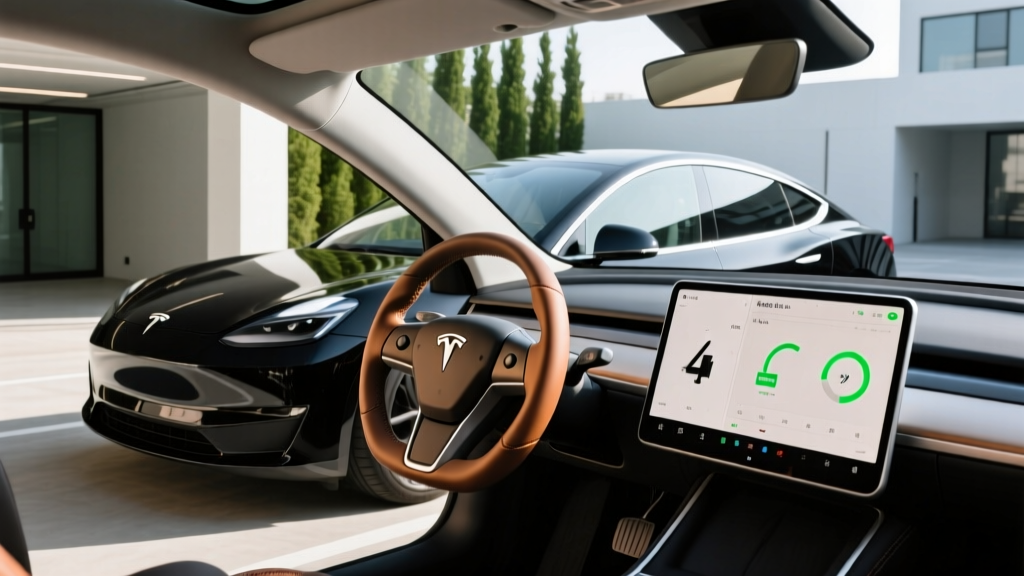
The 2026 Model 3's cabin is defined by its minimalism. There are no physical buttons, no instrument cluster, and no traditional stalks — turn signals live on the steering wheel, and the gear selector is on the touchscreen (with a backup overhead console). The 15.4-inch center touchscreen runs Tesla's proprietary infotainment system, which includes navigation, streaming (Netflix, YouTube, Spotify while parked), gaming, and over-the-air software updates that regularly add features.
Dimensions and space:
- Front legroom: 42.7 inches
- Rear legroom: 35.2 inches
- Cargo (trunk): 21.0 cu ft
- Frunk (front trunk): 3.1 cu ft
- Total cargo: 24.1 cu ft
Rear legroom is adequate for adults under 6 feet but tight for taller passengers on long trips. The trunk is generous for a compact sedan, and the frunk adds useful space for charging cables or a small bag. The ventilated front seats from earlier Highland models remain absent; the synthetic leather upholstery is durable but can feel warm in summer without ventilation.
Driver assistance — SAE Level 2: Every Model 3 ships with Tesla's Basic Autopilot (adaptive cruise control + lane centering). The optional Full Self-Driving (Supervised) package adds automated lane changes, traffic light recognition, and navigate-on-autopilot. Despite the "FSD" name, this is an SAE Level 2 system — you must keep your hands on the wheel and eyes on the road at all times. Tesla monitors engagement via a cabin camera. True autonomous driving (Level 4) is not available in any consumer Tesla vehicle.
Warranty and Long-Term Ownership
| Component | Coverage |
|---|---|
| Basic Vehicle | 4 years / 50,000 miles |
| Battery & Drive Unit (RWD) | 8 years / 100,000 miles (≥70% capacity retention) |
| Battery & Drive Unit (LR & Perf) | 8 years / 120,000 miles (≥70% capacity retention) |
Tesla's battery warranty guarantees that the pack will retain at least 70% of its original capacity during the warranty period. If degradation exceeds 30%, Tesla will repair or replace the battery at no cost. In practice, Tesla's battery degradation data — corroborated by fleet studies from sources like Tesla's Impact Report — shows average degradation of approximately 12–15% after 150,000 miles for NMC packs, and often less for LFP packs due to the chemistry's longer cycle life.
Maintenance costs are low compared to gas vehicles: no oil changes, no spark plugs, no transmission fluid. Expect to replace cabin air filters annually (~$30–50 DIY), wiper blades as needed, and brake pads rarely (regenerative braking preserves them — many owners report original pads beyond 80,000 miles). Tire wear is the main consumable cost; EVs tend to wear tires 20–30% faster than comparable gas cars due to instant torque and heavier curb weight.
Pros and Cons
Pros
- Class-leading efficiency (25 kWh/100 mi)
- Native NACS — full Supercharger network access, no adapter
- Heated steering wheel and all seats standard on every trim
- Over-the-air updates continuously improve the vehicle
- RWD trim at ~$31,490 after federal credit is exceptional value
- Strong resale value relative to most EV competitors
- Excellent safety ratings (IIHS Top Safety Pick+, NHTSA 5-star)
Cons
- No physical stalks — turn signals on the wheel frustrate some drivers
- Firm ride quality, especially on 19-inch wheels
- No Apple CarPlay or Android Auto
- Rear visibility is limited by the sloping roofline and small rear window
- No ventilated/cooled seats available
- FSD (Supervised) costs $8,000 extra and remains Level 2
- Insurance premiums run 15–25% higher than comparable gas sedans
Who Should Buy the 2026 Tesla Model 3?
Buy the Model 3 if: You want the most efficient sedan in its class, rely on road-trip charging infrastructure (the Supercharger network is still the most reliable DC fast-charging ecosystem in North America), appreciate software-driven features, and value a strong price after tax credits.
Look elsewhere if: You need a spacious rear seat for car seats or tall passengers (consider the Hyundai Ioniq 6 or BMW i4), you refuse to give up Apple CarPlay, you want physical controls and a traditional instrument cluster, or you live in an area with limited home charging access and need the longest possible single-charge range (the Long Range at 341 mi EPA helps, but a larger SUV like the Model Y may suit families better).
Frequently Asked Questions
Can I turn on the Tesla Model 3 heated steering wheel remotely?
Yes. Open the Tesla app, select Climate, and activate preconditioning. The heated steering wheel and heated seats will engage along with the HVAC system. You can also schedule automatic preconditioning for your commute time through the vehicle's touchscreen.
How does the Model 3's efficiency compare to competitors?
At 25 kWh/100 mi (Long Range), the Model 3 is among the most efficient EVs on sale. The Hyundai Ioniq 6 SE Long Range achieves a similar 24–25 kWh/100 mi, while the BMW i4 eDrive40 uses roughly 29 kWh/100 mi. Efficiency directly translates to lower charging costs — at the national average electricity rate of ~$0.17/kWh, the Model 3 Long Range costs roughly $4.25 per 100 miles to charge at home, versus ~$12–14 per 100 miles for a 30 MPG gas sedan at $3.50/gallon.
Is the Tesla Model 3 a good car in snow and winter?
The dual-motor AWD trims (Long Range and Performance) provide excellent traction in snow, and the heated steering wheel, heated seats, and heat pump make cold-weather driving comfortable. The LFP battery in the RWD trim is somewhat more resistant to cold-weather degradation than NMC, but you'll still see 20–30% range loss below freezing. Preconditioning the battery before driving and while charging is essential for winter efficiency.
Does the Model 3 qualify for the full $7,500 federal tax credit in 2026?
All three Model 3 trims fall under the $55,000 MSRP cap for sedans. Whether you qualify depends on your income (see the §30D caps above) and the current-year battery-sourcing requirements, which tighten annually. Tesla has worked to domesticate its supply chain, but always verify eligibility on the IRS clean vehicle credit page before finalizing a purchase.
What's the biggest difference between the RWD and Long Range trims?
Beyond the 69-mile EPA range gap, the Long Range adds dual-motor AWD (critical for snow-belt states), a larger NMC battery, faster DC charging (250 kW vs. 170 kW peak), and roughly 75 more horsepower. If you regularly drive over 200 miles between charges or live in a region with harsh winters, the Long Range's $6,250 premium is justified. For city commuters with reliable home charging, the RWD is the value pick.