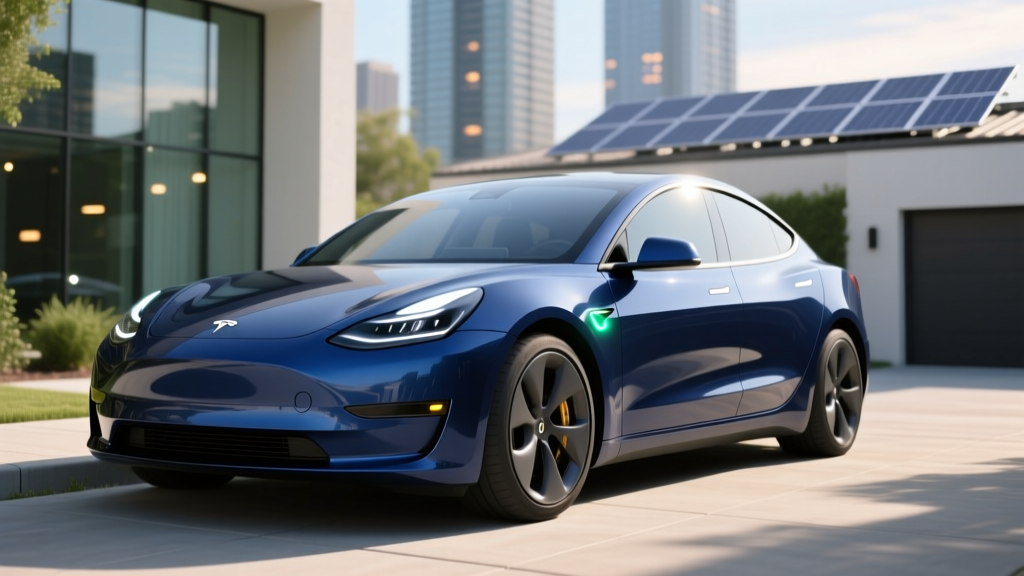
The Tesla Model 3 remains the default benchmark in the electric sedan segment, and for 2026 it continues to set the pace on efficiency, charging speed, and software integration. But the competitive landscape has shifted dramatically — Hyundai's Ioniq 6, BMW's i4, and a refreshed Polestar 2 all demand a closer look. This review breaks down the Model 3's real-world range, charging behavior, battery chemistry trade-offs, pricing after federal incentives, and whether it still deserves its headliner status in the EV sedan category.
2026 Tesla Model 3: Core Specifications at a Glance
| Spec | Model 3 RWD | Model 3 Long Range AWD | Model 3 Performance |
|---|---|---|---|
| EPA Range | 272 mi | 363 mi | 315 mi |
| Battery (usable) | ~57.5 kWh (LFP) | ~75 kWh (NMC) | ~75 kWh (NMC) |
| Drivetrain | Rear-Wheel Drive | Dual-Motor AWD | Dual-Motor AWD |
| Horsepower | 271 hp | 346 hp | 510 hp |
| 0–60 mph | 5.8 sec | 4.2 sec | 2.9 sec |
| Peak DC Fast Charge | 170 kW | 250 kW | 250 kW |
| 10–80% DCFC Time | ~25 min | ~22 min | ~22 min |
| Level 2 Charge Rate | 11.5 kW (~44 mi/hr) | 11.5 kW (~44 mi/hr) | 11.5 kW (~44 mi/hr) |
| Efficiency (MPGe) | 132 MPGe combined | 130 MPGe combined | 119 MPGe combined |
| Base MSRP | $38,990 | $42,490 | $52,990 |
Sources: EPA fueleconomy.gov, Tesla.com specifications (2026 model year).
Range and Efficiency: Sticker Numbers vs. the Real World
EPA sticker: 363 miles (Long Range AWD) / 272 miles (RWD)
Real-world highway (70 mph, 75°F): ~300–320 miles (Long Range) / ~225–240 miles (RWD)
Cold weather (20°F, highway): ~230–260 miles (Long Range) / ~170–190 miles (RWD)
Expect 15–30% range reduction in sustained cold depending on cabin heating and speed.
The Model 3 Long Range AWD's 363-mile EPA rating is among the highest of any EV sedan under $50,000. Tesla's efficiency engineering — low drag coefficient (~0.219 Cd), heat pump standard across all trims, and aggressive regenerative braking — squeezes exceptional miles out of every kilowatt-hour.
The RWD trim uses a lithium iron phosphate (LFP) battery, which trades energy density for longevity and cost. That smaller ~57.5 kWh pack yields 272 EPA miles — adequate for most commutes but noticeably tighter on road trips. The LFP chemistry does offer a practical advantage: Tesla recommends periodic charging to 100% for LFP packs, which helps with battery calibration and means you can access the full pack more routinely than with NMC chemistry, where daily charging to 80% is recommended.
Efficiency on the Long Range AWD measures 130 MPGe combined (26 kWh/100 mi), making it one of the most energy-efficient all-wheel-drive vehicles on the market, electric or otherwise. In temperate city driving with regenerative braking engaged, owners consistently report exceeding the EPA combined figure. Highway driving at 75+ mph is where consumption climbs, as aerodynamic drag dominates.
Battery Chemistry: LFP vs. NMC and What It Means for Ownership
| Factor | LFP (RWD trim) | NMC (Long Range / Performance) |
|---|---|---|
| Energy Density | Lower — smaller pack, less range | Higher — more range per kg |
| Cycle Life | 3,000+ cycles typical | 1,500–2,000 cycles typical |
| Daily Charge Recommendation | 100% OK (periodic full charges recommended) | 80% daily, 100% for trips |
| Cold-Weather Performance | Slightly worse in extreme cold | Better low-temp discharge |
| Cost Advantage | Lower battery cost reflected in MSRP | Higher cost, higher performance |
| Degradation Trajectory | Slower long-term degradation | Steeper early drop, then plateaus |
If you're buying the RWD trim primarily for commuting and can charge at home nightly, the LFP battery is arguably the better long-term ownership play — you'll likely see less capacity loss over 150,000+ miles. If you need maximum range or plan frequent road trips in cold climates, the NMC pack in the Long Range is the clear choice.
Charging Speed: DC Fast Charging and Home Level 2
Charging infrastructure access is where Tesla retains a significant edge. The Model 3 charges natively on the North American Charging Standard (NACS) connector, giving it seamless access to the Tesla Supercharger network — over 6,000 stations and 60,000+ stalls across North America as of early 2026. While other automakers are transitioning to NACS adapters, Tesla owners skip the adapter hassle entirely.
| Charging Level | Power | Speed (Model 3 Long Range) | Best For |
|---|---|---|---|
| Level 1 (120V) | ~1.2 kW | ~3–4 mi/hr | Overnight trickle / emergencies |
| Level 2 (240V, 48A) | 11.5 kW | ~44 mi/hr (full in ~7 hr) | Daily home charging |
| DC Fast (Supercharger V3) | Peak 250 kW | 10–80% in ~22 min | Road trips |
| DC Fast (Supercharger V4) | Peak 250 kW (cable-limited for Model 3) | 10–80% in ~22 min | Future compatibility |
Charging curve reality: The Model 3 Long Range peaks at 250 kW only below ~30% state of charge and for a brief window. Sustained average from 10–80% is closer to 150–165 kW. Above 80%, the charge rate tapers sharply to protect the battery — going from 80–100% can take as long as the 10–80% session. For road trips, plan stops around the 10–80% window for the fastest throughput.
For home charging, the Model 3's onboard charger maxes at 11.5 kW (48 amps). A hardwired Level 2 home charger on a 60-amp circuit delivers roughly 44 miles of range per hour of charging — more than enough to replenish a full day's driving overnight. Expect a home Level 2 installation to cost $500–$2,000 depending on panel proximity and whether your electrical panel needs an upgrade (source: typical electrician quotes, 2025–2026).
Preconditioning matters: when you navigate to a Supercharger in the Tesla nav system, the car automatically warms the battery to optimal charging temperature. Arriving without preconditioning — especially in cold weather — can add 10–15 minutes to your charging session as the battery heats before accepting peak power.
Performance and Driving Dynamics
The 2026 Model 3 Performance is a legitimate sports sedan by any measure: 510 horsepower, 2.9-second 0–60, and a track-tuned adaptive suspension that was significantly reworked for the Highland refresh. Dual-motor all-wheel drive provides confident traction in rain and snow.
The Long Range AWD strikes the best balance for most buyers — 4.2 seconds to 60 mph is quick by any standard, and the ride quality on the refreshed chassis is noticeably improved over pre-2024 Model 3s. Tesla reworked the suspension bushings, added acoustic glass, and improved sound deadening, addressing the most common complaints from earlier owners.
The RWD trim, while the slowest at 5.8 seconds, is still quicker than most gas-powered compact sedans and delivers the efficiency advantage of a lighter single-motor setup. For a commuter who values low running costs over acceleration, it's the rational pick.
Pricing, Trims, and Federal Tax Credit Eligibility
| Trim | Base MSRP | Est. After §30D Credit | Federal Credit Eligible? |
|---|---|---|---|
| Model 3 RWD | $38,990 | ~$31,490 (if eligible) | Yes — up to $7,500 |
| Model 3 Long Range AWD | $42,490 | ~$34,990 (if eligible) | Yes — up to $7,500 |
| Model 3 Performance | $52,990 | ~$45,490 (if eligible) | Yes — up to $7,500 |
Federal §30D tax credit rules (2026): The Model 3 qualifies for up to $7,500 in federal tax credits, but eligibility is not automatic. Per IRS guidelines, buyers must meet income caps ($150,000 single / $300,000 joint MAGI), and the vehicle must meet critical-mineral and battery-component sourcing thresholds that have tightened annually since 2024. As of 2026, Tesla has maintained eligibility for the full $7,500 across all Model 3 trims by securing compliant supply chains, but this is subject to change.
The credit can now be transferred to the dealer at point of sale, reducing your purchase price directly rather than waiting for a tax refund. If you have zero tax liability, the point-of-sale transfer still applies — a significant advantage over the old non-refundable structure.
The Model 3 sedan is well under the $55,000 MSRP cap for sedans (the separate truck/SUV cap is $80,000). All three trims qualify on price. Always verify current eligibility at fueleconomy.gov before purchasing, as sourcing rules update periodically.
Interior, Cargo, and Technology
The Highland-refreshed Model 3 interior is a genuine step up from the pre-2024 cabin. Materials quality has improved with ventilated front seats, ambient lighting, a rear passenger touchscreen, and better acoustic isolation. The minimalist design philosophy remains — there are still no physical buttons for climate or mirrors, and all adjustments route through the 15.4-inch center touchscreen.
Cargo space: The Model 3 offers 23 cubic feet of trunk space plus a small front trunk (frunk) for charging cables and small items. Rear legroom measures 35.2 inches — adequate for adults on shorter trips but tighter than a midsize sedan. The absence of a hatchback (unlike the Model Y) limits practicality for bulky cargo.
Tech highlights:
- 15.4-inch center touchscreen with fast, responsive UI
- 6-inch rear passenger display for climate and media
- Tesla Autopilot standard (SAE Level 2 driver-assist — not self-driving; driver must remain engaged)
- Full Self-Driving (Supervised) available as a $8,000 add-on or $99/month subscription — still Level 2, requires active supervision
- Over-the-air updates continue to add features post-purchase
- Sentry Mode dashcam recording, Dog Mode cabin climate, and theater mode
Tesla Autopilot and FSD (Supervised) are Level 2 driver-assistance systems per SAE classification. The driver must maintain hands-on-wheel awareness and full attention at all times. These systems do not make the vehicle autonomous. Only Level 4 services like Waymo operate without a driver. Do not disengage from driving while using these features.
Warranty and Long-Term Ownership
| Coverage | Terms |
|---|---|
| Basic Vehicle Warranty | 4 years / 50,000 miles |
| Battery & Drive Unit (RWD) | 8 years / 100,000 miles (min 70% retention) |
| Battery & Drive Unit (LR / Perf) | 8 years / 120,000 miles (min 70% retention) |
Tesla's battery warranty guarantees at least 70% capacity retention during the coverage period. Real-world data from high-mileage Tesla owners suggests the NMC packs in Long Range models typically retain 85–90% capacity at 100,000 miles, with the steepest degradation occurring in the first 20,000 miles before plateauing. LFP packs in the RWD trim show even slower degradation curves, with many owners reporting 92%+ state of health at 80,000 miles.
Out-of-warranty battery replacement remains a concern for high-mileage buyers — current replacement costs for a Model 3 battery range from $12,000–$16,000 depending on trim and labor, though prices have trended downward. For context, very few Model 3 batteries have required full replacement under 150,000 miles.
Pros, Cons, and the Competitive Verdict
- Class-leading efficiency (130+ MPGe)
- Native NACS / Supercharger network access
- 363-mi EPA range on Long Range trim
- 250 kW peak DC fast charging
- Continual OTA software improvements
- Strong resale value relative to EV peers
- Point-of-sale §30D credit brings effective price below $32k (RWD)
- Turn-signal buttons on steering wheel (no stalks) frustrate some drivers
- No hatchback — trunk-only cargo access limits utility
- Rear legroom tighter than Hyundai Ioniq 6 or BMW i4
- FSD subscription is expensive and still Level 2
- Ride quality improved but still firm on rough pavement
- No Apple CarPlay / Android Auto
Is the Tesla Model 3 Still the Sedan to Beat?
- Choose the Model 3 Long Range if: You want maximum range under $45k, rely on road-trip charging infrastructure, and value Supercharger network reliability above all else.
- Choose the Model 3 RWD if: Your daily commute is under 60 miles round-trip, you charge at home, and you want the lowest total cost of ownership with an LFP battery built for longevity.
- Choose the Model 3 Performance if: You want sports-sedan acceleration with EV economics and don't mind sacrificing ~50 miles of range for 510 hp.
- Consider the Hyundai Ioniq 6 instead if: You prefer a quieter ride, physical buttons, Apple CarPlay, or need more rear-seat headroom.
- Consider the BMW i4 instead if: You want a more traditional luxury interior, prefer a hatchback cargo layout, or value dealer service infrastructure.
The Model 3's headliner status in 2026 isn't about any single spec — it's about the ecosystem. Supercharger reliability, OTA updates, class-leading efficiency, and a sub-$32,000 effective price on the RWD trim after federal credits create a package that competitors still struggle to match holistically. The Ioniq 6 is a credible alternative on comfort and the i4 on luxury, but neither has the charging network advantage. For most EV sedan buyers, the Model 3 remains the rational default — just go in with eyes open about the cargo limitations and the learning curve of a screen-first interface.
Frequently Asked Questions
What is the real-world range of the 2026 Tesla Model 3?
The EPA rates the Long Range AWD at 363 miles and the RWD at 272 miles. In real-world highway driving at 70 mph in moderate temperatures, expect roughly 300–320 miles from the Long Range and 225–240 from the RWD. In sustained cold (below 30°F), subtract 15–30% depending on speed and cabin heating use. The heat pump helps mitigate cold-weather losses compared to older resistance-heater EVs.
How fast does the Model 3 charge at home and on the road?
At home on a 240V Level 2 charger (48A), the Model 3 charges at 11.5 kW, adding about 44 miles of range per hour — a full charge takes roughly 7 hours for the Long Range. On DC fast charging, the Long Range and Performance trims peak at 250 kW on a V3 Supercharger, reaching 10–80% in approximately 22 minutes. The RWD peaks at 170 kW and takes about 25 minutes for the same window.
How much does the Tesla Model 3 cost after federal tax credits?
If you qualify for the full $7,500 §30D federal tax credit (meeting income caps of $150k single / $300k joint, and the vehicle meeting battery-sourcing requirements), the effective prices drop to approximately $31,490 for the RWD, $34,990 for the Long Range, and $45,490 for the Performance. The credit can be applied at point of sale as of 2024+, reducing your out-of-pocket cost immediately. Always verify current eligibility on fueleconomy.gov and consult a tax professional.
Does the 2026 Tesla Model 3 qualify for the federal EV tax credit?
Yes — all three Model 3 trims currently qualify for up to $7,500 under IRS §30D, as the sedan is under the $55,000 MSRP cap and Tesla has maintained compliant battery sourcing. However, buyer income limits apply ($150,000 single / $225,000 head of household / $300,000 joint MAGI), and sourcing rules tighten periodically. Verify before purchase at fueleconomy.gov and consult a tax advisor for your specific situation.
Is the Tesla Model 3 worth buying vs. the Hyundai Ioniq 6 or BMW i4?
The Model 3 wins on range, efficiency, charging network access, and software. The Ioniq 6 offers a more comfortable ride, physical controls, CarPlay, and competitive range (up to 361 miles EPA on the SEL). The BMW i4 provides a more premium interior, hatchback practicality, and dealer service but at a higher starting price and lower range. If Supercharger access and software integration are top priorities, the Model 3 remains the strongest overall package. If ride comfort and traditional controls matter more, the Ioniq 6 is a compelling alternative.
Is Tesla Autopilot or FSD actually self-driving?
No. Both Tesla Autopilot and Full Self-Driving (Supervised) are SAE Level 2 driver-assistance systems. They can manage steering, acceleration, and braking on highways and some city streets, but the driver must remain fully attentive with hands on the wheel at all times. These systems are not autonomous and do not replace an engaged driver. Only Level 4 robotaxi services like Waymo operate without a human driver in defined service areas.