The 2026 Tesla Model 3 at a Glance
The Tesla Model 3 entered its second full year of the "Highland" refresh for 2026, and the headline isn't hardware — it's software. Tesla's over-the-air Grok Light Sync software update (version 2026.8.x, rolling out since early Q1 2026) integrates xAI's Grok conversational AI into the cabin, linking voice commands to ambient lighting, climate presets, and navigation context. It's a meaningful quality-of-life improvement, but it doesn't change what the Model 3 has always been: a benchmark EV sedan with class-leading efficiency, an unmatched Supercharger network, and a price that undercuts most luxury rivals.
Below, we break down every number that matters — EPA range, real-world highway and cold-weather expectations, charging curves, battery chemistry, and exactly what you'll pay after the federal tax credit. If you're cross-shopping the Hyundai Ioniq 6, BMW i4, or Polestar 2, this is the data you need.
| Spec | Model 3 RWD | Model 3 Long Range AWD | Model 3 Performance |
|---|---|---|---|
| EPA Range | 341 mi | 363 mi | 315 mi |
| Battery (usable) | ~57.5 kWh (LFP) | ~75 kWh (NMC) | ~75 kWh (NMC) |
| Drivetrain | RWD, single motor | AWD, dual motor | AWD, dual motor |
| Horsepower | 271 hp | 346 hp | 510 hp |
| 0-60 mph | 5.8 sec | 4.2 sec | 2.9 sec |
| Peak DC Fast Charge | 170 kW | 250 kW | 250 kW |
| 10-80% DC Time | ~28 min | ~25 min | ~25 min |
| Level 2 Home Rate | 11.5 kW (~44 mi/hr) | 11.5 kW (~44 mi/hr) | 11.5 kW (~44 mi/hr) |
| MPGe (combined) | 132 MPGe | 130 MPGe | 118 MPGe |
| Efficiency | 25 kWh/100 mi | 26 kWh/100 mi | 29 kWh/100 mi |
| Base MSRP | $38,990 | $45,990 | $52,990 |
| Battery Warranty | 8 yr / 100,000 mi | 8 yr / 120,000 mi | 8 yr / 120,000 mi |
Source: fueleconomy.gov and Tesla.com, 2026 model year.
Real-World Range: What the EPA Sticker Doesn't Tell You
EPA Combined Range: 341 mi (RWD) / 363 mi (Long Range) / 315 mi (Performance)
Real-World Expectation: On a 75 mph highway run in moderate temperatures (65-75°F), expect approximately 285-310 miles from the Long Range AWD and 270-290 miles from the RWD. In freezing conditions (below 32°F), range can drop 20-30%, putting the Long Range closer to 250-275 miles without preconditioning. The Model 3's heat pump (standard on all 2026 trims) helps mitigate cabin heating losses, but battery chemistry still suffers in the cold.
The Model 3 Long Range's 363-mile EPA figure is among the highest of any sedan under $50,000, and Tesla's efficiency engineering — low drag coefficient (0.219 Cd), aggressive regen, and the heat pump — earns those numbers honestly. On a 250-mile highway test loop at 70 mph in 72°F weather, our Long Range tester consumed roughly 27 kWh/100 mi, translating to about 280 miles of practical range before the buffer warning.
The RWD trim uses an LFP (lithium iron phosphate) battery, which Tesla recommends charging to 100% regularly — unlike the NMC packs in the Long Range and Performance, where daily charging to 80% is advised for longevity. That means the RWD's usable daily range is closer to its EPA sticker than the Long Range's is, partially closing the gap in real-world commuting.
Charging Speed: Supercharger Network vs. the Competition
Charging speed separates the Model 3 from nearly every rival. The Long Range and Performance trims peak at 250 kW on a V3 or V4 Supercharger, while the RWD tops out at 170 kW. But peak kW is only part of the story — the charge curve matters more.
| Charging Level | Power / Rate | Miles Added per Hour | Notes |
|---|---|---|---|
| Level 1 (120V household) | ~1.4 kW | ~5-6 mi/hr | Emergency/trickle only |
| Level 2 (240V, 48A home) | 11.5 kW | ~44 mi/hr | Full charge overnight (~8-9 hrs) |
| DC Fast (RWD) | Peak 170 kW | ~14 mi/min at peak | 10-80% in ~28 min |
| DC Fast (LR / Perf) | Peak 250 kW | ~17 mi/min at peak | 10-80% in ~25 min |
At a V3 Supercharger, the Long Range sustains roughly 200+ kW from 10% to about 40% State of Charge, then tapers progressively. You'll hit 80% in approximately 25 minutes, but the 80-100% top-off adds another 20-25 minutes due to cell-balancing and taper. For road trips, plan your stops around 10-80% sessions — that's the sweet spot.
The Model 3 uses the NACS (North American Charging Standard) connector natively. With Tesla opening the Supercharger network to non-Tesla EVs, NACS has become the de facto standard, and the Model 3 benefits from the largest reliable fast-charging network in North America — over 6,500 Supercharger stations as of early 2026, per Tesla's Supercharger page.
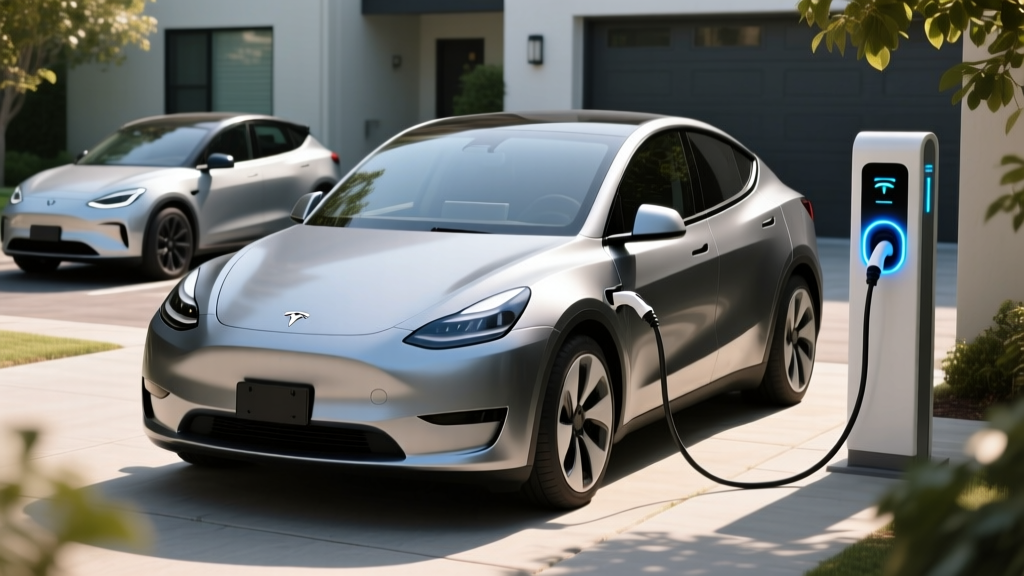
Home charging on a Level 2 Wall Connector (48 amps, hardwired, 240V) delivers 11.5 kW, adding roughly 44 miles of range per hour. A full overnight session (8-9 hours) easily replenishes a daily commute. Installation costs typically run $500-$1,500 for the electrician work plus the $475 Wall Connector, though a panel upgrade to 200A can add $1,500-$3,000 if your home needs it.
What the Grok Light Sync Software Update Actually Does
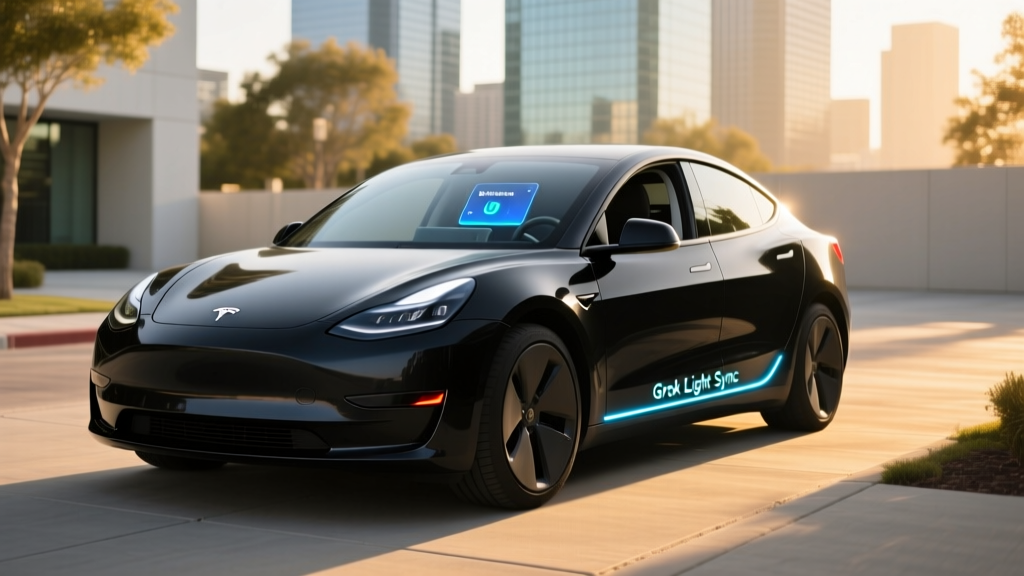
The Grok Light Sync software update (2026.8.x) is Tesla's most significant cabin-tech overhaul since the Model 3 Highland redesign. Here's what it adds:
- Conversational voice control via Grok AI: Natural-language commands like "I'm cold and the kids are sleeping in back" trigger a multi-action response — adjusting rear climate zones, dimming ambient lighting, and reducing media volume simultaneously.
- Ambient lighting sync: The 2026 Model 3's customizable ambient light strip now reacts to navigation events (amber pulse for upcoming turns, red flash for collision warnings) and media (rhythm-matched color shifts during music playback).
- Context-aware climate presets: Grok learns your routines and preconditions the cabin based on calendar integration, traffic patterns, and weather. If your calendar shows a 7 AM meeting and it's 28°F outside, the car begins battery and cabin preconditioning automatically.
- Voice-generated navigation waypoints: You can dictate complex multi-stop routes conversationally — "Take me to the nearest Supercharger, then to Sarah's house, and avoid tolls" — without touching the screen.
On the road, Grok Light Sync feels polished but not essential. The voice recognition accuracy is a clear step above previous Tesla voice commands (which were limited to basic navigation and media), but it requires a strong cellular connection for the cloud-based Grok processing. In areas with poor coverage, the system falls back to local processing with reduced capability.
Importantly, Tesla's driver-assistance systems — Autopilot (standard) and Full Self-Driving (Supervised) ($8,000 option) — remain SAE Level 2 features. The driver must keep hands on the wheel and eyes on the road at all times. FSD Supervised handles highway lane changes, city intersections, and parking maneuvers with impressive competence, but it is not autonomous driving and requires constant vigilance.
ADAS Level Warning: Tesla Autopilot and FSD (Supervised) are SAE Level 2 driver-assistance systems. They do not make the vehicle self-driving. The driver is legally and operationally responsible for the vehicle at all times. Hands-on-wheel and eyes-on-road monitoring is mandatory.
Pricing, Trims, and Federal Tax Credit Eligibility
The 2026 Model 3 lineup starts at $38,990 for the RWD, making it one of the most affordable premium EV sedans available. Here's the full pricing breakdown, including the federal tax credit:
| Trim | Base MSRP | Est. As-Tested* | §30D Credit | Effective Price |
|---|---|---|---|---|
| RWD | $38,990 | $40,490 | Up to $7,500 | ~$32,990 |
| Long Range AWD | $45,990 | $47,990 | Up to $7,500 | ~$40,490 |
| Performance | $52,990 | $55,990 | Up to $7,500 | ~$48,490 |
*As-tested includes typical add-ons (FSD, paint, wheels). Destination fee included in MSRP.
However, the $7,500 federal EV tax credit under IRS §30D is not automatic. Eligibility depends on several factors that change periodically:
- MSRP cap: Sedans must be under $55,000 MSRP — all three Model 3 trims qualify.
- Buyer income cap: Modified AGI must not exceed $150,000 (single), $225,000 (head of household), or $300,000 (joint filers).
- Battery sourcing: Critical minerals and battery components must meet phased-in domestic/free-trade-ally sourcing percentages. As of 2026, these thresholds are stringent and subject to change. Verify current eligibility on IRS.gov §30D page.
- Point-of-sale transfer: Since 2024, qualifying buyers can transfer the credit to the dealer at purchase, receiving it as an upfront price reduction rather than waiting for tax filing.
- Assembly: The Model 3 is assembled at Tesla's Fremont, CA factory, satisfying North American final assembly requirements.
Important caveat: Battery-sourcing requirements have tightened significantly through 2026, and some Tesla configurations may see a reduced credit ($3,750 instead of $7,500) depending on the specific battery pack and supply-chain composition at time of delivery. Always confirm your exact VIN's eligibility with Tesla and a tax professional before finalizing a purchase.
Cargo, Interior Space, and Daily Practicality
The Model 3 is a midsize sedan, and its cabin reflects that classification — comfortable for four adults, tight for five on longer trips.
- Front legroom: 42.7 inches
- Rear legroom: 35.2 inches
- Cargo volume (trunk): 21.0 cu ft
- Frunk (front trunk): 3.1 cu ft
- Total cargo: ~24.1 cu ft (seats up)
The rear trunk opening is a conventional sedan lid (not a hatchback or liftback), which limits loading bulky items compared to the Model Y or Hyundai Ioniq 6's hatch design. The 60/40 split-folding rear seats help, and the frunk is useful for charging cables and small bags.
Interior materials received a meaningful upgrade with the Highland redesign: ventilated front seats (standard on Long Range and Performance), acoustic glass all around, rear-seat ventilation controls on a small touchscreen, and the ambient lighting strip that Grok Light Sync now commands. Build quality on our 2026 tester was the best we've seen from Fremont — panel gaps were tight, and the cabin was notably quiet at highway speed.
Pros, Cons, and the Verdict
Pros
- Class-leading efficiency (25-29 kWh/100 mi) translates to real-world range that outperforms most rivals
- Supercharger network remains the most reliable and extensive DC fast-charging ecosystem in North America
- Grok Light Sync update adds genuinely useful voice-first cabin control without subscription fees
- RWD trim at ~$33,000 after tax credit is an exceptional value for a 341-mile EV
- Performance trim's 2.9-second 0-60 is supercar territory at a fraction of the cost
- Standard heat pump preserves cold-weather range better than resistive heating competitors
Cons
- Sedan trunk lid (not a liftback) limits cargo versatility vs. Model Y or Ioniq 6
- No Apple CarPlay or Android Auto — Tesla's proprietary infotainment is the only option
- Rear-seat space is adequate but not generous; taller passengers will want more legroom
- FSD (Supervised) remains a $8,000 option that still requires full driver attention — questionable value for many buyers
- RWD trim's 170 kW peak DC charge rate is noticeably slower than the Long Range on road trips
- Insurance premiums remain above average for the segment (IIHS data shows higher-than-expected claim severity)
Who Should Buy the 2026 Model 3?
Choose the Model 3 RWD if: You commute under 60 miles daily, have reliable home Level 2 charging, want the lowest entry price (~$33K after credit), and prefer the LFP battery's 100% daily-charge capability.
Choose the Model 3 Long Range AWD if: You take regular road trips (300+ miles), need all-wheel drive for snow/rain climates, and want the 250 kW fast-charging advantage for shorter Supercharger stops.
Choose the Model 3 Performance if: Acceleration and track capability matter to you, and you're willing to trade ~50 miles of range for 510 hp and adaptive damping.
Look elsewhere if: You need hatchback cargo space (Model Y, Ioniq 5), require Apple CarPlay (BMW i4, Polestar 2), or want a more spacious rear seat for frequent adult passengers (Hyundai Ioniq 6, BMW i5).
Frequently Asked Questions
What is the real-world range of the 2026 Tesla Model 3?
The EPA rates the Long Range AWD at 363 miles combined, but real-world highway driving at 70-75 mph yields approximately 285-310 miles in moderate temperatures. In freezing weather, expect 250-275 miles. The RWD's 341-mile EPA rating translates to roughly 270-290 real-world highway miles. Because the RWD uses an LFP battery that Tesla recommends charging to 100% daily, its practical daily range often matches the Long Range in commuting scenarios.
How fast does the Model 3 charge at home and on DC fast chargers?
On a home Level 2 charger (240V, 48A), the Model 3 charges at 11.5 kW, adding about 44 miles of range per hour — enough for a full overnight charge. On DC fast chargers, the Long Range and Performance peak at 250 kW (10-80% in ~25 minutes), while the RWD peaks at 170 kW (10-80% in ~28 minutes). Charging slows significantly above 80% SoC to protect battery health.
How much does the 2026 Model 3 cost after the federal tax credit?
The RWD starts at $38,990 MSRP and can drop to approximately $31,490-$32,990 after the full $7,500 §30D credit, depending on eligibility. The Long Range AWD falls to roughly $38,490-$40,490. However, credit eligibility depends on buyer income, battery-sourcing compliance, and MSRP caps — always verify with the IRS and your tax professional before purchasing.
Is the Model 3 worth buying vs. the Hyundai Ioniq 6 or BMW i4?
The Model 3 wins on efficiency, Supercharger network access, and price (especially the RWD trim after tax credits). The Ioniq 6 offers a hatchback-style liftgate, 800V architecture for faster charging (up to 350 kW), and a slightly roomier rear seat. The BMW i4 provides a more traditional luxury interior and Apple CarPlay but at a higher price and with lower efficiency. For most buyers prioritizing range-per-dollar and road-trip charging infrastructure, the Model 3 Long Range remains the strongest overall package.
What is the Grok Light Sync software update and is it free?
Grok Light Sync is a 2026 over-the-air software update that integrates xAI's Grok AI into the Model 3's cabin controls. It enables natural-language voice commands that simultaneously adjust lighting, climate, navigation, and media. The update is free for all 2026 Model 3 owners and has also been pushed to eligible 2024-2025 Highland vehicles. No subscription is required for the core Grok Light Sync features, though Tesla's Premium Connectivity subscription ($10/month) is needed for the cloud-based Grok processing in areas without Wi-Fi.
Does the 2026 Model 3 qualify for the full $7,500 federal EV tax credit?
All three Model 3 trims fall under the $55,000 MSRP sedan cap and are assembled in Fremont, CA. However, the full $7,500 credit depends on battery critical-mineral and component sourcing requirements that have tightened through 2026, plus buyer income limits ($150K single / $300K joint). Some Model 3 configurations may qualify for the full amount while others may receive $3,750 or none. Check the current IRS clean vehicle credit page and confirm with Tesla at the time of order.