The Frozen Door Handle Problem — And Why the 2026 Model 3 Is Still the EV to Beat
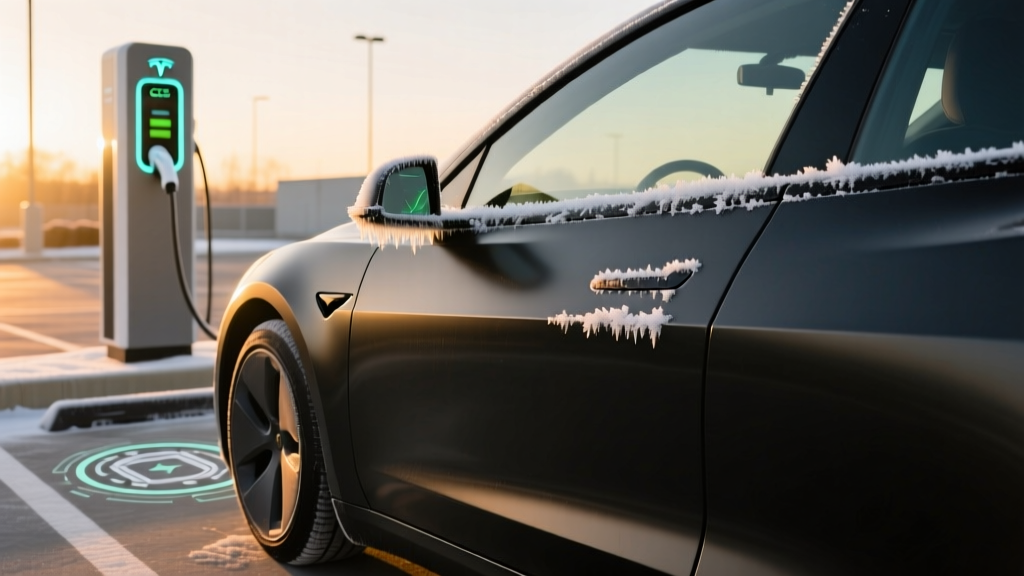
Search "tesla door handle frozen" in any EV forum during January and you'll find hundreds of threads. The flush door handles on the Tesla Model 3 — designed for aerodynamic efficiency — are notorious for freezing into their housings after ice storms, freezing rain, or even a wet evening followed by a temperature drop below 32°F. Unlike traditional pull-out handles, the Model 3's recessed paddle-style handles lack the mechanical leverage to break through ice buildup.
But here's the thing: every major EV with flush handles (the Hyundai Ioniq 6, Lucid Air, and Mercedes EQS included) shares this vulnerability. It's a design trade-off for drag reduction, not a Tesla-specific defect. And the 2026 Tesla Model 3 Highland refresh has improved the situation with a slightly revised handle mechanism and better weather sealing.
This review goes well beyond the frozen-handle headlines. We'll break down the 2026 Model 3's real-world range, charging speeds, battery chemistry, pricing after federal tax credits, and whether it still deserves its spot at the top of the EV sedan segment.
Cold-Weather Fixes: What to Do When Your Tesla Door Handle Is Frozen
Before we get to specs, let's address the keyword that brought you here. If your Tesla door handle is frozen, here are the proven solutions ranked by effectiveness:
- Tesla App Preconditioning: Open the Tesla app, tap Climate → Defrost. This warms the cabin and, crucially, the door areas. Allow 10-15 minutes. This is the cleanest fix.
- De-icer Spray: Keep a can of automotive lock de-icer (isopropyl alcohol-based) in your bag or garage. Spray directly into the handle seam. Works in under 60 seconds.
- Warm Water in a Ziploc Bag: Press a sealed bag of warm (not hot) water against the handle area. The heat transfers through the plastic without risking water intrusion.
- Gentle Tapping: Use the heel of your palm to firmly tap around the handle perimeter. This can fracture thin ice layers enough for the motor to push through.
Prevention: Apply a thin coat of silicone spray or cooking spray to the handle seam and rubber gaskets before a freeze event. Park in a garage when possible. Enable "Keep Climate On" if you have adequate battery reserve (uses roughly 1-2% SoC per hour).
2026 Tesla Model 3: Range, Battery, and Efficiency
The 2026 Model 3 continues with two primary battery configurations across its trim lineup. Tesla does not officially publish usable kWh figures, but teardown data and charging analysis confirm the following:
| Trim | Battery (Usable kWh) | Chemistry | EPA Range | MPGe (Combined) | kWh/100mi |
|---|---|---|---|---|---|
| Model 3 RWD | ~57.5 kWh | LFP (CATL) | 272 mi | 132 MPGe | 25 |
| Model 3 Long Range AWD | ~75 kWh | NMC (Panasonic) | 363 mi | 134 MPGe | 25 |
| Model 3 Performance | ~75 kWh | NMC (Panasonic) | 328 mi | 121 MPGe | 28 |
The RWD trim uses a lithium iron phosphate (LFP) battery — heavier and slightly lower in energy density than NMC, but with longer cycle life, lower degradation, and no cobalt. Tesla recommends charging LFP to 100% regularly, which helps with battery calibration. The Long Range and Performance trims use nickel manganese cobalt (NMC) chemistry from Panasonic, optimized for energy density and sustained power delivery.
📊 Real-World Range Reality Check
EPA Sticker: 363 miles (Long Range AWD)
Real-World Highway (70-75 mph, moderate temps): Expect 290-320 miles. The Model 3's efficiency drops at sustained highway speeds due to aerodynamic drag scaling with the square of velocity.
Cold Weather (below 30°F, mixed driving): Expect 240-280 miles. Battery internal resistance increases in cold, and cabin heating draws 3-5 kW continuously without a heat pump. The 2026 Highland Model 3 includes a standard heat pump, which reduces cold-weather energy penalty by roughly 30% compared to resistive heating.
Combined Daily Driving (city + highway, 50-70°F): 330-350 miles is achievable for careful drivers using regen braking.
Charging Speed: DC Fast, Level 2, and Level 1
Charging speed remains one of the Model 3's strongest advantages, thanks to Tesla's mature Supercharger network and the vehicle's capable onboard charger.
| Charging Level | Power | Speed (Approx.) | Connector |
|---|---|---|---|
| DC Fast Charge (Supercharger V4) | Peak 250 kW | 10-80% in ~25 min (LR); ~22 min (Perf) | NACS (native) |
| Level 2 (Tesla Wall Connector) | 11.5 kW (48A) | ~44 mi/hr added | NACS |
| Level 2 (Public J1772 w/ adapter) | Up to 11.5 kW | ~44 mi/hr (at max amperage) | J1772 → NACS adapter included |
| Level 1 (120V household) | ~1.4 kW (12A) | ~5 mi/hr added | Mobile Connector |
Charging curve reality: The Long Range Model 3 peaks at 250 kW only between roughly 10-30% state of charge (SoC). From 30-50%, it sustains around 150-170 kW. Above 80%, speed tapers sharply to under 50 kW. This is why Tesla recommends charging to 80% at Superchargers for fastest sessions — the last 20% can take as long as the first 60%.
The NACS connector is native, meaning Model 3 owners access Tesla Superchargers without an adapter. For CCS public chargers (Electrify America, EVgo), Tesla sells a CCS adapter (~$250), though Tesla has begun opening Superchargers to other brands, not the reverse.
Performance, Drivetrain, and Cargo
| Spec | RWD | Long Range AWD | Performance |
|---|---|---|---|
| 0-60 mph | 5.8 sec | 4.2 sec | 2.9 sec |
| Horsepower | 271 hp | 346 hp | 510 hp |
| Drivetrain | RWD (single motor) | AWD (dual motor) | AWD (dual motor) |
| Top Speed | 125 mph | 125 mph | 163 mph |
| Cargo (rear trunk + frunk) | 23 cu ft total (rear: 19.8, frunk: 3.1) | ||
| Rear Legroom | 35.3 in | ||
| Front Legroom | 42.7 in | ||
The Performance trim's 2.9-second 0-60 time places it in supercar territory, and the dual-motor AWD system provides confident traction in rain and light snow. The RWD model is perfectly adequate for commuting but lacks the all-weather confidence of AWD — a meaningful consideration if frozen door handles are a concern in your climate.
Cargo space is competitive: 23 cu ft total (including the 3.1 cu ft frunk) easily handles two large suitcases and a week's groceries. The 60/40 split rear seats fold for longer items, though the trunk opening is narrower than a hatchback like the Model Y.
Pricing, Trims, and Federal Tax Credit Eligibility
| Trim | Base MSRP | Federal Tax Credit (§30D) | Effective Price (if eligible) |
|---|---|---|---|
| Model 3 RWD | $38,990 | Up to $7,500 | ~$31,490 |
| Model 3 Long Range AWD | $44,990 | Up to $7,500 | ~$37,490 |
| Model 3 Performance | $52,990 | Up to $7,500 | ~$45,490 |
All three trims fall under the IRS §30D MSRP cap of $55,000 for sedans, making them potentially eligible for the full $7,500 federal tax credit. However, eligibility depends on several factors that change frequently:
- Buyer income caps: Modified AGI must not exceed $150,000 (single), $225,000 (head of household), or $300,000 (joint filers).
- Battery sourcing: A percentage of critical minerals and battery components must be sourced from the US or free-trade-agreement countries. Tesla's shifting supply chain means the credit amount can vary — check fueleconomy.gov for the latest determination.
- Point-of-sale transfer: As of 2024, buyers can transfer the credit to the dealer at purchase, reducing the upfront cost rather than waiting for a tax refund. Tesla supports this through their checkout process.
Always verify current eligibility on IRS.gov before purchasing. Rules have changed multiple times since 2023 and may shift again.
Tech, Driver Assistance, and Warranty
The 2026 Model 3 Highland refresh brought meaningful upgrades over the pre-2024 model:
- 15.4-inch center touchscreen (slightly larger than predecessor) with ventilated front seats, ambient lighting, and a rear 8-inch screen for passengers
- Improved NVH: Acoustic glass and additional sound deadening make the cabin noticeably quieter at highway speeds
- Autopilot (standard): Adaptive cruise control, lane centering, and automatic emergency braking. This is SAE Level 2 driver assistance — you must remain attentive with hands on or near the wheel at all times.
- FSD Supervised ($8,000 option or $99/mo): Adds city street navigation, traffic light/stop sign response, and autosteer on local roads. Still SAE Level 2 — not self-driving. The driver is legally and practically responsible for all vehicle operation.
- Camera-only vision system: Tesla removed ultrasonic sensors in favor of its Tesla Vision neural-net approach. Parking assist works but can occasionally misjudge curb distances compared to ultrasonic-based systems.
- Basic Vehicle: 4 years / 50,000 miles
- Battery & Drive Unit (RWD): 8 years / 100,000 miles (min 70% retention)
- Battery & Drive Unit (LR/Performance): 8 years / 120,000 miles (min 70% retention)
Tesla's warranty guarantees that the battery will retain at least 70% of its original capacity during the warranty period. Real-world data from high-mileage Model 3 owners suggests LFP packs degrade less than 10% over 100,000 miles, while NMC packs typically show 8-12% degradation at the same mileage.
Pros and Cons: The Honest Take
✅ Pros
- Best-in-class Supercharger network (250 kW peak, 50,000+ stalls globally)
- Excellent efficiency (25 kWh/100mi) — among the lowest cost-per-mile EVs
- Over-the-air updates continuously improve the vehicle
- Strong resale value relative to EV segment average
- Performance trim rivals sports cars at a fraction of the price
- Heat pump standard on all trims for cold-weather efficiency
❌ Cons
- Flush door handles freeze in icy conditions (the very reason you're reading this)
- Camera-only parking assist can be imprecise vs ultrasonic sensors
- No Apple CarPlay or Android Auto — Tesla's OS only
- FSD Supervised is expensive ($8K) and still requires full driver attention
- Rear visibility is limited; relies heavily on backup camera
- Build quality improving but still inconsistent panel gaps reported
Who Should Buy the 2026 Tesla Model 3?
Decision Framework
Choose the Model 3 RWD if: You're a daily commuter with home charging, mostly drive in mild climates, and want the lowest-cost entry into a proven EV platform. At ~$31,490 after the tax credit, it's one of the best value propositions in the segment.
Choose the Model 3 Long Range AWD if: You take regular road trips (300+ miles between stops), live in a region with cold winters (AWD + heat pump is a strong combo), or need the maximum range buffer. This is the sweet-spot trim for most buyers.
Choose the Model 3 Performance if: You prioritize acceleration and handling, enjoy spirited driving, and don't mind sacrificing ~35 miles of range for a 2.9-second 0-60 time and track-capable brakes.
Look elsewhere if: You need hatchback cargo space (consider the Model Y), require Apple CarPlay/Android Auto (check the Hyundai Ioniq 6 or BMW i4), or live in a region with minimal Supercharger coverage and unreliable third-party DC charging.
Frequently Asked Questions
Why does my Tesla door handle freeze, and is there a recall?
There is no NHTSA recall for frozen door handles on the Model 3. The flush handle design, while aerodynamically efficient, allows moisture to collect in the handle recess. When temperatures drop below freezing, this moisture turns to ice and prevents the motorized handle from deploying. The 2024+ Highland revision improved weather sealing but did not eliminate the issue entirely. Prevention (silicone spray, garage parking, preconditioning) is the most reliable approach.
What is the real-world range of the 2026 Model 3 Long Range?
EPA rates it at 363 miles. In real-world highway driving at 70-75 mph in moderate temperatures, expect 290-320 miles. In cold weather (below 30°F), expect 240-280 miles. The standard heat pump helps but cannot fully eliminate cold-weather range loss.
How fast does the Model 3 charge at home?
With a Tesla Wall Connector on a 60A circuit, the Model 3 charges at up to 11.5 kW (48A), adding roughly 44 miles of range per hour. A full charge from 10-100% takes approximately 7-8 hours for the Long Range model. Most owners charge overnight and wake up to a full battery daily.
Does the 2026 Model 3 qualify for the $7,500 federal tax credit?
All three trims are under the $55,000 MSRP cap for sedans. However, full credit eligibility depends on your income (under $150K single / $300K joint), battery component and critical mineral sourcing requirements, and current IRS rules. Check IRS.gov and fueleconomy.gov before purchasing. The credit can be transferred at point of sale to reduce your upfront cost.
Is the Model 3 worth buying over the Hyundai Ioniq 6 or BMW i4?
The Model 3 wins on Supercharger network access, efficiency, and software. The Ioniq 6 offers faster 800V charging (~350 kW peak, 10-80% in ~18 min) and traditional door handles that don't freeze. The BMW i4 provides a more conventional luxury interior and Apple CarPlay. If charging infrastructure and total cost of ownership are your top priorities, the Model 3 remains the benchmark. If you prioritize interior luxury or need CCS fast-charging compatibility, the competitors deserve a test drive.
Is Tesla Autopilot or FSD self-driving?
No. Both Autopilot and Full Self-Driving (Supervised) are SAE Level 2 driver-assistance systems. You must remain fully attentive, keep your hands on or near the steering wheel, and be prepared to take over at any moment. Tesla's naming convention has drawn criticism from the NHTSA and safety advocates. True self-driving (Level 4) is currently only available in limited robotaxi services like Waymo in select cities.