When EV shoppers search for Tesla Fremont photos, they're usually looking for one thing: proof of what the vehicle actually looks like rolling off the original Tesla production line in California. The Fremont factory has built every Model 3 destined for North American delivery since 2017, and the current-generation "Highland" refresh (introduced for the 2024 model year and carried into 2026) represents the most substantial update since the car's debut. This review pairs our Fremont-build gallery observations with hard numbers on range, charging, pricing, and ownership to help you decide whether the Model 3 still earns its spot on your shortlist.
What Fremont-Built Model 3 Photos Reveal About Build Quality
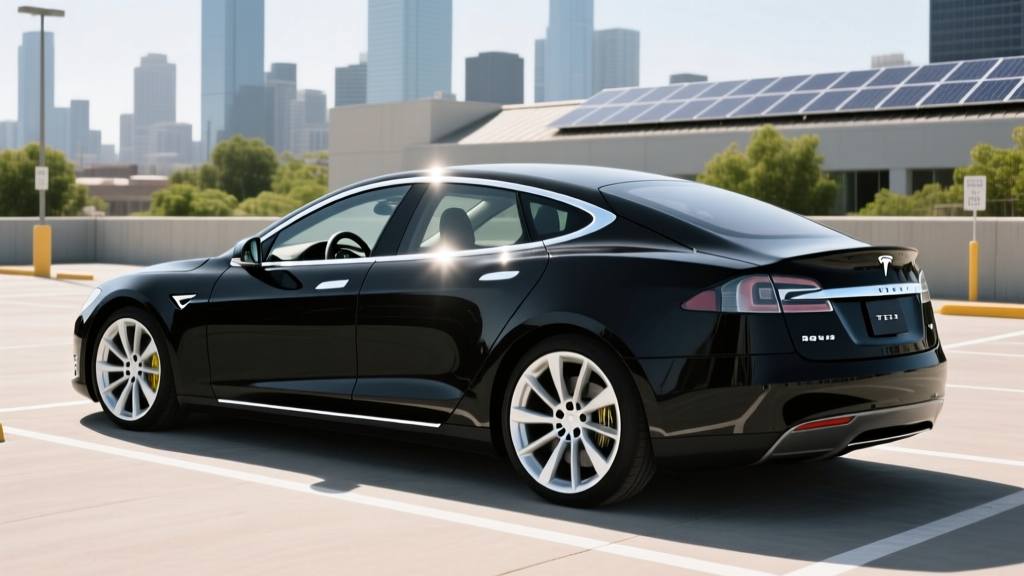
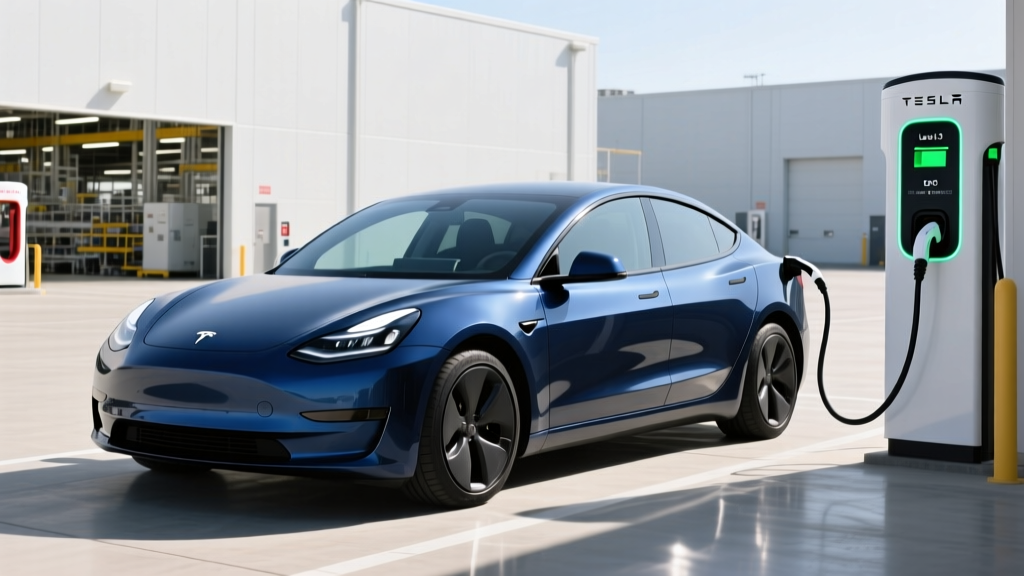
Tesla's Fremont, California facility — a former GM/Toyota joint-venture plant — has been the sole North American source for the Model 3 and Model Y. Walk-around photos from recent Fremont production batches show tighter panel gaps than the 2018-2022 era, consistent paint depth across body panels, and the revised Highland exterior: slimmer LED headlamps, a reshaped front bumper with integrated air curtains, and a rear light bar replacing the previous chrome trim. Wheel options now include 18-inch Photon (aero covers), 19-inch Nova, and the performance-oriented 20-inch Curvature forged set.
Interior shots confirm the cabin overhaul: ventilated front seats, ambient lighting strips along the dashboard and doors, a rear 8-inch touchscreen for climate and media, and the controversial yoke-optional steering setup. The absence of physical turn-signal stalks (replaced by steering-wheel buttons) remains a polarizing design choice that buyers should test-drive before committing.
Range, Efficiency, and Real-World Expectations
Real-World Highway: Expect ~290–310 miles at 70 mph in moderate temperatures.
Cold-Weather (20°F): Range drops 20–30%, yielding ~240–260 miles (Long Range).
City / Stop-and-Go: Regen-heavy driving can match or exceed EPA figures — up to ~370 miles is achievable.
The 2026 Model 3 Long Range AWD carries an EPA-estimated 363 miles of range, placing it near the top of the midsize electric sedan segment. The RWD variant delivers 341 miles. These figures come from an ~82 kWh usable battery pack (NMC chemistry for Long Range; the RWD trim uses an LFP — lithium iron phosphate — pack at ~60 kWh usable, which sacrifices some range but gains longevity and the ability to charge to 100% daily without degradation concerns).
Efficiency ratings land at 132 MPGe combined (Long Range) and 25 kWh/100 miles, among the best in class. Tesla's heat pump, standard across all trims, reduces cold-weather cabin-heating energy draw compared to resistive heaters used in older EVs — but physics still wins: freezing temperatures and sustained highway speeds will shrink your range meaningfully.
| Spec | RWD | Long Range AWD | Performance |
|---|---|---|---|
| EPA Range | 341 mi | 363 mi | 315 mi |
| Battery (usable) | ~60 kWh (LFP) | ~82 kWh (NMC) | ~82 kWh (NMC) |
| 0-60 mph | 5.8 sec | 4.2 sec | 2.9 sec |
| Horsepower | 271 hp | 346 hp | 510 hp |
| Drivetrain | RWD (single motor) | AWD (dual motor) | AWD (dual motor) |
| MPGe (combined) | 132 | 132 | 119 |
| Base MSRP | $38,990 | $44,990 | $52,990 |
Charging Speeds: DC Fast, Level 2, and Level 1
Tesla's Supercharger network remains the gold standard for public DC fast charging reliability, and the Model 3 Highland takes full advantage. On a V4 Supercharger or compatible 250 kW station, the Long Range AWD peaks at 250 kW and charges from 10% to 80% in approximately 25 minutes. The RWD (LFP) model peaks closer to 170 kW due to its smaller pack and different chemistry, reaching 10-80% in roughly 30 minutes.
Understand the charge curve: peak kW is sustained only between roughly 10-50% state of charge. Above 60%, the rate tapers progressively — you'll see ~100 kW at 70% and ~50 kW by 85%. This is normal lithium-ion behavior, not a defect. Plan road-trip stops around the 10-80% window for maximum time efficiency.
| Charging Level | Power / Rate | Miles Added per Hour |
|---|---|---|
| Level 1 (120V household) | ~1.4 kW | ~3–5 mi/hr |
| Level 2 (240V, 48A Wall Connector) | 11.5 kW | ~44 mi/hr |
| DC Fast (250 kW Supercharger) | Peak 250 kW | ~175 mi in 15 min (LR) |
| DC Fast (CCS adapter, 150 kW station) | Peak ~150 kW | ~110 mi in 15 min (LR) |
For home charging, Tesla's Wall Connector at 48 amps on a 60A circuit delivers up to 11.5 kW — enough to replenish a full Long Range battery in roughly 7-8 hours overnight. A standard NEMA 14-50 outlet on a 50A circuit provides ~9.6 kW (~37 mi/hr). Installation costs vary widely: expect $500–$1,500 if your panel has capacity, or $2,000–$4,000+ if a panel upgrade is needed.
Note: All 2026 Model 3 vehicles ship with the native NACS (North American Charging Standard) port. Tesla includes a CCS1 adapter for non-Tesla networks, and the Supercharger network now supports NACS-equipped vehicles from Ford, Rivian, and others — reducing Tesla's exclusivity advantage but increasing station availability overall.
Performance and Driving Dynamics
The Model 3 Performance trim hits 0-60 mph in 2.9 seconds with 510 horsepower from its dual-motor setup — supercar territory at a sedan price. The Long Range AWD manages 4.2 seconds (346 hp), which is quick enough for confident highway merging and passing. The RWD's 5.8-second sprint (271 hp) is adequate for daily driving but noticeably less urgent.
The Highland refresh brought a revised suspension with frequency-selective dampers, new bushings, and improved sound insulation. The result is a noticeably quieter, more compliant ride than pre-2024 Model 3s — addressing one of the most persistent owner complaints. Steering remains precise and quick-geared, though some drivers find it overly assisted in Comfort mode. Track Mode on the Performance trim allows adjustable torque distribution and regen settings for spirited driving.
Pricing, Trims, and Federal Tax Credit Eligibility
| Trim | Base MSRP | Federal Credit (§30D) | Effective Price* |
|---|---|---|---|
| RWD | $38,990 | Up to $7,500 | ~$31,490 |
| Long Range AWD | $44,990 | Up to $7,500 | ~$37,490 |
| Performance | $52,990 | Up to $7,500 | ~$45,490 |
*Effective price assumes full §30D credit eligibility. Destination fee ($1,390) not included. Final credit depends on battery sourcing, buyer income, and MSRP caps. Verify with a tax professional.
The IRS §30D clean vehicle credit offers up to $7,500 for qualifying new EVs, split into two halves: $3,750 for meeting critical-minerals sourcing requirements and $3,750 for battery-component sourcing. As of 2026, Tesla's Fremont-built Model 3 with the North American-sourced NMC pack qualifies for the full $7,500 on Long Range and Performance trims. The RWD's LFP battery — typically sourced from CATL in China — may qualify for a reduced credit ($3,750) or none, depending on current-year sourcing determinations.
Eligibility requirements include:
- Buyer income caps: Modified AGI ≤ $150,000 (single) / $300,000 (joint)
- MSRP cap: Vehicle MSRP must not exceed $55,000 (sedans) — the Performance trim at $52,990 qualifies, but adding high-cost options could push it over
- Point-of-sale transfer: You can transfer the credit to the dealer at purchase, reducing your out-of-pocket cost immediately
Always confirm current eligibility at fueleconomy.gov before purchasing, as battery-sourcing rules tighten annually.
Interior Space, Cargo, and Daily Practicality
The Model 3 is a midsize sedan, and its dimensions reflect that positioning:
- Cargo volume: 23 cu ft (trunk + frunk combined) — the frunk adds ~3.1 cu ft for charging cables or a small bag
- Front legroom: 42.7 inches
- Rear legroom: 35.2 inches — adequate for average adults, tight for tall passengers on long trips
- Rear headroom: 37.8 inches — the glass roof creates an airy feel but reduces actual clearance vs. a conventional steel roof
The rear 8-inch screen (added in the Highland refresh) gives passengers control over climate and media — a welcome upgrade for family use. However, the absence of rear USB-C ports beyond a single pair, and no rear-seat heating controls on the RWD trim, are notable gaps at this price point.
Technology, Driver Assistance, and Autopilot
Every Model 3 ships with Tesla's 15.4-inch center touchscreen running the proprietary Tesla OS — no Apple CarPlay or Android Auto, but native Spotify, Netflix, YouTube (while parked), and a built-in trip planner with live Supercharger routing. The navigation system is excellent, automatically preconditioning the battery when a Supercharger is selected as your destination — a critical feature for achieving advertised DC fast-charge speeds in cold weather.
Autopilot (standard) includes adaptive cruise control, lane centering, and automatic emergency braking. FSD (Supervised), a $8,000 add-on or $99/month subscription, adds automatic lane changes, traffic-light and stop-sign recognition, and city-street navigation — but driver supervision is mandatory, and performance varies significantly by geography and road-marking quality. For most buyers, standard Autopilot is sufficient for highway commuting.
Warranty and Long-Term Ownership
Tesla's warranty structure is straightforward:
- Basic vehicle: 4 years / 50,000 miles
- Battery & drive unit (RWD/LFP): 8 years / 100,000 miles
- Battery & drive unit (Long Range/Performance/NMC): 8 years / 120,000 miles
- Capacity retention threshold: Tesla warrants the battery will retain at least 70% of original capacity during the warranty period
LFP batteries (RWD trim) typically show slower degradation than NMC — data from fleet analyses suggest ~5-8% loss over 100,000 miles vs. ~8-12% for NMC. Both chemistries are well within the 70% warranty floor under normal use. Out-of-warranty battery replacement costs range from $12,000 to $16,000 depending on pack size — a figure worth considering for buyers planning 10+ year ownership.
Pros
- Class-leading efficiency (132 MPGe combined)
- Supercharger network reliability — still the best public charging experience
- Highland refresh fixed ride quality and cabin noise complaints
- Strong resale value relative to non-Tesla EVs
- Over-the-air updates continuously add features
- Federal tax credit up to $7,500 on qualifying trims
Cons
- No Apple CarPlay or Android Auto
- Steering-wheel turn-signal buttons require adaptation
- Rear seat space is tight for tall adults on long trips
- FSD (Supervised) remains Level 2 — not autonomous despite the name
- RWD LFP trim may not qualify for full $7,500 federal credit
- Service center wait times can stretch weeks in high-demand metros
Who Should Buy the 2026 Tesla Model 3?
Choose the Model 3 RWD if: You're a commuter with home charging, drive under 40 miles daily, and want the lowest entry price with an LFP battery you can charge to 100% without guilt.
Choose the Long Range AWD if: You take regular road trips, live in a cold climate, need the security of 300+ real-world miles, and want dual-motor traction for snow or rain.
Choose the Performance if: You want sports-car acceleration, track capability, and don't mind a slightly firmer ride and 50-mile range penalty vs. Long Range.
Look elsewhere if: You need a large rear seat for teen/adult passengers, require Apple CarPlay, or want a traditional dealer service experience.
Frequently Asked Questions
What is the real-world range of the 2026 Tesla Model 3?
The Long Range AWD achieves an EPA-estimated 363 miles, but expect ~290-310 miles at sustained highway speeds in moderate weather, and ~240-260 miles in freezing conditions. The RWD's 341-mile EPA rating translates to roughly 270-290 real-world highway miles.
How fast does the Model 3 charge at home and on the road?
On a 250 kW Supercharger, the Long Range charges 10-80% in about 25 minutes. At home on a 48A Level 2 Wall Connector, you'll add ~44 miles per hour — a full overnight charge is easily achievable. Level 1 (120V) trickle charging adds only 3-5 miles per hour.
How much does the Model 3 cost after the federal tax credit?
With the full $7,500 §30D credit, the Long Range AWD drops from $44,990 to roughly $37,490 before destination and options. Eligibility depends on your income (≤$150K single / ≤$300K joint), the vehicle's MSRP (≤$55K for sedans), and battery-sourcing compliance. Confirm current eligibility at fueleconomy.gov.
Is the Model 3 worth buying vs. competitors like the Hyundai Ioniq 6 or BMW i4?
The Model 3 wins on Supercharger network access, efficiency, and software integration. The Hyundai Ioniq 6 offers more rear-seat room, a longer wheelbase, and 800V charging architecture (10-80% in ~18 min at 350 kW stations). The BMW i4 provides a more premium interior and Apple CarPlay but at a higher price and lower range. Test-drive all three before deciding.
Does the Tesla Model 3 qualify for the full $7,500 federal EV tax credit?
The Long Range and Performance trims (NMC, North American battery sourcing) qualify for the full $7,500 as of 2026, provided you meet income and MSRP requirements. The RWD trim with its LFP battery may qualify for only $3,750 or no credit, depending on current-year critical-minerals sourcing rules. Always verify at the point of sale.
What are the biggest drawbacks of the Model 3?
The most common owner complaints center on the lack of smartphone mirroring (CarPlay/Android Auto), the learning curve of steering-wheel-mounted turn signals, rear-seat space limitations, and service-center wait times in major metro areas. The Highland refresh addressed earlier build-quality and noise concerns.