Buying a Tesla Model 3 is one thing. Living with it for twelve months is another. The "Highland" refresh that debuted for the 2024 model year (and carries into 2025 and 2026) brought a quieter cabin, refined suspension, ambient lighting, and a rear touchscreen for passengers — but the core question for new owners remains the same: how does this sedan actually perform day in and day out?
If you're researching a Tesla Model 3 first year of ownership, this profile covers what matters most: real-world range versus the EPA sticker, charging behavior at home and on the road, the true cost after federal tax credits, and the ownership friction points no spec sheet reveals. All figures below reflect the current-generation Model 3 lineup as sold through 2025–2026.
Quick Verdict: Who the Model 3 Is For
The Model 3 remains the default compact electric sedan for buyers who want a proven charging network, strong efficiency, and over-the-air updates — without paying luxury-badge premiums. It fits best as a daily commuter and road-trip vehicle for one or two adults. Families needing rear-seat space or cargo volume for strollers should cross-shop the Model Y or Hyundai Ioniq 5.
Look elsewhere if: You regularly carry rear-seat passengers over 6 feet tall, need hatchback cargo versatility, or want Apple CarPlay/Android Auto integration.
Range, Battery & Real-World Efficiency
| Spec | Model 3 RWD | Model 3 Long Range AWD | Model 3 Performance |
|---|---|---|---|
| EPA Range | 341 mi | 363 mi | 315 mi |
| Battery (usable) | ~57.5 kWh (LFP) | ~75 kWh (NMC) | ~75 kWh (NMC) |
| Chemistry | Lithium Iron Phosphate | Nickel Manganese Cobalt | Nickel Manganese Cobalt |
| MPGe (combined) | 132 MPGe | 134 MPGe | 121 MPGe |
| Efficiency | 25 kWh/100 mi | 25 kWh/100 mi | 28 kWh/100 mi |
| 0–60 mph | 5.8 sec | 4.2 sec | 2.9 sec |
| Horsepower | 271 hp | 346 hp | 510 hp |
| Drivetrain | RWD (single motor) | AWD (dual motor) | AWD (dual motor) |
- Highway (70–75 mph, summer): ~280–310 mi (RWD), ~310–340 mi (Long Range)
- City / suburban mixed: Near or slightly above EPA due to regenerative braking
- Cold weather (below 32°F): Plan for 20–30% range loss; a Long Range that stickers at 363 mi may deliver 250–275 mi on a cold highway run
The EPA's fueleconomy.gov listing confirms the 132–134 MPGe combined figures for the mainstream trims. The Model 3's efficiency is among the best in its class — rivaling the Hyundai Ioniq 6 and surpassing the BMW i4 and Polestar 2 on kWh per mile.
Charging Speed: DC Fast, Level 2 & Home Setup
| Charging Method | Max Rate | Speed / Time | Connector |
|---|---|---|---|
| DC Fast Charge (V3/V4 Supercharger) | 170 kW (RWD) / 250 kW (LR & Perf) | 10–80% in ~25 min (RWD) / ~18 min (LR/Perf) | NACS (native) |
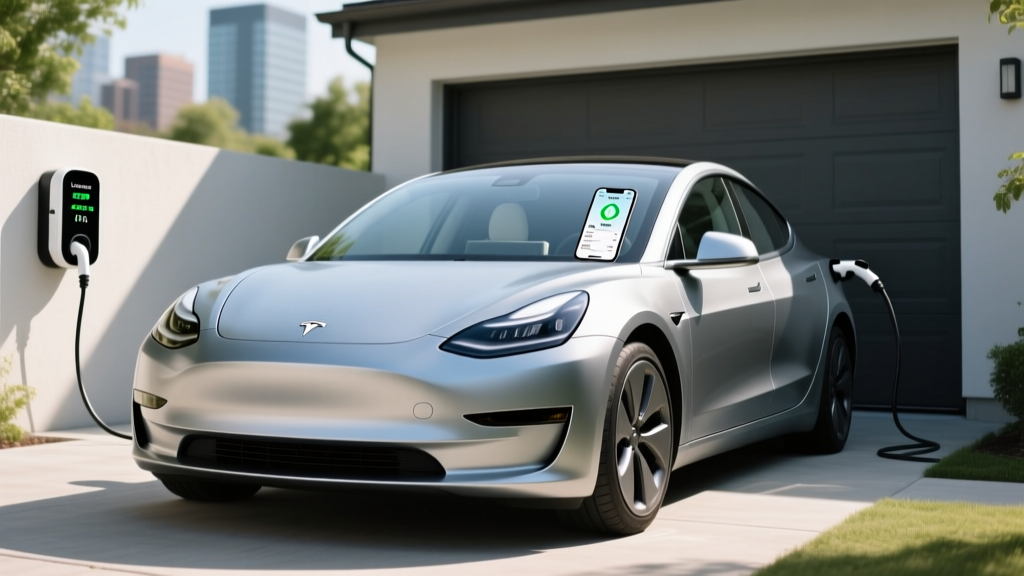
| Level 2 Home (Wall Connector, 48A) | 11.5 kW | ~44 mi/hr added; full charge in 6–8 hours | NACS |
| Level 2 Public (J1772 stations) | Up to 11.5 kW w/ adapter | Varies by station output | J1772 → NACS adapter (included) |
| Level 1 (120V household) | ~1.4 kW | ~3–4 mi/hr; emergency/trickle only | Standard outlet w/ Mobile Connector |
A critical ownership note: the Model 3 uses Tesla's NACS (North American Charging Standard) connector natively. This means direct plug-and-charge access to the entire Supercharger network — the most reliable DC fast-charging ecosystem in North America, with over 25,000 stalls as of 2026. For non-Tesla Level 2 public chargers (ChargePoint, EVgo, etc.), Tesla includes a J1772 adapter in the glovebox.
Charging-curve reality: The 250 kW peak on Long Range and Performance trims is a ceiling, not a sustained rate. In practice, you'll see 250 kW only between roughly 10–25% State of Charge (SoC). From 50–80%, the rate tapers to 80–120 kW. This is why the 10–80% time of ~18 minutes is the meaningful metric, not the peak number. The LFP-equipped RWD model peaks lower (170 kW) and has a flatter charge curve, so its 10–80% time is slightly longer but more consistent.
Preconditioning matters: Navigate to a Supercharger using the built-in nav, and the car will warm or cool the battery en route to optimize charge speed. Skip this step (e.g., by driving to a charger without nav routing) and your first 5–10 minutes of charging may be significantly slower, especially in cold weather.
Pricing, Trims & Federal Tax Credit (2025–2026)
| Trim | Base MSRP | Est. As-Tested* | §30D Credit Eligibility | Effective Price After Credit |
|---|---|---|---|---|
| Model 3 RWD | $38,990 | $39,990–$41,490 | Eligible (up to $7,500) | ~$31,490–$33,990 |
| Model 3 Long Range AWD | $45,740 | $47,240–$49,740 | Eligible (up to $7,500) | ~$38,240–$42,240 |
| Model 3 Performance | $52,990 | $54,490–$57,990 | Eligible (up to $7,500) | ~$45,490–$50,490 |
*As-tested prices include common options (paint colors $1,500–$2,500, FSD capability, wheels) plus destination fee. Excludes state/local incentives.
Federal tax credit rules (IRS §30D) — current for 2025–2026: The Model 3 qualifies for up to $7,500 in federal tax credits, which can now be transferred to the dealer as a point-of-sale discount at purchase, reducing your out-of-pocket cost immediately. However, eligibility depends on several factors:
- MSRP cap: Sedans must be under $55,000 MSRP. The RWD and Long Range qualify. The Performance trim's base MSRP of $52,990 qualifies, but loaded with options pushing it over $55K, it may lose eligibility — check the VIN-specific sticker.
- Buyer income cap: Modified Adjusted Gross Income (MAGI) must not exceed $150,000 (single), $225,000 (head of household), or $300,000 (joint filing).
- Battery sourcing: The credit splits into two halves ($3,750 each) — one for critical minerals sourcing and one for battery component manufacturing. Tesla's North American battery supply chain has largely satisfied both requirements for Model 3 trims through 2025–2026, but sourcing rules tighten annually. Always verify current-year eligibility at IRS.gov or via the dealer's point-of-sale verification system.
- VIN verification: The dealer must confirm the specific vehicle's battery sourcing at the time of sale. A model that qualified in January may have different eligibility by December if supply chains shift.
State and local incentives (California's CVRP, Colorado's state credit, utility rebates) can stack on top of the federal credit but vary widely by jurisdiction. Check your state energy office and local utility for current programs.
Interior, Cargo & Daily Livability
The Highland-refreshed Model 3 interior is a meaningful step up from the 2017–2023 versions. Acoustic glass, improved seat cushioning, ventilated front seats, and ambient lighting close the gap with European competitors. The 15.4-inch front touchscreen handles all vehicle controls — there are no physical buttons, turn signal stalks, or gear selector (all are touch- or steering-wheel-based, which remains polarizing).
Dimensions that matter:
- Cargo volume: 23 cu ft (trunk + frunk combined) — adequate for weekly groceries and two carry-ons, but less than a hatchback like the Ioniq 5 (56 cu ft seats-down)
- Rear legroom: 35.3 inches — sufficient for adults under 6 feet on shorter trips; taller passengers will find it snug compared to a midsize sedan
- Front headroom: 40.3 inches — generous thanks to the glass roof, though the roof itself reduces usable overhead space
- Frunk (front trunk): ~3.1 cu ft — useful for charging cables and small bags
Standout tech: Tesla's infotainment remains the segment benchmark for responsiveness and over-the-air feature additions. The 8-inch rear touchscreen for passengers (climate, media, gaming) was a welcome Highland addition. Navigation-integrated Supercharger routing and preconditioning is genuinely useful. The Tesla app's remote climate, location tracking, and service scheduling are best-in-class.
Notable drawbacks: No Apple CarPlay or Android Auto — you're fully in Tesla's ecosystem. Turn signals are now capacitive buttons on the steering wheel (a love-it-or-hate-it change from the traditional stalk). The glass roof offers no shade, requiring an aftermarket sunshade in hot climates. Rear visibility is limited; rely on the backup camera.
Driver Assistance: Autopilot & FSD (Supervised)
All Tesla driver-assistance features — including Basic Autopilot, Enhanced Autopilot, and Full Self-Driving (Supervised) — are SAE Level 2 systems. This means the driver must remain fully attentive, keep hands on the wheel, and be prepared to take over at any moment. These are NOT self-driving systems. Only Level 4 robotaxi services (Waymo, Zoox) operate without a human driver in defined areas.
The Model 3 comes standard with Basic Autopilot (lane centering + adaptive cruise control). Enhanced Autopilot ($6,000) adds auto lane change, autosteer on highways, and smart summon. Full Self-Driving (Supervised) at $8,000 (or $99/month subscription) adds traffic light/stop sign recognition and city-street autosteer — though its real-world performance remains inconsistent in complex urban environments, construction zones, and adverse weather.
For most buyers, Basic Autopilot is sufficient for highway commuting. The FSD subscription model ($99/month) lets you try the feature without a large upfront commitment — a sensible approach given its ongoing development status.
- Drive the car autonomously — you are the responsible operator at all times
- Reliably handle construction zones, unmapped roads, or heavy weather
- Replace attentive driving — NHTSA has investigated multiple incidents involving driver inattention with Level 2 systems
Warranty, Reliability & Long-Term Battery Outlook
| Coverage | Term |
|---|---|
| Basic Vehicle Limited Warranty | 4 years / 50,000 miles |
| Battery & Drive Unit (RWD) | 8 years / 100,000 miles |
| Battery & Drive Unit (LR & Performance) | 8 years / 120,000 miles |
| Battery Capacity Guarantee | Minimum 70% retention over warranty period |
Tesla's battery warranty guarantees at least 70% capacity retention over the stated term. In practice, real-world degradation data from fleet operators and owner surveys suggests the average Model 3 loses roughly 5–8% capacity over the first 100,000 miles, with the curve flattening significantly after the initial break-in period. LFP batteries (RWD) tend to show slightly more linear degradation but tolerate 100% daily charging without accelerated wear — a practical advantage for commuters who need maximum daily range.
First-year ownership tip: Tesla's service model differs from traditional dealerships. There are no scheduled maintenance visits. Issues are triaged through the app, often resolved via over-the-air software patches, and physical service is handled at Tesla Service Centers or by mobile rangers. Response times vary by region — urban owners typically report faster service than rural ones.
Pros & Cons After a First Year
- Best-in-class Supercharger network access with native NACS — no adapter friction
- Outstanding efficiency (25 kWh/100 mi) keeps charging costs low
- Over-the-air updates add features post-purchase (new UI, games, efficiency tweaks)
- LFP battery in RWD allows guilt-free 100% daily charging
- Highland refresh fixed most cabin noise and ride-quality complaints
- Strong resale value relative to non-Tesla EVs
- Point-of-sale tax credit transfer reduces upfront cost immediately
- No Apple CarPlay / Android Auto — full Tesla ecosystem lock-in
- Steering-wheel turn signal buttons are unintuitive for many drivers
- Rear seat space is tight for tall adults on long trips
- Glass roof provides no shade; heat soak in summer is real
- Insurance premiums run 15–30% higher than comparable gas sedans
- Service center availability varies; rural owners may face long wait times
- FSD remains a Level 2 beta despite the "Full Self-Driving" name
Tesla Model 3 First Year: Frequently Asked Questions
What is the real-world range of the Tesla Model 3?
The EPA rates the Long Range AWD at 363 miles, the RWD at 341 miles, and the Performance at 315 miles. In real-world highway driving at 70–75 mph during summer, expect roughly 85–90% of the EPA figure. In cold weather (below freezing), plan for 70–80% of EPA range, particularly on highway-heavy routes. City driving with regenerative braking often matches or slightly exceeds EPA estimates.
How fast does the Model 3 charge at home and on DC fast chargers?
On a Tesla Wall Connector (Level 2, 48 amps / 11.5 kW), the Model 3 adds about 44 miles of range per hour — a full overnight charge from 20% to 100% takes 6–8 hours depending on trim. On a V3/V4 Supercharger (DC fast charge), the Long Range and Performance peak at 250 kW and achieve 10–80% in approximately 18 minutes. The RWD peaks at 170 kW with a 10–80% time of about 25 minutes. Both taper significantly above 80% SoC.
How much does the Model 3 actually cost after the federal tax credit?
The RWD starts at $38,990 MSRP and can drop to approximately $31,490 after the maximum $7,500 federal tax credit (via point-of-sale transfer). The Long Range AWD starts at $45,740, falling to roughly $38,240 after credit. Eligibility requires meeting IRS §30D income caps ($150K single / $300K joint), MSRP caps ($55K for sedans), and battery sourcing requirements. Always verify eligibility at the point of sale — rules and sourcing compliance can shift during the model year.
Is the Model 3 worth buying versus the Hyundai Ioniq 6, BMW i4, or Polestar 2?
The Model 3 wins on charging infrastructure (Supercharger network), efficiency, and software integration. The Hyundai Ioniq 6 offers slightly more rear-seat room and a traditional sedan shape with 800V ultra-fast charging on Electrify America. The BMW i4 provides a more premium interior and Apple CarPlay but costs significantly more and relies on CCS charging. The Polestar 2 is a strong design alternative but trails on range and charging speed. If Supercharger access matters to you — and for road-trippers, it should — the Model 3 remains the pragmatic choice.
Does the Tesla Model 3 qualify for the full $7,500 federal EV tax credit?
As of the 2025–2026 tax year, the Model 3 RWD and Long Range AWD generally qualify for the full $7,500 credit, subject to buyer income limits, the $55,000 MSRP cap for sedans, and battery critical-mineral and component sourcing requirements. The Performance trim qualifies at base MSRP but may exceed the cap when optioned. Credit can be applied as a point-of-sale price reduction. Verify VIN-specific eligibility through the dealer at purchase and consult IRS.gov for current rules.
What's the biggest surprise in a Tesla Model 3 first year?
Most new owners report two surprises: first, how rarely they visit a "gas station equivalent" — home Level 2 charging covers 95% of needs, and the cost per mile drops to roughly $0.04–$0.06 depending on local electricity rates (versus $0.12–$0.16/mile for a 30 MPG gas sedan). Second, how much over-the-air updates change the car — new features, UI improvements, and even efficiency tweaks arrive without a service visit. The tradeoff is insurance cost: expect premiums 15–30% above a comparable Camry or Accord, driven by Tesla's higher repair costs and parts pricing.
Sources: EPA range and efficiency data via fueleconomy.gov; Tesla official specifications via tesla.com/model3; IRS §30D clean vehicle credit rules via irs.gov. Prices and credit eligibility reflect 2025–2026 model year data and are subject to change. Always confirm with your dealer and tax professional before purchasing.