2026 Tesla Model 3 at a Glance: Financing, Range, and Value
The Tesla Model 3 remains the benchmark compact electric sedan entering the 2026 model year. With the Highland refresh now fully mature, Tesla has stabilized pricing and expanded its financing partnerships, making the Model 3 one of the most accessible premium EVs on the market. But monthly payments hinge on more than sticker price — the Tesla Model 3 financing rate you qualify for, combined with federal tax credit eligibility, determines your true cost of ownership far more than MSRP alone.
This guide breaks down every number that matters: EPA range versus real-world expectations, DC fast-charging curves, battery chemistry trade-offs, and the financing math behind each 2026 trim. Whether you're comparing the RWD base model to the Long Range AWD or evaluating the Performance variant, the data below will help you decide if the Model 3 earns a spot in your driveway.
| Spec | RWD (Base) | Long Range AWD | Performance |
|---|---|---|---|
| EPA Range | 272 mi | 341 mi | 315 mi |
| Battery (usable) | ~60 kWh (LFP) | ~75 kWh (NMC) | ~75 kWh (NMC) |
| Peak DC Fast Charge | 170 kW | 250 kW | 250 kW |
| 10–80% DC Time | ~25 min | ~22 min | ~22 min |
| Level 2 Home Charge | 11.5 kW (~44 mi/hr) | 11.5 kW (~44 mi/hr) | 11.5 kW (~44 mi/hr) |
| 0–60 mph | 5.8 sec | 4.2 sec | 2.9 sec |
| Horsepower | 271 hp | 346 hp | 510 hp |
| Drivetrain | RWD | Dual-Motor AWD | Dual-Motor AWD |
| MPGe (combined) | 132 MPGe | 131 MPGe | 119 MPGe |
| Base MSRP | $38,990 | $47,740 | $52,990 |
| Federal Tax Credit | Up to $7,500 | Up to $7,500 | Up to $7,500 |
Tesla Model 3 Financing Rate: What to Expect in 2026
Tesla offers financing through its in-house Tesla Finance division as well as partner banks and credit unions. As of early 2026, typical Tesla Model 3 financing rates range from approximately 4.99% to 8.49% APR for borrowers with excellent credit (720+ FICO), depending on loan term and down payment. Rates climb for tier-2 and tier-3 credit profiles, sometimes reaching 10–13% APR through captive lending.
Here's how financing variables affect a Long Range AWD purchase at $47,740 MSRP with a $7,500 federal credit applied at point of sale:
| Scenario | Loan Amount | APR | Term | Monthly Payment |
|---|---|---|---|---|
| Excellent credit, 60 mo | $40,240 | 4.99% | 60 months | ~$756 |
| Good credit, 72 mo | $40,240 | 6.49% | 72 months | ~$668 |
| Average credit, 72 mo | $40,240 | 8.99% | 72 months | ~$718 |
| $10K down, excellent, 60 mo | $30,240 | 4.99% | 60 months | ~$568 |
Estimates assume $7,500 §30D credit applied at point of sale. Actual rates depend on creditworthiness, lender, and state. Source: Tesla Financing.
Lease vs. Buy Considerations
Tesla's leasing program typically offers lower monthly payments but restricts mileage (usually 10,000–15,000 mi/yr) and eliminates equity buildup. For buyers who plan to hold the vehicle 5+ years and drive 12,000+ miles annually, purchasing with a competitive APR and applying the federal credit at point of sale generally yields a lower total cost. Third-party credit unions like PenFed and local lenders sometimes undercut Tesla Finance by 0.25–0.75%, so always get pre-approved before ordering.
Real-World Range vs. EPA Estimates
EPA Estimated Range: 272 mi (RWD) / 341 mi (Long Range) / 315 mi (Performance)
Real-World Expectation: In mixed driving at 65–75 mph with climate control active, expect approximately 240–255 mi from the RWD, 295–315 mi from the Long Range, and 270–290 mi from the Performance trim. Cold-weather driving (below 32°F) can reduce range by 15–30% depending on cabin heating demands and whether you precondition the battery.
The Model 3 Long Range's 341-mile EPA rating is among the highest in its class, but highway efficiency tells a more practical story. At a steady 75 mph on flat terrain, the Long Range typically delivers around 265–285 Wh/mi, translating to roughly 260–290 miles before the buffer engages. The RWD's smaller LFP pack means real-world highway range often settles around 220–240 miles — adequate for most commutes but something to plan around on road trips exceeding 200 miles between chargers.
Cold weather is the Model 3's most significant range variable. Tesla's heat pump (standard on all 2026 trims) mitigates cabin-heating energy draw compared to resistive heaters, but battery chemistry itself becomes less efficient in freezing temperatures. In sustained 20°F conditions, Long Range owners typically report 250–270 miles of usable range. Preconditioning while plugged in at home recovers much of this loss.
Charging Speed: DC Fast Charge and Home Level 2
| Charging Level | Power | RWD Speed | Long Range / Performance | Miles Added per Hour |
|---|---|---|---|---|
| Level 1 (120V) | ~1.4 kW | ~3–4 mi/hr | ~3–4 mi/hr | 3–5 |
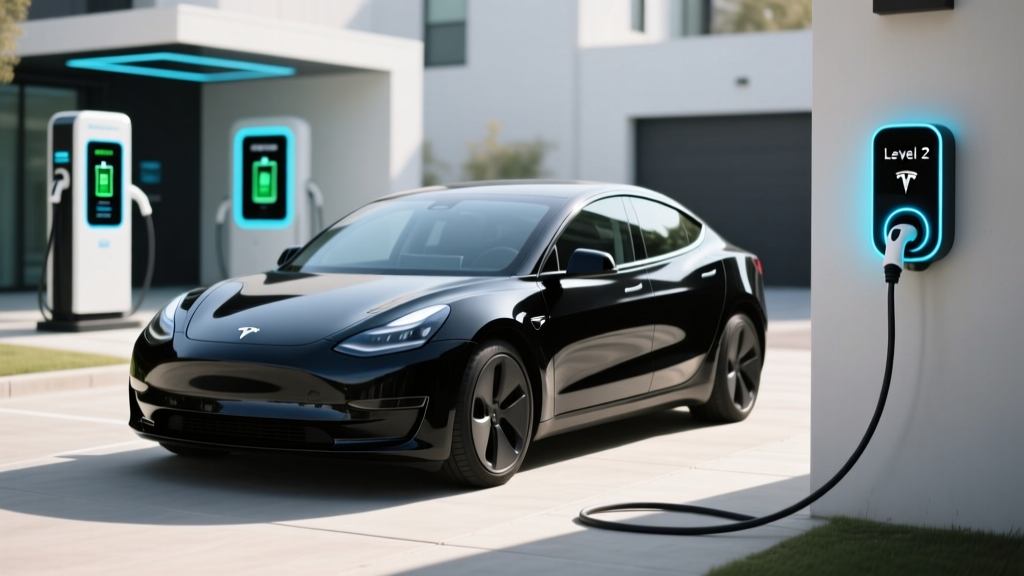
| Level 2 (240V, 48A) | 11.5 kW | ~44 mi/hr | ~44 mi/hr | 40–44 |
| DC Fast (Peak) | 170 kW / 250 kW | ~155 mi in 25 min | ~200 mi in 22 min | N/A (burst) |
Understanding the Charge Curve
Tesla's advertised "250 kW" peak rate applies only to the Long Range and Performance trims with NMC batteries, and only at a low state of charge (typically 10–20% SoC). The charge curve tapers significantly above 60%, dropping to roughly 80–100 kW by 80% SoC and further to 30–40 kW near 100%. This is why Tesla and most EV analysts quote 10–80% times rather than full-charge times — the final 20% can add 20+ minutes.
The RWD's LFP battery peaks at a lower 170 kW but tolerates frequent 100% charging without degradation concerns, which is a practical advantage for daily use. Tesla recommends LFP owners charge to 100% at least once weekly for battery calibration. NMC owners should target 80–90% daily and reserve 100% for road trips.
On Tesla's Supercharger network (V3 stalls delivering up to 250 kW and V4 stalls in select locations), a Long Range Model 3 can add approximately 175 miles of range in a 15-minute stop when arriving at a low state of charge. Third-party networks like Electrify America and EVgo also support the Model 3 via its NACS connector, though real-world speeds on non-Tesla chargers may vary depending on station power output and battery preconditioning.
Federal Tax Credit Eligibility: §30D Rules for 2026
All three 2026 Model 3 trims remain eligible for up to $7,500 in federal tax credits under IRS §30D, provided the buyer and vehicle meet all requirements. The credit can be transferred to the dealer at point of sale, reducing the purchase price directly rather than requiring you to wait for a tax refund.
- MSRP Cap: Sedans must have an MSRP at or below $55,000. The RWD ($38,990) and Long Range ($47,740) qualify; the Performance ($52,990) qualifies but leaves little room for options before hitting the cap.
- Buyer Income Limits: Modified adjusted gross income (MAGI) must not exceed $150,000 (single), $225,000 (head of household), or $300,000 (married filing jointly).
- Battery Sourcing: Critical minerals and battery components must meet escalating domestic-content thresholds set by the IRS. Tesla has maintained compliance for US-built Model 3 vehicles, but always verify current eligibility at fueleconomy.gov before purchasing.
- Point-of-Sale Transfer: Buyers may elect to transfer the credit to the dealer, reducing the financed amount and monthly payment directly.
- One Credit per Vehicle, per Year: The credit applies once per eligible vehicle; used EVs have a separate §25E credit with different rules.
Source: IRS.gov — Credits for New Clean Vehicles. Rules are subject to legislative change; verify eligibility with a tax professional.
Battery Chemistry, Degradation, and Warranty
The 2026 Model 3 uses two distinct battery chemistries depending on trim, and the difference has real ownership implications:
| Attribute | LFP (RWD) | NMC (Long Range / Performance) |
|---|---|---|
| Usable Capacity | ~60 kWh | ~75 kWh |
| Energy Density | Lower (heavier per kWh) | Higher (lighter per kWh) |
| Cycle Life | 3,000+ cycles | 1,500–2,000 cycles |
| Daily Charge Recommendation | 100% (weekly minimum) | 80–90% daily |
| Cold-Weather Performance | More range loss in freezing temps | Better cold-weather resilience |
| Typical 100K-Mile Degradation | ~5–8% | ~7–12% |
Tesla's battery warranty covers 8 years or 100,000 miles (whichever comes first) for the RWD, and 8 years or 120,000 miles for the Long Range and Performance trims. The warranty guarantees at least 70% capacity retention during the coverage period. In practice, Tesla's battery management system and thermal controls have yielded strong longevity data — most Model 3 packs retain 90%+ capacity at 100,000 miles based on fleet telemetry aggregated by EV tracking communities.
Full battery replacement outside warranty currently costs approximately $12,000–$16,000 depending on pack size and labor, though module-level repairs may reduce costs in some cases. For most owners, the battery will outlast the vehicle's useful economic life.
Interior, Technology, and Daily Livability
The 2026 Model 3 interior reflects Tesla's minimalist approach: a single 15.4-inch center touchscreen handles all infotainment, climate, and vehicle controls. There is no instrument cluster — speed and navigation display on the left third of the center screen. A rear 8-inch screen provides climate and entertainment controls for back-seat passengers.
Space and Cargo
Front legroom measures 42.3 inches; rear legroom is 35.0 inches — adequate for adults on shorter trips but tighter than a Hyundai Ioniq 6 or BMW i4 on longer drives. Cargo volume behind the rear seats is 23.0 cubic feet, expanding to approximately 64.9 cu ft with the 60/40 split rear seats folded. The front trunk (frunk) adds 3.1 cu ft of secure storage, useful for charging cables or a small bag.
Driver Assistance: Autopilot and FSD (Supervised)
Every 2026 Model 3 comes standard with Tesla's Basic Autopilot, which includes adaptive cruise control and lane-centering on marked highways. Full Self-Driving (Supervised) remains an optional add-on at approximately $8,000 or $99/month. Despite the name, FSD is an SAE Level 2 system — the driver must remain fully attentive with hands on or near the wheel at all times. FSD adds features like automatic lane changes, traffic-light recognition, and navigation-guided on-ramp-to-off-ramp steering, but it does not replace an engaged driver.
FSD (Supervised) is not autonomous driving. It is an SAE Level 2 driver-assistance system. The driver is legally and practically responsible for all vehicle operation at all times. Do not use FSD as a substitute for attention — treat it as an advanced cruise-control aid that still requires your eyes on the road and hands ready to intervene.
Pros, Cons, and the Verdict
Pros
- Class-leading Supercharger network access with reliable plug-and-charge experience
- Strong efficiency (132 MPGe RWD) keeps per-mile electricity costs low
- LFP battery on RWD offers exceptional cycle life and 100% daily charging
- Over-the-air updates continuously add features post-purchase
- Competitive financing rates through Tesla Finance and third-party lenders
- Excellent safety ratings from NHTSA (5-star overall) and IIHS (Top Safety Pick+)
Cons
- Minimalist interior lacks physical buttons; all climate controls are touchscreen-only
- Rear seat space is tighter than some competitors in the segment
- No Apple CarPlay or Android Auto — Tesla's proprietary infotainment only
- Ride quality on 19-inch wheels can be firm over rough pavement
- FSD (Supervised) costs extra and remains a Level 2 system, not true autonomy
- Insurance premiums tend to run 15–25% higher than comparable gas sedans
Who the Model 3 Suits Best
The RWD trim is ideal for commuters with home charging access and daily drives under 80 miles — the LFP battery's longevity and low cost make it a compelling daily driver. The Long Range AWD suits road-trippers and cold-climate drivers who need 300+ miles of buffer and dual-motor traction. The Performance variant targets enthusiasts who want sports-car acceleration in a practical sedan, though its higher MSRP pushes closer to the §30D tax-credit cap.
Model 3 vs. Key Competitors: Is It Worth It?
| Attribute | Tesla Model 3 LR | Hyundai Ioniq 6 SEL | BMW i4 eDrive40 | Polestar 2 LR |
|---|---|---|---|---|
| EPA Range | 341 mi | 361 mi | 307 mi | 320 mi |
| Peak DC Charge | 250 kW | 235 kW | 205 kW | 205 kW |
| 0–60 mph | 4.2 sec | 5.1 sec | 5.5 sec | 4.3 sec |
| Base MSRP | $47,740 | $42,600 | $52,200 | $49,900 |
| Charging Network | Supercharger (NACS) | NACS (via adapter) | NACS (via adapter) | NACS (via adapter) |
| Tax Credit | Up to $7,500 | Up to $7,500 | Up to $7,500 | Up to $7,500 |
The Model 3 Long Range holds its ground against the Ioniq 6 on range while offering faster DC charging and a more mature charging-network experience. The BMW i4 delivers a more premium interior and traditional driving dynamics but at a higher price point and with slower charging. The Polestar 2 is a strong alternative for buyers who prefer Scandinavian design and Google-based infotainment, though it trails on range and efficiency.
Frequently Asked Questions
What is the real-world range of the 2026 Tesla Model 3?
In mixed driving conditions at highway speeds with climate control active, the Long Range AWD delivers approximately 295–315 miles. The RWD typically achieves 220–240 miles on the highway. Cold weather (below 32°F) can reduce these figures by 15–30%. Preconditioning the battery while plugged in at home recovers much of the cold-weather loss.
How fast does the Model 3 charge at home and on DC fast chargers?
On a Level 2 home charger (240V, 48 amps, 11.5 kW), the Model 3 adds approximately 44 miles of range per hour — a full overnight session easily replenishes a day's driving. On a Tesla V3 Supercharger, the Long Range and Performance peak at 250 kW and charge from 10–80% in roughly 22 minutes. The RWD peaks at 170 kW with a 10–80% time of approximately 25 minutes.
How much does the 2026 Model 3 cost after the federal tax credit?
With the full $7,500 §30D credit applied at point of sale, the effective prices are approximately $31,490 for the RWD, $40,240 for the Long Range AWD, and $45,490 for the Performance. Eligibility depends on buyer income limits, MSRP caps, and battery-sourcing compliance — verify current status at fueleconomy.gov and consult a tax professional.
Does the 2026 Tesla Model 3 qualify for the federal EV tax credit?
Yes, all three 2026 Model 3 trims currently qualify for up to $7,500 under IRS §30D, provided the buyer's modified AGI falls within limits ($150K single / $300K married filing jointly) and the vehicle's MSRP stays at or below the $55,000 sedan cap. Tesla's US-built Model 3 has maintained battery-sourcing compliance, but rules can change — always confirm before purchasing.
What Tesla Model 3 financing rate can I expect?
As of early 2026, Tesla Finance typically offers rates from approximately 4.99% to 8.49% APR for well-qualified buyers, depending on term length and credit tier. Third-party lenders and credit unions may offer slightly lower rates. Getting pre-approved before ordering gives you leverage and a baseline to compare against Tesla's in-house financing offer.
Is the Model 3 worth buying versus competitors in 2026?
The Model 3 remains the strongest all-around package in its price range when you factor in Supercharger network reliability, efficiency, software updates, and financing accessibility. The Hyundai Ioniq 6 offers slightly more range and a more conventional interior. The BMW i4 is more premium but costlier. If charging convenience and total cost of ownership are your top priorities, the Model 3 is difficult to beat.