Quick Verdict: The Benchmark Sedan, Priced Right If You Do the Math
The 2026 Tesla Model 3 remains the default electric sedan for buyers who want a proven platform, access to the Supercharger network, and strong efficiency. But before you configure one, you need to run the real numbers — not just the sticker price. A Tesla financing calculator is the single most useful tool for understanding what a Model 3 actually costs per month once you factor in the §30D federal tax credit, state incentives, estimated insurance premiums, and your local electricity rate. This review breaks down every spec you need to plug into that calculator, plus the real-world ownership data that spec sheets leave out.
Range Reality Check
EPA Estimated Range: 341 miles (Long Range AWD) | 272 miles (RWD)
Real-World Expectation: On a 70-mph highway run in moderate temperatures, expect roughly 280–300 miles from the Long Range and 225–245 miles from the RWD. In sub-freezing winter conditions, plan for a 20–30% reduction — bringing the Long Range down to approximately 230–260 miles. These figures assume no preconditioning; using Tesla's navigation-routed battery preconditioning recovers some efficiency on DC fast-charge stops.
Spec Table: 2026 Tesla Model 3 at a Glance
| Attribute | RWD (Base) | Long Range AWD | Performance |
|---|---|---|---|
| EPA Range | 272 mi | 341 mi | 315 mi |
| Battery (usable) | ~57.5 kWh (LFP) | ~75 kWh (NMC) | ~75 kWh (NMC) |
| Drivetrain | Rear-Wheel Drive | Dual-Motor AWD | Dual-Motor AWD |
| Horsepower | 271 hp | 346 hp | 510 hp |
| 0–60 mph | 5.8 sec | 4.2 sec | 2.9 sec |
| Peak DC Fast Charge | 170 kW | 250 kW | 250 kW |
| 10–80% DCFC Time | ~25 min | ~22 min | ~22 min |
| Level 2 Home Charge | 11.5 kW (~44 mi/hr) | 11.5 kW (~44 mi/hr) | 11.5 kW (~44 mi/hr) |
| EPA Efficiency | 142 MPGe / 24 kWh/100mi | 132 MPGe / 26 kWh/100mi | 119 MPGe / 28 kWh/100mi |
| Base MSRP | $38,990 | $45,990 | $53,990 |
| Battery Warranty | 8 yr / 100,000 mi | 8 yr / 120,000 mi | 8 yr / 120,000 mi |
Source: EPA / fueleconomy.gov and Tesla.com Model 3 specs. Prices reflect 2026 model-year MSRP before destination.
Charging: How Fast Does the Model 3 Actually Charge?
Charging speed is where kW (power — the rate of energy transfer) and kWh (energy — the battery capacity) diverge, and the difference matters for your road-trip planning.
| Charging Level | Power / Rate | Miles Added Per Hour | Typical Use Case |
|---|---|---|---|
| Level 1 (120V) | ~1.4 kW | ~5 mi/hr | Emergency / overnight trickle |
| Level 2 (240V, 48A) | 11.5 kW | ~44 mi/hr | Home daily charging (Wall Connector) |
| DC Fast Charge (RWD) | 170 kW peak | ~170 mi in 15 min | Road-trip Supercharger stops |
| DC Fast Charge (LR / Perf) | 250 kW peak | ~200 mi in 15 min |
The 250 kW peak on the Long Range and Performance trims is not sustained across the entire session. The Model 3's charge curve tapers significantly above 60% State of Charge (SoC), and drops sharply past 80%. A realistic 10–80% session at a V3 Supercharger takes approximately 22 minutes for the Long Range. The RWD trim, with its LFP battery, can be charged to 100% regularly without degradation concerns — Tesla recommends this — but its lower peak rate means full charges take longer.
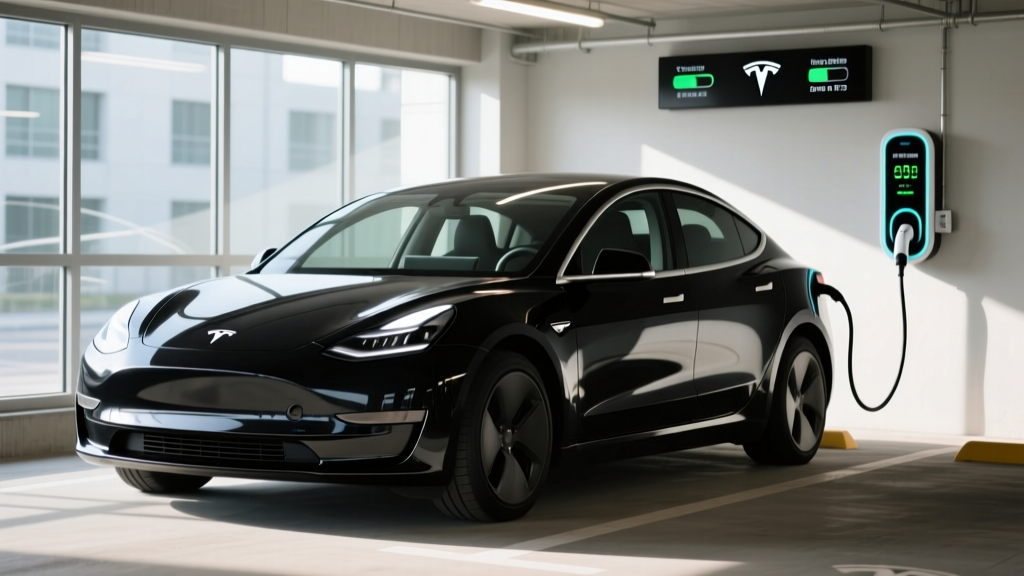
Home charging note: The Tesla Wall Connector delivers up to 11.5 kW on a 60A circuit (48A continuous). A full charge from 10% on the Long Range takes roughly 7 hours — easily completed overnight. Installation typically costs $500–$2,000 depending on panel proximity and whether your home needs a 200A service upgrade.
Pricing, Tax Credits, and Running the Tesla Financing Calculator
The headline MSRP is only the starting point. Here's where a Tesla financing calculator earns its keep — by incorporating the §30D federal tax credit, which can be applied as a point-of-sale price reduction as of 2024 and beyond.
| Trim | MSRP | Est. §30D Credit | Effective Price (Before State Incentives) |
|---|---|---|---|
| RWD | $38,990 | Up to $7,500 | ~$31,490 |
| Long Range AWD | $45,990 | Up to $7,500 | ~$38,490 |
| Performance | $53,990 | Up to $7,500 | ~$46,490 |
Critical eligibility caveats — the §30D credit is not automatic. Per IRS guidelines, you must meet all of the following:
- Income caps: Modified AGI ≤ $150,000 (single) / $225,000 (head of household) / $300,000 (joint)
- MSRP cap: Vehicle MSRP must not exceed $55,000 for sedans (all Model 3 trims currently qualify)
- Battery sourcing: Critical minerals and battery components must meet phased percentage thresholds from US/free-trade-agreement partners — these tighten annually. Confirm current-year compliance on the IRS clean vehicle credit page or with your tax professional
- Point-of-sale transfer: You may elect to transfer the credit to the dealer (Tesla) at purchase, reducing the purchase price directly, or claim it on your tax return
When using a Tesla financing calculator, input the effective post-credit price, not the MSRP. A $7,500 reduction on a 72-month loan at 6.5% APR saves roughly $115/month. Factor in insurance (Model 3 averages $1,800–$2,400/year depending on state and driving record), and electricity costs (national average ~$0.17/kWh makes a full Long Range charge approximately $12.75 — versus ~$45 to fill a comparable gas sedan at $3.50/gallon).
Battery Chemistry: LFP vs NMC in the Model 3 Lineup
Tesla uses two distinct battery chemistries across the Model 3 range, and the choice affects longevity, charging habits, and cold-weather behavior.
| Factor | LFP (RWD) | NMC (Long Range / Performance) |
|---|---|---|
| Energy Density | Lower (heavier pack for same kWh) | Higher (more range per kg) |
| Cycle Life | 3,000+ cycles (excellent longevity) | 1,500–2,000 cycles (still strong) |
| Daily Charge Recommendation | 100% OK — charge fully regularly | 80% daily; 100% for trips only |
| Cold-Weather Performance | Greater range loss in freezing temps | Better low-temp resilience with heat pump |
| Cobalt / Nickel Content | None (lower supply-chain risk) | Contains nickel and cobalt |
The LFP pack in the RWD Model 3 is a longevity play. Its lower energy density explains the shorter EPA range despite a physically comparable pack size, but its cycle-life advantage means less degradation over 150,000+ miles. The NMC packs in the Long Range and Performance trims prioritize range and output, and Tesla's battery management system (BMS) is among the best in the industry at minimizing degradation — expect roughly 5–8% capacity loss over the first 100,000 miles based on fleet data.
Performance, Interior, and Technology
The Model 3's driving dynamics remain a strength. The RWD trim's 5.8-second 0–60 mph time is quicker than most gas sedans in its price class, while the Performance trim's 2.9-second sprint enters supercar territory. All trims feature a low center of gravity from the floor-mounted battery pack, giving the Model 3 composed cornering that belies its curb weight.
Inside, the refreshed "Highland" interior (introduced for 2024, continuing into 2026) is notably quieter than earlier Model 3s, with acoustic glass, ventilated front seats, ambient lighting, and a rear touchscreen for passengers. Cargo space measures 23 cu ft (combined trunk and frunk), which trails the Hyundai Ioniq 6 but is adequate for two-adult daily use and weekend trips. Rear legroom is 35.3 inches — tight for taller passengers on longer drives.
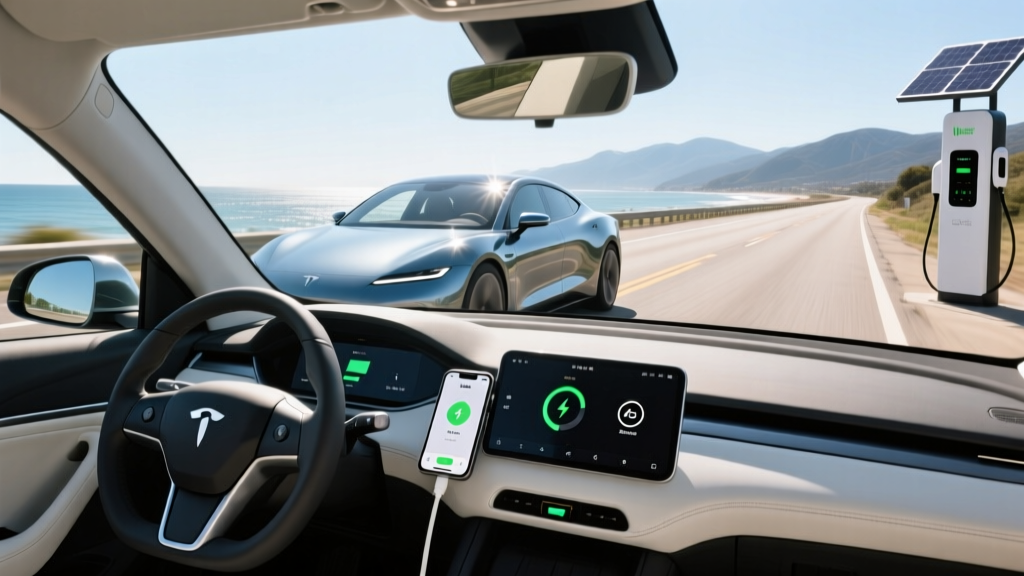
The 15.4-inch center touchscreen runs Tesla's proprietary infotainment system, which lacks Apple CarPlay and Android Auto — a persistent drawback for buyers who prefer phone-mirroring. Navigation, media, climate, and vehicle controls all route through the screen, including the digital instrument cluster viewed on the left third of the display.
Driver assistance: The Model 3 comes standard with Tesla's Basic Autopilot (adaptive cruise, lane centering, emergency braking). Full Self-Driving (Supervised) is an optional upgrade that adds automated lane changes, traffic-light recognition, and city-street navigation. However, FSD Supervised remains an SAE Level 2 system — the driver must remain attentive with hands on the wheel at all times. It is not autonomous driving.
SAE Automation Level: Level 2
Tesla Autopilot and FSD (Supervised) are Level 2 driver-assistance systems. The vehicle can control steering and acceleration simultaneously, but the human driver is fully responsible for monitoring the environment and intervening immediately. This is fundamentally different from Level 4 robotaxi services like Waymo, which operate without a driver in defined geographic areas.
Who the 2026 Model 3 Suits Best
Choose the Model 3 RWD if:
- You primarily commute under 60 miles round-trip and can charge at home
- You want the lowest entry price and plan to keep the car 8+ years (LFP longevity)
- You don't regularly carry rear-seat passengers or take long road trips in winter
Choose the Model 3 Long Range AWD if:
- You take regular road trips and need 300+ mile real-world range
- You live in a region with cold winters and need AWD plus better cold-weather battery performance
- You want the best balance of range, performance, and value in the lineup
Choose the Model 3 Performance if:
- Acceleration and track capability are priorities (2.9-sec 0–60, adaptive damping)
- You accept the range and price trade-off for maximum output
Look elsewhere if:
- You need SUV cargo space or easy child-seat access (consider Model Y or Hyundai Ioniq 5)
- You require Apple CarPlay / Android Auto
- You frequently tow (Model 3 is not rated for towing)
Pros and Cons
Pros
- Class-leading efficiency (up to 142 MPGe on RWD)
- Access to Tesla Supercharger network — the most reliable DC fast-charging network in North America
- Strong §30D tax credit eligibility across all trims (MSRP under $55K cap)
- Over-the-air updates continuously add features post-purchase
- LFP battery on RWD offers exceptional cycle life and daily 100% charging
- Highland interior is significantly quieter and more refined than pre-2024 Model 3
Cons
- No Apple CarPlay or Android Auto
- Rear legroom (35.3 in) is tight for adults on long trips
- Insurance premiums run 15–30% higher than comparable gas sedans
- All controls routed through touchscreen — no physical buttons for climate or volume
- RWD LFP battery loses more range in extreme cold vs NMC trims
- FSD (Supervised) remains Level 2 despite the "self-driving" branding
Competitor Check: Model 3 vs the Alternatives
The Model 3's closest competitors in 2026 include the Hyundai Ioniq 6 (361 mi EPA, ~$42,000), the BMW i4 eDrive40 (307 mi, ~$57,000), and the Polestar 2 (320 mi, ~$49,000). The Ioniq 6 edges the Model 3 on EPA range and offers CarPlay, but lacks Supercharger access (though its 800V architecture charges faster at compatible stations). The BMW i4 offers a more traditional luxury interior but costs significantly more and doesn't qualify for the full §30D credit due to MSRP and sourcing constraints. The Model 3's combination of price, efficiency, Supercharger access, and tax-credit eligibility remains difficult to match in total cost of ownership.
Frequently Asked Questions
What is the real-world range of the 2026 Tesla Model 3?
The EPA rates the Long Range AWD at 341 miles and the RWD at 272 miles. In real-world highway driving at 70 mph in moderate weather, expect approximately 280–300 miles (Long Range) and 225–245 miles (RWD). In freezing temperatures, subtract 20–30%. Preconditioning the battery via Tesla's navigation system helps recover some efficiency.
How fast does the Model 3 charge at home and on road trips?
At home on a Level 2 Tesla Wall Connector (11.5 kW / 48A), the Model 3 adds roughly 44 miles of range per hour — a full overnight charge. On a V3 Supercharger, the Long Range and Performance peak at 250 kW and achieve a 10–80% charge in about 22 minutes. The RWD peaks at 170 kW with a 10–80% time of roughly 25 minutes. Expect significant taper above 80% SoC.
How much does the Model 3 cost after the federal tax credit?
With the maximum $7,500 §30D credit applied at point of sale, the RWD drops to approximately $31,490, the Long Range to ~$38,490, and the Performance to ~$46,490. Eligibility depends on buyer income (≤$150K single / $300K joint), MSRP caps (all trims qualify at under $55K), and battery-sourcing requirements that change annually. Confirm current rules at IRS.gov or with a tax professional.
Does the Tesla Model 3 qualify for the §30D federal EV tax credit?
As of 2026, all Model 3 trims qualify for up to $7,500 under §30D, provided the buyer meets income thresholds and the vehicle's battery components and critical minerals meet the phased domestic-sourcing requirements. The credit can be transferred to Tesla at purchase to reduce the sale price directly. Always verify current-year eligibility on the IRS clean vehicle credit page before purchasing.
Is the Model 3 worth buying vs the Hyundai Ioniq 6 or BMW i4?
If total cost of ownership is your priority, the Model 3 (especially the RWD with tax credit) is extremely competitive. The Ioniq 6 offers more range and CarPlay but lacks native Supercharger access. The BMW i4 is a more refined luxury experience but costs $15,000+ more and may not qualify for the full credit. The Model 3's Supercharger network access and OTA updates give it a practical edge for road-trip-heavy buyers.
How do I use the Tesla financing calculator effectively?
Start with the post-credit effective price (MSRP minus $7,500 if eligible). Input your down payment, loan term (Tesla offers 36–72 months through partner lenders), and estimated APR (check current rates, typically 5.5–7.5% depending on credit). Add estimated annual insurance ($1,800–$2,400) and electricity costs (roughly $500–$700/year for 12,000 miles at the national average). Compare the total monthly cost against a gas vehicle's payment plus fuel ($150+/month at current prices) to see the real savings gap.
What is the Model 3's battery warranty?
Tesla covers the RWD battery and drive unit for 8 years or 100,000 miles (whichever comes first), with a minimum 70% capacity retention guarantee. The Long Range and Performance trims receive 8 years or 120,000 miles, also with a 70% retention floor. Out-of-warranty battery replacement costs approximately $7,000–$12,000 depending on pack size, though widespread replacements remain uncommon at current fleet ages.
Safety ratings: The 2026 Model 3 carries a 5-star overall rating from NHTSA and earns an IIHS Top Safety Pick+ designation. Always verify current-year ratings as testing protocols update.