Quick Verdict: Is the Tesla Model 3 Still the Default EV Sedan?
The 2026 Tesla Model 3 Long Range AWD remains the benchmark compact electric sedan — not because it leads every category, but because it balances range, charging speed, software polish, and Supercharger network access better than anything in its price band. For buyers researching the Tesla finance rate alongside vehicle specs, the math often favors Tesla's captive financing over third-party auto loans in 2026, though the answer depends on your credit tier and down payment.
This review covers the refreshed Model 3 lineup (RWD, Long Range AWD, and Performance AWD), with exact EPA figures, real-world range expectations, charging curves, and a breakdown of how financing through Tesla compares to alternatives.
Range, Battery, and Real-World Efficiency
- Long Range AWD: EPA 341 miles — expect ~290–310 miles on a highway-heavy road trip at 70–75 mph, and ~240–260 miles in sub-30°F winter conditions.
- RWD: EPA 272 miles — expect ~230–250 miles highway, ~190 miles cold-weather.
- Performance AWD: EPA 315 miles — expect ~270–285 miles highway.
These figures assume tire pressure is correct and climate preconditioning is used. Highway driving at 80+ mph or sustained mountain grades will compress range further.
| Spec | RWD | Long Range AWD | Performance AWD |
|---|---|---|---|
| EPA Range | 272 mi | 341 mi | 315 mi |
| Battery (usable, est.) | ~57.5 kWh (LFP) | ~77 kWh (NMC) | ~77 kWh (NMC) |
| Efficiency | 25 kWh/100 mi (134 MPGe) | 24 kWh/100 mi (140 MPGe) | 26 kWh/100 mi (130 MPGe) |
| 0–60 mph | 5.8 sec | 4.2 sec | 2.9 sec |
| Horsepower | 271 hp | 384 hp | 510 hp |
| Drivetrain | RWD | Dual-motor AWD | Dual-motor AWD |
| Top Speed | 125 mph | 125 mph | 163 mph |
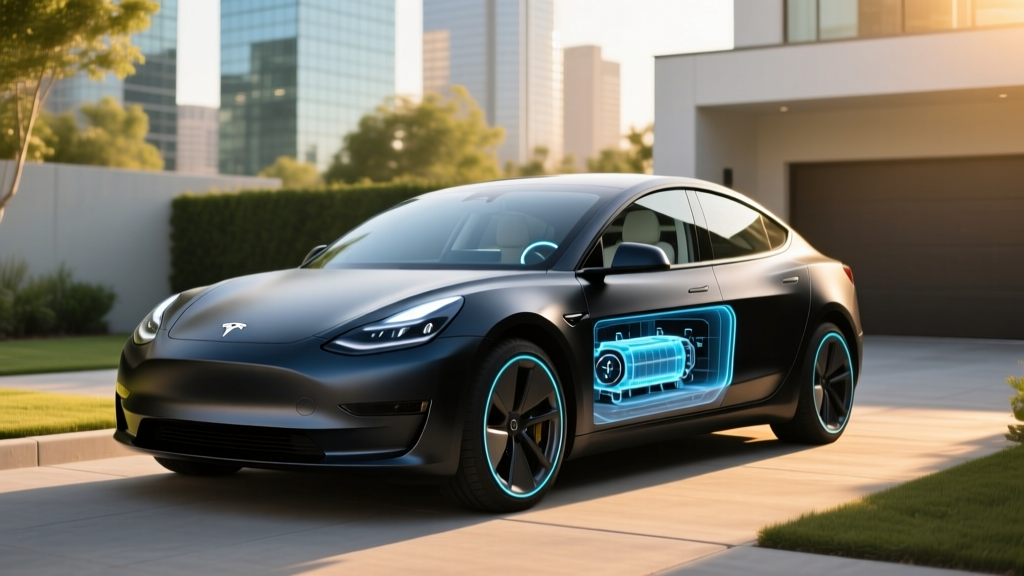
The RWD model uses a lithium iron phosphate (LFP) battery, which Tesla recommends charging to 100% at least weekly — ideal for commuters with home charging. Long Range and Performance trims use NMC (nickel-manganese-cobalt) chemistry, where daily charging to 80% is recommended to preserve long-term state of health (SoH).
Charging Speed: DC Fast, Level 2, and Level 1
Charging speed is where the Model 3 continues to outperform most rivals. The Long Range and Performance trims peak at 250 kW on a V3 Supercharger (or compatible CCS/NACS DC fast charger), while the RWD LFP battery peaks around 170 kW. Peak rates are not sustained — the charge curve tapers significantly above 60% SoC, so 10–80% times are the practical metric.
| Charging Level | RWD (LFP) | Long Range / Performance (NMC) |
|---|---|---|
| DC Fast (peak kW) | 170 kW | 250 kW |
| 10–80% DC time | ~28 min | ~25 min |
| Level 2 (240V, 48A) | ~30 mi/hr | ~44 mi/hr |
| Level 2 full charge (0–100%) | ~9 hr | ~8.5 hr |
| Level 1 (120V, 12A) | ~3 mi/hr | ~3 mi/hr |
Preconditioning matters. If you navigate to a Supercharger in the Tesla nav, the car preheats the battery pack en route, which can shave 5–8 minutes off a cold-weather fast-charge session. Skipping preconditioning in winter can halve your peak charge rate.
Per fueleconomy.gov, the Long Range AWD's combined 140 MPGe translates to roughly $0.045–$0.065 per mile on average U.S. residential electricity ($0.16/kWh), versus $0.13–$0.16/mi for a 30-MPG gas sedan at $3.60/gallon.
Pricing, Trims, and the Tesla Finance Rate in 2026
The 2026 Model 3 lineup starts at $38,990 (RWD), with Long Range AWD at $44,990 and Performance AWD at $52,990. Destination fees add ~$1,390. These MSRPs matter because they sit under the IRS §30D federal tax credit MSRP cap of $55,000 for sedans.
| Trim | Base MSRP | Est. After $7,500 Credit* | Tesla Finance Rate (APR est.) | Est. Monthly (72 mo, 10% down) |
|---|---|---|---|---|
| RWD | $38,990 | $31,490 | 5.49%–7.99% | $470–$510 |
| Long Range AWD | $44,990 | $37,490 | 5.49%–7.99% | $560–$610 |
| Performance AWD | $52,990 | $45,490 | 5.49%–7.99% | $680–$740 |
*$7,500 credit assumes buyer meets IRS §30D income caps ($150K single / $300K joint), battery critical-mineral and sourcing requirements, and elects point-of-sale transfer. Verify current eligibility at irs.gov — rules can change.
How the Tesla Finance Rate Compares
Tesla's captive financing (via partner banks like Wells Fargo and U.S. Bank) typically posts APRs in the 5.49%–7.99% range for 60–72 month terms in 2026, depending on credit tier (700+ FICO scores receive the promotional floor). Here's how that stacks up:
- Credit unions (e.g., Navy Federal, PenFed): 5.24%–7.49% for well-qualified buyers — often slightly lower, but requires pre-approval and may lack Tesla's seamless point-of-sale integration.
- Major bank auto loans (Chase, Capital One): 5.99%–8.49% — comparable, sometimes higher for 72-month EV terms.
- Tesla lease (where available): Money factor equivalent to ~4.5%–6.5% APR, but you forfeit the §30D credit (Tesla captures it) and have no equity at term end.
Buyer tip: Get pre-approved from a credit union before configuring your Tesla order. If the Tesla finance rate offered at checkout beats your pre-approval, take it. If not, use your pre-approval — Tesla accepts third-party financing.
Tax Credit Eligibility Checklist (IRS §30D)
- MSRP cap: Sedan must be ≤ $55,000 — all Model 3 trims qualify.
- Income cap: Modified AGI ≤ $150,000 (single) / $225,000 (HoH) / $300,000 (joint).
- Battery sourcing: Critical minerals and battery components must meet escalating domestic/free-trade-partner thresholds — Tesla's supply chain has largely complied through 2026, but verify at purchase.
- Point-of-sale transfer: You can apply the $7,500 as a down-payment reduction at delivery, rather than waiting for a tax refund.
- Final assembly: Must be in North America — all U.S.-market Model 3s are built at Giga Texas.
Interior, Cargo, and Daily Usability
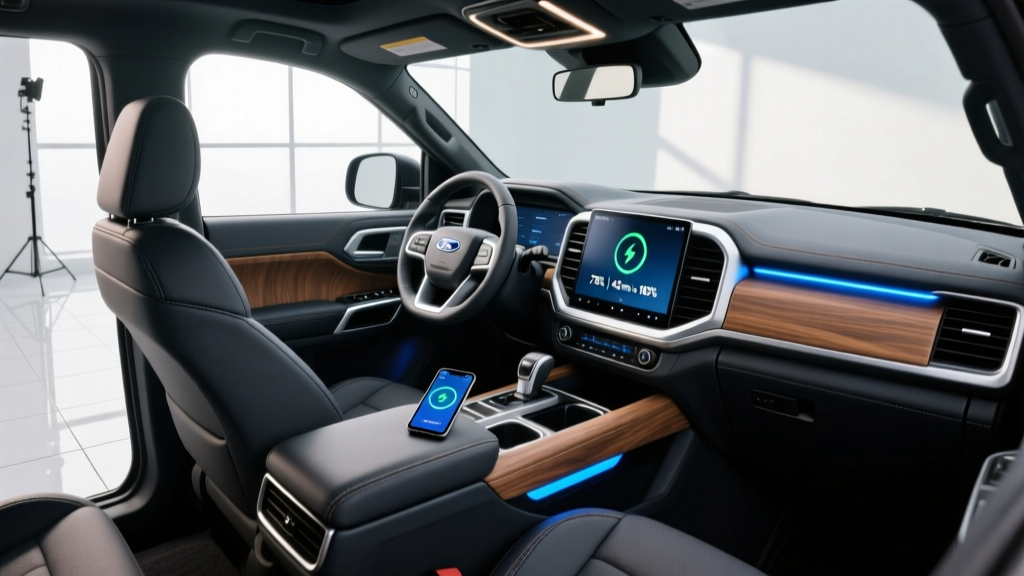
The refreshed Model 3 interior is markedly quieter than pre-2024 versions, with acoustic glass, ventilated front seats, and ambient lighting. The minimalist cabin remains polarizing — no physical stalks (turn signals are on the steering wheel), no instrument cluster, and all climate/media controls live on the 15.4-inch center touchscreen.
- Cargo (rear trunk + frunk): 23 cu ft combined (21 cu ft trunk + 2 cu ft frunk) — adequate for a week's groceries or two carry-ons, but less than a Hyundai Ioniq 6 or BMW i4.
- Rear legroom: 35.3 inches — comfortable for adults under 6'0", but tight for three-across seating.
- Front headroom: 40.3 inches — generous, even with the glass roof.
- Towing: Not rated for towing in the U.S. — if you need to tow, look at the Model Y or a truck-platform EV.
Standout Tech
- 15.4" center touchscreen with Netflix/YouTube/theater mode while parked.
- Over-the-air updates that regularly add features (recent: improved adaptive cruise smoothing, UI refinements).
- Dashcam and Sentry Mode using the car's camera suite — no aftermarket hardware needed.
- Heat pump standard — improves cold-weather range by ~10–15% vs. resistive heating.
- V2L not available — unlike Hyundai/Kia/Genesis EVs, the Model 3 cannot power external devices.
Notable Drawbacks
- Turn-signal buttons on the steering wheel are unintuitive for roundabouts and lane changes.
- No Apple CarPlay or Android Auto — you're locked into Tesla's native infotainment.
- Rear visibility is compromised by the sloped roofline and small rear window.
- Panel-gap inconsistency remains a lottery depending on build week.
Driver Assistance: Autopilot and FSD (Supervised)
Both Autopilot (standard) and Full Self-Driving Supervised ($8,000 option or $99/mo subscription) are SAE Level 2 driver-assist systems. You must keep your hands on the wheel and eyes on the road at all times. These are not autonomous driving systems. Only Level 4 robotaxi services (Waymo, Zoox) operate without driver supervision in geofenced areas.
- It does not navigate unmapped construction zones reliably.
- It does not handle heavy rain, fog, or snow with full confidence — the vision-only system lacks radar/lidar redundancy.
- It does not eliminate your liability — you are the responsible driver at all times.
- It does not make the car "self-driving" in any legal or practical sense.
Autopilot (standard) handles highway lane-keeping and adaptive cruise competently. FSD Supervised adds city-street navigation, traffic-light recognition, and automatic turns — impressive in low-complexity suburbs, but still requires frequent interventions in dense urban environments. Per NHTSA, Tesla's crash-rate data is complicated by the brand's high market share and reporting methodology, so treat manufacturer-published safety claims critically.
Warranty and Long-Term Ownership
- Basic vehicle warranty: 4 years / 50,000 miles.
- Battery & drive unit: 8 years / 100,000 miles (RWD) or 8 years / 120,000 miles (Long Range / Performance), with a minimum 70% capacity retention guarantee.
- Expected degradation: Tesla's fleet data suggests ~10–12% capacity loss at 150,000 miles for NMC packs; LFP packs tend to degrade more slowly but may show sudden SoC calibration drops.
- Out-of-warranty battery replacement: $12,000–$16,000 estimated — a real financial risk for second owners past the 8-year mark.
Maintenance costs are low: no oil changes, cabin air filter every 2 years, brake fluid check every 2 years, and tire rotation every 6,250 miles. Expect insurance premiums 15–25% higher than comparable gas sedans, per IIHS data reflecting Tesla's higher repair costs after collisions.
Who the Model 3 Suits Best
- Choose the RWD if: You commute under 60 miles daily, charge at home, and want the lowest entry price. The LFP battery's 100% daily-charge recommendation makes it hassle-free.
- Choose Long Range AWD if: You take regular road trips (200+ miles), live in a cold climate, or need AWD traction. This is the best all-around Model 3.
- Choose Performance AWD if: You value 2.9-second 0–60 acceleration and track-day capability, and accept the range and ride-firmness trade-offs.
- Look elsewhere if: You need cargo space (Model Y, Ioniq 5), towing capability (F-150 Lightning, Rivian R1T), CarPlay support (Hyundai/Kia/BMW), or physical buttons (virtually every competitor).
Pros and Cons at a Glance
- Class-leading 341-mile EPA range (Long Range)
- 250 kW DC fast charging, 10–80% in ~25 min
- Access to 6,000+ North American Superchargers
- Over-the-air updates add features post-purchase
- Strong resale value relative to EV peers
- Eligible for full $7,500 federal tax credit (verify eligibility)
- No CarPlay/Android Auto
- Steering-wheel turn signals frustrate some drivers
- Rear seat and cargo space lag rivals
- Vision-only FSD lacks lidar/radar redundancy
- Insurance premiums run 15–25% above segment average
- No V2L capability
Is the Model 3 Worth It vs. Key Competitors?
Against the Hyundai Ioniq 6 (EPA 361 mi, ~$42,500), the Model 3 trades range for Supercharger network access and software maturity. The BMW i4 eDrive40 (EPA 301 mi, ~$52,200) offers a more premium interior and CarPlay, but costs significantly more and charges slower. The Polestar 2 (EPA 276 mi, ~$49,900) has better build quality but can't match Tesla's efficiency or charging speed.
The Model 3's strongest competitive advantage remains the Supercharger network — even as NACS adoption opens it to rivals in 2026, Tesla-native vehicles still enjoy the most seamless plug-and-charge experience with the fewest authentication steps.
FAQ
What is the real-world range of the 2026 Tesla Model 3?
The Long Range AWD's EPA 341-mile rating translates to roughly 290–310 miles in mixed highway driving at 70–75 mph and 240–260 miles in freezing temperatures. The RWD's 272-mile EPA rating drops to ~230 miles highway and ~190 miles in deep cold.
How fast does the Model 3 charge?
On a 250 kW V3 Supercharger, the Long Range and Performance models charge from 10–80% in approximately 25 minutes. The RWD (LFP battery) peaks at 170 kW and takes ~28 minutes for the same session. Home Level 2 charging at 48A adds ~30–44 miles per hour depending on trim.
How much does the Model 3 cost after the federal tax credit?
If you qualify for the full $7,500 §30D credit and elect point-of-sale transfer, the RWD drops to ~$31,490, Long Range to ~$37,490, and Performance to ~$45,490. Eligibility depends on income caps, battery sourcing, and final assembly rules — verify at irs.gov before ordering.
What Tesla finance rate can I expect in 2026?
Tesla's partner lenders typically offer 5.49%–7.99% APR for 60–72 month terms, with the lowest rates reserved for 720+ FICO scores. Compare this against a credit union pre-approval before committing — the difference of 0.5–1.0% APR on a $45K loan can save $500–$900 over the term.
Does the Model 3 qualify for the full $7,500 federal EV tax credit?
All three trims fall under the $55,000 sedan MSRP cap and are assembled in Texas. As of early 2026, Tesla's battery sourcing has met §30D critical-mineral and component thresholds. However, buyer income limits ($150K/$300K) and potential rule changes mean you should confirm eligibility on the IRS website or with a tax professional.
Is the Model 3 better than the Model Y?
For a single driver or couple prioritizing efficiency and handling, the Model 3 Long Range is the sharper choice — more range, lower price, better driving dynamics. For families needing cargo space, easy child-seat access, and optional third-row seating, the Model Y wins. They share a platform, but the use cases diverge.
Is FSD (Supervised) worth the $8,000 cost?
For most buyers, no. Standard Autopilot handles highway commuting well. FSD Supervised is an impressive tech demo in simple suburban environments but still requires constant supervision and frequent interventions. At $99/month, it's worth a trial subscription before committing to a purchase.