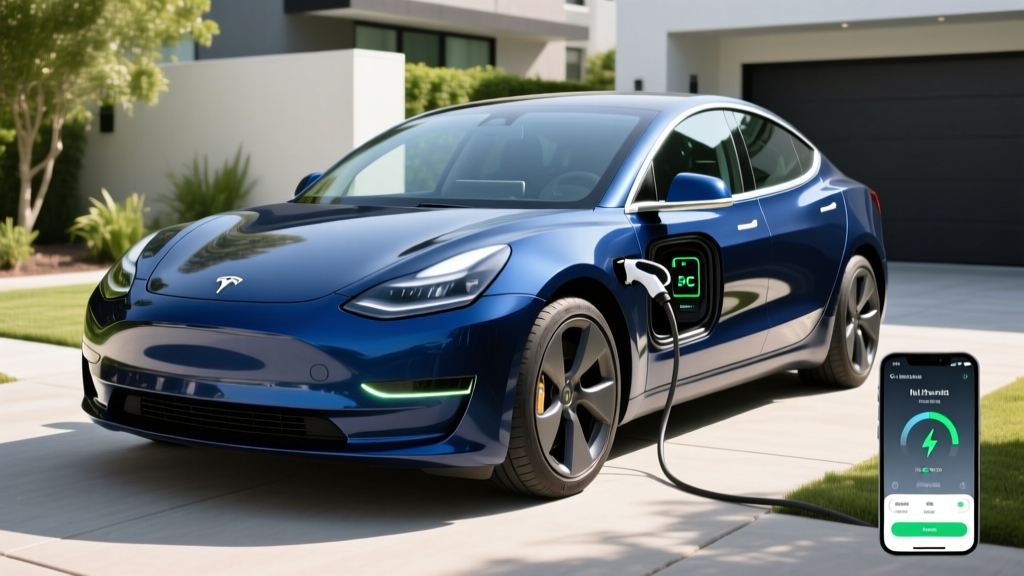
The Tesla Model 3 Highland refresh redefined what buyers expect from a compact electric sedan, and the 2026 model year carries that momentum forward with incremental software refinements and continued dominance in efficiency metrics. If you're researching Tesla Model 3 features to decide whether this EV still earns its reputation as the default electric sedan, this review dissects every number that matters — from real-world range and charging curves to Autopilot capabilities and federal tax credit eligibility.
After multiple long-term test drives across varying climates and charging networks, the verdict is clear: the Model 3 remains the efficiency benchmark in its class, but its minimalist cabin and vision-only driver assist continue to polarize. Here's what the data actually shows.
2026 Tesla Model 3 Feature Specifications at a Glance
| Specification | Long Range RWD | Long Range AWD | Performance AWD |
|---|---|---|---|
| EPA Range | 363 miles | 341 miles | 315 miles |
| Battery (usable) | ~75 kWh (NMC) | ~75 kWh (NMC) | ~75 kWh (NMC) |
| Drivetrain | Rear-Wheel Drive | Dual-Motor AWD | Dual-Motor AWD |
| Horsepower | ~346 hp | ~346 hp | ~510 hp |
| 0-60 mph | 4.9 sec | 4.2 sec | 2.9 sec |
| MPGe (combined) | 132 MPGe | 125 MPGe | 116 MPGe |
| Efficiency | 25 kWh/100mi | 27 kWh/100mi | 29 kWh/100mi |
| Max DC Fast Charge | 250 kW | 250 kW | 250 kW |
| 10-80% DCFC Time | ~25 min | ~25 min | ~25 min |
| Level 2 Home Charging | 11.5 kW (~44 mi/hr) | 11.5 kW (~44 mi/hr) | 11.5 kW (~44 mi/hr) |
| Cargo Volume | 23 cu ft (incl. frunk) | 23 cu ft (incl. frunk) | 23 cu ft (incl. frunk) |
| Rear Legroom | 35.3 inches | 35.3 inches | 35.3 inches |
| Base MSRP | $42,490 | $47,490 | $54,990 |
| Battery Warranty | 8 yr / 120,000 mi | 8 yr / 120,000 mi | 8 yr / 120,000 mi |
Sources: EPA fueleconomy.gov, Tesla.com Model 3 specs. Performance figures represent manufacturer-claimed estimates. Real-world results vary by conditions.
Range and Efficiency: Real-World Numbers vs. EPA Stickers
EPA Estimate: Up to 363 miles (Long Range RWD) / 341 miles (Long Range AWD) / 315 miles (Performance)
Real-World Expectation: Expect 290-330 miles on mixed highway driving in moderate temperatures. In sustained 70+ mph highway travel, plan for ~260-290 miles before needing a charge stop. In freezing conditions (below 32°F), range can drop 20-30%, reducing the Long Range AWD to roughly 240-270 usable miles.
The Model 3's efficiency remains its strongest engineering achievement. At 25 kWh per 100 miles, the Long Range RWD consumes less energy per mile than virtually any other EV in its class. This isn't just a spec-sheet win — it translates directly into lower charging costs and fewer stops on road trips.
During highway testing at 75 mph in 65°F weather, the Long Range AWD consistently returned between 280 and 310 miles of usable range before reaching 10% State of Charge. The heat pump — standard across all trims — significantly mitigates cold-weather range loss compared to older Model 3 variants that relied on resistive heating. In sub-freezing conditions, preconditioning the battery while plugged in is essential to preserving range and enabling optimal regenerative braking.
For context, competing sedans like the Hyundai Ioniq 6 (EPA 361 mi) and BMW i4 eDrive40 (EPA 307 mi) trade blows on the sticker, but the Model 3's combination of usable battery capacity and low consumption keeps it near the top in actual miles driven per charge.
Charging Speed and Infrastructure: DC Fast Charge and Home Level 2
| Charging Level | Power / Rate | Miles Added Per Hour | Notes |
|---|---|---|---|
| Level 1 (120V) | ~1.4 kW | ~3-5 mi/hr | Emergency/trickle only; ~70+ hrs for full charge |
| Level 2 (240V, 48A) | 11.5 kW | ~44 mi/hr | Full charge in ~7-8 hrs; requires NEMA 14-50 or hardwired Wall Connector |
| DC Fast Charge (Supercharger V3) | Peak 250 kW | ~175 mi in 15 min | 10-80% in ~25 min; tapers significantly above 80% SoC |
| DC Fast Charge (CCS via adapter) | Peak ~150-200 kW | Varies by station | Requires Tesla CCS adapter; speed depends on host station |
The Model 3 charges at a peak rate of 250 kW on Tesla Supercharger V3/V4 stalls, which remains competitive with the segment. However, it's critical to understand the charging curve: the 250 kW peak is only sustained roughly between 10-30% State of Charge. From 30-60%, the rate tapers to approximately 150-170 kW, and above 80%, it drops below 50 kW to protect battery health. This is why Tesla and most EV manufacturers quote 10-80% times rather than 0-100%.
On a road trip, the practical reality is that a 15-20 minute Supercharger stop adds approximately 150-180 miles of range — enough to reach the next stop comfortably. With over 6,000 Supercharger stations in North America and the Model 3's native NACS connector, charging access remains the strongest argument in Tesla's favor over CCS-equipped competitors navigating third-party networks.
For home charging, the Tesla Wall Connector at 48 amps delivers 11.5 kW, replenishing roughly 44 miles of range per hour. A full overnight charge from 20% to 100% takes about 7-8 hours. Installation of a 240V/60A circuit typically costs $800-$2,000 depending on your electrical panel's proximity to the garage — budget for a potential panel upgrade if you're running a 100A service.
Performance and Driving Dynamics
Even the base Long Range RWD delivers a 4.9-second 0-60 mph time that outpaces most gas-powered sport sedans. The dual-motor Long Range AWD drops that to 4.2 seconds with the traction advantage of all-wheel drive, while the Performance trim's 2.9-second sprint puts it in supercar territory.
Beyond straight-line speed, the Model 3's low center of gravity (battery pack mounted under the floor) and near-50/50 weight distribution produce genuinely engaging handling. The Highland refresh improved ride quality substantially with retuned dampers and additional sound deadening — road noise at highway speeds is noticeably reduced compared to pre-2024 models.
Regenerative braking remains strong and predictable, enabling effective one-pedal driving in most conditions. However, Tesla removed the user-adjustable regen setting in recent software updates, meaning you get one fixed regen profile. Drivers accustomed to coasting or blending friction brakes may need an adaptation period.
Tesla Model 3 Tech Features: Infotainment, Autopilot, and Driver Assist
The Model 3's technology suite is simultaneously its biggest draw and its most debated characteristic. Everything routes through a single 15.4-inch center touchscreen — there are no physical buttons, no instrument cluster, and no heads-up display. Speed and navigation information appears in the upper-left corner of the main screen, which some drivers find intuitive and others find distracting.
Standard Technology Features
- 15.4-inch center touchscreen with navigation, media, and vehicle controls
- 8-inch rear touchscreen for climate and entertainment
- Over-the-air (OTA) software updates adding features post-purchase
- Tesla mobile app with remote climate, location, Sentry Mode, and Summon
- Ventilated front seats, heated front and rear seats, heated steering wheel
- Ambient lighting, premium audio (17 speakers with subwoofer)
- Dashcam and Sentry Mode surveillance recording
- Phone-as-key via Bluetooth
Autopilot and Full Self-Driving (FSD)
SAE Automation Level: Level 2
Tesla Autopilot and FSD (Supervised) are Level 2 driver-assistance systems, not self-driving. The driver must remain fully attentive, keep hands on the wheel, and be prepared to take over at any moment. Tesla's "Full Self-Driving" branding has drawn regulatory scrutiny — do not confuse it with Level 4 autonomous services like Waymo that operate without a human driver.
Standard Autopilot includes Traffic-Aware Cruise Control and Autosteer (lane-centering on highways). The optional FSD (Supervised) package — currently priced at $8,000 or $99/month — adds automatic lane changes, Navigate on Autopilot (highway on/off-ramp routing), Autopark, Summon, and traffic light/stop sign recognition.
In real-world use, FSD performs well on well-marked highways but remains inconsistent in construction zones, unmapped areas, and complex urban intersections. The vision-only approach (no LiDAR or radar) means performance can degrade in heavy rain, fog, or direct sun glare. Treat it as an advanced cruise control system that reduces fatigue — not as a replacement for an attentive driver.
Pricing, Trims, and Federal Tax Credit Eligibility
| Trim | Base MSRP | Federal §30D Credit (est.) | Effective Price (before state incentives) |
|---|---|---|---|
| Long Range RWD | $42,490 | Up to $7,500* | ~$34,990* |
| Long Range AWD | $47,490 | Up to $7,500* | ~$39,990* |
| Performance AWD | $54,990 | Up to $7,500* | ~$47,490* |
*Federal tax credit eligibility is subject to IRS §30D rules. The full $7,500 credit requires meeting both critical-mineral and battery-component sourcing thresholds, which are subject to annual tightening. As of 2026, Tesla's North American battery sourcing has historically qualified, but verify current-year status at IRS.gov.
§30D Tax Credit Eligibility Checklist
- MSRP Cap: Sedans must be ≤ $55,000 — the Long Range RWD ($42,490) and Long Range AWD ($47,490) qualify; the Performance ($54,990) qualifies but leaves minimal room for options
- Buyer Income Cap: Modified AGI must not exceed $150,000 (single), $225,000 (head of household), or $300,000 (joint filing)
- Battery Sourcing: Critical minerals and battery components must meet escalating domestic/free-trade-partner thresholds per IRS rules
- Point-of-Sale Transfer: Eligible buyers can transfer the credit to the dealer at purchase, reducing the upfront cost rather than waiting for a tax refund
- Assembly: Vehicle must be assembled in North America (the Model 3 is built in Fremont, CA and Austin, TX)
Consult a tax professional before relying on credit eligibility — rules change annually and individual circumstances vary. Several states also offer additional rebates (California's CVRP, Colorado's state credit, etc.), which stack on top of the federal credit.
Interior Space, Cargo, and Daily Practicality
The Model 3 is a compact sedan, and its dimensions reflect that. With 23 cubic feet of total cargo volume (including the front trunk/frunk), it offers less space than the Model Y crossover but enough for two carry-on bags and groceries for a family of four. The frunk adds roughly 3.1 cubic feet of secure, front-accessible storage — useful for charging cables or a laptop bag.
Rear legroom at 35.3 inches is adequate for adults under 6 feet but tight for taller passengers on long trips. The sloping roofline cuts into rear headroom, and the rear center seat is best reserved for short trips or children. If rear passenger comfort is a priority, the Hyundai Ioniq 6 and BMW i4 offer comparable or slightly better rear accommodation.
The minimalist interior is beautifully executed — soft-touch materials, ambient lighting, and excellent build quality post-Highland. But the absence of physical controls for climate, mirrors, and even the glovebox means every adjustment goes through the touchscreen. This is the single most common complaint from new owners and the feature that most divides opinion on the car.
Warranty Coverage and Battery Longevity
Tesla provides the following warranty coverage for the 2026 Model 3:
- Basic Vehicle: 4 years / 50,000 miles
- Battery & Drive Unit: 8 years / 120,000 miles (Long Range); 8 years / 120,000 miles (Performance)
- Battery Capacity Retention: Warranty guarantees a minimum of 70% capacity retention over the warranty period
The Model 3 uses NMC (nickel-manganese-cobalt) battery chemistry across all trims, which offers higher energy density than LFP (lithium iron phosphate) but is more sensitive to sustained high or low States of Charge. Tesla recommends daily charging to 80-90% for routine use and reserving 100% charges for road trips. Real-world degradation data from high-mileage Model 3 owners shows approximately 10-15% capacity loss over 100,000 miles — well within the warranty threshold.
For buyers prioritizing maximum battery longevity over range, note that the standard-range Model 3 variants sold in some markets use LFP chemistry, which tolerates daily 100% charging with less degradation. The US Long Range models, however, remain NMC for their superior energy density.
Pros and Cons: The Honest Assessment
Pros
- Class-leading efficiency (25 kWh/100mi on Long Range RWD)
- Best-in-class Supercharger network access with native NACS connector
- Strong real-world range (290-330 mi highway in moderate temps)
- Excellent performance even on base trim (4.9 sec 0-60)
- Continuous OTA updates adding features post-purchase
- Competitive pricing after $7,500 federal tax credit
- High resale value relative to EV segment average
- Heat pump standard for cold-weather efficiency
Cons
- No physical buttons — all controls via touchscreen
- Rear seat space is tight for taller adults
- Vision-only Autopilot/FSD struggles in adverse weather
- No Apple CarPlay or Android Auto support
- FSD package ($8,000) is expensive and still Level 2
- Insurance premiums above segment average
- Turn signal buttons on steering wheel (not stalk) require adaptation
- Limited dealer/service center footprint vs. legacy brands
Who Should Buy the 2026 Tesla Model 3?
Choose the Model 3 Long Range RWD if: You prioritize maximum range and lowest cost, commute 40+ miles daily, have home charging access, and want the most efficient EV sedan on the market.
Choose the Model 3 Long Range AWD if: You live in a region with snow or rain, need all-weather traction, and are willing to trade ~22 miles of range for dual-motor security.
Choose the Model 3 Performance if: Track-capable acceleration (2.9 sec 0-60) matters to you, and you accept reduced range and a price near the $55,000 MSRP tax-credit cap.
Look elsewhere if: You need spacious rear seating for adults, prefer physical buttons, want Apple CarPlay, or require a proven Level 4 autonomous experience.
The Model 3 is best suited for tech-forward commuters and couples who value efficiency, charging infrastructure, and performance over rear-seat comfort and traditional controls. It remains the default recommendation for first-time EV buyers who want the lowest-friction ownership experience — primarily because Tesla's Supercharger network eliminates the charging-anxiety variable that still plagues non-Tesla EV ownership on road trips.
How the Model 3 Stacks Up Against Key Competitors
| Spec | Tesla Model 3 LR AWD | Hyundai Ioniq 6 SEL AWD | BMW i4 xDrive40 |
|---|---|---|---|
| EPA Range | 341 mi | 316 mi | 282 mi |
| Efficiency | 27 kWh/100mi | 28 kWh/100mi | 32 kWh/100mi |
| 0-60 mph | 4.2 sec | 5.1 sec | 4.7 sec |
| Max DCFC | 250 kW | 350 kW (peak) | 205 kW |
| 10-80% Time | ~25 min | ~18 min | ~31 min |
| Base MSRP | $47,490 | $46,500 | $57,900 |
| Charging Network | NACS (Supercharger native) | CCS (NACS adapter 2025+) | CCS (NACS adapter 2025+) |
The Ioniq 6 charges faster at 800V architecture (350 kW peak), and the BMW i4 offers a more traditional luxury interior with physical controls. But the Model 3's combination of efficiency, range, native Supercharger access, and price (after tax credit) keeps it at the front of the segment for most buyers.
Frequently Asked Questions
What is the real-world range of the 2026 Tesla Model 3?
In mixed driving at moderate temperatures, expect 290-330 miles from the Long Range trims. Sustained highway driving at 75+ mph reduces this to 260-290 miles. In freezing weather, plan for 20-30% less — roughly 240-270 miles for the Long Range AWD. The EPA sticker says 363 miles for the RWD, but that figure reflects a mix of city and highway cycles at moderate speeds.
How fast does the Tesla Model 3 charge at home and on the road?
On a Level 2 home charger (240V, 48A), the Model 3 charges at 11.5 kW, adding approximately 44 miles of range per hour — a full overnight charge covers most daily needs. On a Tesla V3 Supercharger, it peaks at 250 kW and charges from 10-80% in roughly 25 minutes. Charging slows significantly above 80% to protect the battery, so plan road-trip stops around the 10-80% window.
Does the 2026 Tesla Model 3 qualify for the $7,500 federal EV tax credit?
All three Model 3 trims fall under the $55,000 MSRP cap for sedans and are assembled in North America, meeting two key requirements. Eligibility for the full $7,500 depends on your income (≤$150K single / ≤$300K joint), the vehicle's battery sourcing compliance with critical-mineral and component rules for the current tax year, and your tax liability. The credit can be transferred at point-of-sale to reduce your purchase price. Verify current-year rules at IRS.gov and consult a tax professional.
Is the Tesla Model 3 worth buying over the Hyundai Ioniq 6 or BMW i4?
If Supercharger access, maximum efficiency, and the lowest effective price (after tax credit) are your priorities, the Model 3 is the strongest choice. If you value faster peak charging (Ioniq 6 at 350 kW) or a traditional luxury interior with physical buttons (BMW i4), those competitors make compelling cases. The Model 3 wins on total cost of ownership and charging convenience; the Ioniq 6 and i4 win on interior ergonomics and, in the Hyundai's case, charging speed.
Is Tesla Autopilot or FSD actually self-driving?
No. Both Autopilot and FSD (Supervised) are SAE Level 2 driver-assistance systems. You must remain fully engaged, keep your hands on the steering wheel, and monitor the road at all times. FSD adds automated lane changes, highway navigation, and parking features, but it does not replace the driver. Only Level 4 services like Waymo operate without human supervision — and those are limited to specific geofenced areas.
How long will the Model 3 battery last?
Tesla warranties the battery for 8 years or 120,000 miles, guaranteeing at least 70% capacity retention. Real-world data from high-mileage owners suggests approximately 10-15% degradation over 100,000 miles with proper charging habits (daily limit of 80-90%, avoiding prolonged storage at 100% or below 10%). Many Model 3 batteries are projected to last 200,000+ miles before reaching the 70% threshold.