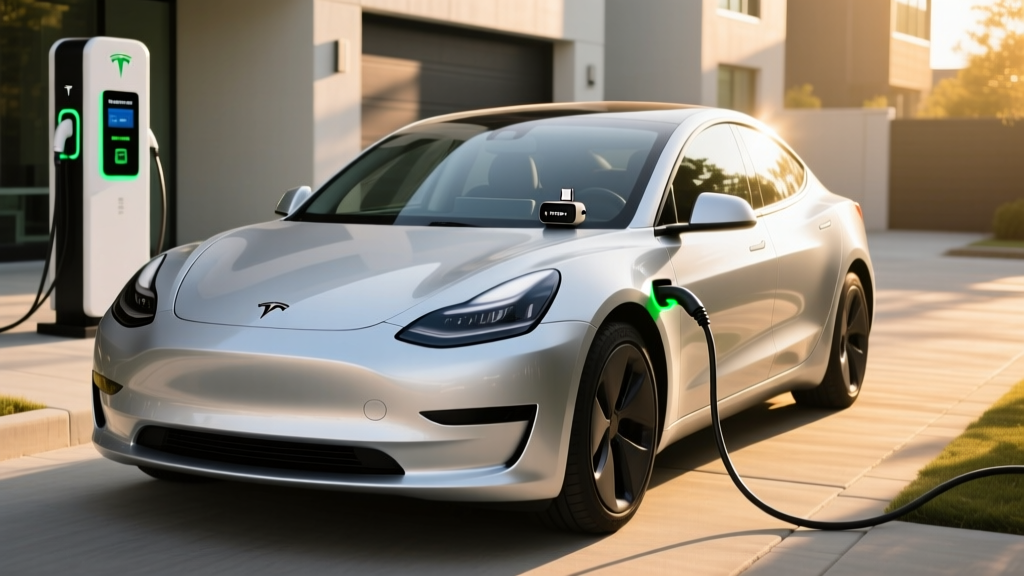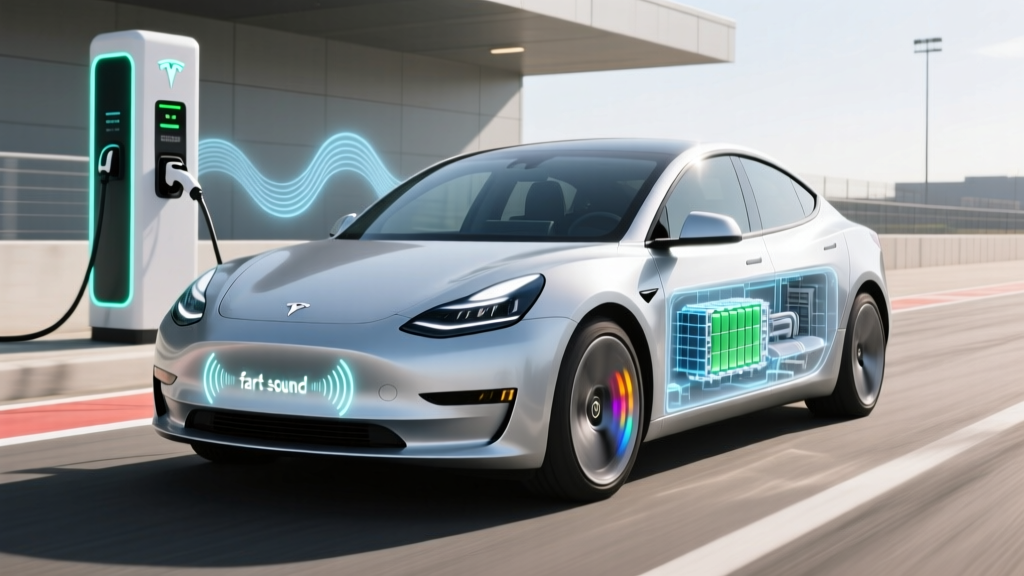
The Tesla Model 3 remains one of the best-selling electric sedans in the U.S., and for good reason: strong range, fast charging, and access to the Supercharger network. But beyond the spec sheet, the Model 3 is also famous for Easter eggs like the Tesla fart sound — a novelty feature that lets owners trigger whoopee-cushion noises through the car's exterior speakers via the Tesla app. It's silly, it's viral, and it's emblematic of Tesla's playful approach to software. This review covers what actually matters for buyers in 2026: real-world range, charging performance, pricing after federal tax credits, and whether the Model 3 still holds up against a growing field of competitors.
2026 Tesla Model 3 Core Specifications
| Spec | RWD (Base) | Long Range AWD | Performance |
|---|---|---|---|
| EPA Range | 341 mi | 363 mi | 315 mi |
| Battery (usable) | ~57.5 kWh (LFP) | ~75 kWh (NMC) | ~75 kWh (NMC) |
| Peak DC Fast Charge | 170 kW | 250 kW | 250 kW |
| 10–80% DC Time | ~25 min | ~18 min | ~18 min |
| Level 2 Home Charge | 11.5 kW (~44 mi/hr) | 11.5 kW (~44 mi/hr) | 11.5 kW (~44 mi/hr) |
| 0–60 mph | 5.8 sec | 4.2 sec | 2.9 sec |
| Horsepower | 271 hp | 346 hp | 510 hp |
| Drivetrain | RWD | Dual-Motor AWD | Dual-Motor AWD |
| MPGe (combined) | 132 MPGe | 125 MPGe | 113 MPGe |
| Base MSRP | $38,990 | $44,990 | $52,990 |
Real-World Range: What the EPA Sticker Doesn't Tell You
EPA Estimate: 341 mi (RWD) / 363 mi (Long Range AWD) / 315 mi (Performance)
Real-World Expectation: On a 70 mph highway drive in moderate temperatures (65°F), expect roughly 280–310 miles from the Long Range AWD before needing a charge. In cold weather (below 32°F), range can drop 20–30%, bringing usable highway range to approximately 220–250 miles. City driving with regenerative braking recovers energy and tends to exceed EPA estimates.
The Long Range AWD's 75 kWh NMC battery provides the most buffer for road trips, while the base RWD's LFP chemistry offers a different ownership trade-off: lower energy density but significantly longer cycle life and less degradation over time. Tesla recommends charging LFP batteries to 100% regularly, whereas NMC packs benefit from daily limits around 80% to preserve longevity. Source: fueleconomy.gov.
Charging Speed and Infrastructure
| Charging Level | Power | Miles Added per Hour |
|---|---|---|
| Level 1 (120V outlet) | ~1.4 kW | ~5 mi/hr |
| Level 2 (240V, 48A) | 11.5 kW | ~44 mi/hr |
| DC Fast (V3 Supercharger) | Up to 250 kW (Long Range/Perf) | ~175 mi in 15 min (peak) |
| DC Fast (V4 Supercharger) | Up to 325 kW (hardware-limited to ~250 kW on Model 3) | Similar to V3 on current Model 3 |
Charge curve reality: The Long Range and Performance trims peak at 250 kW but only sustain that rate between roughly 10–30% State of Charge. Above 50%, the curve tapers significantly, dropping below 100 kW past 70%. The 10–80% time of approximately 18 minutes assumes you arrive at a V3 Supercharger with a preconditioned battery (the car's navigation routes to chargers and automatically warms the pack). Without preconditioning — for instance, at a non-Tesla CCS charger with an adapter — add 5–8 minutes to that estimate in cooler weather.
Tesla's NACS connector is now the industry standard, with Ford, GM, Rivian, and others adopting it. Model 3 owners benefit from the widest fast-charging network in North America, with over 6,000 Supercharger stations and growing.
Pricing, Trims, and Federal Tax Credit Eligibility
| Trim | Base MSRP | Est. After §30D Credit | Credit Eligibility |
|---|---|---|---|
| RWD | $38,990 | ~$31,490 | Likely eligible (LFP battery sourcing varies) |
| Long Range AWD | $44,990 | ~$37,490 | Eligible (below $55K sedan cap, income-dependent) |
| Performance | $52,990 | ~$45,490 | Eligible (below $55K sedan cap) |
Under current IRS §30D rules, the federal EV tax credit provides up to $7,500, which can now be transferred at the point of sale as an instant discount. However, eligibility depends on multiple factors:
- MSRP Cap: Sedans must be under $55,000. All Model 3 trims clear this.
- Buyer Income Cap: Modified AGI must not exceed $150,000 (single), $225,000 (head of household), or $300,000 (joint). See IRS §30D guidelines.
- Battery Sourcing: Critical minerals and battery component requirements phase in progressively. The RWD trim's LFP battery (largely sourced from CATL in China) may lose partial or full credit eligibility depending on current-year sourcing thresholds. The Long Range and Performance NMC packs, assembled in the U.S., have historically qualified for the full $7,500.
Always verify eligibility with a tax professional and Tesla's point-of-sale credit tool at purchase time, as sourcing rules tighten annually.
The Tesla Fart Sound and Software Easter Eggs
The Tesla fart sound is accessed through the Tesla mobile app under the "Emissions Test" feature. Users can select different sound profiles and trigger them through the car's external pedestrian-warning speaker — aimed at friends standing outside the vehicle. It requires the car to be parked and was originally introduced around 2019.
Beyond the fart sound, the Model 3's software includes other Easter eggs: a "Romance Mode" that simulates a fireplace on the center screen with crackling audio, "Santa Mode" that replaces the car icon with a sleigh during navigation in December, and light-show routines that sync exterior lights and music. These features are trivial in isolation but reflect Tesla's software-first philosophy — the car receives over-the-air updates that add functionality long after purchase, something legacy automakers are still catching up to.
On the serious tech side, the Model 3 features:
- Autopilot: Standard SAE Level 2 driver-assist with adaptive cruise and lane centering. The driver must remain engaged at all times — this is not self-driving.
- FSD (Supervised): Optional $8,000 upgrade (or $99/month subscription) enabling automatic lane changes, traffic-light recognition, and city-street navigation. Still Level 2; full driver supervision required.
- 15.4-inch center touchscreen: Handles all vehicle controls, navigation, media, and gaming (Steam integration supports a library of titles while parked).
- Sentry Mode: Cameras record surroundings when parked, with cloud-accessible clips via the app.
ADAS Limitation Warning: Tesla Autopilot and FSD (Supervised) are SAE Level 2 systems. The driver must keep hands on or near the wheel and remain fully attentive. These systems do not make the vehicle autonomous. Misuse has resulted in documented collisions and NHTSA investigations.
Interior, Cargo, and Practicality
The Model 3's minimalist interior polarizes buyers. There is no instrument cluster — all information lives on the center screen, including speed and turn-signal indicators (the turn signals are also on-screen, with no physical stalk on the refreshed "Highland" generation). The cabin materials have improved post-refresh with ventilated front seats, acoustic glass, and ambient lighting.
- Front legroom: 42.7 inches
- Rear legroom: 35.2 inches (tighter than a Hyundai Ioniq 6 or BMW i4)
- Trunk: 23 cu ft (rear cargo)
- Frunk: 3.1 cu ft (enough for a charging cable bag or small backpack)
- Total cargo: ~26 cu ft — adequate for a sedan but not hatchback-competitive
The glass roof provides an airy feel but offers no shade option from the factory; aftermarket sunshades are a common first purchase. Rear-seat comfort has improved with the Highland refresh's slightly reclined seatback, but taller passengers (6'2"+) will find headroom tight due to the sloping roofline.
Warranty, Battery Longevity, and Ownership Costs
Tesla provides the following warranty coverage:
- Basic Vehicle: 4 years / 50,000 miles
- Battery & Drive Unit (RWD): 8 years / 100,000 miles
- Battery & Drive Unit (Long Range / Performance): 8 years / 120,000 miles
- Battery retention threshold: Tesla warrants a minimum of 70% capacity retention during the warranty period
Real-world degradation data from fleet aggregators like Recurrent Auto shows Tesla batteries typically retain 90%+ capacity at 100,000 miles, with LFP packs showing even slower fade curves due to their chemistry advantage. A full battery replacement out of warranty runs approximately $12,000–$16,000 depending on the pack, though most owners never reach that point.
Insurance premiums for the Model 3 average 15–25% higher than comparable gas sedans, driven by Tesla's repair costs (structural battery pack, aluminum panels, proprietary parts). Tesla Insurance is available in many states and can be competitive, though rates vary significantly by ZIP code and driving record.
Pros, Cons, and Who Should Buy
Pros
- Class-leading Supercharger network access (20,000+ stalls in North America)
- Strong efficiency: 132 MPGe combined on RWD, roughly 4 mi/kWh
- Over-the-air updates continually add features
- LFP option on RWD offers excellent long-term battery durability
- FSD subscription option ($99/mo) avoids upfront $8K cost
- Fart sound and Easter eggs add personality (if that's your thing)
Cons
- No physical turn-signal stalk — steering-wheel buttons require adaptation
- Rear seat space tighter than competitors (Ioniq 6, i4)
- Panel gaps and paint quality still inconsistent on some deliveries
- No Apple CarPlay / Android Auto — Tesla's proprietary system only
- RWD LFP may lose partial §30D credit due to battery sourcing
- Insurance costs above segment average
Choose the Model 3 if: You prioritize charging infrastructure, software innovation, and efficiency above all. The Long Range AWD at ~$37,490 after tax credit is the value sweet spot for road-trippers and commuters who need AWD.
Look elsewhere if: You need maximum rear-seat space (consider the Hyundai Ioniq 6 or BMW i4), prefer physical controls and Apple CarPlay, or want a hatchback cargo opening (Model Y or Hyundai Ioniq 5).
Frequently Asked Questions
What is the real-world range of the Tesla Model 3?
The EPA rates the Long Range AWD at 363 miles, but sustained highway driving at 70 mph typically yields 280–310 miles. In freezing temperatures, expect a 20–30% reduction, bringing real-world winter highway range to roughly 220–250 miles. City driving with regen braking often meets or slightly exceeds the EPA figure.
How fast does the Model 3 charge at home and on the road?
At home on a 240V Level 2 charger (48A), the Model 3 adds approximately 44 miles of range per hour, fully replenishing overnight. On a V3 Supercharger, the Long Range and Performance models peak at 250 kW and charge from 10–80% in roughly 18 minutes with battery preconditioning. The RWD model peaks at 170 kW, taking about 25 minutes for the same 10–80% session.
How much does the Model 3 cost after federal tax credits?
The Long Range AWD starts at $44,990 MSRP. With the full $7,500 §30D credit applied at point of sale, the effective price drops to approximately $37,490. The base RWD at $38,990 could reach ~$31,490, but its LFP battery sourcing may reduce credit eligibility. Always confirm with Tesla and a tax professional at purchase time. Income caps apply ($150K single / $300K joint).
Does the Tesla Model 3 qualify for the federal EV tax credit?
Yes, all Model 3 trims fall under the $55,000 sedan MSRP cap. However, full $7,500 eligibility depends on the buyer's income, the battery's critical-mineral sourcing, and component origin. The Long Range and Performance trims have consistently qualified for the full credit. The RWD trim's LFP battery (with Chinese-sourced minerals) may be subject to partial credit reduction under tightening 2026 sourcing rules. See IRS clean vehicle credits for current requirements.
How do you activate the Tesla fart sound?
Open the Tesla mobile app while near your parked Model 3, navigate to the "Emissions Test" option, select a sound profile, and tap to trigger the sound through the car's exterior pedestrian-warning speaker. The feature is intended as a prank for people standing near the vehicle.
Is the Model 3 worth buying vs. competitors in 2026?
The Model 3 Long Range AWD remains the benchmark for efficiency and charging-network access. The Hyundai Ioniq 6 offers more rear-seat space and a slightly more comfortable ride but uses the less-common CCS connector (though adapters exist). The BMW i4 provides a more traditional luxury interior and physical controls at a higher price point (~$52K base). For buyers who prioritize road-trip charging convenience and software features, the Model 3 is still the segment leader.