When shoppers search for a "Tesla 3 engine," they're usually asking one of two things: what actually propels this sedan forward, and whether its electric powertrain holds up against gas-car reliability over the long haul. The short answer is that the Model 3 uses permanent-magnet synchronous reluctance motors—no pistons, no valves, no oil changes. But the real story for buyers is how those motors, paired with Tesla's battery packs and thermal management, translate into daily range, charging speed, and ownership cost.
This profile covers the 2026 Tesla Model 3 lineup—the Standard Range RWD, Long Range AWD, and Performance AWD—with exact EPA data, battery chemistry details, real-world range expectations, and a clear-eyed look at who this sedan actually serves best.
2026 Tesla Model 3 Powertrain & Motor Specs
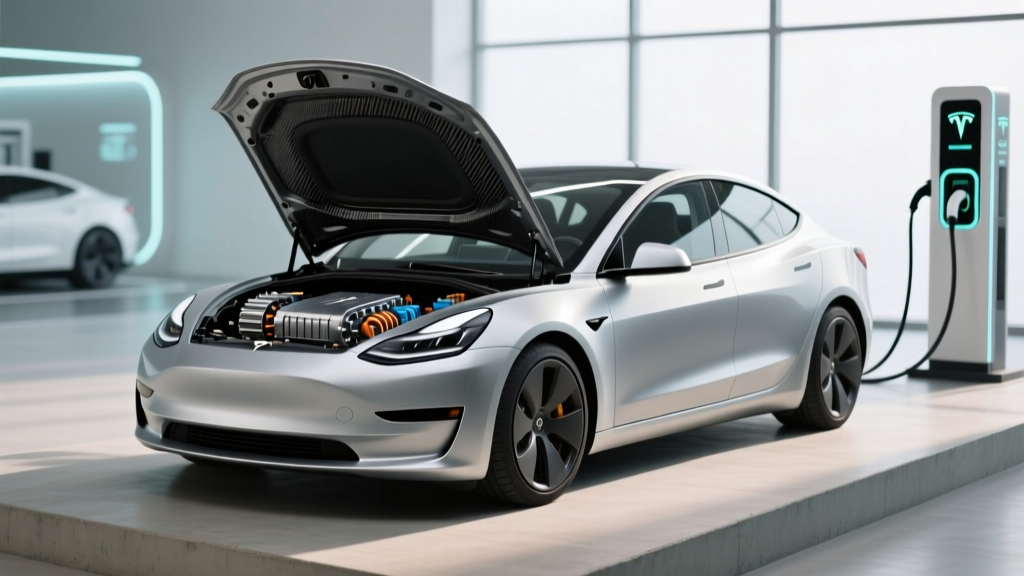
Unlike internal-combustion engines rated by displacement, the Model 3's "engine" is one or two electric motors drawing from a floor-mounted battery pack. Here's how each trim breaks down for the 2026 model year:
| Trim | Motor Configuration | Drivetrain | Horsepower | 0–60 mph |
|---|---|---|---|---|
| Standard Range RWD | Single rear motor (permanent magnet) | RWD | ~271 hp | 5.8 sec |
| Long Range AWD | Dual motor (rear PM + front induction) | AWD | ~346 hp | 4.2 sec |
| Performance AWD | Dual motor (rear PM + front induction, tuned) | AWD | ~510 hp | 2.9 sec |
The rear motor across all trims is a permanent-magnet synchronous reluctance unit—highly efficient at both low and high speeds. AWD models add a front induction (asynchronous) motor that can disconnect when not needed to reduce parasitic drag, improving highway efficiency. This dual-motor architecture also provides torque vectoring and redundancy: if one motor fails, the car can still drive on the other.
Battery Capacity, Chemistry & Efficiency
Battery chemistry is where the Model 3 lineup splits meaningfully. The Standard Range RWD uses a lithium iron phosphate (LFP) pack, while the Long Range and Performance trims use nickel-manganese-cobalt (NMC) chemistry.
| Trim | Battery Chemistry | Usable Capacity (est.) | EPA Efficiency | kWh/100 mi |
|---|---|---|---|---|
| Standard Range RWD | LFP | ~57.5 kWh | 142 MPGe | 24 |
| Long Range AWD | NMC | ~75 kWh | 132 MPGe | 26 |
| Performance AWD | NMC | ~75 kWh | 124 MPGe | 28 |
LFP vs. NMC—what it means for you: LFP batteries are heavier and slightly less energy-dense, but they tolerate daily charging to 100% without accelerated degradation. Tesla explicitly recommends charging the Standard Range to 100% at least weekly. NMC packs last longest when charged to 80% for daily use and reserved at 100% only for road trips. LFP also avoids cobalt, which matters to buyers tracking supply-chain ethics. Source: Tesla Model 3 Charging Guide.
The EPA publishes laboratory-derived range figures. Here's how they compare to what you'll actually experience:
- Standard Range RWD: EPA 272 mi — expect ~230–245 mi highway, ~200–215 mi in sub-30°F cold.
- Long Range AWD: EPA 363 mi — expect ~310–330 mi highway, ~270–290 mi in sub-30°F cold.
- Performance AWD: EPA 315 mi — expect ~265–285 mi highway, ~230–250 mi in sub-30°F cold.
Highway driving at 75+ mph increases aerodynamic drag significantly on any EV. Cold weather reduces battery chemical efficiency and adds cabin heating load, even with the Model 3's standard heat pump. Data cross-referenced with fueleconomy.gov.
Charging Speed: DC Fast Charge & Home Level 2
Charging speed is where the Model 3's 400-volt architecture shows its age against 800-volt competitors like the Hyundai Ioniq 6 and Porsche Taycan. Still, Tesla's Supercharger network reliability offsets the peak-rate gap for most owners.
| Charge Method | Standard Range RWD | Long Range AWD | Performance AWD |
|---|---|---|---|
| Max DC Fast Charge | 170 kW | 250 kW | 250 kW |
| 10–80% DC Time | ~25 min | ~22 min | ~22 min |
| Level 2 (240V, 48A) | 11.5 kW (~44 mi/hr) | 11.5 kW (~44 mi/hr) | 11.5 kW (~44 mi/hr) |
| Level 1 (120V, 12A) | ~1.4 kW (~5 mi/hr) | ~1.4 kW (~5 mi/hr) | ~1.4 kW (~5 mi/hr) |
| Connector | NACS (native) | NACS (native) | NACS (native) |
Understanding the charge curve: The 250 kW peak on Long Range and Performance trims applies only between roughly 10–30% State of Charge (SoC). Above 50%, the rate tapers progressively; above 80%, it drops sharply to protect the battery. A 10–80% session takes ~22 minutes at a V3 Supercharger, but charging from 80–100% can add another 20+ minutes. Plan road-trip stops around the 10–80% window.
The Standard Range's LFP pack tops out at 170 kW, making its 10–80% session about 3 minutes longer. For home charging, a 48-amp Level 2 wall connector on a 60-amp circuit delivers a full overnight charge in roughly 6–8 hours for any trim. Professional installation for a Level 2 home setup typically runs $800–$2,000 depending on panel capacity and run length—consult a licensed electrician for your specific situation.
Pricing, Tax Credits & Ownership Cost
| Trim | Base MSRP | As-Tested (typical config) | §30D Credit Eligibility |
|---|---|---|---|
| Standard Range RWD | $38,990 | $39,990 (w/ paint upgrade) | Eligible — up to $7,500* |
| Long Range AWD | $47,740 | $49,740 (w/ FSD transfer) | Eligible — up to $7,500* |
| Performance AWD | $54,990 | $56,990 (w/ wheels + paint) | Eligible — up to $7,500* |
*Federal tax credit caveats (IRS §30D, 2026 rules):
- Income caps: Modified AGI must not exceed $150,000 (single), $225,000 (head of household), or $300,000 (joint). Source: IRS.gov §30D.
- MSRP cap: Sedans must have an MSRP at or below $55,000. The Performance trim at $54,990 base qualifies, but adding options that push MSRP above $55,000 disqualifies it.
- Battery sourcing: The full $7,500 requires meeting both critical-mineral and battery-component sourcing thresholds. Tesla's US-built packs have largely met these requirements, but verify at the point of sale—dealers must provide a clean vehicle report.
- Point-of-sale transfer: You can transfer the credit to the dealer for an immediate price reduction rather than claiming it on your tax return.
After the maximum $7,500 credit, the Standard Range RWD drops to roughly $31,490—a compelling entry point for an EV with this tech suite. The Long Range AWD lands around $40,240, and the Performance at approximately $47,490.
Interior, Cargo & Daily Practicality
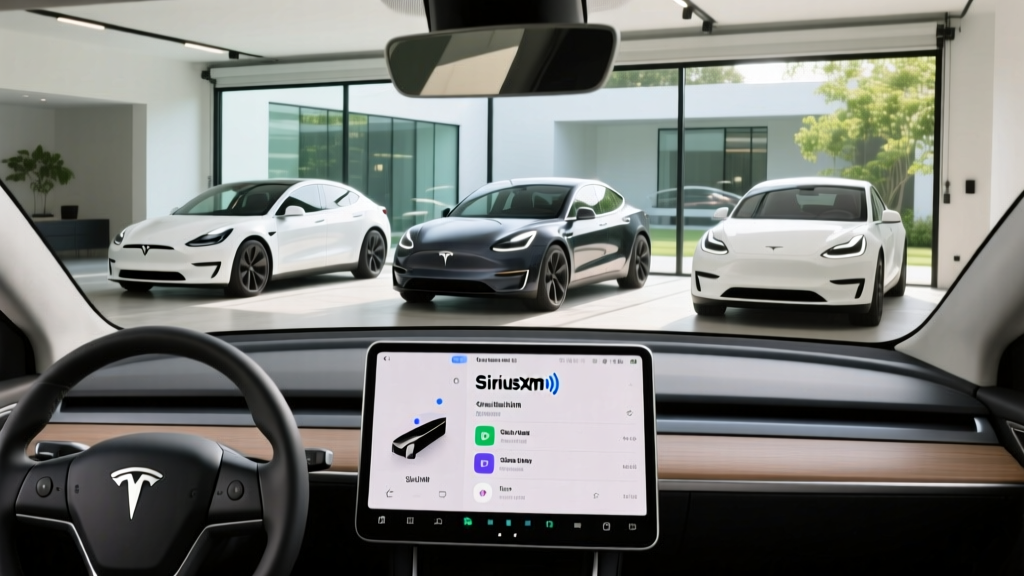
The Model 3's minimalist cabin centers on a 15.4-inch touchscreen that handles everything from climate control to glovebox release. There's no instrument cluster—speed and navigation display on the left third of the main screen.
Dimensions & space:
- Front headroom: 40.3 in | Rear headroom: 37.8 in
- Front legroom: 42.4 in | Rear legroom: 35.3 in
- Trunk (rear): 21 cu ft
- Frunk (front trunk): 3.1 cu ft
- Total cargo: ~24 cu ft (seats up)
The rear seat fits two adults comfortably for long trips; a third middle passenger is tight on the raised floor. The 21-cu-ft trunk is generous for the compact-sedan segment—larger than the Hyundai Ioniq 6's 12.3 cu ft—and the 60/40 split-folding rear seats open up significant length for longer items.
Notable drawbacks: the absence of physical buttons frustrates some drivers (adjusting mirrors and vents requires screen taps), the panoramic glass roof lets in considerable heat in southern climates despite UV tinting, and there are no Apple CarPlay or Android Auto integrations—Tesla's proprietary infotainment only.
Driver Assistance & Technology
Tesla's Autopilot and optional Full Self-Driving (Supervised) are Level 2 driver-assistance systems under SAE classification. The driver must remain fully engaged, hands on or near the wheel, and eyes on the road at all times. These systems do NOT make the Model 3 a self-driving vehicle. Only Level 4 services like Waymo operate without a human driver, and those are limited to geoflected urban zones in select cities.
Standard Autopilot includes Traffic-Aware Cruise Control and Autosteer (lane centering) on divided highways. It's competent for daily commuting but requires constant supervision.
Full Self-Driving (Supervised) adds automatic lane changes, Navigate on Autopilot (highway on-ramp to off-ramp), autosteer on city streets, and Smart Summon (low-speed parking-lot movement). The $8,000 add-on or $99/month subscription remains a Level 2 system despite the name. Expect occasional disengagements in construction zones, unmapped intersections, and adverse weather.
Other tech highlights: Tesla Vision (camera-only, no radar or ultrasonic sensors as of the Highland refresh), over-the-air software updates that add features post-purchase, Sentry Mode (360° parking surveillance), and a built-in dashcam with front/rear/side recording.
Warranty & Long-Term Ownership
| Component | Coverage |
|---|---|
| Basic Vehicle | 4 years / 50,000 miles |
| Battery & Drive Unit (Standard Range) | 8 years / 100,000 miles (min 70% retention) |
| Battery & Drive Unit (Long Range / Performance) | 8 years / 120,000 miles (min 70% retention) |
Tesla warrants that the battery will retain at least 70% of its original capacity during the warranty period. Real-world data from fleet operators and Tesla's own impact reports suggest most Model 3 packs retain 85–90% capacity at 100,000 miles under normal charging habits. A full battery replacement outside warranty currently ranges from $12,000–$16,000 depending on the pack, though prices have been trending downward.
Maintenance costs are minimal: no oil changes, no spark plugs, no transmission fluid. Cabin air filter replacement every 2 years (~$60 DIY), tire rotation every 6,250 miles, and brake fluid checks round out the schedule. Regenerative braking significantly extends brake pad life—many owners report original pads past 80,000 miles.
Pros, Cons & Buyer Verdict
Pros
- Class-leading efficiency (24–28 kWh/100 mi)
- Supercharger network reliability (20,000+ US stations)
- 363-mi EPA range on Long Range—top of segment
- Strong resale value relative to EV competitors
- OTA updates continuously add features
- $7,500 federal credit eligible across trims
Cons
- 400V architecture limits peak charge rate vs 800V rivals
- No CarPlay/Android Auto—Tesla ecosystem only
- Minimalist interior lacks physical controls
- Rear middle seat is cramped on raised floor
- FSD ($8,000) is expensive for a Level 2 system
- Glass roof heat soak in hot climates
Who Should Buy the 2026 Model 3?
- Commuters & daily drivers: The Standard Range RWD at ~$31,500 after credit is one of the best-value EVs available. 272 mi of range covers weeks of city commuting between charges.
- Road-trip enthusiasts: The Long Range AWD's 363-mi EPA range and Supercharger access make cross-country travel practical with 20-minute stops every 2.5–3 hours.
- Tech-forward buyers: If you want OTA updates, a native app ecosystem, and integrated navigation with live Supercharger routing, Tesla's software stack is unmatched.
- Not ideal for: Families needing easy rear-seat child-seat access (consider Model Y), buyers who demand CarPlay, or those in extreme-cold regions where a heat-pump-equipped Hyundai Ioniq 5 or Kia EV6 may lose less range.
Frequently Asked Questions
What is the real-world range of the Tesla Model 3?
Real-world range depends on trim, driving style, and climate. The Long Range AWD (EPA 363 mi) delivers roughly 310–330 mi at highway speeds in mild weather, dropping to 270–290 mi in sub-freezing temperatures. The Standard Range RWD (EPA 272 mi) averages 230–245 mi on the highway in moderate conditions.
Does the Tesla Model 3 qualify for the federal EV tax credit?
Yes, all 2026 Model 3 trims are eligible for up to $7,500 under IRS §30D, provided the buyer meets income caps ($150K single / $300K joint), the vehicle MSRP stays at or below $55,000, and battery-sourcing requirements are met. The credit can be transferred to the dealer at point of sale for an immediate price reduction. Always verify eligibility with your tax professional and the dealer's clean vehicle report.
How fast does the Model 3 charge at home and on the road?
On a Level 2 home charger (240V, 48A), all trims charge at 11.5 kW, adding roughly 44 miles of range per hour—a full charge takes 6–8 hours overnight. On DC fast chargers, the Long Range and Performance peak at 250 kW (10–80% in ~22 min), while the Standard Range peaks at 170 kW (~25 min).
Is the Tesla Model 3 worth it vs. the Hyundai Ioniq 6 or BMW i4?
The Model 3 Long Range wins on EPA range (363 mi vs. Ioniq 6's 361 mi, though real-world parity is closer) and Supercharger network access. The Ioniq 6 offers 800V architecture for faster peak charging and a more traditional interior with CarPlay. The BMW i4 provides premium build quality and driving dynamics but starts higher and offers less range per dollar. If range and charging network matter most, the Model 3 remains the benchmark.
What does "Tesla 3 engine" actually mean?
The Model 3 has no internal-combustion engine. It uses one or two electric motors (permanent-magnet rear, induction front on AWD) powered by a lithium-ion battery pack. These motors have far fewer moving parts than a gas engine—no timing belts, no oil pump, no exhaust system—resulting in lower long-term maintenance costs and near-silent operation.