Quick Verdict: The Real Cost to Charge a Tesla Model 3
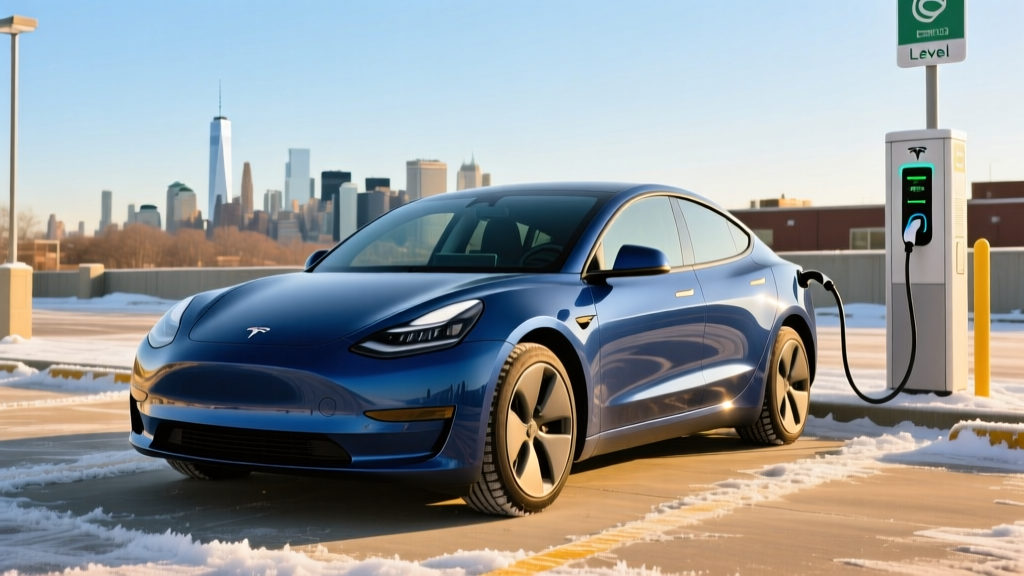
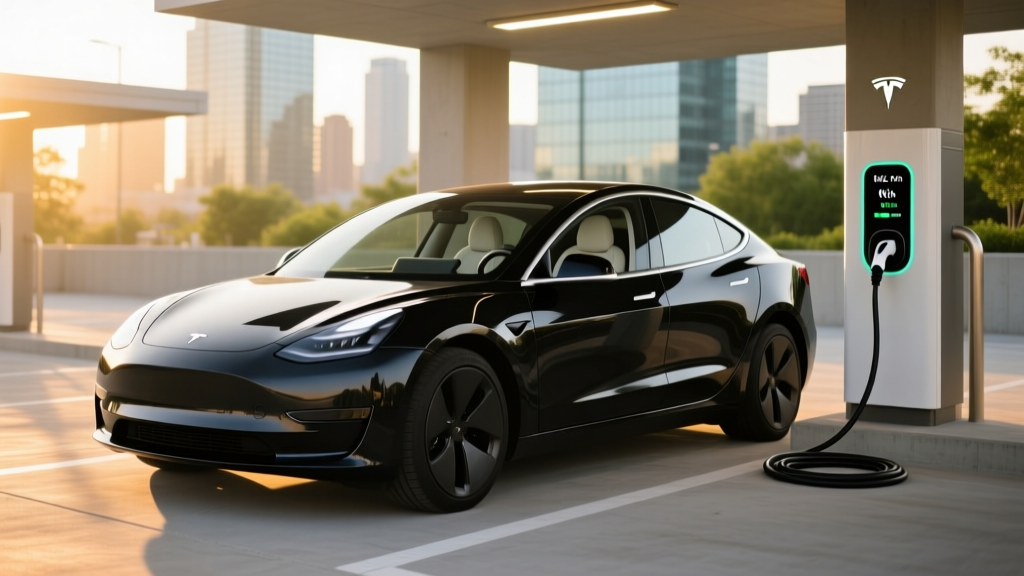
If you've been searching for how much in electricity to charge a Tesla, the answer depends heavily on where and when you plug in. For the 2025–2026 Tesla Model 3, a full home charge costs between $9.50 and $22.00 depending on your state's electricity rate, while Supercharger sessions typically run $16 to $30 for a near-full battery. That translates to roughly 3.5 to 6.5 cents per mile at home — a fraction of what gasoline costs per mile in a comparable sedan.
But charging cost is only one part of the ownership picture. This review covers the 2026 Tesla Model 3 lineup — range, charging speed, efficiency, pricing, and tax credit eligibility — so you can calculate your true cost of ownership with real numbers, not estimates.
2026 Tesla Model 3 at a Glance: Full Spec Table
| Specification | Model 3 RWD | Model 3 Long Range AWD | Model 3 Performance |
|---|---|---|---|
| EPA Range | 272 miles | 363 miles | 315 miles |
| Battery (usable) | ~57.5 kWh (LFP) | ~75 kWh (NMC) | ~75 kWh (NMC) |
| MPGe (combined) | 132 MPGe | 132 MPGe | 121 MPGe |
| Efficiency | 25 kWh/100 mi | 25 kWh/100 mi | 28 kWh/100 mi |
| Peak DC Fast Charge | 170 kW | 250 kW | 250 kW |
| 10–80% DC Charge | ~25 min | ~22 min | ~22 min |
| Level 2 Home Charge | 11.5 kW (~44 mi/hr) | 11.5 kW (~44 mi/hr) | 11.5 kW (~44 mi/hr) |
| 0–60 mph | 5.8 sec | 4.2 sec | 2.9 sec |
| Horsepower | 271 hp | 346 hp | 510 hp |
| Drivetrain | RWD | Dual-Motor AWD | Dual-Motor AWD |
| Base MSRP | $38,990 | $47,740 | $54,990 |
| Federal Tax Credit (§30D) | Up to $7,500 | Up to $7,500 | Up to $7,500 |
| Battery/Drive Warranty | 8 yr / 100,000 mi | 8 yr / 120,000 mi | 8 yr / 120,000 mi |
Source: EPA fueleconomy.gov, Tesla spec sheets. Prices exclude destination fee. Tax credit eligibility subject to IRS §30D rules — see pricing section below.
How Much in Electricity to Charge a Tesla Model 3: Full Breakdown
Understanding the cost to charge a Tesla Model 3 requires separating three scenarios: home charging (cheapest), public Level 2 charging (moderate), and DC fast charging / Supercharging (most expensive but fastest).
Home Charging (Level 2): The Cheapest Option
The national average residential electricity rate in 2026 sits around $0.17 per kWh, though this varies enormously — from $0.11/kWh in Louisiana to $0.33/kWh in California. Here's what a full 0–100% charge costs for each trim:
| Trim | Battery Size | Cost at $0.11/kWh | Cost at $0.17/kWh (avg) | Cost at $0.33/kWh (CA) |
|---|---|---|---|---|
| RWD (LFP) | 57.5 kWh | $6.33 | $9.78 | $18.98 |
| Long Range | 75 kWh | $8.25 | $12.75 | $24.75 |
| Performance | 75 kWh | $8.25 | $12.75 | $24.75 |
Per-mile cost at home: With the Long Range AWD at the national average, you're paying roughly 3.5 cents per mile. Compare that to a gas sedan averaging 30 MPG at $3.40/gallon — that's 11.3 cents per mile. Over 15,000 miles annually, home charging saves approximately $1,170 per year versus gasoline.
Pro tip: If your utility offers time-of-use (TOU) rates, scheduling charges during off-peak hours (typically 10 PM – 6 AM) can cut your per-kWh cost by 30–50%. The Tesla app lets you schedule charging natively.
Tesla Supercharger Network (DC Fast Charging)
Supercharger pricing varies by location and time of day, averaging $0.28–$0.40 per kWh in 2026. For a Long Range Model 3 charging from 10–80% (adding roughly 52.5 kWh):
- At $0.28/kWh: $14.70 per session
- At $0.36/kWh (peak urban): $18.90 per session
- At $0.40/kWh (premium corridor): $21.00 per session
That works out to roughly 5.5 to 8 cents per mile on Superchargers — still cheaper than gasoline in most states, but noticeably more than home charging. Frequent road-trippers should budget accordingly.
Public Level 2 Chargers (ChargePoint, EVgo, etc.)
Public Level 2 stations typically charge $0.20–$0.35 per kWh, sometimes with an additional session fee of $1–$2. A full charge on public Level 2 runs between $12 and $28 depending on your battery size and local rates. These are best for topping up at work or while shopping — not for regular full charges.
Real-World Range vs. EPA Estimates: What You'll Actually Get
Model 3 Long Range AWD: EPA 363 miles. Expect ~310–330 miles in mixed real-world driving, ~260–280 miles sustained highway at 75+ mph, and ~240–260 miles in freezing weather (below 32°F).
Model 3 RWD: EPA 272 miles. Expect ~230–250 miles mixed, ~195–215 highway, ~180–200 in cold weather.
Model 3 Performance: EPA 315 miles. Expect ~270–290 mixed, ~230–250 highway, ~210–230 in cold weather.
The EPA test cycle includes low-speed urban driving and moderate climate control use. In practice, highway speeds above 70 mph increase aerodynamic drag significantly, and EVs don't benefit from the efficiency gains that hybrids get in stop-and-go traffic. Cold weather reduces battery chemical efficiency and demands energy for cabin heating — the Model 3's heat pump helps, but you'll still see a 15–25% range reduction in sub-freezing conditions.
The LFP battery in the RWD trim handles 100% daily charges well (unlike NMC, which Tesla recommends keeping between 20–80% for daily use). This means RWD owners can use their full 272 miles daily, partially offsetting the smaller battery.
Charging Speed Deep Dive: DC Fast, Level 2, and Level 1
When buyers ask how much in electricity to charge a Tesla, the follow-up question is usually how long it takes. Here's the full charging-speed picture:
| Charging Level | Power (kW) | Model 3 RWD | Model 3 LR / Perf | Miles Added per Hour |
|---|---|---|---|---|
| Level 1 (120V outlet) | 1.4 kW | ~4 mi/hr | ~4 mi/hr | 3–5 mi/hr |
| Level 2 (240V home) | 11.5 kW | ~44 mi/hr | ~44 mi/hr | 38–44 mi/hr |
| DC Fast (Supercharger V3) | 170–250 kW peak | ~25 min 10–80% | ~22 min 10–80% | N/A (session-based) |
Understanding the charge curve: The peak kW number (250 kW for LR/Performance) is not sustained for the entire session. The battery accepts maximum power only at low states of charge (roughly 10–30%). As the battery fills, the charge rate tapers — above 80%, speeds drop dramatically to protect battery health. This is why manufacturers quote 10–80% times rather than 0–100%. Charging the final 20% on DC fast can take as long as the first 70%.
Home charging reality: Most owners install a 240V NEMA 14-50 outlet or a Tesla Wall Connector. At 11.5 kW, you'll add roughly 44 miles of range per hour — more than enough to fully replenish overnight. A typical 40-amp circuit (common in older homes) delivers ~9.6 kW, adding about 36 miles per hour — still sufficient for daily needs.
NACS connector: All 2026 Model 3 vehicles use the NACS (North American Charging Standard) connector natively. With Ford, GM, Rivian, and others adopting NACS by 2025–2026, Supercharger congestion at popular corridors is something to monitor, though Tesla has been expanding stall counts aggressively.
Pricing, Tax Credits, and True Cost of Ownership
The 2026 Tesla Model 3 lineup starts at $38,990 for the RWD and reaches $54,990 for the Performance. But the sticker price isn't what most buyers actually pay.
Federal Tax Credit (§30D) Eligibility
All three Model 3 trims currently qualify for up to $7,500 in federal tax credits under IRS §30D, and Tesla offers point-of-sale transfer, meaning the credit reduces your purchase price at the dealer rather than waiting until you file taxes. However, eligibility depends on several factors:
- Buyer income caps: Modified AGI must not exceed $150,000 (single), $225,000 (head of household), or $300,000 (joint).
- MSRP cap: Sedans must be under $55,000. The RWD ($38,990) and Long Range ($47,740) qualify. The Performance at $54,990 is right at the cap — adding options or destination could push it over. Confirm with your tax professional.
- Battery sourcing: The credit splits into two halves — $3,750 for critical minerals and $3,750 for battery component assembly. Tesla's US-built battery packs have largely met both requirements for the Model 3, but sourcing rules tighten annually. Verify current-year compliance at IRS.gov's qualified vehicle list.
Credit-Adjusted Pricing
| Trim | Base MSRP | Destination | Est. Tax Credit | Effective Price |
|---|---|---|---|---|
| RWD | $38,990 | $1,390 | –$7,500 | ~$32,880 |
| Long Range AWD | $47,740 | $1,390 | –$7,500 | ~$41,630 |
| Performance | $54,990 | $1,390 | –$7,500* | ~$48,880* |
*Performance MSRP is at the §30D sedan cap. Adding options may disqualify it. Confirm before purchasing. State incentives (California, Colorado, etc.) may stack on top — check your state's energy office.
5-Year Electricity Cost vs. Gasoline
At 15,000 miles/year, the Long Range AWD consuming 25 kWh/100 mi, and a national average of $0.17/kWh:
- Annual electricity cost (home): ~$638
- 5-year electricity cost: ~$3,188
- Comparable gas sedan (30 MPG, $3.40/gal): ~$1,700/year, $8,500 over 5 years
- 5-year fuel savings: ~$5,300
Even mixing in 20% Supercharger use at $0.34/kWh, the 5-year fuel cost rises to roughly $4,100 — still a substantial savings over gasoline.
Interior, Tech, and Daily Livability
The refreshed Model 3 (introduced for 2024 and carried into 2026) brought meaningful improvements in cabin quietness, suspension tuning, and interior materials. The minimalist cabin centers on a 15.4-inch touchscreen that controls virtually everything — including climate vents, mirror adjustment, and glovebox release.
Cargo and Passenger Space
- Rear legroom: 35.3 inches (adequate for adults, tight for tall passengers on long trips)
- Front legroom: 42.7 inches
- Trunk: 21.0 cu ft (plus a 3.1 cu ft frunk)
- Total cargo: 24.1 cu ft — competitive with compact sedans but less than a Model Y or Ioniq 5 hatchback
The frunk is useful for charging cables and small bags but won't swallow a carry-on. The trunk's shape is deep but narrow at the opening — a limitation of the sedan body style versus a liftback or crossover.
Tech and Driver Assistance
Every Model 3 includes Tesla's basic Autopilot (SAE Level 2), which provides adaptive cruise control and lane centering. The optional Full Self-Driving (Supervised) package adds automatic lane changes, traffic light recognition, and navigation-on-autopilot — but this remains a Level 2 system requiring constant driver attention and hands-on-wheel supervision. It is not autonomous driving.
The 2026 Model 3 also features ventilated front seats (a welcome addition for warm climates), ambient lighting, a rear-seat touchscreen for climate and entertainment, and improved acoustic glass that noticeably reduces highway wind noise compared to pre-refresh models.
Who the 2026 Tesla Model 3 Suits Best
- Choose the RWD ($38,990) if: You commute under 60 miles daily, have reliable home charging, live in a mild climate, and want the lowest entry price with LFP battery longevity. The 272-mile EPA range covers most daily needs with margin.
- Choose the Long Range AWD ($47,740) if: You take regular road trips, live in a cold-weather state, need dual-motor traction, or simply want the comfort of 363 miles of range. This is the best all-around Model 3 for most buyers.
- Choose the Performance ($54,990) if: You prioritize acceleration (2.9 seconds to 60 mph is supercar territory) and track-day capability, and you're willing to sacrifice ~50 miles of range and potentially the full tax credit for it.
- Look elsewhere if: You need crossover cargo space (consider the Model Y or Hyundai Ioniq 5), require over 300 miles of real-world highway range for frequent 400+ mile trips, or prefer physical buttons and a traditional instrument cluster.
Pros and Cons
- Best-in-class Supercharger network reliability
- LFP battery (RWD) allows daily 100% charging with minimal degradation
- Industry-leading efficiency (25 kWh/100 mi)
- Over-the-air updates continuously add features
- Lowest per-mile electricity cost in its class
- Strong resale value relative to non-Tesla EVs
- Everything on the touchscreen — no physical climate or volume controls
- Rear seat is tighter than competitors (Camry, Ioniq 6)
- RWD trim limited to 170 kW peak DC charging
- Performance trim may exceed $55K MSRP cap with options
- FSD subscription ($99/mo) adds cost for features still in beta
- No Apple CarPlay or Android Auto
Frequently Asked Questions
How much in electricity to charge a Tesla Model 3 at home per month?
Driving 1,250 miles per month (15,000 annually) in the Long Range AWD at the national average rate of $0.17/kWh costs approximately $53 per month. The RWD, slightly more efficient in real-world use due to less weight, costs around $50 per month. If you have access to off-peak TOU rates averaging $0.10/kWh, expect closer to $31 per month.
Is it cheaper to charge a Tesla at home or at a Supercharger?
Home charging is consistently cheaper — typically 40–60% less per kWh than Supercharger rates. A Long Range owner charging exclusively at home spends ~$638 annually on electricity. The same owner using only Superchargers at $0.34/kWh would spend ~$1,275. Most owners use a mix, with home as the primary source and Superchargers for road trips.
Does the Tesla Model 3 qualify for the full $7,500 federal tax credit?
As of 2026, the Model 3 RWD and Long Range AWD qualify for the full $7,500 credit under IRS §30D, provided the buyer meets income caps ($150K single / $300K joint) and the vehicle MSRP stays under $55,000. The Performance trim is borderline — confirm before purchasing. Tesla offers point-of-sale transfer, so the credit reduces your down payment directly.
How long does the Model 3 battery last, and what does replacement cost?
Tesla warranties the battery for 8 years / 100,000 miles (RWD) or 8 years / 120,000 miles (LR/Performance), guaranteeing at least 70% capacity retention. Real-world data from Tesla's fleet suggests NMC packs retain approximately 85–90% capacity at 100,000 miles. LFP packs in the RWD show even slower degradation due to the chemistry's inherent stability. Out-of-warranty replacement costs range from $12,000 to $16,000 depending on the pack — though most owners never need one within typical ownership periods.
What is the real-world range of the Tesla Model 3 in winter?
Expect a 15–25% range reduction in sustained sub-freezing temperatures. The Long Range AWD drops from 363 EPA miles to roughly 260–290 miles in winter. Preconditioning the battery while plugged in (a feature built into the Tesla app) mitigates this loss and restores regenerative braking performance. The heat pump, standard on all 2026 Model 3 trims, is significantly more efficient than resistive heating and helps preserve range compared to older EVs.
How does the Model 3 compare to the Hyundai Ioniq 6 or BMW i4?
The Ioniq 6 offers a similar sedan form factor with 360 miles of range (Long Range trim) at a comparable price, plus physical buttons and Apple CarPlay — but lacks Tesla's Supercharger network and has slower DC charging (~20 min 10–80%). The BMW i4 is more premium inside with 307 miles of range but starts ~$10,000 higher. For pure value and charging infrastructure, the Model 3 remains the benchmark. See our comparison guides for full side-by-side data.
Can I charge a Tesla Model 3 on a regular 120V outlet?
Yes, using the included Mobile Connector with a standard NEMA 5-15 adapter. However, Level 1 charging delivers only ~1.4 kW, adding about 3–5 miles of range per hour. A full charge from empty takes 40–50+ hours. This works for overnight top-ups if your daily driving is under 30 miles, but a 240V Level 2 installation is strongly recommended for regular ownership. Budget $500–$2,000 for a professional Level 2 installation depending on your electrical panel's capacity and distance from the panel to your parking spot.