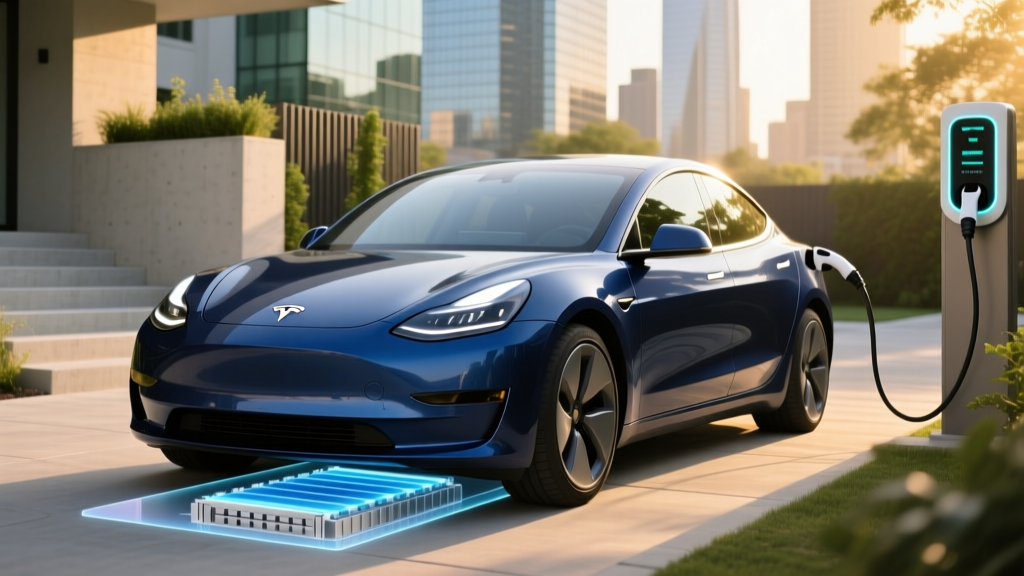
If you are shopping for an electric sedan in 2026, the Tesla Model 3 remains the benchmark that every competitor measures itself against. The current-generation "Highland" refresh brought meaningful improvements in ride quality, cabin noise, and interior materials, while the underlying Tesla drivetrain architecture continues to lead the industry in efficiency (miles per kWh) and charging-network integration. But spec sheets only tell half the story. This review breaks down what it actually costs to buy, charge, and live with each Model 3 variant — with the real-world numbers Tesla's marketing won't highlight.
2026 Tesla Model 3 Quick Verdict
The Model 3 lineup splits into three distinct propositions: the Long Range RWD for maximum efficiency, the Long Range AWD for all-weather traction, and the Performance for enthusiasts who want sports-car acceleration at a sedan price. All three share the same 79 kWh (usable) NMC lithium-ion battery pack and Tesla's industry-leading heat-pump thermal management. The RWD base model with the smaller LFP battery was discontinued for the US market in late 2025, simplifying the lineup but raising the entry price.
| Spec | Long Range RWD | Long Range AWD | Performance |
|---|---|---|---|
| EPA Range | 363 mi | 341 mi | 315 mi |
| Battery (usable) | 79 kWh NMC | 79 kWh NMC | 79 kWh NMC |
| Drivetrain | Rear-Wheel Drive (single motor) | Dual-Motor AWD | Dual-Motor AWD |
| Horsepower | 271 hp | 346 hp | 510 hp |
| 0–60 mph | 5.8 sec | 4.2 sec | 2.9 sec |
| Top Speed | 125 mph | 125 mph | 163 mph |
| EPA Efficiency | 132 MPGe (25 kWh/100mi) | 124 MPGe (27 kWh/100mi) | 115 MPGe (29 kWh/100mi) |
| Max DC Fast Charge | 250 kW | 250 kW | 250 kW |
| 10–80% DCFC Time | ~25 min | ~25 min | ~25 min |
| Level 2 Home Charge | 11.5 kW (~44 mi/hr) | 11.5 kW (~44 mi/hr) | 11.5 kW (~44 mi/hr) |
| Cargo Volume | 23 cu ft (trunk + frunk combined) | ||
| Base MSRP | $44,130 | $47,130 | $54,630 |
Sources: EPA / fueleconomy.gov, Tesla Model 3 Design Studio. Prices exclude destination fee.
Real-World Range: What the EPA Sticker Doesn't Tell You
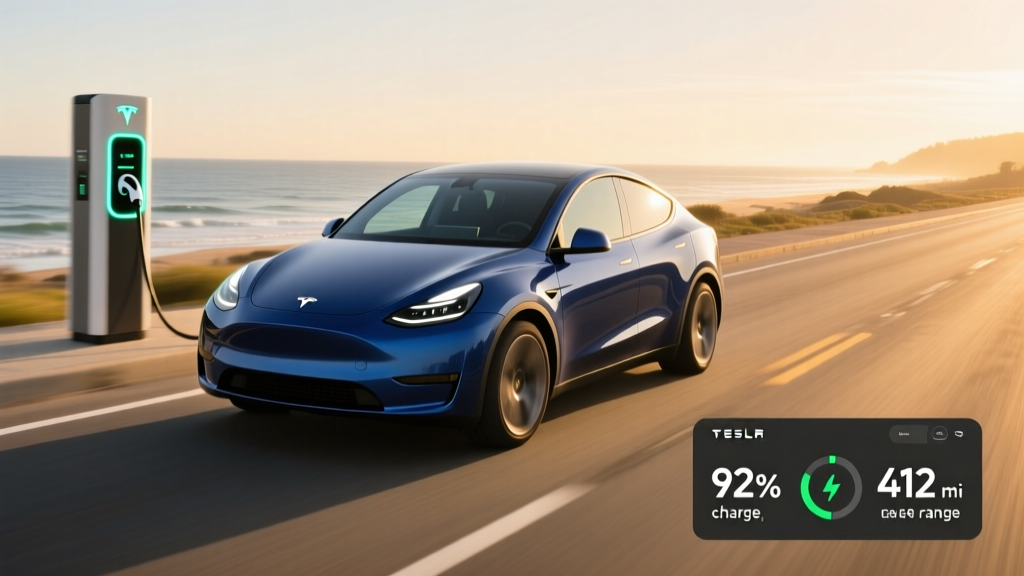
EPA Estimate vs. Reality: The Long Range RWD carries an EPA rating of 363 miles — the highest of any Model 3 variant. However, EPA testing uses a weighted city/highway cycle with moderate speeds and climate control assumptions that rarely match real driving.
- Highway cruising (70–75 mph, mild weather): Expect ~300–320 miles on the Long Range RWD, ~280–300 on the AWD, and ~255–275 on Performance.
- Cold weather (below 32°F): Range drops 20–30% across all trims. The Long Range AWD — the trim most buyers in snow-belt states will choose — realistically delivers 230–270 miles in winter highway conditions.
- City / stop-and-go with regen: You may actually exceed the EPA number on the RWD, hitting 370+ miles thanks to aggressive regenerative braking recapturing energy.
Bottom line: Plan road trips around ~270 miles of usable range (Long Range AWD) to keep a safety buffer. The Model 3's efficiency is genuinely best-in-class, but physics still governs cold-weather losses.
The Highland generation's improved aerodynamic drag coefficient (0.219 Cd) and Tesla's octovalve heat-pump system help mitigate cold-weather losses compared to older Model 3s, but no EV is immune. Preconditioning the battery while plugged in — a feature accessible via the Tesla app — recovers significant range in freezing temperatures by warming the pack before departure.
Drivetrain Architecture: RWD vs. Dual-Motor AWD vs. Performance
The Tesla drivetrain in the Model 3 uses permanent-magnet synchronous reluctance motors (a hybrid design Tesla pioneered at scale). The single-motor RWD places one unit on the rear axle, giving the car a slight rear-bias weight distribution and the best efficiency of the lineup. The dual-motor variants add a front induction motor that can decouple entirely when not needed, eliminating parasitic drag during steady-state cruising.
The Performance trim uses a revised rear motor with higher power output and Tesla's track-mode software, which can shift torque bias front-to-rear for oversteer or stability. This isn't just a software unlock — the Performance model also gets larger brake rotors, stiffer suspension bushings, and a lowered ride height.
For most buyers, the Long Range AWD is the sweet spot: you gain all-weather capability, a sub-4.5-second 0–60 time (faster than most sports sedans from five years ago), and only sacrifice 22 miles of EPA range versus the RWD. The Performance model's 2.9-second sprint is thrilling but costs $7,500 more and 47 miles of range — a trade-off that only makes sense if you plan to use track mode.
Charging Speed: DC Fast, Level 2, and the Supercharger Advantage
All 2026 Model 3 trims share the same charging hardware: a peak 250 kW DC fast-charge rate on Tesla's V3/V4 Superchargers and a 48-amp onboard charger for Level 2 AC charging.
| Charging Level | Power (kW) | Speed (mi/hr added) | Notes |
|---|---|---|---|
| Level 1 (120V household) | ~1.4 kW | ~5 mi/hr | Emergency/trickle only; 60+ hr for full charge |
| Level 2 (240V home, 48A) | 11.5 kW | ~44 mi/hr | Full charge in ~7–8 hours overnight |
| DC Fast (V3 Supercharger) | Peak 250 kW | ~170 mi in 15 min | 10–80% in ~25 min; tapers above 80% |
| DC Fast (CCS adapter, third-party) | Up to 250 kW | Varies by station | Requires Tesla CCS adapter (included since 2024) |
Charging curve reality: The 250 kW peak is sustained only between roughly 10% and 35% state of charge. The rate tapers to ~150 kW by 50%, ~90 kW by 70%, and drops sharply above 80%. This is why Tesla (and all knowledgeable EV owners) recommend charging to 80% on road trips — the final 20% can take as long as the first 70%. Battery preconditioning, triggered automatically when you navigate to a Supercharger, is essential for hitting peak rates in cool weather.
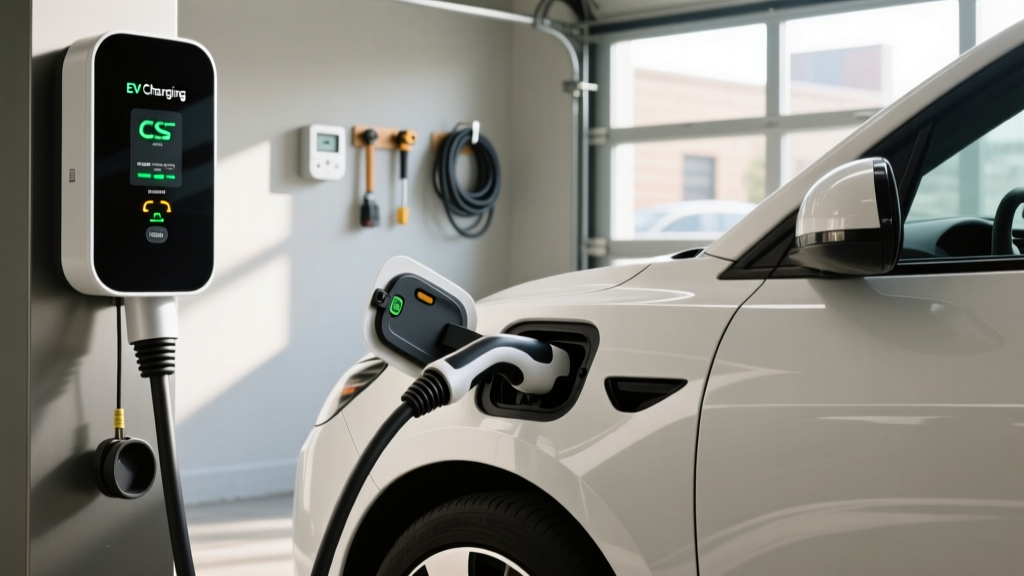
Home charging at 11.5 kW (48 amps on a 60-amp circuit) is fast enough to fully replenish the battery overnight. Installation of a Tesla Wall Connector or equivalent Level 2 unit typically costs $800–$2,000 including electrician labor, depending on your panel capacity and run length. If your home has a 200-amp panel with spare capacity, expect the lower end; older 100-amp panels may require a $2,000–$4,000 upgrade.
Pricing, Tax Credits, and Total Cost of Ownership
Tesla's pricing shifts periodically, but as of early 2026, the Model 3 lineup starts at $44,130 for the Long Range RWD (including destination). The Long Range AWD adds $3,000 at $47,130, and the Performance sits at $54,630.
| Trim | Base MSRP | Federal §30D Credit | Effective Price |
|---|---|---|---|
| Long Range RWD | $44,130 | Up to $7,500* | ~$36,630 |
| Long Range AWD | $47,130 | Up to $7,500* | ~$39,630 |
| Performance | $54,630 | Up to $7,500* | ~$47,130 |
*Credit eligibility depends on buyer income, battery sourcing, and MSRP caps. See IRS rules below.
Federal Tax Credit Eligibility (§30D Rules for 2026)
The IRS §30D clean vehicle credit offers up to $7,500, split into two $3,750 halves — one for battery-component sourcing and one for critical-minerals sourcing. Key rules for 2026:
- MSRP cap: Sedans must be priced at or below $55,000. The Long Range RWD and AWD qualify; the Performance at $54,630 squeaks under the cap but any options (FSD transfer, paint, wheels) that push the total above $55,000 disqualify it.
- Buyer income cap: Modified AGI must not exceed $150,000 (single), $225,000 (head of household), or $300,000 (joint).
- Battery sourcing: Increasingly strict critical-mineral and battery-component requirements apply. Tesla's shift to US-assembled battery packs and North American mineral sourcing has kept the Model 3 eligible for the full $7,500 as of early 2026, but this is subject to change — always verify on the IRS qualified vehicles list before purchasing.
- Point-of-sale transfer: Since 2024, buyers can transfer the credit to the dealer at purchase, reducing the out-of-pocket price immediately rather than waiting for a tax refund.
Consult a tax professional before relying on the credit. State incentives (California, Colorado, New York, and others) may stack on top but vary by jurisdiction.
Interior, Tech, and Daily Livability
The Highland refresh transformed the Model 3 cabin from spartan to genuinely premium. Ventilated front seats, ambient lighting, acoustic glass on all windows, and a rear-seat touchscreen for climate and media controls are now standard. The minimalist interior remains polarizing — there are no physical stalks (turn signals are steering-wheel buttons) and no instrument cluster — but most owners adapt within a week.
Cargo space: 23 cubic feet total (trunk plus front trunk/frunk). The trunk opening is narrower than competitors like the Hyundai Ioniq 6, which limits bulky-item loading. Rear seat legroom is 35.2 inches — adequate for adults on shorter trips but tighter than a midsize sedan.
Infotainment: The 15.4-inch center screen runs Tesla's proprietary OS, which remains the most responsive and feature-rich in the industry. Native navigation with real-time Supercharger availability, Spotify/Apple Music integration, and over-the-air updates that add features post-purchase are genuine differentiators. However, there is no Apple CarPlay or Android Auto — a dealbreaker for some buyers.
Driver Assistance: Autopilot and FSD Supervised
SAE Automation Level: Level 2. Tesla's Autopilot (standard) and Full Self-Driving Supervised ($8,000 option or $99/month) require continuous driver attention. The driver must keep hands on the steering wheel and eyes on the road at all times. These systems are not autonomous — they are advanced driver-assistance features comparable to GM Super Cruise or Ford BlueCruise, with no hands-off, eyes-off capability.
Autopilot provides competent adaptive cruise control and lane centering on highways. FSD Supervised adds automatic lane changes, traffic-light recognition, and city-street navigation, but its performance varies significantly by geography and road complexity. It is an impressive technology demonstration, but it does not replace an attentive driver. See NHTSA's guidance on ADAS for context on current regulatory expectations.
Warranty, Reliability, and Long-Term Ownership
Tesla's warranty coverage is competitive but not class-leading:
- Basic vehicle: 4 years / 50,000 miles
- Battery and drive unit: 8 years / 120,000 miles (Long Range and Performance), with a guaranteed minimum 70% capacity retention over the warranty period
- Roadside assistance: 4 years / 50,000 miles
The 70% retention threshold is important context: if your battery degrades to 69% of original capacity within 8 years/120,000 miles, Tesla will repair or replace it. Real-world degradation data from high-mileage Model 3 owners suggests most packs retain 85–90% capacity at 100,000 miles, with the steepest drop occurring in the first 10,000–15,000 miles before leveling off.
Long-term reliability has improved significantly since the pre-2023 Fremont build era. Panel gaps, suspension component wear, and heat-pump failures that plagued earlier models are far less common in the Highland generation. However, Tesla's service-center network remains thinner than legacy automakers — if you live in a rural area, factor in potential travel time for warranty work.
How the Model 3 Stacks Up Against Key Competitors
| Metric | Tesla Model 3 LR AWD | Hyundai Ioniq 6 Limited | BMW i4 xDrive40 |
|---|---|---|---|
| EPA Range | 341 mi | 316 mi | 282 mi |
| 0–60 mph | 4.2 sec | 5.1 sec | 4.5 sec |
| Peak DCFC | 250 kW | 233 kW | 205 kW |
| Base MSRP | $47,130 | $49,250 | $58,100 |
| Efficiency | 124 MPGe | 117 MPGe | 98 MPGe |
| Charging Network | Supercharger (native) | NACS adapter for Superchargers | NACS adapter for Superchargers |
The Model 3 wins on range, efficiency, and price. The Ioniq 6 offers a more conventional interior layout with physical buttons and CarPlay. The BMW i4 delivers superior build quality and driving dynamics but at a significant price premium. The Supercharger network remains Tesla's strongest moil — while competitors now have NACS adapters for Supercharger access, Tesla owners still benefit from seamless plug-and-charge integration and real-time stall availability in the navigation system.
Pros and Cons
Pros
- Best-in-class efficiency (kWh per mile) across all trims
- Supercharger network integration — the most reliable DC fast-charging experience
- Highland cabin is materially quieter and better finished than pre-2024 models
- Over-the-air updates add features and improve performance post-purchase
- Strong resale value relative to EV segment average
- Class-leading 0–60 times for the price, especially Performance trim
Cons
- No Apple CarPlay or Android Auto — Tesla OS only
- Turn-signal buttons on the steering wheel frustrate some drivers
- Rear seat legroom is tighter than midsize competitors
- Trunk opening is narrow; limits large-item cargo loading
- Service-center density is still sparse in rural areas
- FSD Supervised is expensive and does not deliver true autonomy
Who Should Buy the 2026 Tesla Model 3?
Choose the Long Range RWD if: You live in a mild climate, commute long distances, and want to maximize range and minimize cost per mile. This is the efficiency champion of the lineup.
Choose the Long Range AWD if: You experience snow or rain regularly, want confident all-weather traction, and value quick acceleration without the Performance price premium. This is the best all-around Model 3 for most US buyers.
Choose the Performance if: You want sports-car acceleration, plan to use track mode, and are willing to trade 26+ miles of range and $7,500 for the thrill. Verify your configuration stays under the $55,000 MSRP cap for tax-credit eligibility.
Look elsewhere if: You need Apple CarPlay, prefer physical controls, require a spacious rear seat for adult passengers, or live far from a Tesla service center.
Frequently Asked Questions
What is the real-world range of the 2026 Tesla Model 3?
The EPA rates the Long Range RWD at 363 miles, the AWD at 341 miles, and the Performance at 315 miles. In real-world highway driving at 70–75 mph, expect 300–320 miles (RWD), 280–300 (AWD), and 255–275 (Performance). In freezing temperatures, subtract 20–30% from these figures.
How fast does the Model 3 charge at home and on the road?
On a Level 2 home charger (240V, 48A), the Model 3 charges at 11.5 kW, adding roughly 44 miles of range per hour — a full charge takes 7–8 hours. On a Tesla V3 Supercharger, it peaks at 250 kW and charges from 10–80% in approximately 25 minutes, though the rate tapers significantly above 80% SoC.
Does the 2026 Tesla Model 3 qualify for the $7,500 federal tax credit?
The Long Range RWD ($44,130) and Long Range AWD ($47,130) qualify for up to $7,500 under IRS §30D, provided the buyer meets income limits ($150K single / $300K joint) and the battery meets sourcing requirements. The Performance ($54,630) is under the $55,000 sedan MSRP cap, but adding options can push it over — verify before ordering. Always check the current IRS qualified vehicle list.
Is the Tesla Model 3 worth buying over the Hyundai Ioniq 6 or BMW i4?
The Model 3 wins on efficiency, range, price, and charging-network integration. The Ioniq 6 is a strong alternative if you want CarPlay and physical buttons. The BMW i4 offers better build quality and driving refinement but costs $11,000+ more for less range. For most buyers, the Model 3 Long Range AWD at ~$39,630 after the tax credit is the best value in the segment.
What are the biggest drawbacks of the Model 3?
No Apple CarPlay/Android Auto, steering-wheel turn-signal buttons that divide opinion, tight rear legroom for taller adults, a narrow trunk opening, and limited service-center availability in rural areas. FSD Supervised remains a Level 2 system despite its name and $8,000 price tag.
How long will the Model 3 battery last?
Tesla warranties the battery for 8 years / 120,000 miles with a minimum 70% capacity retention guarantee. Real-world data from high-mileage owners shows most NMC packs retain 85–90% capacity at 100,000 miles. Battery replacement outside of warranty currently costs $12,000–$16,000 depending on the pack — though this is rarely needed within the first 150,000 miles.