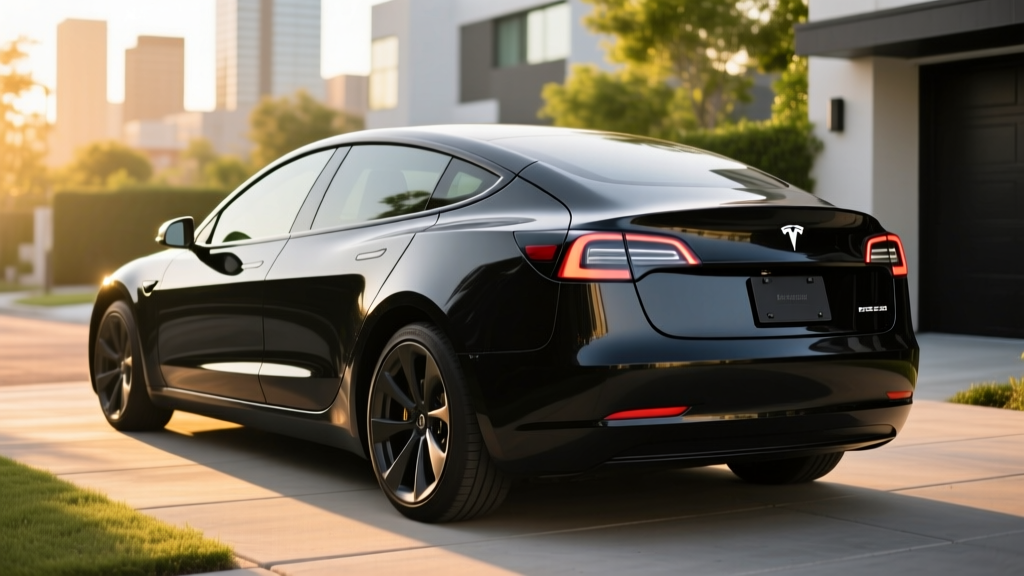
Why Is Your 2018 Tesla Model 3 Drive Unit Making a Sound?
If you own or are considering a used 2018 Tesla Model 3, you may have noticed — or read about — the drive unit producing an unusual sound. This is one of the most searched concerns among early Model 3 owners, and for good reason. The 2018 model year was Tesla's first mass-production year for the Model 3, and some early vehicles exhibited drive unit whine, hum, or grinding noises that prompted service bulletins and, in some cases, full drive unit replacements under warranty.
This guide covers what causes those sounds, how to diagnose them, what Tesla has done to address the issue, and whether a 2018 Model 3 is still a smart buy today. We'll also walk through the vehicle's core specs — range, charging, battery, performance, and pricing — so you have the full ownership picture.
Common 2018 Model 3 Drive Unit Sounds Explained
Not all drive unit sounds signal a problem. Electric motors operate differently from internal combustion engines, and some noise is inherent to the design. Here's how to categorize what you're hearing:
Normal Sounds
- Low-speed whine or whirring: Electric motors produce electromagnetic noise, especially under load at low speeds. This is normal and present in nearly every EV.
- Regen braking hum: When the motor acts as a generator during regenerative braking, a subtle hum is expected.
- Coolant pump noise: The drive unit has its own thermal management loop. A faint buzzing when the car is parked or charging is the coolant pump circulating fluid — completely normal.
Sounds That Warrant Attention
- Loud, high-pitched whining that increases with speed: In some 2018 Model 3 rear-wheel-drive (RWD) units, owners reported a pronounced whine that grew louder above 40 mph. This was often traced to early-production motor bearing wear or gear-set tolerances in the rear drive unit.
- Grinding or metallic noise during acceleration: This can indicate bearing failure or internal gear wear. It's not normal and should be inspected immediately.
- Clunking when shifting between Drive and Reverse: While some drivetrain lash is expected, a pronounced clunk may point to motor mount or half-shaft issues.
- Vibration paired with noise: If the sound is accompanied by vibration through the floor or seat, it suggests a mechanical imbalance or mounting problem.
What Tesla Did About It
Tesla issued internal service bulletins addressing excessive drive unit noise in early Model 3 vehicles. Many affected owners received full rear drive unit replacements under the vehicle's 8-year/100,000-mile powertrain warranty. Later-production 2018 and 2019+ Model 3 vehicles used revised drive units with improved bearing specifications and noise dampening.
2018 Tesla Model 3 Core Specs: Range, Battery, and Performance
Whether you're diagnosing a noise issue or evaluating a used 2018 Model 3 as a purchase, here are the numbers that matter. The 2018 Model 3 was offered in three primary configurations: Standard Range (RWD), Long Range (RWD), and Long Range Dual Motor (AWD).
| Spec | Standard Range RWD | Long Range RWD | Long Range AWD |
|---|---|---|---|
| EPA Range | 220 mi | 310 mi | 310 mi |
| Battery (Usable) | ~50 kWh (NMC) | ~75 kWh (NMC) | ~75 kWh (NMC) |
| Drivetrain | Rear-Wheel Drive | Rear-Wheel Drive | Dual Motor AWD |
| Horsepower | ~258 hp | ~258 hp | ~346 hp |
| 0-60 mph | 5.6 sec | 5.1 sec | 4.5 sec |
| EPA Efficiency | 138 MPGe | 136 MPGe | 120 MPGe |
| Max DC Fast Charge | ~120 kW | ~120 kW | ~120 kW |
| Level 2 Charge Rate | 7.6 kW (32 mi/hr) | 11.5 kW (44 mi/hr) | 11.5 kW (44 mi/hr) |
| Cargo Volume | 15 cu ft (trunk) + 4.2 cu ft (frunk) = 19.2 cu ft total | ||
| Rear Legroom | 35.2 in | ||
| Battery Warranty | 8 yr / 100,000 mi (Std) | 8 yr / 120,000 mi (Long Range) | |
Source: EPA Fuel Economy — 2018 Tesla Model 3 listings.
Charging the 2018 Model 3: What to Expect in 2026
The 2018 Model 3 uses the Tesla (NACS) connector natively, giving it access to the Tesla Supercharger network — still the most reliable DC fast-charging network in the U.S. as of 2026. Here's what charging looks like across all three levels:
| Level | Power (kW) | Speed (miles/hr) | Notes |
|---|---|---|---|
| Level 1 (120V outlet) | ~1.4 kW | ~4 mi/hr | Emergency/top-up only |
| Level 2 (240V home) | 7.6–11.5 kW | 32–44 mi/hr | Full overnight charge |
| DC Fast (Supercharger V2) | Peak ~120 kW | ~170 mi in 30 min | Tapers above 60% SoC |
| DC Fast (Supercharger V3/V4) | ~120 kW (capped by vehicle) | Same as V2 | 2018 Model 3 cannot exceed ~120 kW |
Important context: The 2018 Model 3's onboard charging architecture caps DC fast charging at approximately 120 kW, even when plugged into a 250 kW V3 or V4 Supercharger. The charge curve peaks around 40–50% state of charge (SoC) and tapers significantly above 80%. A typical 10–80% session takes roughly 35–45 minutes. This is slower than newer EVs with 200+ kW peak rates, but the Supercharger network's reliability largely compensates.
For CCS-equipped public chargers (Electrify America, EVgo), you'll need a NACS-to-CCS adapter. Tesla sells one, and third-party options are available. The Model 3 can accept CCS charging through this adapter, though speeds remain capped at the vehicle's ~120 kW ceiling.
Used 2018 Model 3 Pricing and Tax Credit Eligibility
As a used vehicle in 2026, the 2018 Model 3 is not eligible for the new-vehicle §30D federal tax credit. However, it may qualify for the Used Clean Vehicle Credit (§25E), which provides up to $4,000 or 30% of the sale price (whichever is lower) if specific conditions are met.
- Sale price must be $25,000 or less
- Buyer AGI must not exceed $75,000 (single) / $112,500 (head of household) / $150,000 (joint)
- Vehicle must be at least 2 model years old (2018 qualifies in 2026)
- Must be purchased from a licensed dealer (private-party sales excluded)
- Buyer must not have claimed the used-EV credit in the prior 3 years
- Battery must be at least 7 kWh (all Model 3 variants qualify)
Verify current rules at IRS.gov §25E page. Tax rules change — consult a tax professional.
| Trim | Typical Used Price | Price After §25E Credit |
|---|---|---|
| Standard Range RWD | $17,000–$21,000 | ~$13,000–$17,000 |
| Long Range RWD | $20,000–$24,000 | ~$16,000–$20,000 |
| Long Range Dual Motor AWD | $22,000–$27,000 | ~$18,000–$23,000 |
Note: Long Range AWD models priced above $25,000 do not qualify for the §25E credit. Shop carefully — a dealer listing at $24,995 could save you $4,000, while the same car at $25,500 leaves you paying full price.
Drive Unit Warranty: Are You Still Covered?
The 2018 Model 3's battery and drive unit warranty depends on the variant:
- Standard Range: 8 years / 100,000 miles (whichever comes first), with minimum 70% battery capacity retention
- Long Range / AWD: 8 years / 120,000 miles (whichever comes first), with minimum 70% battery capacity retention
For a 2018 model, the 8-year window expired in 2026. If your vehicle has fewer than 100,000 miles (Standard Range) or 120,000 miles (Long Range), you may still have powertrain coverage for the drive unit. This is critical if you're experiencing drive unit noise — get it evaluated and documented by Tesla Service before your mileage threshold is reached.
The drive unit is covered under the same warranty as the battery pack. If Tesla determines the noise constitutes a defect rather than normal operational sound, they will replace the drive unit at no cost. Out-of-warranty drive unit replacement costs have been reported in the $5,000–$8,000 range, making early diagnosis essential.
Technology and Features That Still Hold Up
Despite being an early-production model, the 2018 Model 3 remains technologically capable in 2026. Here's what you're working with:
Infotainment
- 15-inch center touchscreen with Tesla's continuously updated software
- Over-the-air (OTA) updates — Tesla has continued pushing software improvements to 2018 hardware
- Navigation, streaming media (Spotify, Apple Music), and web browser
- No Apple CarPlay or Android Auto (Tesla's closed ecosystem)
Driver Assistance (SAE Level 2)
- Basic Autopilot (standard): Traffic-aware cruise control and lane centering
- Enhanced Autopilot ($6,000 option): Auto lane change, Navigate on Autopilot, Smart Summon, Autopark
- Full Self-Driving Supervised ($12,000 option): Traffic light and stop sign recognition, city street steering assistance. Note: FSD capability on 2018 hardware (HW2.5) is limited compared to HW3/HW4 vehicles. Some FSD features may not be available or may perform below current standards on 2018 units.
Notable Drawbacks
- No heads-up display
- Minimalist interior means no physical buttons — everything runs through the screen, including climate and mirror adjustments
- Early 2018 build quality was inconsistent (panel gaps, interior trim issues) — improved significantly by late 2018/2019
- Rear seat comfort is average for the class — the 35.2 inches of legroom is tight for taller passengers on long trips
- No heat pump in 2018 models (resistive cabin heating), which increases cold-weather energy consumption
2018 Model 3 vs. the Used EV Competition
If you're weighing a used 2018 Model 3 against other options in the $18,000–$27,000 range, here's how it stacks up:
| Vehicle | EPA Range | DC Fast Charge | Typical Used Price | Key Advantage |
|---|---|---|---|---|
| 2018 Tesla Model 3 LR AWD | 310 mi | ~120 kW | $22,000–$27,000 | Supercharger network, range |
| 2019 Chevrolet Bolt EV | 238 mi | ~55 kW | $14,000–$18,000 | Low price, practical hatchback |
| 2020 Hyundai Kona Electric | 258 mi | ~77 kW | $17,000–$22,000 | CarPlay, comfortable ride |
| 2020 Nissan Leaf Plus | 215 mi | ~50 kW (CHAdeMO) | $14,000–$18,000 | Lowest entry price |
- You need 300+ miles of range for road trips
- Supercharger access matters to you
- You want OTA software updates and strong resale value
- You prefer Tesla's minimal tech-forward interior
- You want Apple CarPlay or physical buttons
- You're concerned about early build quality variability
- You need maximum rear-seat space for car seats or tall passengers
- You want the fastest DC charging available
Pros and Cons of the 2018 Tesla Model 3
Pros
- 310-mile EPA range (Long Range) still competitive in 2026
- Native NACS connector = full Supercharger network access
- Strong performance (4.5s 0-60 AWD) for the price
- Continued OTA software updates from Tesla
- Extensive Supercharger and service infrastructure
- Low running costs vs. gas equivalents
- Strong safety ratings (NHTSA 5-star, IIHS Top Safety Pick+)
Cons
- Drive unit noise was a known issue on early 2018 units
- DC fast charging capped at ~120 kW (slow vs. newer EVs)
- No heat pump — cold-weather range loss is significant
- Inconsistent early build quality (panel gaps, trim)
- No Apple CarPlay / Android Auto
- FSD hardware (HW2.5) may limit future autonomous features
- Tight rear seat for a premium-priced sedan
- 8-year battery/drive unit warranty expiring or expired
Frequently Asked Questions
Is a whining sound from the 2018 Model 3 drive unit a safety concern?
A mild whine under acceleration is normal for electric motors. However, a loud or worsening whine, grinding, or vibration should be inspected promptly. While it's unlikely to cause sudden failure, bearing wear can progress and eventually damage the drive unit. If you're within the mileage limits of your powertrain warranty, Tesla will evaluate and potentially replace the unit at no charge.
How much does it cost to replace a 2018 Model 3 drive unit out of warranty?
Out-of-warranty drive unit replacement has been reported between $5,000 and $8,000, including parts and labor at a Tesla Service Center. Independent EV shops may offer lower prices using refurbished units. If the noise is caught early, some shops can replace just the bearings for $1,500–$2,500.
Does a 2018 Model 3 qualify for any federal tax credit in 2026?
Not the new-vehicle §30D credit. It may qualify for the used-vehicle §25E credit (up to $4,000) if the sale price is $25,000 or less, purchased from a dealer, and the buyer meets income caps ($75,000 single / $150,000 joint). Verify eligibility at IRS.gov and consult a tax professional.
What's the real-world range of a 2018 Model 3 Long Range with battery degradation?
Most 2018 Long Range Model 3 batteries have degraded 8–12% after 60,000–100,000 miles, depending on charging habits (frequent Supercharging and charging to 100% accelerate degradation). Expect roughly 270–285 miles of usable range in mixed driving, 230–250 miles on sustained highway trips, and 215–230 miles in cold weather.
Can the 2018 Model 3 use non-Tesla chargers?
Yes, but with an adapter. The 2018 Model 3 has a native NACS (Tesla) port. To use CCS chargers (Electrify America, EVgo, some ChargePoint stations), you'll need a NACS-to-CCS adapter. Tesla sells an official adapter, and several third-party options exist. CHAdeMO charging is not supported without a third-party adapter, and the CHAdeMO network is shrinking.
Is the 2018 Model 3 still worth buying in 2026?
Yes — if you find one with a documented service history, ideally with the drive unit already replaced or confirmed noise-free, and battery degradation under 12%. The Long Range AWD at $22,000–$25,000 (potentially $18,000–$21,000 after the §25E credit) remains one of the best value propositions in used EVs, thanks to its range, Supercharger access, and performance. Just budget for the possibility of an out-of-warranty drive unit repair and factor in the lack of a heat pump if you live in a cold climate.
For the latest safety data, check the NHTSA 2018 Tesla Model 3 page and IIHS ratings.