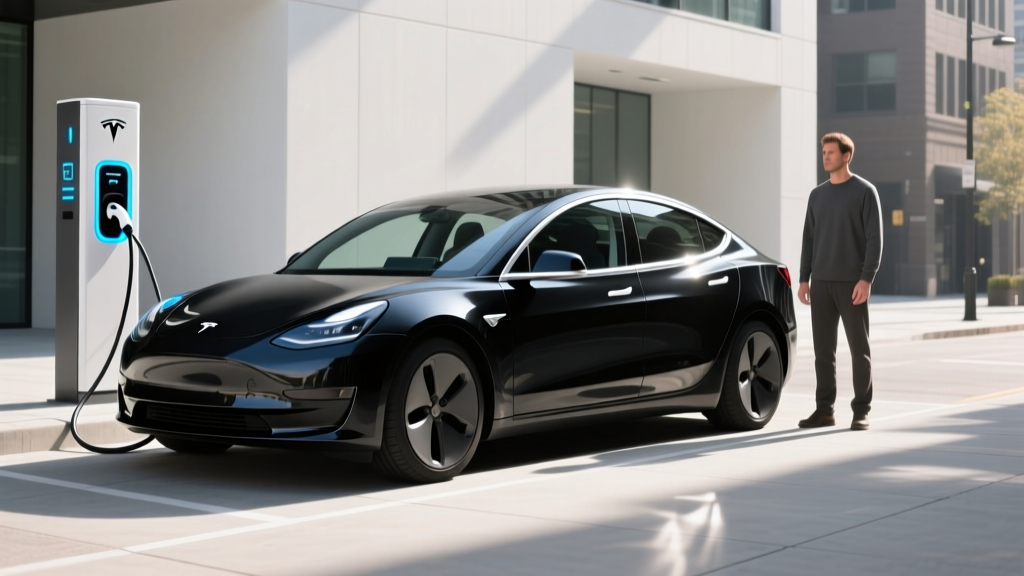
The Tesla Model 3 remains the benchmark compact electric sedan in 2026, but buyers researching this car often hit a wall of fragmented specs. You want to know if it fits your garage, how far it really goes on a charge, and what you'll actually pay after incentives. This profile breaks down every critical Model 3 Tesla dimensions data point alongside real-world range, charging speeds, and ownership costs — no marketing fluff, just the numbers that matter.
Quick Verdict: Who the Model 3 Is For
The 2026 Tesla Model 3 suits daily commuters and tech-forward drivers who prioritize efficiency, access to the Supercharger network, and over-the-air updates. It's less ideal for families needing rear-seat headroom for tall teens or buyers who want Apple CarPlay/Android Auto integration. If your commute is under 60 miles round-trip and you can install a Level 2 home charger, the RWD trim delivers outstanding value. Road-trippers should step up to the Long Range AWD for the 363-mile EPA buffer.
Exterior Dimensions and Garage Fit
The Model 3's footprint is compact enough for tight urban garages yet long enough to provide credible trunk space. Here are the exact exterior measurements for the current-generation (Highland refresh) Model 3:
| Dimension | Measurement |
|---|---|
| Overall Length | 184.8 in (4,694 mm) |
| Overall Width (mirrors folded) | 77.8 in (1,976 mm) |
| Overall Width (body, no mirrors) | 72.8 in (1,849 mm) |
| Overall Height | 56.8 in (1,443 mm) |
| Wheelbase | 113.2 in (2,875 mm) |
| Ground Clearance | 5.5 in (139 mm) |
| Curb Weight (RWD / LR AWD) | 3,862 lb / 4,034 lb |
For garage planning, you'll need at least 19 feet of depth (including walking clearance) and roughly 8 feet of width to open doors comfortably. The 5.5-inch ground clearance is sedan-typical but means you'll want to approach steep driveways at an angle to avoid scraping the front air dam.
Interior Space: Passenger and Cargo Dimensions
Inside, the Model 3 offers competitive front-seat room but a notably tight rear seat compared to rivals like the Hyundai Ioniq 6 or BMW i4. Tesla's minimalist cabin eliminates physical buttons, routing nearly all controls through the 15.4-inch center touchscreen.
| Interior Dimension | Front | Rear |
|---|---|---|
| Headroom | 40.3 in | 37.8 in |
| Legroom | 42.7 in | 35.2 in |
| Shoulder Room | 56.3 in | 53.5 in |
| Hip Room | 53.4 in | 50.7 in |
Cargo volume: 23.0 cubic feet trunk (including under-floor storage) plus a 3.1-cubic-foot front trunk (frunk). Total enclosed storage: 26.1 cu ft. The trunk opening is relatively narrow, so bulky items like large dog crates require careful maneuvering. The rear seats fold 60/40 to accommodate longer cargo, but there's no hatchback access — a limitation versus the Model Y or Ioniq 5.
Range, Battery, and Efficiency by Trim
| Spec | RWD | Long Range AWD | Performance |
|---|---|---|---|
| EPA Range | 272 mi | 363 mi | 315 mi |
| Battery Chemistry | LFP (CATL) | NMC | NMC |
| Battery Capacity (usable) | ~57.5 kWh | ~75 kWh | ~75 kWh |
| MPGe (city/hwy/combined) | 140 / 121 / 132 | 136 / 119 / 128 | 123 / 106 / 115 |
| kWh per 100 mi | 25 | 26 | 29 |
| Drivetrain | Rear-Wheel Drive | Dual-Motor AWD | Dual-Motor AWD |
| Horsepower | 271 hp | 346 hp | 510 hp |
| 0–60 mph | 5.8 sec | 4.2 sec | 2.9 sec |
The RWD trim's LFP (lithium iron phosphate) battery is a key differentiator. LFP chemistry offers a longer cycle life and can be routinely charged to 100% without degradation concerns — Tesla actually recommends periodic 100% charges for LFP packs to maintain cell-balancing accuracy. The trade-off is lower energy density (hence the shorter range) and reduced cold-weather performance compared to NMC. In winter testing, LFP-equipped Model 3s have shown up to 35% range loss at 15°F, versus roughly 20–25% for NMC Long Range models.
According to fueleconomy.gov, the Long Range AWD's 128 MPGe combined makes it one of the most efficient all-wheel-drive electric sedans on the market, translating to roughly 26 kWh per 100 miles. At the U.S. average electricity rate of ~$0.17/kWh, that's about $4.42 per 100 miles of driving — roughly one-third the fuel cost of a 30-MPG gas sedan at $3.50/gallon.
Charging Speeds: DC Fast Charge and Home Level 2
| Charging Method | RWD (LFP) | Long Range / Performance (NMC) |
|---|---|---|
| Max DC Fast Charge Rate | 170 kW | 250 kW |
| 10–80% DC Fast Charge Time | ~25 min | ~22 min |
| Level 2 (240V, 48A) Rate | ~11.5 kW (~44 mi/hr) | ~11.5 kW (~44 mi/hr) |
| Level 2 (240V, 32A Mobile Connector) | ~7.7 kW (~30 mi/hr) | ~7.7 kW (~30 mi/hr) |
| Level 1 (120V, 12A) | ~1.4 kW (~5 mi/hr) | ~1.4 kW (~5 mi/hr) |
| Connector (North America) | NACS (native Tesla), Supercharger network | |
Charging-curve reality check: The 250-kW peak rate on Long Range and Performance trims is not sustained for the full session. The Model 3 typically holds peak rate only between ~10–30% State of Charge (SoC), then tapers progressively. By 60% SoC, you'll see roughly 150 kW; by 80%, it drops to under 70 kW. This is why Tesla quotes 10–80% times rather than 0–100% — charging above 80% is painfully slow and best reserved for destination overnight stops.
For home charging, Tesla's Wall Connector at 48 amps on a 60-amp circuit delivers roughly 44 miles of range per hour of charging. A full overnight session (8 hours) replenishes about 350 miles — more than enough for any Model 3 trim. Expect a professional installation (electrician + permit) to run $500–$2,000 depending on panel proximity and whether your home needs a service upgrade. The included Mobile Connector with a NEMA 14-50 adapter delivers about 30 mi/hr on a 240V/40A outlet — adequate for most daily needs if you don't want to hardwire a Wall Connector.
Pricing, Trims, and Federal Tax Credit Eligibility
| Trim | Base MSRP | Est. After §30D Credit* |
|---|---|---|
| RWD | $38,990 | ~$31,490 |
| Long Range AWD | $45,740 | ~$38,240 |
| Performance | $52,740 | ~$45,240 |
*All trims include $1,390 destination fee in MSRP. Tax credit estimate assumes full $7,500 eligibility. Destination charges are not credit-eligible.
- MSRP Cap: Sedan price must not exceed $55,000 (all Model 3 trims qualify).
- Buyer Income Cap: Modified AGI ≤ $150,000 (single), $225,000 (head of household), $300,000 (married filing jointly).
- Battery Sourcing: Critical minerals and battery components must meet escalating domestic-content thresholds. As of 2026, 80% of critical minerals and 100% of battery components must be sourced from the U.S. or FTA partners, with no foreign entities of concern (FEOC).
- Point-of-Sale Transfer: Eligible buyers can transfer the credit to the dealer at purchase, reducing the upfront price rather than waiting for a tax refund.
- Assembly: Model 3 is assembled at Giga Texas (Fremont production has shifted), satisfying North American final assembly requirements.
Always verify current eligibility at irs.gov before purchasing — sourcing rules tighten annually and trim-level eligibility can change mid-year.
The RWD trim's sub-$32,000 effective price (with full credit) makes it one of the most affordable premium electric sedans available. However, buyers who don't itemize deductions or who exceed the income cap won't qualify, making the effective price $7,500 higher. The point-of-sale transfer option, introduced under the Inflation Reduction Act, helps by letting you apply the credit as a down-payment reduction at purchase — but the dealer must participate.
Tech, Driver Assistance, and Warranty
Infotainment: The 15.4-inch center touchscreen handles navigation, media, climate, and vehicle settings. There is no Apple CarPlay or Android Auto — Tesla's proprietary system is the only option. Streaming services (Netflix, YouTube, Spotify) work while parked. A secondary 8-inch rear touchscreen provides rear passengers with climate and media controls. The 17-speaker audio system on Long Range and Performance trims is genuinely excellent, rivaling premium branded systems.
Driver Assistance (SAE Level 2): Standard Autopilot includes adaptive cruise control and lane-centering on highways. Tesla's Full Self-Driving (Supervised) — a $8,000 add-on or $99/month subscription — adds automated lane changes, traffic-light recognition, and navigate-on-autopilot. However, FSD remains SAE Level 2: the driver must remain fully engaged, hands on or near the wheel, and eyes on the road at all times. It is not autonomous driving. According to NHTSA, no consumer vehicle currently sold in the U.S. offers Level 3 or higher automated driving for public roads.
Warranty Coverage:
| Component | Coverage |
|---|---|
| Basic Vehicle | 4 years / 50,000 miles |
| Battery & Drive Unit (RWD) | 8 years / 100,000 miles |
| Battery & Drive Unit (LR/Perf) | 8 years / 120,000 miles |
| Battery Capacity Retention | Minimum 70% over warranty period |
Tesla's battery warranty guarantees at least 70% capacity retention over the warranty period. If your Long Range pack degrades below 70% within 8 years or 120,000 miles, Tesla will repair or replace it. Real-world degradation data from owner fleets suggests most Model 3 packs retain 88–92% capacity at 100,000 miles, with LFP packs showing slightly better long-term retention but more variance in early calibration.
Pros, Cons, and How It Compares
- Class-leading efficiency (25–29 kWh/100 mi)
- Access to 6,000+ North American Superchargers
- LFP battery allows routine 100% charging (RWD)
- Strong over-the-air update cadence
- Competitive pricing after §30D credit
- Excellent front-seat comfort and visibility
- Tight rear legroom (35.2 in) and headroom
- No Apple CarPlay / Android Auto
- No hatchback — trunk-only cargo access
- Low ground clearance (5.5 in) for rough roads
- FSD subscription cost is steep for Level 2 assist
- LFP cold-weather range loss can exceed 30%
Versus key competitors: The Hyundai Ioniq 6 SE offers 361 miles of EPA range for roughly $42,000 and has more rear-seat room, but lacks Supercharger network access (though NACS adapters are becoming available). The BMW i4 eDrive40 starts around $57,000 — significantly pricier — but delivers superior build quality and standard CarPlay. The Polestar 2 is similarly priced to the Long Range Model 3 but trails on range (276 mi) and efficiency. For pure value-per-mile-of-range, the Model 3 RWD at ~$31,500 after credit is difficult to beat in 2026.
Look elsewhere if: You regularly carry rear-seat adults, need CarPlay, want hatchback versatility (consider the Model Y), or live in extreme-cold climates where LFP range loss is a dealbreaker.
Frequently Asked Questions
What is the real-world range of the 2026 Tesla Model 3?
The RWD delivers about 272 miles EPA, but expect 220–245 miles on highway road trips at 75 mph and as low as 185–200 miles in sub-20°F weather due to LFP chemistry limitations. The Long Range AWD's 363-mile EPA figure translates to roughly 305–325 highway miles in fair weather and 260–290 in deep cold. Preconditioning the battery via the Tesla app before departure recovers some of this loss.
How fast does the Model 3 charge at home and on the road?
On DC fast charging, the Long Range and Performance peak at 250 kW and reach 10–80% in roughly 22 minutes. The RWD peaks at 170 kW and takes about 25 minutes for the same session. At home on a 48-amp Level 2 Wall Connector, all trims add about 44 miles of range per hour — a full overnight charge easily covers any single day's driving.
Does the Tesla Model 3 qualify for the $7,500 federal EV tax credit?
All 2026 Model 3 trims fall under the $55,000 sedan MSRP cap and are assembled in Texas, meeting the North American assembly requirement. However, your eligibility depends on income limits ($150K single / $300K joint) and the battery-sourcing rules in effect at time of purchase. The credit can be transferred at point of sale to reduce your purchase price. Verify at irs.gov before committing.
How do Tesla Model 3 dimensions compare to the Model Y?
The Model Y is roughly 7 inches longer, 1.3 inches wider, and 6.4 inches taller, with 76.0 cu ft of cargo space (versus the Model 3's 26.1 cu ft total). If you need family-hauling cargo versatility, the Model Y is the better fit. The Model 3 wins on efficiency, driving dynamics, and price.
Is the Model 3 Performance worth the upcharge?
At $52,740, the Performance delivers a 2.9-second 0–60 time, track mode, and adaptive dampers — genuinely thrilling for enthusiast drivers. But you sacrifice 48 miles of range versus the Long Range and pay more than the §30D MSRP cap allows for a sedan ($55,000), so it barely squeezes under the credit limit. If speed isn't a daily need, the Long Range AWD is the smarter value play.
What are the biggest drawbacks of owning a Model 3?
The most common owner complaints center on the tight rear seat, absence of CarPlay/Android Auto, trunk-only cargo access (no hatchback), and the LFP battery's pronounced cold-weather range loss. Tesla's service center network, while expanding, still requires advance scheduling in many metro areas, and body repair costs after collisions tend to be higher than mainstream brands due to aluminum and integrated structural components.