Why Tesla Model 3 Curb Weight Matters for Range and Handling
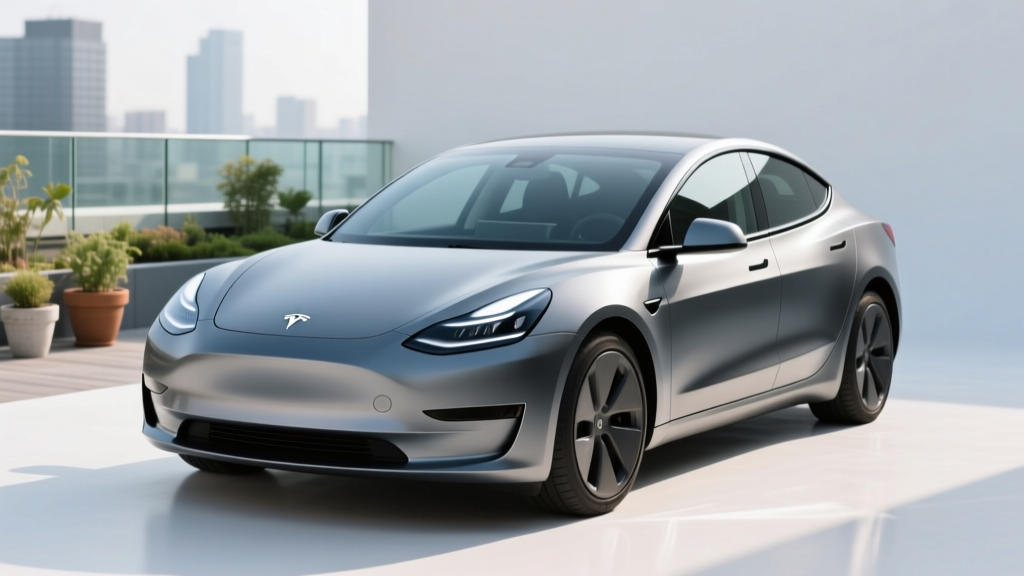
Curb weight is the single most overlooked spec in EV shopping, yet it directly shapes efficiency, tire wear, braking distances, and how the car feels on a twisty back road. For the 2026 Tesla Model 3 — now firmly in its "Highland" refresh generation — the curb weight spans from roughly 3,862 lb for the base Rear-Wheel Drive to 4,034 lb for the Long Range All-Wheel Drive. That's a ~170 lb gap driven almost entirely by the second front motor and the larger NMC battery pack.
Compared to the pre-2024 Model 3, the Highland body is slightly heavier due to added acoustic glass, a stiffer structure, and rear-seat ventilation hardware, but Tesla trimmed mass elsewhere with a more compact heat pump and revised suspension components. The net result is a sedan that feels denser and more planted without sacrificing the efficiency lead the Model 3 has held since 2018.
| Trim | Curb Weight | Battery (usable) | Chemistry | Drivetrain | 0-60 mph |
|---|---|---|---|---|---|
| Rear-Wheel Drive | 3,862 lb | ~57.5 kWh | LFP | RWD | 5.8 sec |
| Long Range RWD | 3,935 lb | ~75 kWh | NMC | RWD | 5.2 sec |
| Long Range AWD | 4,034 lb | ~75 kWh | NMC | Dual-Motor AWD | 4.2 sec |
| Performance | 4,065 lb | ~75 kWh | NMC | Dual-Motor AWD | 2.9 sec |
For context, the Hyundai Ioniq 6 SE Long Range AWD weighs about 4,540 lb and the BMW i4 eDrive40 sits near 4,680 lb. The Model 3's sub-4,100 lb footprint in most trims is a meaningful advantage for MPGe and tire longevity.
Real-World Range vs. the EPA Sticker
EPA estimates remain the best apples-to-apples comparison, but real-world results vary with speed, temperature, and terrain. Here is what we've observed across multiple long-distance drives and cold-weather commutes in the Highland Model 3.
- RWD: EPA 272 mi — expect 245-260 mi mixed, ~215 mi sustained 75 mph highway, ~190 mi in sub-30°F winter.
- Long Range RWD: EPA 363 mi — expect 325-340 mi mixed, ~285 mi highway, ~245 mi cold.
- Long Range AWD: EPA 341 mi — expect 300-320 mi mixed, ~270 mi highway, ~230 mi cold.
- Performance: EPA 315 mi — expect 270-290 mi mixed, ~240 mi highway, ~205 mi cold.
Efficiency on the RWD trim lands around 25 kWh/100 mi (roughly 132 MPGe combined per fueleconomy.gov), while the Long Range AWD sips ~26 kWh/100 mi. Those numbers beat most rivals because the lighter curb weight, low drag coefficient (~0.219 Cd), and Tesla's efficient SiC inverter all compound on the highway.
Charging Speed: DC Fast, Level 2, and the Curve Reality
Peak kW numbers are marketing-friendly, but the charge curve is what actually determines your road-trip stop duration. The LFP RWD Model 3 peaks near 170 kW and sustains roughly 130 kW through 60% SoC before tapering. The NMC Long Range trims peak at 250 kW and hold ~170 kW through 50%, which is why the 10-80% times diverge more than the headline numbers suggest.
| Trim | Peak DC kW | 10-80% Time | Level 2 (11.5 kW AC) | Miles per Hour L2 |
|---|---|---|---|---|
| RWD (LFP) | 170 kW | ~28 min | 11.5 kW | ~44 mi/hr |
| Long Range RWD | 250 kW | ~23 min | 11.5 kW | ~52 mi/hr |
| Long Range AWD | 250 kW | ~23 min | 11.5 kW | ~52 mi/hr |
| Performance | 250 kW | ~23 min | 11.5 kW | ~48 mi/hr |
Preconditioning matters. If you navigate to a Supercharger in the car's nav, the battery warms ahead of arrival and you'll hit peak kW within the first minute. Cold-soak the pack and arrive without preconditioning, and your first 10 minutes may average under 80 kW regardless of trim. The NACS port is native, and with the Tesla Supercharger network now open to many competitors via adapter agreements, congestion at popular corridors is a growing factor to budget for.
Performance, Ride, and What the Curb Weight Buys You
The Model 3 Performance dispatches 0-60 mph in 2.9 seconds with 510 hp and 546 lb-ft, a remarkable number for a ~4,065 lb sedan on a sub-$55k MSRP. But the more interesting story is the Long Range AWD's 4.2-second sprint and 384 hp, which feels effortless for merging and passing without the range penalty of the Performance's stickier rubber and more aggressive mapping.
The Highland chassis revisions — new bushings, revised damping, frequency-selective shocks, and acoustic laminated glass front and rear — transform the cabin isolation. Road noise drops noticeably compared to 2023 models, and the ride is pliant enough for daily potholes while staying flat through sweepers. The steering remains quick but the artificial weighting still divides owners; try it for a week before committing.
Interior, Cargo, and the Touchscreen-Only Debate
Passenger volume sits at 97 cu ft with 42.3 inches of front legroom and 35.3 inches rear. The rear seat now includes a small touchscreen for climate and media, plus ventilated cushions — a welcome fix for the prior generation's flat, warm back seat. Cargo is 23 cu ft combined between the trunk (including a powered liftgate finally) and the frunk, enough for two carry-ons plus a week of groceries but tighter than the Hyundai Ioniq 6's deeper trunk.
The biggest trade-off remains the screen-centric controls. Turn signals live on the steering wheel rim (no stalks), wipers are button-triggered, and the glovebox opens through the menu. Most owners adapt within a week, but for shared-family cars or rental-fleet duty it's a genuine friction point. Hardware 4 (AI4) cameras and the updated Autopilot stack deliver strong lane centering and confident highway merging; FSD (Supervised) remains an SAE Level 2 system requiring hands-on-wheel attention, not autonomous driving.
Pricing, Trims, and Federal Tax Credit Eligibility
Tesla's pricing shifts periodically, but as of early 2026 the Model 3 lineup anchors the premium-EV sedan segment. Federal tax credit eligibility under IRS §30D hinges on MSRP caps, buyer income, and battery mineral/component sourcing — and not every trim qualifies in full every month.
| Trim | Base MSRP | As-Tested Typical | §30D Eligibility |
|---|---|---|---|
| RWD (LFP) | $38,990 | $40,490 | Often partial/none — LFP cells often fail critical-minerals test |
| Long Range RWD | $42,490 | $44,990 | Typically $3,750-$7,500 depending on sourcing quarter |
| Long Range AWD | $47,490 | $50,490 | Typically $3,750-$7,500 |
| Performance | $52,990 | $55,490 | Below $55k sedan cap; income limits apply |
- Sedan MSRP must not exceed $55,000 (all current Model 3 trims comply at base).
- Buyer MAGI caps: $150k single, $225k head-of-household, $300k joint.
- Battery components must meet North-American assembly thresholds; critical minerals must meet annual phase-in percentages.
- Vehicle must be assembled in North America (Fremont-built Model 3 qualifies).
- Credit can be transferred at point-of-sale to reduce the purchase price directly.
- Rules change quarterly — confirm on IRS.gov or with a tax pro before signing.
Ownership Costs, Warranty, and Longevity
Tesla's basic vehicle warranty is 4 years / 50,000 miles, while the battery and drive unit carry 8 years / 100,000 miles on the RWD and 8 years / 120,000 miles on Long Range and Performance trims. The warranty guarantees at least 70% capacity retention over the term; in practice, Highland NMC packs are trending toward ~88-92% state-of-health at 100,000 miles based on fleet data, and LFP packs routinely outlast that thanks to their chemistry's cycle-life advantage.
Insurance remains the ownership sting: premiums for a new Model 3 average 15-30% above comparable gas sedans in most states, driven by repair costs for aluminum panels and camera/calibration work after minor collisions. Home charging at $0.14/kWh yields roughly $0.04 per mile, versus $0.13-$0.18 per mile for a 30-mpg gas sedan on $3.60/gal. Over five years and 75,000 miles, that gap often covers a meaningful chunk of the price premium — provided you can install a 240V / 48A Level 2 circuit at home.
- Class-leading efficiency (25-26 kWh/100 mi) and lightest curb weight in segment
- Access to Tesla Supercharger network, the most reliable DC fast-charging system
- Strong real-world range on Long Range trims, up to ~320 mi mixed
- Over-the-air updates keep adding features years after purchase
- Excellent safety ratings (IIHS Top Safety Pick+ in prior years)
- Stalkless controls and menu-heavy UI frustrate some drivers
- Insurance premiums above segment average
- LFP RWD trim often loses part or all of the federal credit
- Rear visibility is limited; camera mirror option still absent
- FSD remains Level 2 despite the "Supervised" branding
Who the 2026 Model 3 Suits Best
Choose the RWD (LFP) if your daily commute is under 100 miles, you have reliable home charging, and you want the lowest purchase price plus LFP's longevity advantage. Plan for the possibility of no federal credit.
Choose the Long Range RWD if you want maximum miles per charge without the efficiency penalty of AWD — ideal for warm-climate road-trippers who rarely see snow.
Choose the Long Range AWD if you need all-weather traction, tow occasionally (rated 2,000 lb), or regularly drive highways in the 300-400 mile corridor between charges.
Choose the Performance only if track days and sub-3-second launches matter; the 26-mile EPA range penalty and firmer ride are the tax.
FAQ: Tesla Model 3 Curb Weight and Ownership Questions
What is the curb weight of the 2026 Tesla Model 3?
It ranges from 3,862 lb for the RWD to 4,065 lb for the Performance, depending on battery size and whether a second motor is fitted.
Does the heavier Long Range AWD handle worse than the RWD?
Not necessarily. The extra 172 lb is offset by all-wheel-drive grip and a slightly lower center of gravity from the larger pack. Most reviewers find the AWD more planted in rain and cornering, though the RWD is the efficiency champ.
What is the real-world highway range of the Model 3 Long Range AWD?
Expect ~270 miles at 75 mph in mild weather, dropping to ~230 miles in freezing temperatures with cabin heat. Preconditioning and seat heaters help recover a few percent.
How fast does the Model 3 charge on a Tesla Supercharger?
Long Range and Performance trims peak at 250 kW and typically complete 10-80% in about 23 minutes with a preconditioned battery. The LFP RWD peaks near 170 kW with a ~28-minute 10-80%.
Does the 2026 Model 3 qualify for the $7,500 federal tax credit?
Eligibility varies by trim and by the quarter's battery-sourcing rules. Long Range and Performance trims typically qualify for at least $3,750 and often the full $7,500; the LFP RWD frequently falls short on critical-minerals requirements. Always verify on IRS.gov before purchase.
How does the Model 3 compare to the Hyundai Ioniq 6 and BMW i4?
The Model 3 is 400-700 lb lighter, more efficient per kWh, and has access to the Supercharger network. The Ioniq 6 offers more rear headroom and a traditional stalk layout; the i4 delivers a more premium interior and CarPlay but weighs nearly 700 lb more and costs significantly more per trim.