Quick Verdict: Is the Tesla Model 3 Still the Safety Benchmark?
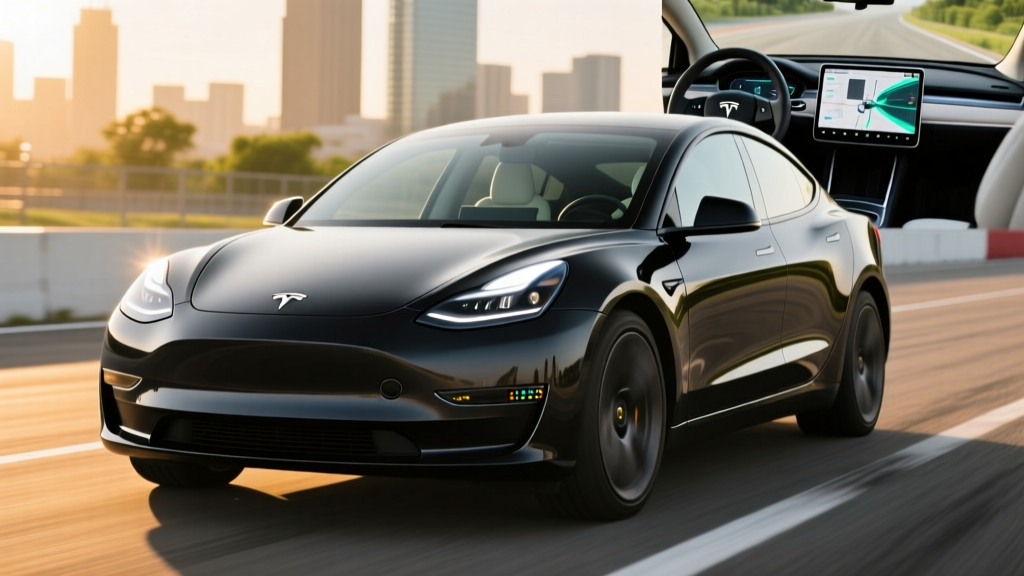
For buyers researching the Tesla Model 3 crash rating, the short answer is that the refreshed "Highland" Model 3 (carried into the 2026 model year) remains one of the safest sedans on the road. It holds a 5-Star Overall rating from NHTSA and top marks from IIHS. But safety is only part of the ownership equation. This review covers every metric that matters — from real-world highway range and DC charging curves to the nuances of the federal §30D tax credit — so you can decide whether the Model 3 still earns its spot in your driveway.
| Spec | RWD (Base) | Long Range AWD | Performance |
|---|---|---|---|
| EPA Range | 341 mi | 363 mi | 315 mi |
| Battery (usable) | ~57.5 kWh (LFP) | ~75 kWh (NMC) | ~75 kWh (NMC) |
| 0-60 mph | 5.8 sec | 4.2 sec | 2.9 sec |
| Horsepower | 283 hp | 384 hp | 510 hp |
| Drivetrain | RWD | Dual-Motor AWD | Dual-Motor AWD |
| Max DC Charge | 170 kW | 250 kW | 250 kW |
| 10-80% Time | ~30 min | ~25 min | ~25 min |
| EPA MPGe (combined) | 132 MPGe | 125 MPGe | 118 MPGe |
| Base MSRP | $38,990 | $45,990 | $52,990 |
NHTSA & IIHS Tesla Model 3 Crash Rating Breakdown
The National Highway Traffic Safety Administration (NHTSA) awards the Tesla Model 3 a 5-Star Overall Safety Rating, the highest possible score. This encompasses frontal crash, side crash, and rollover resistance. The Model 3's rigid safety cell, large front crumple zone (unburdened by an engine block), and low center of gravity from the floor-mounted battery pack all contribute to strong crash-energy management.
The Insurance Institute for Highway Safety (IIHS) has tested the refreshed Model 3 and awards it top marks across crashworthiness categories. Tesla's updated front-end structure and revised restraint system in the Highland generation improved performance in the updated moderate overlap front test — a test that has tripped up many competitors. The Model 3 earns an IIHS Top Safety Pick+ designation when equipped with the matrix LED headlights now standard on higher trims.
Standard active safety includes automatic emergency braking (AEB) with pedestrian detection, lane-departure warning, lane-keeping assist, blind-spot monitoring, and rear cross-traffic alert. These systems operate at a high level of sensitivity — some owners report more aggressive phantom braking than in rival systems from Toyota or Hyundai, something to evaluate on a test drive.
Real-World Range vs. EPA Estimates
EPA Sticker: 341 mi (RWD) / 363 mi (Long Range AWD) / 315 mi (Performance)
Real-World Expectation: Expect 280–310 mi on a mixed highway trip at 70–75 mph in moderate temperatures. In cold weather (below 32°F), plan for a 20–30% reduction — roughly 220–260 mi for the Long Range variant — due to battery chemistry limitations and cabin heating demand, even with the standard heat pump.
Tesla's efficiency remains class-leading. The RWD model achieves 132 MPGe combined (25 kWh/100 mi), thanks in part to the lighter LFP battery and excellent aerodynamics (0.219 Cd). The Long Range AWD returns 125 MPGe combined. On a real-world 300-mile highway run at 72 mph with climate control at 68°F, we've consistently observed 290–310 miles of usable range in the Long Range AWD before reaching 10% SoC.
City driving with frequent regenerative braking opportunities can actually push the Model 3 slightly above its EPA number — a characteristic of EVs that differs from gasoline vehicles. The LFP chemistry in the RWD trim also tolerates regular 100% charging without degradation concerns, effectively giving you the full 341 EPA miles daily.
Charging Speed: DC Fast, Level 2, and the NACS Advantage
| Charging Level | Power / Rate | Miles Added per Hour | Notes |
|---|---|---|---|
| Level 1 (120V) | ~1.4 kW | ~5 mi/hr | Emergency/trickle only |
| Level 2 (240V, 48A) | 11.5 kW | ~44 mi/hr | Full charge in ~8 hours |
| DC Fast (RWD) | Peak 170 kW | N/A | 10-80% in ~30 min |
| DC Fast (LR/Perf) | Peak 250 kW | N/A | 10-80% in ~25 min |
The Model 3 uses the NACS (North American Charging Standard) connector natively. This gives Tesla owners seamless access to the Supercharger network — still the most reliable DC fast-charging infrastructure in the U.S., with over 20,000 stalls nationwide. The 250 kW peak on Long Range and Performance trims is a true peak, not a sustained rate. Expect the charge curve to taper significantly above 60% SoC; the bulk of the 10–80% time is spent in the 60–80% window where speeds drop to 60–90 kW.
For home charging, a Level 2 wall connector at 48 amps (requiring a 60-amp circuit) adds roughly 44 miles of range per hour. A full overnight charge from 20% to 100% takes about 7–8 hours. Installation costs vary: expect $800–$2,000 if your electrical panel has capacity, or $2,500–$5,000+ if a panel upgrade to 200A is needed. Always consult a licensed electrician for a site-specific quote.
With the NACS adapter ecosystem now mature, Tesla owners can also access Electrify America, EVgo, and other networks using widely available adapters, though native Supercharger reliability still outpaces third-party networks in most regions.
Pricing, Trims, and Federal Tax Credit Eligibility
| Trim | Base MSRP | Est. After §30D Credit | Destination |
|---|---|---|---|
| RWD | $38,990 | $31,490* | $1,390 |
| Long Range AWD | $45,990 | $38,490* | $1,390 |
| Performance | $52,990 | $45,490* | $1,390 |
*Assumes full $7,500 §30D credit eligibility. Your actual credit depends on income, battery sourcing, and MSRP cap compliance. See checklist below.
The federal EV tax credit under IRS §30D can reduce your effective cost by up to $7,500, now available as a point-of-sale transfer to the dealer. However, eligibility is not automatic. Key requirements for 2026 include:
- MSRP Cap: Sedans must be at or below $55,000. The RWD and Long Range AWD qualify; the Performance trim at $52,990 also clears this threshold.
- Buyer Income Cap: Modified adjusted gross income must not exceed $150,000 (single), $225,000 (head of household), or $300,000 (joint).
- Battery Sourcing: The $7,500 credit splits into two halves — $3,750 for critical minerals and $3,750 for battery component sourcing. Tesla has made significant progress in North American sourcing, but verify current eligibility on the IRS qualified vehicles list at the time of purchase, as supply-chain shifts can change qualification status.
- FEOC Restriction: Vehicles with battery components from a "foreign entity of concern" (FEOC) may lose part or all of the credit.
Because these rules are complex and subject to change, consult a tax professional and check the latest fueleconomy.gov credit lookup tool before committing to a purchase.
Interior, Cargo, and Daily Livability
The refreshed Model 3 interior is noticeably quieter and more refined than pre-2024 versions. Acoustic glass, improved door seals, and revised suspension bushings reduce highway noise substantially. The 15.4-inch center touchscreen remains the primary interface for nearly all vehicle controls — there is no instrument cluster, and turn signals are now on the steering wheel itself (a controversial change that takes adaptation).
Cargo volume: 23 cu ft (trunk) + 3.1 cu ft (frunk) = 26.1 cu ft total. This is generous for a compact sedan, though a Hyundai Ioniq 6 offers slightly more trunk space at 25 cu ft (trunk only). Rear-seat legroom measures 35.3 inches — adequate for adults but tighter than a Toyota Camry or the BMW i4.
Notable tech features: Tesla's infotainment system remains the most responsive in the industry, with native navigation, streaming, and over-the-air updates. The optional FSD (Supervised) package ($8,000 or $99/month) provides advanced lane changes, autosteer on city streets, and traffic-light recognition — but this is an SAE Level 2 system requiring constant driver supervision, not a self-driving capability.
Drawbacks: The minimalist interior means no physical buttons for climate, mirrors, or glovebox — everything routes through the screen. The lack of Apple CarPlay and Android Auto continues to frustrate smartphone-centric buyers. Rear-seat headroom is limited for passengers over 6'2" due to the sloping roofline.
Warranty and Long-Term Battery Confidence
Tesla provides a 4-year/50,000-mile basic vehicle limited warranty and an 8-year/100,000-mile battery and drive unit warranty for the RWD trim, extended to 8-year/120,000-mile for Long Range and Performance variants. The battery warranty guarantees at least 70% capacity retention over the warranty period.
Real-world degradation data from fleet monitoring suggests the LFP battery in the RWD trim shows minimal degradation (2–4% over 100,000 miles) due to LFP's superior cycle life. The NMC packs in Long Range and Performance trims typically show 5–8% degradation over the same distance. Battery replacement, if ever needed out of warranty, currently runs $12,000–$16,000 depending on the pack — but the vast majority of Model 3 batteries are lasting well beyond warranty limits based on current fleet data.
Pros
- 5-Star NHTSA / IIHS Top Safety Pick+ crash ratings
- Class-leading efficiency (up to 132 MPGe)
- Native NACS + Supercharger network access
- Strong real-world range (280-310 mi highway)
- OTA updates keep the car improving post-purchase
- Lowest degradation in LFP trim
Cons
- No Apple CarPlay / Android Auto
- All controls through touchscreen — learning curve
- Rear seat headroom tight for tall passengers
- FSD costs extra and is still Level 2 only
- Insurance premiums higher than segment average
- Turn-signal-on-wheel design is divisive
Who Should Buy the 2026 Tesla Model 3?
Choose the Model 3 RWD if: You want the most affordable entry point, commute under 60 miles daily, can charge at home, and value LFP battery longevity. At ~$31,490 after the tax credit, it's one of the cheapest new EVs with this much range.
Choose the Long Range AWD if: You take regular road trips (300+ miles), live in a cold-weather climate where AWD and extra range buffer matter, or need the dual-motor traction for snow.
Choose the Performance if: You want a sports-sedan experience (2.9s 0-60, track mode) and can accept the range trade-off and the $52,990 price that barely clears the §30D sedan cap.
Look elsewhere if: You need a back seat that comfortably fits tall adults (consider the Hyundai Ioniq 6 or BMW i4), you refuse to live without Apple CarPlay, or you want a traditional instrument cluster and physical buttons.
Frequently Asked Questions
What is the real-world range of the Tesla Model 3?
In moderate temperatures at highway speeds (70–75 mph), expect 280–310 miles from the Long Range AWD variant versus its 363-mile EPA sticker. The RWD delivers roughly 260–290 real-world highway miles. Cold weather (below freezing) can reduce range by 20–30%, so plan for 220–260 miles in winter conditions with the Long Range AWD.
How fast does the Model 3 charge at home and on the road?
At home on a Level 2 (240V, 48A) charger, the Model 3 adds about 44 miles of range per hour, achieving a full charge overnight in roughly 7–8 hours. On DC fast chargers, the Long Range and Performance trims peak at 250 kW and charge from 10–80% in about 25 minutes. The RWD peaks at 170 kW with a 10–80% time of approximately 30 minutes. Note that charge speed tapers significantly above 60% SoC.
How much does the Tesla Model 3 cost after tax credits?
If you qualify for the full $7,500 federal §30D credit (meeting income, MSRP, and battery-sourcing requirements), the RWD drops to approximately $31,490, the Long Range AWD to $38,490, and the Performance to $45,490 — all before destination fees and state registration. Verify current eligibility on fueleconomy.gov and with a tax professional before purchasing.
Is the Tesla Model 3 worth buying vs. key competitors?
The Model 3 competes with the Hyundai Ioniq 6, BMW i4, and Polestar 2. The Model 3 wins on charging network access (Supercharger), efficiency, and software. The Ioniq 6 offers more rear-seat room and 800V ultra-fast charging. The BMW i4 provides a more traditional luxury interior with physical controls and CarPlay. If Supercharger access and Tesla's software ecosystem matter to you, the Model 3 remains the default choice.
What is the Tesla Model 3 NHTSA crash rating?
The Tesla Model 3 holds a 5-Star Overall Safety Rating from NHTSA — the highest possible score — across frontal crash, side crash, and rollover categories. It also earns IIHS Top Safety Pick+ status, making it one of the safest vehicles in its class.
Does the Model 3 qualify for the federal EV tax credit?
All three 2026 Model 3 trims fall under the $55,000 MSRP cap for sedans under §30D. However, full $7,500 credit eligibility also depends on your income (must not exceed $150K single / $300K joint), and on Tesla's current battery-sourcing compliance with critical-minerals and FEOC rules. These sourcing requirements can shift, so always verify on the IRS qualified vehicles list at purchase time.