Quick Verdict: Is the Model 3 Still the Value Benchmark?
The refreshed Tesla Model 3 (internally "Highland") remains one of the most efficient electric sedans on the market, and its total cost of ownership story is stronger than ever in 2026 — provided you qualify for the federal credit and charge mostly at home. The RWD Long Range variant we focus on here starts at $42,990 before incentives, delivers an EPA-estimated 363 miles of range, and sips electricity at roughly 25 kWh per 100 miles. After the §30D credit, effective price can dip into the mid-$30k range, and five-year fuel savings versus a comparable gas sedan often exceed $6,000.
But the Model 3 cost of ownership picture isn't uniformly rosy: insurance premiums run 15–30% higher than segment average, Tesla's out-of-warranty repair costs are steep, and FSD (Supervised) adds $8,000 to the purchase if you opt in. Below, we break down every number that matters.
Range, Efficiency, and Real-World Expectations
Real-World Highway: Expect ~300–320 miles at 70 mph in mild weather
Cold-Weather (20°F): Plan for 240–270 miles — a 20–30% reduction is typical for NMC chemistry without aggressive preconditioning
The Long Range AWD uses a 79 kWh (usable) nickel-manganese-cobalt (NMC) battery pack, chosen for its higher energy density and cold-weather tolerance versus LFP. The base RWD model uses a 60 kWh LFP (lithium iron phosphate) pack — heavier per kWh but more durable over thousands of cycles and tolerant of routine 100% charging.
Efficiency is where the Model 3 punches hardest. The Long Range achieves 132 MPGe combined (25 kWh/100 mi) per fueleconomy.gov. That's roughly 15% more efficient than the Hyundai Ioniq 6 Long Range and 25% better than the BMW i4 eDrive40. On a road trip from Denver to Albuquerque (~450 miles), you'll need one 20-minute DC fast-charge stop; in a gas Camry, you'd burn about $55 in fuel for the same stretch.
Charging Speed: DC Fast, Level 2, and the Supercharger Advantage
| Charging Level | Power / Rate | 10–80% Time | Miles Added per Hour |
|---|---|---|---|
| DC Fast Charge (peak) | 250 kW (V3 Supercharger) | ~27 minutes (Long Range) | ~175 mi in 15 min |
| DC Fast (sustained avg) | ~150 kW average 10–80% | — | — |
| Level 2 Home (48A / 11.5 kW) | 11.5 kW | ~7.5 hours (0–100%) | ~44 mi/hr |
| Level 2 Home (32A / 7.7 kW) | 7.7 kW | ~11 hours (0–100%) | ~30 mi/hr |
| Level 1 (120V / 12A) | 1.4 kW | N/A (overnight top-up) | ~4–5 mi/hr |
The Model 3's charge curve peaks near 250 kW below 30% SoC, then tapers to ~120 kW by 60% and ~60 kW above 80%. That's why the 10–80% time is 27 minutes rather than the 15 minutes marketing sometimes implies. Tesla's Supercharger network — now open to NACS-equipped rival EVs — remains the most reliable DC network in the U.S., with uptime consistently above 97% at V3/V4 stalls.
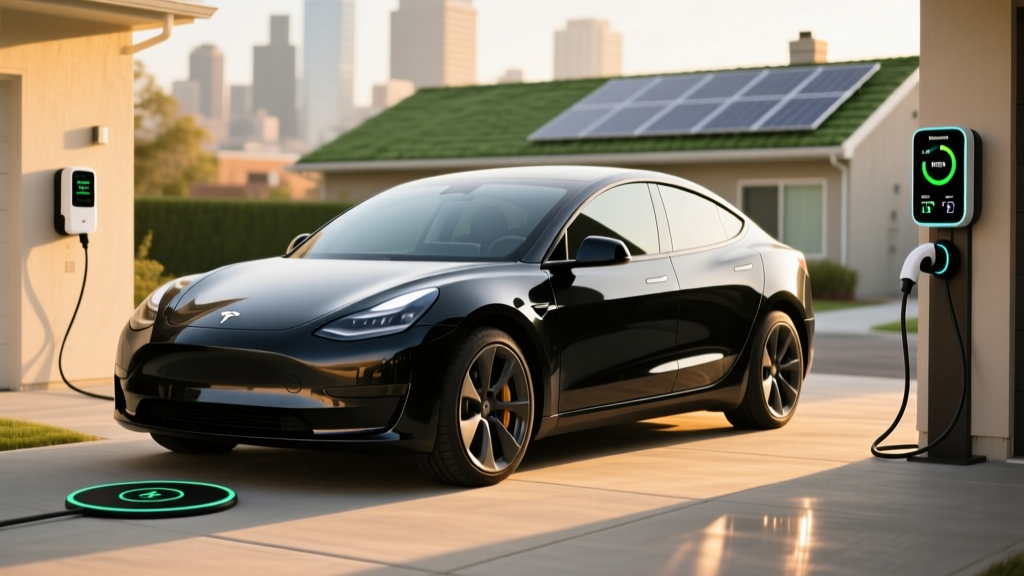
For home charging, the Tesla Wall Connector ($420 hardware) on a 60A circuit delivers the full 11.5 kW the onboard charger can accept. Expect $600–$1,400 installed if your panel has capacity; add $1,500–$3,000 if you need a 200A service upgrade. (Always get a licensed electrician's assessment — panel load varies widely.)
Performance and Drivetrain Specs
| Spec | RWD (Base) | Long Range AWD | Performance |
|---|---|---|---|
| 0–60 mph | 5.8 sec | 4.2 sec | 2.9 sec |
| Horsepower | 271 hp | 346 hp | 510 hp |
| Drivetrain | Rear-Wheel Drive | Dual-Motor AWD | Dual-Motor AWD |
| Top Speed | 125 mph | 125 mph | 163 mph |
| Battery (usable) | 60 kWh (LFP) | 79 kWh (NMC) | 79 kWh (NMC) |
| EPA Range | 272 mi | 363 mi | 315 mi |
Even the base RWD Model 3 feels quick off the line — single-motor torque delivery is immediate, and the low center of gravity makes it genuinely fun on canyon roads. The Long Range AWD is the sweet spot for most buyers: dual motors add all-weather traction, and the 4.2-second 0–60 time outpaces most sports sedans costing twice as much. Track Mode on the Performance variant is a toy most buyers won't use, but it's a nice option.
Pricing, Tax Credit, and the Real Purchase Price
| Trim | MSRP | §30D Credit | Effective Price |
|---|---|---|---|
| RWD (Base) | $38,990 | Up to $7,500* | ~$31,490 |
| Long Range AWD | $42,990 | Up to $7,500* | ~$35,490 |
| Performance | $52,990 | Up to $7,500* | ~$45,490 |
* §30D credit eligibility is not automatic. Per IRS guidelines, buyers must meet all of the following:
- Income caps: AGI ≤ $150,000 (single) / $225,000 (head of household) / $300,000 (joint)
- MSRP cap: Vehicle MSRP ≤ $55,000 for sedans (all Model 3 trims qualify)
- Battery sourcing: Critical minerals and battery components must meet phased-in domestic/free-trade thresholds — Tesla has largely localized supply chains, but verify the VIN on the IRS qualifying-vehicles list at time of purchase
- Point-of-sale transfer: Credit can be applied at purchase (dealer reduces price) or claimed on your tax return — you must have tax liability to claim it on return
Destination fee ($1,390) and any paint/interior/wheel upgrades add to MSRP. FSD (Supervised) is an $8,000 option that does not count toward the MSRP cap for credit purposes. Consult a tax professional before relying on the credit.
5-Year Total Cost of Ownership: Model 3 vs Gas Sedan vs Rival EV
| Cost Category (5 yr) | Model 3 LR AWD | Toyota Camry V6 (gas baseline) | Hyundai Ioniq 6 SEL |
|---|---|---|---|
| Purchase (after credit) | $35,490 | $32,500 | $38,900 |
| Fuel / Electricity | $3,400 | $9,200 | $3,600 |
| Insurance (avg) | $11,500 | $7,800 | $9,600 |
| Maintenance | $1,600 | $4,200 | $1,800 |
| Depreciation (est.) | $16,000 | $14,500 | $18,200 |
| 5-Year Total | $67,990 | $68,200 | $72,100 |
Source assumptions: 12,000 mi/yr, $0.14/kWh home electricity, $3.40/gal gas, insurance from AAA/Quadrant averages. Electricity cost assumes 80% home / 20% DC fast-charge mix.
The Model 3 reaches near-parity with a Camry over five years — remarkable for a 346-hp AWD sedan — primarily because electricity and maintenance savings offset the higher insurance and purchase price. Depreciation has stabilized since the 2023 Highland refresh; resale values now track closer to Toyota than to luxury-EV peers. The Ioniq 6 is slightly more expensive to own due to higher depreciation and a smaller tax-credit benefit for some buyers.
Interior, Cargo, and Daily Usability
The Highland interior is a genuine step up from pre-2024 Model 3s: ventilated front seats, ambient lighting, rear-seat touchscreen, acoustic glass, and a quieter cabin at highway speeds. Cargo capacity is 23 cu ft (trunk + frunk), adequate for two large suitcases and a week of groceries but tighter than the Ioniq 6's 12.3 cu ft trunk + 2.5 cu ft frunk when you factor in the Model 3's narrower trunk opening.
Rear legroom is 35.3 inches — sufficient for adults under 6'2" but snug compared to a Camry (38.0 in). Families with rear-facing car seats will find the Model 3 workable but not generous; the Model Y is the better call for two-child households.
Infotainment remains Tesla's minimalist touchscreen approach: no Apple CarPlay or Android Auto, no physical buttons for climate or mirrors. This is the single most polarizing trait — some owners love the simplicity, others find it distracting. Navigation, over-the-air updates, and the Tesla app ecosystem remain class-leading.
Driver Assistance: Autopilot, FSD, and What They Actually Do
Standard Autopilot (included) handles lane-centering and adaptive cruise competently on divided highways. FSD (Supervised), the $8,000 upgrade, adds city-street navigation, stop-sign/light recognition, and autosteer on surface streets — impressive in suburban environments but still prone to hesitation at complex unprotected lefts and construction zones. For most buyers, standard Autopilot plus attentive driving is the rational choice; FSD's cost is hard to justify unless you're a tech-enthusiast beta tester.
Warranty, Battery Longevity, and Out-of-Warranty Risk
Tesla's warranty structure is straightforward:
- Basic vehicle: 4 years / 50,000 miles
- Battery & drive unit (RWD): 8 years / 100,000 miles, 70% capacity retention minimum
- Battery & drive unit (Long Range / Performance): 8 years / 120,000 miles, 70% capacity retention minimum
Real-world degradation data from fleet aggregators like Recurrent Auto shows Model 3 NMC packs typically retain ~90% capacity at 100,000 miles — well within warranty thresholds. LFP packs in the RWD model degrade even more slowly, often losing only 5–7% over 150,000 miles when charged to 100% regularly (which Tesla explicitly recommends for LFP).
Out-of-warranty battery replacement is the lurking cost: $12,000–$16,000 for a Long Range pack at current Tesla service pricing. The 8-year/120,000-mile coverage mitigates this for most owners, but second- and third-owners should budget for it. Drive-unit failures are rare but similarly expensive (~$5,000–$7,000).
Pros, Cons, and Who Should Buy
Pros
- Class-leading efficiency (132 MPGe / 25 kWh/100 mi)
- Supercharger network access — most reliable DC charging in the U.S.
- 363-mile EPA range on Long Range covers most road trips with one stop
- Strong OTA updates and app ecosystem
- Low maintenance costs (no oil, minimal brake wear from regen)
- All trims qualify for §30D credit (MSRP under $55k cap)
Cons
- Insurance premiums 15–30% above segment average
- No Apple CarPlay / Android Auto — touchscreen-only interface
- Rear seat legroom tight for families (35.3 in)
- FSD (Supervised) is $8,000 and still Level 2, not autonomous
- Out-of-warranty battery replacement costs $12k–$16k
- Minimalist interior lacks physical buttons for climate/mirrors
Look elsewhere if: You regularly carry four adults (consider Model Y or Ioniq 5), need CarPlay integration, want a physical-button interior (BMW i4), or can't secure affordable insurance quotes in your ZIP code.
Frequently Asked Questions
What is the real-world range of the Tesla Model 3?
The Long Range AWD is EPA-rated at 363 miles, but real-world highway driving at 70 mph yields ~300–320 miles in mild weather and ~240–270 miles in sub-freezing temperatures. The RWD base model's 272-mile EPA figure translates to ~220–240 miles highway in cold weather. Preconditioning the battery before fast charging or hard driving recovers some of this loss.
How fast does the Model 3 charge at home and on the road?
On a V3 Supercharger, the Long Range peaks at 250 kW and averages ~150 kW from 10–80%, taking about 27 minutes. At home on a 48A Level 2 Wall Connector, you'll add ~44 miles per hour — enough to fully recharge overnight. On a standard 120V outlet, expect only 4–5 miles per hour, suitable for plug-in hybrids but painfully slow for a 79 kWh battery.
Does the Tesla Model 3 qualify for the $7,500 federal tax credit?
All three trims fall under the $55,000 MSRP sedan cap, so the vehicle qualifies. But you must also meet IRS income limits ($150k/$225k/$300k by filing status) and the battery must meet critical-mineral and component-sourcing thresholds — verify your specific VIN on the IRS qualifying list at purchase time. The credit can be transferred to the dealer as a point-of-sale discount.
Is the Model 3 worth buying over the Hyundai Ioniq 6 or BMW i4?
The Model 3 wins on efficiency, Supercharger access, and software. The Ioniq 6 offers a more conventional interior, CarPlay, and slightly lower insurance. The BMW i4 is the premium choice with superior materials and physical controls but costs $10k–$15k more. For pure cost-of-ownership math, the Model 3 Long Range is hard to beat.
How much does insurance cost for a Tesla Model 3?
National averages run $1,900–$2,400/year for a 35-year-old driver with clean record, roughly 15–30% higher than a Camry or Ioniq 6. Tesla's own insurance product (available in most states) uses real-time driving data and can be 10–20% cheaper for safe drivers. Always quote your specific ZIP and profile before purchasing.
What's the 5-year total cost of ownership?
For a Long Range AWD with the §30D credit, 5-year TCO averages ~$68,000 assuming 12,000 mi/yr, home-dominant charging, and average insurance. That's essentially parity with a gas Camry and $4,000–$5,000 cheaper than most rival EVs. Electricity and maintenance savings do the heavy lifting; insurance and depreciation partially offset them.