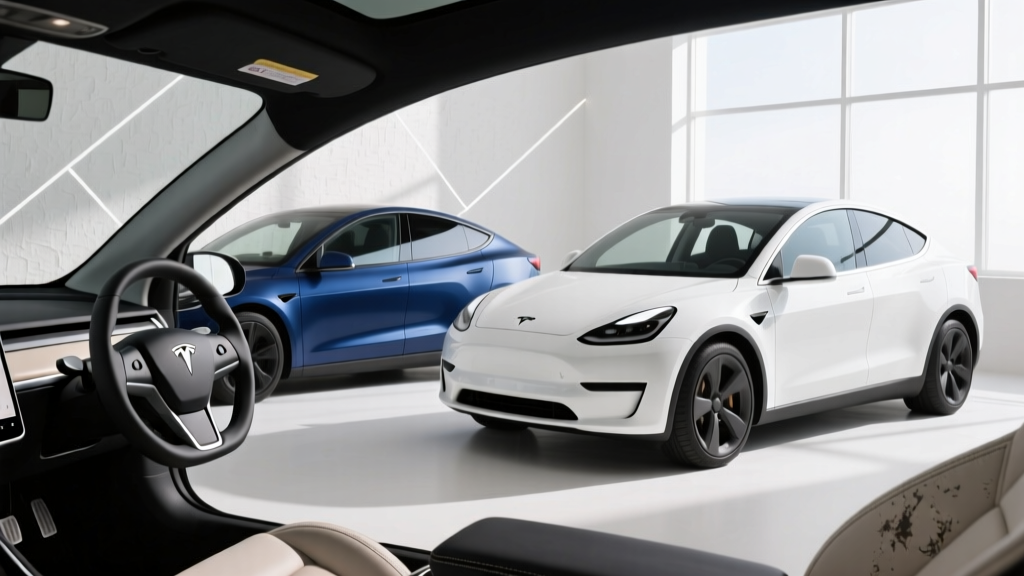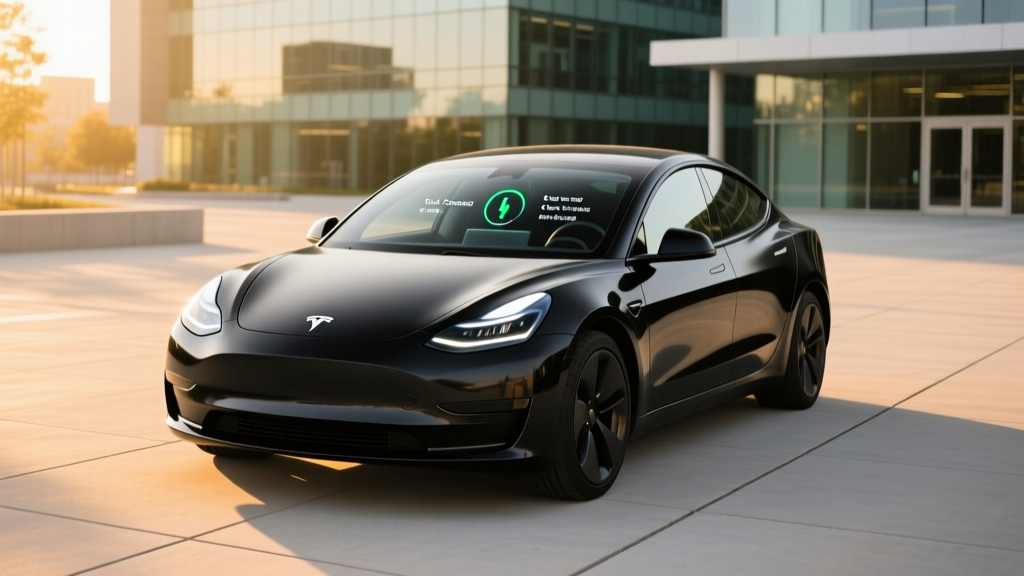
Tesla's software-first approach is the brand's real differentiator. While rivals chase battery size, Tesla leans on over-the-air updates, a vertically integrated Supercharger network, and a connectivity stack that ties navigation, media, safety, and remote access into one subscription. The 2026 Model 3 Highland refresh carries that philosophy into a more refined sedan with better ride quality, a quieter cabin, and the latest HW4 vision hardware.
This review focuses on what Tesla connectivity actually gets you in the 2026 Model 3 — Standard vs Premium plans, what features live where, and whether the ecosystem justifies the price versus a Hyundai Ioniq 6 or BMW i4. We also break down the hard numbers: EPA range, real-world highway expectations, DC fast-charge curves, and current §30D tax credit eligibility.
2026 Tesla Model 3: Specs at a Glance
| Spec | RWD (Standard Range) | Long Range AWD | Performance |
|---|---|---|---|
| EPA Range | 272 mi | 363 mi | 315 mi |
| Battery (usable) | ~60 kWh LFP | ~75 kWh NMC | ~75 kWh NMC |
| Drivetrain | RWD, single motor | Dual-motor AWD | Dual-motor AWD |
| Horsepower | 271 hp | 346 hp | 510 hp |
| 0-60 mph | 5.8 sec | 4.2 sec | 2.9 sec |
| DC Fast Charge (peak) | 170 kW | 250 kW | 250 kW |
| 10-80% DCFC Time | ~25 min | ~22 min | ~22 min |
| Level 2 (11.5 kW) | ~37 mi/hr | ~44 mi/hr | ~44 mi/hr |
| MPGe (combined) | 132 MPGe | 132 MPGe | 121 MPGe |
| Efficiency | 25 kWh/100 mi | 25 kWh/100 mi | 28 kWh/100 mi |
| Base MSRP | $38,990 | $47,740 | $54,990 |
| Battery Warranty | 8 yr / 100,000 mi | 8 yr / 120,000 mi | 8 yr / 120,000 mi |
Source: fueleconomy.gov and Tesla's 2026 order configurator.
Range: EPA Sticker vs Real World
EPA Long Range AWD: 363 miles
Real-world expectation: 290–320 mi at 70 mph highway in mild weather; 230–260 mi below 30°F. The RWD (LFP) trim lands closer to 215–240 mi on the highway — plan conservatively if your commute is long or winter is harsh.
Tesla's thermal management is among the best in the segment. The heat pump, standard across trims, limits cold-weather range loss to roughly 20-25%, better than the 30%+ drop many competitors see. Still, EPA cycles are weighted toward city and moderate-speed driving. Sustained 75-80 mph cruising on an interstate pushes consumption closer to 28-30 kWh/100 mi on the Long Range, shaving 40-60 miles off the sticker.
The RWD's LFP pack is heavier and smaller, which is why its EPA figure is 272 miles. The payoff is longevity — LFP chemistry tolerates 100% daily charges without meaningful degradation, a big deal if you lack home charging and rely on public DCFC top-ups.
Charging Speed: DC Fast, Level 2, and the Supercharger Advantage
| Level | Power / Rate | What You Get |
|---|---|---|
| Level 1 (120V) | ~1.4 kW | ~4-5 mi/hr — emergency/trickle only |
| Level 2 (240V, 48A) | 11.5 kW | 37-44 mi/hr; full overnight recharge |
| DC Fast (V3 Supercharger) | Peak 250 kW (LR/Perf) | 10-80% in ~22 min; tapers sharply past 80% |
| DC Fast (V4 Supercharger) | Peak 250 kW (current Model 3 cap) | Same peak; V4 cabinet future-proofs to 400+ kW for next-gen architectures |
A critical nuance: Tesla's 250 kW peak is reached only between roughly 10-30% State of Charge on a preconditioned pack. The curve tapers to ~100 kW by 60% and ~50 kW above 80%. A 10-80% session averages closer to 150-160 kW in real conditions — still class-leading for a 400-volt architecture, but don't expect 250 kW sustained.
Preconditioning matters. Navigate to a Supercharger via the car's built-in nav (requires connectivity) and the battery warms to optimal temperature, unlocking the full curve. Arrive cold and peak rate may cap at 120-140 kW for the first several minutes.
The Model 3 uses the NACS (J3400) connector natively — the same plug now adopted by Ford, GM, Rivian, Hyundai, and most of the industry. That means access to 70,000+ Supercharger stalls plus growing third-party NACS networks.
Tesla Connectivity: Standard vs Premium Plans
"Tesla connectivity" refers to the cellular data link that powers features beyond basic driving. Every new Model 3 ships with eight years of Standard Connectivity included. Premium Connectivity is $9.99/month or $99/year.
| Feature | Standard (included) | Premium ($9.99/mo) |
|---|---|---|
| Basic navigation | ✓ | ✓ |
| Live traffic visualization | — | ✓ |
| Satellite-view maps | — | ✓ |
| Streaming media (Spotify, Apple Music, Tidal) | Via Bluetooth/phone | Native over LTE/Wi-Fi |
| YouTube, Netflix, Arcade (parked) | Wi-Fi only | Over cellular |
| Caraoke, web browser | Wi-Fi only | Over cellular |
| Sentry Mode live camera access | — | ✓ |
| Dashcam remote viewer | — | ✓ |
| OTA software updates | ✓ (Wi-Fi preferred) | ✓ (cellular backup) |
Is Premium worth it? If you park in secure garages and stream music from your phone, Standard is enough. Premium shines for commuters who want live traffic rerouting, apartment dwellers without garage Wi-Fi for OTA updates, and anyone using Sentry Mode in risky parking areas. At $99/year, it's a minor line item versus insurance.
Autopilot, FSD (Supervised), and the SAE Level 2 Reality
Not self-driving. Tesla Autopilot and Full Self-Driving (Supervised) are SAE Level 2 driver-assistance systems. You must keep hands on the wheel and eyes on the road at all times. Only robotaxi services like Waymo operate at Level 4 in geofenced zones. FSD (Supervised) costs $99/month or $8,000 outright and does not replace an attentive driver.
HW4 hardware (standard on 2026 Model 3) uses higher-resolution cameras with improved low-light performance and a wider field of view. Real-world behavior is smoother than prior generations — lane changes are less hesitant, and phantom braking events are reduced, though not eliminated. NHTSA continues to monitor Tesla's ADAS through its Standing General Order on crash reporting.
Basic Autopilot (Traffic-Aware Cruise Control + Autosteer) is included. Enhanced Autopilot ($6,000) adds auto lane change, Navigate on Autopilot, Autopark, and Summon. FSD (Supervised) layers on traffic light/stop sign control and city street routing. None of these remove the driver's legal responsibility.
Pricing, Trims, and the Federal Tax Credit
| Trim | MSRP | Est. After §30D Credit | §30D Eligible? |
|---|---|---|---|
| RWD (Standard Range) | $38,990 | ~$31,490 | Yes — under $55k sedan cap; verify battery sourcing |
| Long Range AWD | $47,740 | ~$40,240 | Yes — under $55k sedan cap; verify sourcing |
| Performance | $54,990 | ~$47,490 | Borderline — MSRP under $55k but options can push over |
The IRS §30D clean vehicle credit provides up to $7,500, split between a critical-minerals component ($3,750) and a battery-component component ($3,750). Eligibility hinges on three buyer-side rules:
- MSRP cap: Sedans must be ≤ $55,000 (vans/SUVs/pickups ≤ $80,000)
- Income cap: AGI ≤ $150,000 single / $225,000 head of household / $300,000 joint
- Battery sourcing: Critical minerals and components must meet phased-in domestic/FTEA thresholds — verify VIN eligibility on the IRS portal before purchase
- Point-of-sale transfer: As of 2024+, you can transfer the credit to the dealer for an immediate price reduction rather than waiting to claim it on your tax return
Tesla's US-built battery packs generally meet the component threshold, but critical-minerals sourcing shifts throughout the model year. Always confirm your specific VIN on fueleconomy.gov before signing.
Interior, Cargo, and Daily Practicality
The 2026 Model 3 keeps its minimalist 15.4-inch center display and adds a rear 8-inch touchscreen for climate and media. Ventilated front seats, ambient lighting, and acoustic glass (front and rear) are now standard — a major cabin-quietness upgrade over pre-2024 models.
- Front legroom: 42.7 in
- Rear legroom: 35.2 in — tight for taller passengers vs. an Ioniq 6 (37.0 in)
- Cargo (rear trunk): 23 cu ft
- Frunk: 3.1 cu ft — enough for a charging cable kit, not a full grocery run
- Towing: Not rated — no tow package offered on Model 3
The Model 3 is a driver's sedan first, family hauler second. For cargo-heavy duty, the Model Y or a Hyundai Ioniq 5 is the better pick.
Pros, Cons, and Who Should Buy
Pros
- Class-leading Supercharger network and NACS ecosystem
- Excellent efficiency (25 kWh/100 mi LR) — fewer stops, lower cost per mile
- OTA updates add real features years after purchase
- Strong resale value relative to non-Tesla EVs
- Refined Highland cabin: quiet, ventilated seats standard
Cons
- No physical stalks — turn signals on the wheel take weeks to adapt
- Rear seat room trails rivals (Ioniq 6, BMW i4)
- No Apple CarPlay / Android Auto — you're in Tesla's ecosystem
- FSD (Supervised) remains Level 2 and expensive
- RWD's 272-mi EPA range is modest for the price
Who it suits best: Tech-forward commuters and road-trippers who value the Supercharger network and software polish over rear-seat space. The Long Range AWD is the sweet spot — 363 mi EPA, dual-motor traction, and full §30D eligibility under the $55k sedan cap. Skip the Model 3 if you need CarPlay, frequent five-adult seating, or towing capability.
2026 Tesla Model 3 FAQ
What is the real-world range of the 2026 Tesla Model 3?
Expect 290-320 miles highway in the Long Range AWD in mild weather, dropping to 230-260 miles in sub-freezing temps. The RWD lands around 215-240 miles highway. Efficiency, not pack size, is Tesla's edge.
How fast does the Model 3 charge at home and on the road?
Level 2 at 11.5 kW adds 37-44 miles per hour — a full overnight refill. DC fast charging peaks at 250 kW on Long Range/Performance trims, reaching 10-80% in roughly 22 minutes with a preconditioned battery. The RWD LFP peaks at 170 kW.
How much does the 2026 Model 3 cost after the federal tax credit?
The Long Range AWD starts at $47,740 and can drop to ~$40,240 after the full $7,500 §30D credit, assuming your AGI is within limits and your VIN meets current battery-sourcing rules. Always verify on fueleconomy.gov before purchase.
Does the 2026 Model 3 qualify for the federal EV tax credit?
Generally yes — both RWD and Long Range fall under the $55,000 sedan MSRP cap. Eligibility also depends on buyer AGI (≤$150k single / $300k joint) and the battery's critical-mineral and component sourcing for your production month.
Is the Model 3 worth buying over an Ioniq 6 or BMW i4?
Choose Model 3 for Supercharger access, software updates, and efficiency. Choose Ioniq 6 for rear-seat space and 800V charging (10-80% in ~18 min). Choose BMW i4 if you want CarPlay, a traditional cockpit, and a quieter ride at the cost of range.
Is Tesla Premium Connectivity worth $99/year?
Yes if you use live traffic routing, stream media natively, or rely on Sentry Mode live view. No if you tether your phone or always have garage Wi-Fi for updates.