The Tesla Model 3 Highland refresh transformed the sedan from a minimalist experiment into a genuinely refined electric daily driver. But beyond the redesigned interior, ventilated seats, and ambient lighting, one of the most searched questions among buyers is surprisingly aesthetic: what colors does the Model 3 come in, and does your paint choice affect anything beyond curb appeal?
This review covers the full 2025 Tesla Model 3 lineup — every exterior color, the real-world range you can expect, DC fast-charging performance, and whether the $7,500 federal tax credit still applies. Whether you're choosing between Stealth Grey and Ultra Red or weighing the Model 3 Long Range AWD against the Hyundai Ioniq 6, this is the data-driven breakdown you need.
2025 Tesla Model 3 Exterior Color Options
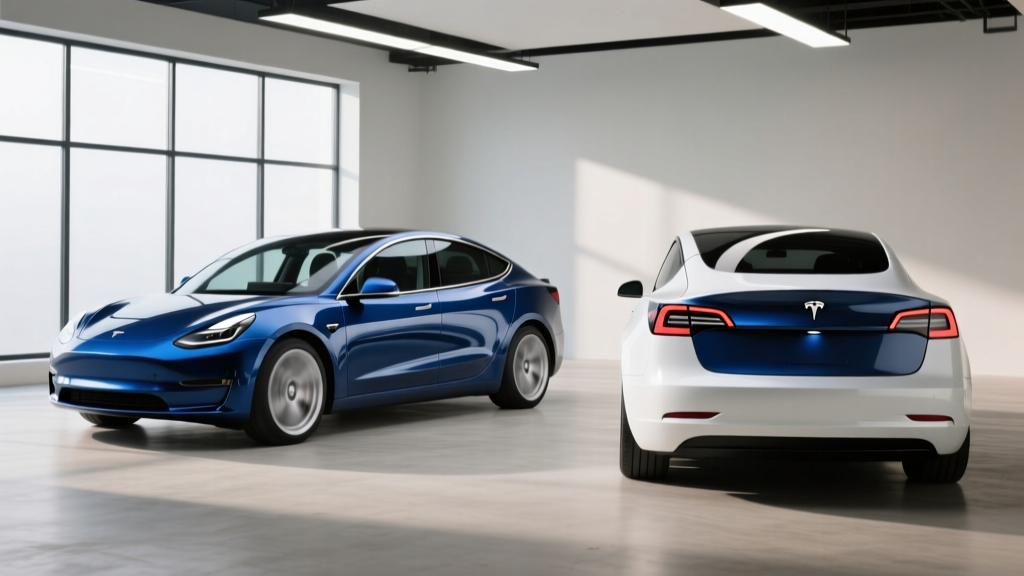
Tesla streamlined the Model 3 color palette with the Highland refresh. As of the 2025 model year, buyers can choose from five exterior colors. Pearl White Multi-Coat remains the only no-cost option, while the other four carry a premium.
| Color Name | Type | Cost | Notes |
|---|---|---|---|
| Pearl White Multi-Coat | Tri-coat pearl | $0 | Default; hides minor scratches well, popular for fleets |
| Solid Black | Solid | $1,500 | Deep gloss; shows swirl marks and dust readily |
| Deep Blue Metallic | Metallic | $1,500 | Rich metallic flake; looks darker in overcast light |
| Stealth Grey | Metallic | $1,500 | Replaced Midnight Silver; warm undertone, hides dirt well |
| Ultra Red | Multi-coat | $2,500 | Replaced Red Multi-Coat; deeper, more translucent finish |
Does color affect range or resale? No. Tesla applies identical thermal-management systems across all paints. However, darker colors absorb more solar heat, which can marginally increase cabin cooling load in hot climates — a negligible effect given the Model 3's heat pump. Resale data from Recurrent and iSeeCars shows Ultra Red and Stealth Grey commanding modest premiums on the used market, while Pearl White depreciates slightly faster due to its ubiquity.
Range, Efficiency, and Real-World Expectations
The 2025 Model 3 is offered in three configurations, each with distinct range and drivetrain characteristics. Here's how the EPA numbers translate to real-world driving.
Model 3 Long Range AWD: EPA 363 miles. Expect 300–330 miles on a mixed highway trip at 70–75 mph. In sub-30°F winter conditions, plan for 240–280 miles due to battery chemistry resistance and cabin heating demand.
Model 3 RWD: EPA 272 miles. Real-world highway: 225–250 miles. Cold weather: 180–210 miles.
Model 3 Performance: EPA 315 miles. Aggressive driving and wider 19" wheels reduce real-world highway range to 250–280 miles.
| Spec | RWD | Long Range AWD | Performance |
|---|---|---|---|
| EPA Range | 272 mi | 363 mi | 315 mi |
| Battery (usable) | ~57.5 kWh (LFP) | ~75 kWh (NMC) | ~75 kWh (NMC) |
| MPGe (combined) | 132 MPGe | 130 MPGe | 119 MPGe |
| kWh/100 mi | 25 | 26 | 28 |
| 0–60 mph | 5.8 sec | 4.2 sec | 2.9 sec |
| Horsepower | 271 hp | 346 hp | 510 hp |
| Drivetrain | RWD (single motor) | AWD (dual motor) | AWD (dual motor) |
LFP vs. NMC — why it matters: The base RWD model uses a lithium iron phosphate (LFP) battery. LFP cells offer longer cycle life and tolerate regular 100% charging without degradation concerns, but they are heavier and lose more range in cold weather (up to 30–40% in sub-freezing temps). The Long Range and Performance trims use nickel manganese cobalt (NMC) chemistry, which delivers higher energy density and better cold-weather retention (~20–25% loss), but Tesla recommends daily charging to 80% to preserve longevity.
Charging Speed: DC Fast, Level 2, and Home Setup
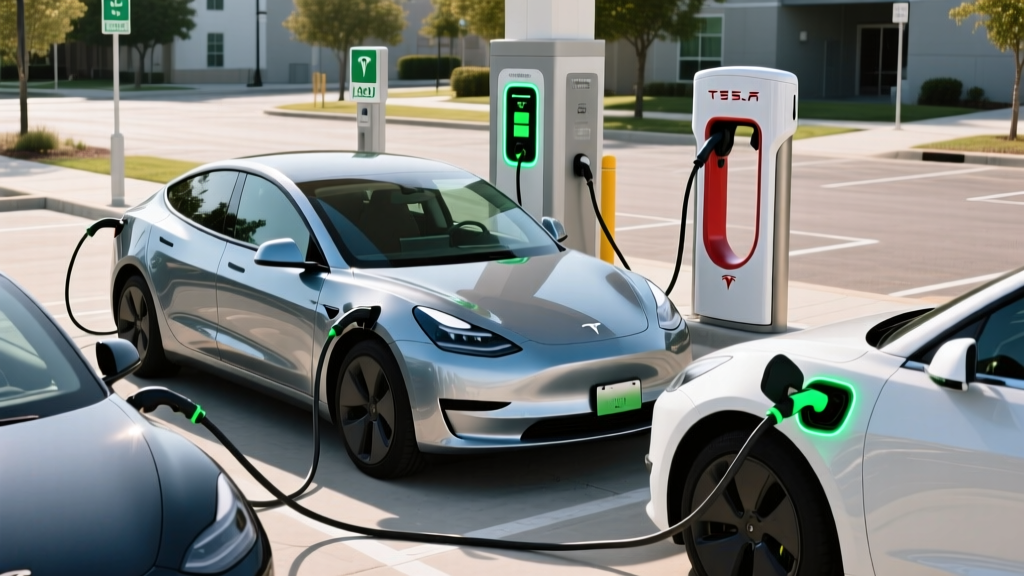
Charging speed remains one of the Model 3's strongest advantages, thanks in part to Tesla's Supercharger network and the vehicle's efficient thermal preconditioning. Here's the full charging picture.
| Charging Level | Power / Rate | Time (10–80%) | Miles Added per Hour |
|---|---|---|---|
| Level 1 (120V household) | ~1.4 kW | N/A (trickle) | ~3–5 mi/hr |
| Level 2 (240V home / public) | 11.5 kW (max onboard) | ~7–8 hours (full) | ~37–44 mi/hr |
| DC Fast (V3 Supercharger) | Peak 250 kW | ~25 min (LR AWD) | ~170 mi in 15 min |
| DC Fast (V4 Supercharger) | Peak 250 kW (Model 3 limited) | ~25 min (LR AWD) | Same as V3 for this vehicle |
Charge curve reality: The Model 3 Long Range peaks at 250 kW only between roughly 10–30% state of charge. From 30–60%, it sustains around 150–170 kW, then tapers to 75 kW above 60% and drops below 40 kW past 80%. This is why Tesla's 10–80% time is the meaningful metric — charging from 80–100% can add another 20+ minutes.
Preconditioning matters: Navigate to a Supercharger using the built-in navigation, and the Model 3 will automatically warm the battery to optimal temperature before arrival. Without preconditioning (e.g., arriving at a third-party CCS charger without nav routing), peak charge rates can drop by 30–50% in cold weather.
CCS compatibility: The 2025 Model 3 comes with a native NACS charge port. Tesla includes a CCS adapter (or offers one for purchase) for use on Electrify America and other CCS networks. As of 2025, Tesla Superchargers remain NACS-only, though Tesla has begun opening select stalls to non-Tesla EVs via the NACS standard.
Pricing, Tax Credits, and Total Cost
Tesla's pricing fluctuates periodically, but here are the current MSRPs for the 2025 Model 3 lineup as of early 2025, before any incentives.
| Trim | Base MSRP | With Popular Options* | Federal Tax Credit (§30D) | Effective Price** |
|---|---|---|---|---|
| Model 3 RWD | $38,990 | $41,490 | Up to $7,500 | ~$31,490–$33,990 |
| Model 3 Long Range AWD | $47,740 | $50,240 | Up to $7,500 | ~$40,240–$42,740 |
| Model 3 Performance | $54,990 | $56,490 | Up to $7,500 | ~$47,490–$48,990 |
*Popular options include $1,500 color upgrade and $1,000 19" Nova wheels. FSD (Supervised) adds $8,000 and is excluded from these figures.
**Effective price assumes full §30D credit eligibility and point-of-sale transfer. Actual credit depends on your tax liability and eligibility.
- MSRP cap: Sedans must be ≤$55,000. All Model 3 trims qualify (the Performance at $54,990 fits under the cap).
- Buyer income cap: Modified AGI ≤$150,000 (single), ≤$225,000 (head of household), ≤$300,000 (joint).
- Battery sourcing: The full $7,500 requires meeting both critical-mineral and battery-component requirements. Tesla's supply chain has qualified for the full credit on most Model 3 configurations, but verify at fueleconomy.gov for the specific trim and build date.
- Point-of-sale transfer: As of 2024, you can transfer the credit to the dealer at purchase, reducing your out-of-pocket cost immediately rather than waiting for tax filing.
Always confirm eligibility with a tax professional and the IRS clean vehicle credit page. Rules are subject to change.
Interior, Cargo, and Tech
The Highland refresh addressed many of the original Model 3's interior criticisms. Ventilated front seats, ambient lighting, rear-seat ventilation controls, and significantly improved sound insulation make the 2025 cabin a genuine step up.
| Dimension | Measurement |
|---|---|
| Front legroom | 42.7 in |
| Rear legroom | 35.2 in |
| Cargo (trunk) | 21.0 cu ft |
| Frunk (front trunk) | 3.1 cu ft |
| Total cargo | 24.1 cu ft |
Infotainment: The 15.4-inch center touchscreen runs Tesla's proprietary OS — no Apple CarPlay or Android Auto. The rear passengers now have an 8-inch screen for climate and media control. Navigation, streaming, and gaming are built in.
Driver assistance: Basic Autopilot (lane centering + adaptive cruise) is standard. Enhanced Autopilot ($6,000) adds auto lane change, navigate-on-autopilot, and smart summon. Full Self-Driving (Supervised) at $8,000 adds traffic-light recognition and city-street autosteer.
Despite the "Full Self-Driving" name, Tesla's FSD (Supervised) is an SAE Level 2 driver-assistance system. You must remain fully engaged, hands ready, and eyes on the road at all times. The vehicle does not drive itself. Only Level 4 services like Waymo operate without driver supervision, and those are limited to specific geofenced areas.
Warranty and Long-Term Ownership
| Coverage | Term |
|---|---|
| Basic vehicle | 4 years / 50,000 miles |
| Battery & drive unit (RWD) | 8 years / 100,000 miles |
| Battery & drive unit (LR/Perf) | 8 years / 120,000 miles |
| Battery capacity retention | ≥70% during warranty period |
Degradation data: According to Tesla's 2024 Impact Report and independent data from Recurrent Auto, Model 3 batteries retain approximately 88–92% of original capacity at 100,000 miles. LFP batteries in the RWD model tend to show less degradation but may exhibit larger range swings due to voltage curve characteristics.
Out-of-warranty replacement: A Model 3 battery replacement currently costs between $12,000–$16,000 depending on the pack. However, the failure rate before 150,000 miles is extremely low based on fleet data.
Pros, Cons, and the Competition
- Class-leading Supercharger network access
- Excellent efficiency (25–28 kWh/100 mi)
- 250 kW DC fast charging with strong taper curve
- Significantly improved cabin quietness (Highland)
- All trims under $55K MSRP cap for tax credit
- OTA updates continuously add features
- No Apple CarPlay / Android Auto
- Turn-signal stalks removed (buttons on wheel)
- Rear visibility is limited; relies heavily on cameras
- LFP RWD model suffers significant cold-weather range loss
- Service center wait times can be long in some markets
- FSD remains a $8,000 Level 2 system, not autonomy
Model 3 vs. Key Competitors
| Attribute | Tesla Model 3 LR AWD | Hyundai Ioniq 6 SEL AWD | BMW i4 xDrive40 |
|---|---|---|---|
| EPA Range | 363 mi | 316 mi | 282 mi |
| DC Fast Peak | 250 kW | 233 kW | 205 kW |
| 0–60 mph | 4.2 sec | 5.1 sec | 4.9 sec |
| Base MSRP | $47,740 | $46,750 | $57,900 |
| CarPlay / Android Auto | No | Yes | Yes |
Who Should Buy the Tesla Model 3?
Choose the Model 3 RWD if: You commute under 40 miles round-trip, charge at home nightly, live in a mild climate, and want the lowest entry price with LFP battery longevity.
Choose the Model 3 Long Range AWD if: You take regular road trips, live in a cold-weather state, need dual-motor traction, and want 300+ real-world highway miles per charge.
Choose the Model 3 Performance if: You prioritize acceleration and track capability and accept a ~50-mile range trade-off for 2.9-second 0–60 times and adaptive damping.
Look elsewhere if: You need CarPlay, want a more traditional interior with physical controls, require over 25 cu ft of cargo, or frequently tow (Model 3 is not rated for towing in the US).
Frequently Asked Questions
What is the real-world range of the Tesla Model 3?
The Long Range AWD delivers roughly 300–330 miles on highway trips at 70–75 mph in moderate temperatures. In winter (below 30°F), expect 240–280 miles. The RWD model with its LFP battery sees larger cold-weather drops — plan for 180–210 miles in freezing conditions.
How fast does the Model 3 charge at home and on the road?
At home on a 240V Level 2 charger (48A circuit), the Model 3 accepts up to 11.5 kW, adding about 37–44 miles per hour — a full overnight charge. On a V3 Supercharger, it peaks at 250 kW and charges from 10–80% in approximately 25 minutes for the Long Range model.
Does the 2025 Tesla Model 3 qualify for the $7,500 federal tax credit?
Yes, all three trims fall under the $55,000 sedan MSRP cap. However, you must also meet income limits ($150K single / $300K joint) and the vehicle must satisfy battery-sourcing requirements. Verify your specific configuration at fueleconomy.gov and consult a tax professional. The credit can be transferred at point of sale to reduce your purchase price immediately.
Is the Tesla Model 3 worth buying over the Hyundai Ioniq 6 or BMW i4?
The Model 3 Long Range offers the best range and Supercharger network access, making it the strongest road-trip choice. The Ioniq 6 provides CarPlay, a more conventional interior, and comparable value. The BMW i4 offers superior build quality and driving dynamics but at a $10K+ premium with less range. For most buyers prioritizing range and charging infrastructure, the Model 3 LR AWD remains the segment benchmark.
Which Tesla Model 3 color is most popular and best for resale?
Pearl White is the most common (and free), but Stealth Grey and Ultra Red tend to hold value slightly better on the used market due to their premium perception and lower volume. Black shows the most swirl marks and requires more maintenance to keep looking showroom-fresh.
Does the Model 3 have a frunk?
Yes, but it's small — just 3.1 cubic feet. It's useful for charging cables and a small bag but won't replace the trunk for real cargo. Total cargo space (trunk + frunk) is 24.1 cu ft.