The Tesla Model 3 remains one of the most recognizable electric sedans on American roads, and for 2026 it continues to offer a compelling mix of efficiency, tech-forward design, and access to the largest fast-charging network in North America. But beyond the powertrain, one of the first decisions any buyer faces is aesthetic: which of the available Tesla Model 3 colors best fits your lifestyle, maintenance tolerance, and budget? This guide covers every exterior and interior color option for the current Model 3 lineup, then goes deep on the specs that actually determine ownership satisfaction — real-world range, charging speed, battery chemistry, pricing after incentives, and how it stacks up against rivals like the Hyundai IONIQ 6 and BMW i4.
2026 Tesla Model 3 Exterior Color Options
Tesla streamlined the Model 3 palette with the "Highland" refresh and has carried a focused set of colors into the 2026 model year. Here is the complete exterior color menu, including pricing and practical ownership notes:
| Color Name | Cost | Paint Type | Ownership Notes |
|---|---|---|---|
| Pearl White Multi-Coat | Standard (no charge) | Multi-coat pearl | Hides light dust and swirl marks well; most popular fleet color; can look generic in parking lots |
| Solid Black | Standard (no charge) | Solid base/clear | Shows dust, pollen, water spots, and fine scratches prominently; requires frequent washing; dramatic at night |
| Deep Blue Metallic | +$1,000 | Metallic | Rich color shift in sunlight; moderate dust visibility; popular among corporate buyers |
| Ultra Red | +$2,000 | Multi-coat | Introduced with Highland; deep, layered red with strong metallic flake; premium showroom presence |
| Quicksilver | +$2,000 | Multi-coat metallic | Warm silver with champagne undertone; excellent at concealing road grime; highly recommended for low-maintenance owners |
| Stealth Grey | +$1,500 | Metallic | Replaced Midnight Silver; darker, more saturated grey; stealthy aesthetic; moderate maintenance |
Pro tip for color selection: If you live in an area with hard water, heavy pollen, or frequent construction dust, avoid Solid Black. Quicksilver and Pearl White are the most forgiving finishes for owners who wash their cars infrequently. Ultra Red and Deep Blue Metallic look stunning when clean but demand more upkeep to maintain that showroom depth.
Interior Color and Material Options
The 2026 Model 3 offers two interior colorways, both using Tesla's vegan leather (synthetic polyurethane) upholstery:
- All Black — Standard on all trims. Black seats, black dashboard, black door panels. Hides wear well but absorbs heat in summer; ventilated seats (standard on Long Range and Performance) mitigate this significantly.
- Black and White — +$1,000 upgrade. White seats with black dashboard and accents. Visually striking and airy, but the white seat bolsters show denim dye transfer within months if you frequently wear raw or dark jeans. Tesla's coating resists stains better than earlier generations, but expect some patina over 3+ years.
No wood trim, no real leather, no brown or tan option. The minimalist interior is a deliberate design choice — if you prefer traditional luxury materials, the BMW i4 or Mercedes EQB may suit your taste better.
Range, Battery, and Efficiency: Real-World Expectations
The 2026 Model 3 is available in three trims, each with distinct battery chemistry and range profiles:
| Spec | Model 3 RWD | Model 3 Long Range AWD | Model 3 Performance |
|---|---|---|---|
| EPA Range | 272 mi | 363 mi | 315 mi |
| Battery (usable) | ~57.5 kWh | ~75 kWh | ~75 kWh |
| Chemistry | LFP (Lithium Iron Phosphate) | NMC (Nickel Manganese Cobalt) | NMC |
| MPGe (combined) | 132 MPGe | 130 MPGe | 119 MPGe |
| Energy consumption | 25 kWh/100mi | 26 kWh/100mi | 28 kWh/100mi |
| Drivetrain | Rear-Wheel Drive | Dual-Motor AWD | Dual-Motor AWD |
| Horsepower | 271 hp | 346 hp | 510 hp |
| 0–60 mph | 5.8 sec | 4.2 sec | 2.9 sec |
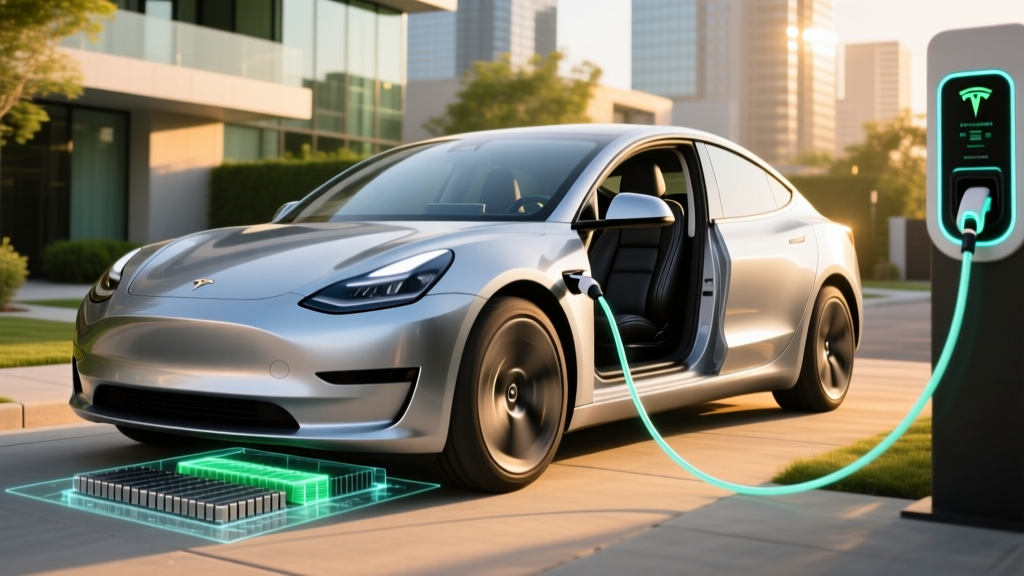
LFP vs NMC — what it means for you: The base RWD trim uses an LFP battery, which is heavier and slightly less energy-dense than NMC but offers two major advantages: it can be charged to 100% daily without accelerating degradation, and it has a longer cycle life (often exceeding 3,000 full cycles before meaningful capacity loss). If your commute is under 40 miles round-trip and you want a low-maintenance battery you can charge fully every night, the RWD with LFP is arguably the smarter long-term pick. NMC batteries (Long Range and Performance) should be kept between 20–80% for daily use, charging to 100% only before road trips.
Charging Speed: DC Fast Charging and Home Level 2
Charging speed is where the refreshed Model 3 shows meaningful improvement over the pre-2024 models. Tesla upgraded the thermal management system to sustain higher charge rates for longer.
| Charging Level | Power / Rate | Speed | Notes |
|---|---|---|---|
| Level 1 (120V household) | ~1.4 kW | ~3–4 mi/hr | Emergency/trickle only; ~80+ hours for full charge |
| Level 2 (240V home) | 11.5 kW (48A) | ~44 mi/hr | Full charge in ~7–9 hours; requires 60A breaker |
| DC Fast Charge (CCS/NACS) | Peak 250 kW (LR/Perf) / 170 kW (RWD) | 10–80% in ~25 min (LR) | Charge curve tapers significantly above 60%; precondition via navigation for best speeds |
Charging curve reality: The Long Range and Performance trims peak at 250 kW but only hold that rate briefly — typically between 10–30% State of Charge. From 30–60%, expect a sustained 150–170 kW. Above 80%, the rate drops to under 50 kW to protect the battery. This is why Tesla's navigation system preconditions the battery when you route to a Supercharger: it heats the pack to the optimal temperature so you hit peak rate immediately on arrival. Always navigate to the charger rather than driving there manually if you want the fastest session.
The RWD trim's LFP battery charges at a lower peak rate (~170 kW) but benefits from a flatter charge curve, meaning the gap between it and the Long Range narrows in the 40–80% zone. For most RWD owners, a 10–80% session takes roughly 30 minutes at a V3 Supercharger.
Pricing, Trims, and Federal Tax Credit Eligibility
Here is the current pricing structure for the 2026 Model 3 before and after potential incentives:
| Trim | Base MSRP | Destination | Total Before Incentives | Est. After §30D Credit* |
|---|---|---|---|---|
| Model 3 RWD | $38,990 | $1,390 | $40,380 | ~$32,880 |
| Model 3 Long Range AWD | $45,740 | $1,390 | $47,130 | ~$39,630 |
| Model 3 Performance | $52,990 | $$1,390 | $54,380 | ~$46,880 |
*Federal tax credit estimates assume full eligibility. Actual credit depends on individual circumstances.
- Vehicle MSRP cap: Sedans must be under $55,000 MSRP. The RWD and Long Range qualify; the Performance trim exceeds the cap and is NOT eligible for the new-vehicle credit.
- Buyer income cap: Modified AGI must not exceed $150,000 (single), $225,000 (head of household), or $300,000 (married filing jointly).
- Battery sourcing: A percentage of critical minerals and battery components must be sourced from the U.S. or FTA partners — thresholds increase annually. Tesla has largely localized its supply chain, but confirm current-year compliance on IRS.gov's eligible vehicle list before purchasing.
- Point-of-sale transfer: You can transfer the credit to the dealer at purchase, reducing your out-of-pocket cost immediately rather than waiting for a tax refund.
Consult a tax professional to confirm your personal eligibility. Rules are subject to change — verify on irs.gov.
Technology, Safety, and Driver Assistance
The Model 3's technology stack remains its strongest differentiator in the segment:
- Infotainment: 15.4-inch center touchscreen running Tesla's proprietary OS. No Apple CarPlay or Android Auto — Tesla's native navigation, Spotify, Netflix, and gaming suite are the only options. The interface is fast, responsive, and receives regular OTA updates.
- Rear passenger screen: An 8-inch rear touchscreen controls climate, seat heaters, and media for back-seat passengers (introduced with Highland refresh).
- Autopilot (standard): SAE Level 2 driver-assist including adaptive cruise, lane centering, and automatic emergency braking. The driver must remain engaged at all times.
- Full Self-Driving Supervised (+$8,000 or $99/mo): Adds automatic lane changes, Navigate on Autopilot, traffic light/stop sign recognition, and Autopark. Despite the name, this is still SAE Level 2 — it is not autonomous driving. The driver is fully responsible for the vehicle at all times.
- Safety: The Model 3 earned a 5-star overall rating from NHTSA and a Top Safety Pick+ designation from IIHS.
Notable drawbacks: The absence of physical buttons (even for glovebox opening and mirror adjustment — all controlled via touchscreen) frustrates some buyers. Turn signals are now on steering-wheel buttons rather than a stalk, which has a learning curve. There is no heads-up display.
Cargo, Passenger Space, and Practicality
| Dimension | Measurement |
|---|---|
| Front headroom | 40.3 in |
| Front legroom | 42.7 in |
| Rear headroom | 37.8 in |
| Rear legroom | 35.2 in |
| Trunk (rear cargo) | 21.0 cu ft |
| Frunk (front trunk) | 3.1 cu ft |
| Total cargo | 24.1 cu ft |
The Model 3 is a midsize sedan, and rear-seat space reflects that. Adults over 6 feet will find rear legroom tight on longer trips. The trunk is generously sized for the segment, and the rear seats fold 60/40 for longer items. The frunk is small — useful for charging cables and a laptop bag, but not much more.
Compared to the Hyundai IONIQ 6 (12.3 cu ft trunk), the Model 3 offers substantially more cargo space. Compared to the Model Y (76.2 cu ft max), it's a significant step down. If cargo volume is a priority, the Model Y is the more practical Tesla.
Warranty and Long-Term Ownership
| Coverage | Term |
|---|---|
| Basic Vehicle Limited Warranty | 4 years / 50,000 miles |
| Battery & Drive Unit (RWD) | 8 years / 100,000 miles (min 70% retention) |
| Battery & Drive Unit (LR/Perf) | 8 years / 120,000 miles (min 70% retention) |
Tesla's battery warranty guarantees that the pack will retain at least 70% of its original capacity during the warranty period. In practice, Tesla's battery degradation data shows most Model 3 packs retain 88–92% capacity after 100,000 miles. LFP batteries in the RWD trim tend to degrade more slowly in the early years, though they start with less total capacity.
Insurance costs tend to be higher than comparable gas sedans — expect 15–30% higher premiums depending on your state and driving record, driven by repair costs for aluminum panels and sensor recalibration. Get an insurance quote before committing to a purchase.
How It Compares: Model 3 vs. Key Competitors
- You want access to the Supercharger network (17,000+ stalls in North America)
- You value OTA software updates that add features over time
- You prioritize efficiency and class-leading MPGe
- You want the fastest DC charging in the segment (250 kW peak)
- You prefer a minimalist, screen-centric interior
- You want Apple CarPlay/Android Auto (Hyundai IONIQ 6, BMW i4)
- You prefer physical controls and traditional luxury (BMW i4, Genesis Electrified G80)
- You need more rear-seat space or cargo room (Hyundai IONIQ 5, Tesla Model Y)
- You want a longer warranty (Hyundai: 10yr/100,000mi battery)
- You dislike the single-screen interface for all vehicle controls
The Hyundai IONIQ 6 offers a slightly lower starting price, a 10-year battery warranty, and CarPlay — but charges slower (peak ~235 kW, and only on 800V infrastructure that's less common). The BMW i4 delivers a more traditional luxury experience with physical buttons and CarPlay, but costs significantly more and has less range. For pure value-per-mile-of-range, the Model 3 Long Range remains difficult to beat.
Frequently Asked Questions
What is the real-world range of the Tesla Model 3?
The EPA rates the Long Range AWD at 363 miles, but expect 300–320 miles in real-world highway driving at 75 mph, and 250–280 miles in freezing weather. The RWD delivers about 220–240 miles on the highway in mild conditions, dropping to 190–210 in winter.
How fast does the Model 3 charge at home and on the road?
At home on a Level 2 (240V, 48A) charger, the Model 3 adds approximately 44 miles of range per hour, fully charging overnight in 7–9 hours. On DC fast chargers, the Long Range peaks at 250 kW and charges from 10–80% in about 25 minutes. The RWD peaks at 170 kW with a similar 10–80% time of roughly 30 minutes.
Does the 2026 Tesla Model 3 qualify for the federal EV tax credit?
The Model 3 RWD and Long Range AWD are eligible for up to $7,500 under IRS §30D, provided the buyer meets income caps ($150K single / $300K joint) and the vehicle's battery sourcing meets current-year thresholds. The Performance trim exceeds the $55,000 MSRP cap for sedans and does not qualify. Always verify on the IRS eligible vehicles list before purchasing.
Which Tesla Model 3 color is easiest to maintain?
Quicksilver and Pearl White Multi-Coat are the most forgiving colors for hiding dust, water spots, and minor swirl marks. Solid Black shows every imperfection and requires the most frequent washing. Ultra Red is stunning but demands regular care to maintain its depth.
Is the Tesla Model 3 worth buying over the Hyundai IONIQ 6 or BMW i4?
The Model 3 wins on charging speed, Supercharger network access, software features, and efficiency. The IONIQ 6 wins on warranty length and CarPlay support. The BMW i4 wins on interior material quality and traditional driving ergonomics. Your priorities determine the winner — if charging infrastructure and tech are paramount, the Model 3 is the strongest choice in 2026.
Is Autopilot or FSD actually self-driving?
No. Both Autopilot and Full Self-Driving (Supervised) are SAE Level 2 driver-assistance systems. The driver must keep their hands on the wheel and eyes on the road at all times. Tesla's FSD adds convenience features like automatic lane changes and traffic-light recognition, but it does not make the car autonomous. Only Level 4 robotaxi services like Waymo operate without a human driver.