Choosing a paint color might seem like the fun part of ordering a Tesla Model 3, but the decision intersects with resale value, thermal efficiency, and even charging behavior in extreme climates. The refreshed Model 3 (internally dubbed "Highland" and carried into the 2026 model year) offers a curated palette alongside meaningful updates to range, ride quality, and cabin noise. This guide breaks down every 2026 Tesla Model 3 color option alongside the specs, charging data, and ownership economics that actually matter once the novelty of a new paint job wears off.
2026 Tesla Model 3 Color Palette: What's Available and What It Costs
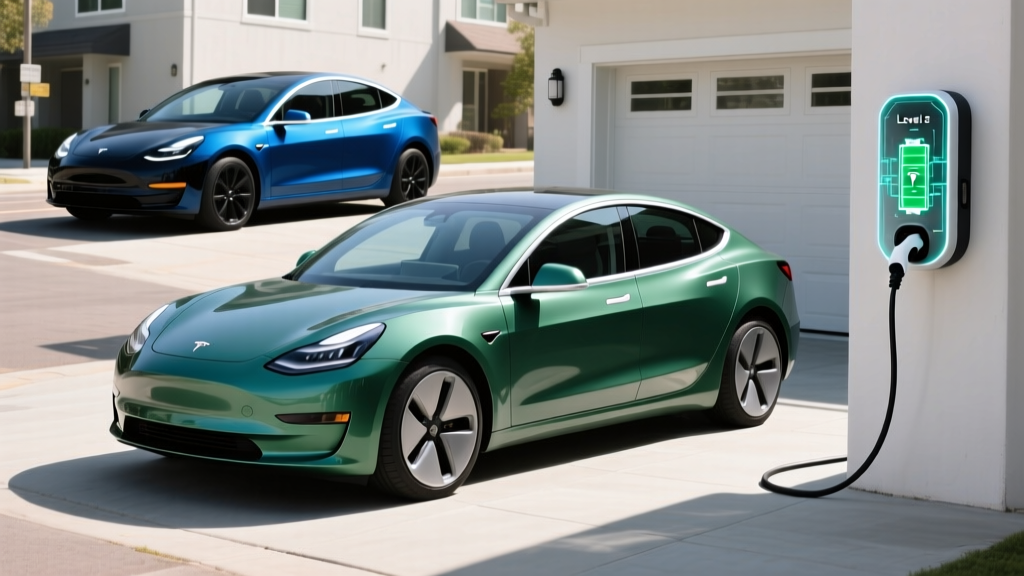
Tesla streamlined the Model 3 exterior palette for 2026. Pearl White Multi-Coat remains the no-cost default, while four additional options carry upcharges. Ultra Red and Deep Blue Metallic replaced the older Red Multi-Coat and Midnight Silver Metallic in most markets, and Solid Black and Stealth Grey round out the lineup. Quicksilver and Ultra White are no longer standard order options for the sedan.
| Color | Finish Type | Upcharge | Notes |
|---|---|---|---|
| Pearl White Multi-Coat | Tri-coat pearl | $0 | Best heat rejection; highest resale demand |
| Solid Black | Standard solid | $1,500 | Shows swirl marks easily; absorbs heat |
| Deep Blue Metallic | Metallic | $1,500 | Replaced Midnight Silver; rich in direct sun |
| Ultra Red | Multi-coat metallic | $2,000 | Replaced Red Multi-Coat; deeper, darker hue |
| Stealth Grey | Metallic | $1,500 | Undertones shift blue/warm depending on light |
A practical note for Sun Belt buyers: darker colors like Solid Black and Ultra Red can raise cabin soak temperatures by 10–15°F versus Pearl White when parked in direct sun, which marginally increases the energy needed for initial cabin preconditioning. The effect on range is small (typically under 1%), but it compounds for vehicles consistently parked outdoors without shade.
Range, Battery, and Efficiency: The Numbers Behind the Badge
The 2026 Model 3 continues on a 60 kWh (usable) LFP battery for the base Rear-Wheel Drive trim and an approximately 79 kWh NMC pack for Long Range and Performance variants. Tesla does not publish official usable kWh figures, so these values are derived from EPA test data and third-party teardown analysis.
| Spec | RWD (Base) | Long Range AWD | Performance AWD |
|---|---|---|---|
| EPA Range | 272 mi | 363 mi | 315 mi |
| Battery (usable, est.) | ~60 kWh (LFP) | ~79 kWh (NMC) | ~79 kWh (NMC) |
| Drivetrain | Rear-Wheel Drive | Dual-Motor AWD | Dual-Motor AWD |
| Horsepower | 271 hp | 346 hp | 510 hp |
| 0–60 mph | 5.8 sec | 4.2 sec | 2.9 sec |
| MPGe (combined) | 132 MPGe | 130 MPGe | 118 MPGe |
| kWh/100 mi | 25 | 26 | 29 |
| Top Speed | 125 mph | 125 mph | 163 mph |
The LFP chemistry in the RWD trim trades energy density for longevity and cost. LFP cells tolerate regular 100% charging without the degradation concerns that apply to NMC packs, which Tesla recommends charging to 80–90% for daily use. According to fueleconomy.gov, the Long Range AWD's 130 MPGe combined rating translates to roughly 26 kWh per 100 miles — among the most efficient vehicles in its class.
Charging Speed: DC Fast Charge and Home Level 2 Data
The refreshed Model 3 supports up to 250 kW on DC fast chargers via the native NACS connector. On a V3 or V4 Tesla Supercharger (or any NACS-compatible 350 kW station with preconditioning enabled), the Long Range variant can add approximately 175 miles of range in 15 minutes under ideal conditions.
| Charge Level | Power / Rate | RWD (60 kWh) | Long Range / Perf (79 kWh) |
|---|---|---|---|
| Level 1 (120V household) | ~1.2 kW | ~4 mi/hr | ~4 mi/hr |
| Level 2 (240V, 32A Mobile Connector) | 7.7 kW | ~30 mi/hr | ~30 mi/hr |
| Level 2 (240V, 48A Wall Connector) | 11.5 kW | ~44 mi/hr (full in ~6 hr) | ~44 mi/hr (full in ~8 hr) |
| DC Fast Charge (peak) | 250 kW | 10–80% in ~22 min | 10–80% in ~25 min |
Charging-curve reality: the 250 kW peak applies only between roughly 10–30% state of charge. Above 50%, the rate tapers to approximately 100–120 kW, and above 80% it drops further to protect cell health. Plan road-trip stops around the 10–80% window for the fastest throughput. For home charging, Tesla's Wall Connector at 48 amps is the most practical setup, requiring a NEMA 14-60 outlet or hardwired 60A circuit installed by a licensed electrician.
Pricing, Trims, and Federal Tax Credit Eligibility
The 2026 Model 3 lineup starts at $38,990 for the RWD, with Long Range AWD at $45,740 and Performance at $52,990 (all prices before destination fees of approximately $1,390). Adding a premium color like Ultra Red ($2,000) pushes a Long Range build past $49,000 before incentives.
| Trim | Base MSRP | As-Tested (w/ color + FSD) | Est. After §30D Credit |
|---|---|---|---|
| RWD | $38,990 | $42,490 (Ultra Red + FSD) | ~$34,990 |
| Long Range AWD | $45,740 | $55,240 (Ultra Red + FSD + Wheels) | ~$47,740 |
| Performance AWD | $52,990 | $59,490 (Ultra Red + FSD) | ~$51,990 |
Federal tax credit (§30D) rules for 2026: The Model 3 qualifies for up to $7,500 if the buyer meets IRS income caps ($150,000 single / $300,000 joint MAGI), the vehicle MSRP remains under $55,000 (sedan cap), and battery-critical-mineral and component sourcing thresholds are satisfied. Tesla has confirmed that most 2026 Model 3 trims built for the US market meet the sourcing requirements, but eligibility can shift with supply-chain changes. The credit can now be transferred at the point of sale as an instant rebate, reducing the purchase price directly. Always verify current eligibility on irs.gov and consult a tax professional before finalizing your order.
Interior Space, Cargo, and Daily Practicality
The Model 3 is a compact sport sedan, and its dimensions reflect that positioning. Rear legroom measures 35.2 inches — adequate for adults on shorter trips but tight for six-footers on long highway drives. Cargo volume totals 23 cubic feet between the rear trunk (21 cu ft) and the front trunk, or "frunk" (2 cu ft), which is enough for a week's groceries or two carry-on suitcases but not competitive with the Model Y or Hyundai Ioniq 5 for family hauling.
The Highland refresh improved cabin quietness substantially, with acoustic glass and additional sound deadening reducing highway noise by roughly 3–5 dB compared to the pre-2024 model. Ventilated front seats and a rear 8-inch touchscreen are now standard across all trims, addressing two of the most common complaints from earlier Model 3 owners.
Tech, Driver Assistance, and What Autopilot Actually Does
Every 2026 Model 3 ships with Tesla's basic Autopilot suite: Traffic-Aware Cruise Control and Autosteer (lane centering). This is an SAE Level 2 driver-assistance system — the driver must remain fully engaged, hands on or near the wheel, and eyes on the road at all times.
The 15.4-inch center touchscreen runs Tesla's proprietary infotainment OS, which integrates navigation with real-time Supercharger routing, streaming media (Netflix, YouTube, Spotify), and a surprisingly capable gaming platform. Notably absent: Apple CarPlay and Android Auto. Tesla's native navigation and phone-as-key integration are robust enough that most owners adapt quickly, but smartphone mirroring remains a dealbreaker for some buyers.
Warranty, Ownership Costs, and Long-Term Battery Outlook
Tesla covers the Model 3 with a 4-year/50,000-mile limited vehicle warranty and an 8-year/100,000-mile battery and drive-unit warranty (8 years/120,000 miles for Long Range and Performance). The battery warranty guarantees at least 70% capacity retention over the warranty period. Real-world degradation data from Tesla's fleet reports and third-party tracking (including NHTSA and owner surveys) suggest NMC Model 3 packs typically lose 8–12% capacity over the first 100,000 miles, while LFP packs in the RWD trim show even slower degradation thanks to the chemistry's inherent cycle-life advantage.
Insurance costs remain a pain point: the Model 3 averages $2,200–$2,800 annually for full coverage depending on state, age, and driving record — roughly 20–30% above the segment average for compact sedans. Tesla Insurance is available in select states and can undercut third-party quotes for clean-record drivers, but availability varies.
Pros, Cons, and Who Should Buy the 2026 Model 3
- Class-leading efficiency (25–29 kWh/100 mi)
- 250 kW DC fast charging with reliable Supercharger network
- Strong real-world range (290–310 mi highway, Long Range)
- Improved cabin quietness and ride quality post-Highland refresh
- Over-the-air updates add features continuously
- LFP battery in RWD allows daily 100% charging without degradation worry
- Rear seat legroom is tight for tall adults (35.2 in)
- No Apple CarPlay or Android Auto
- Insurance premiums 20–30% above segment average
- FSD (Supervised) costs $8,000 extra and remains Level 2
- Cargo space (23 cu ft) trails crossover alternatives
- Color options limited to 5; premium colors add $1,500–$2,000
Best for: Solo commuters, couples without children, and road-trip-oriented buyers who value Supercharger network access and best-in-class efficiency. The Long Range AWD at $45,740 (roughly $38,240 after the federal credit) is the value sweet spot. Look elsewhere if: You regularly carry rear-seat passengers, need more than 23 cu ft of cargo space, or require Apple CarPlay — consider the Hyundai Ioniq 6, BMW i4, or Tesla Model Y instead.
Frequently Asked Questions
What is the real-world range of the 2026 Tesla Model 3?
The EPA rates the Long Range AWD at 363 miles and the RWD at 272 miles. Real-world highway driving at 70–75 mph yields approximately 290–310 miles for the Long Range and 220–240 for the RWD. In winter conditions below freezing, expect a 20–30% reduction unless you precondition the battery and use the heat pump efficiently.
How fast does the Model 3 charge at home and on the road?
On a DC fast charger, the Model 3 peaks at 250 kW and charges from 10–80% in approximately 22–25 minutes. At home on a 48-amp Tesla Wall Connector (11.5 kW), a full charge takes about 6 hours for the RWD and 8 hours for the Long Range. A standard 240V/32A outlet delivers roughly 30 miles of range per hour of charging.
Does the 2026 Tesla Model 3 qualify for the $7,500 federal tax credit?
Most 2026 Model 3 trims qualify for up to $7,500 under IRS §30D, provided the buyer's MAGI is under $150,000 (single) or $300,000 (joint), the vehicle MSRP is under $55,000, and battery-sourcing requirements are met. The credit can be applied at the point of sale as an instant discount. Verify current eligibility on irs.gov before ordering.
Is the Tesla Model 3 worth buying over the Hyundai Ioniq 6 or BMW i4?
The Model 3 wins on efficiency, Supercharger network access, and over-the-air software evolution. The Ioniq 6 offers a longer wheelbase and more rear-seat space; the BMW i4 delivers a more traditional luxury interior and Apple CarPlay. If charging infrastructure and software are your top priorities, the Model 3 remains the benchmark. If interior space or smartphone integration matters more, cross-shop the alternatives.
Does the color I choose affect resale value?
Yes. Pearl White Multi-Coat and Deep Blue Metallic historically hold the strongest resale demand for the Model 3 in the US market. Solid Black tends to show the most wear (swirl marks, rock chips) and may cost more to maintain cosmetically. Ultra Red commands a premium among enthusiasts but has a narrower buyer pool.