The Tesla Model 3 enters 2026 as one of the most efficient and tech-forward electric sedans on the market. While buyers often start their search by exploring every Model 3 color available — from the no-cost Stealth Grey to the $2,500 Ultra Red — the decision quickly moves to range, charging speed, and which trim actually fits your daily driving. This guide covers the full 2026 Model 3 lineup with exact EPA figures, real-world range expectations, battery chemistry differences, and current federal tax credit eligibility.
2026 Tesla Model 3 Trim Lineup and Pricing
Tesla offers the Model 3 in three distinct trims for 2026, each with a different battery chemistry, drivetrain, and range profile. Pricing reflects the base MSRP before any incentives or destination fees.
| Trim | Drivetrain | EPA Range | Battery (Usable) | 0-60 mph | Base MSRP |
|---|---|---|---|---|---|
| Model 3 RWD | Rear-Wheel Drive | 272 mi | ~57.5 kWh (LFP) | 5.8 sec | $38,990 |
| Model 3 Long Range RWD | Rear-Wheel Drive | 363 mi | ~75 kWh (NMC) | 5.0 sec | $42,490 |
| Model 3 Long Range AWD | Dual-Motor AWD | 341 mi | ~75 kWh (NMC) | 4.2 sec | $47,490 |
The base RWD model uses a lithium iron phosphate (LFP) battery, which trades some energy density for longevity and the ability to charge to 100% daily without degradation concerns. The Long Range trims use nickel manganese cobalt (NMC) chemistry, which packs more energy per kilogram but benefits from an 80% daily charge limit for long-term health.
Model 3 Color Palette for 2026
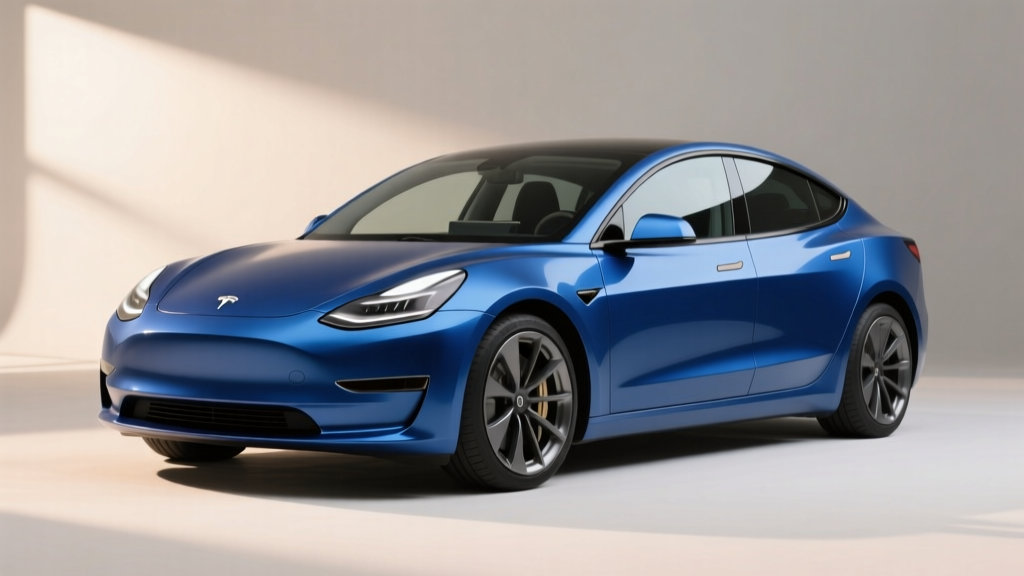
Tesla streamlined the Model 3 exterior palette with the Highland refresh and carries those options into 2026. Here is the complete color lineup with pricing:
- Stealth Grey — No additional cost (standard)
- Pearl White Multi-Coat — $1,000
- Solid Black — $1,500
- Deep Blue Metallic — $1,000
- Ultra Red — $2,500
- Quicksilver — $2,500 (premium multi-coat)
Quicksilver and Ultra Red are multi-coat finishes that require additional production steps, explaining the premium. Stealth Grey replaced the former Midnight Silver Metallic and has become the most popular no-cost choice. Interior options include All Black (standard) and Black & White ($1,000), both in Tesla's vegan leather material.
Real-World Range vs. EPA Estimates
The Long Range RWD posts an EPA-estimated 363 miles, making it one of the most efficient EVs sold in the US. However, expect approximately 290-310 miles in sustained 75 mph highway driving and as low as 240-260 miles in freezing temperatures (below 32°F). The base RWD with its 272-mile EPA rating typically delivers 220-240 miles on the highway. These reductions come from aerodynamic drag at speed and battery chemistry limitations in cold weather — not defects.
Tesla's heat pump, standard across all 2026 Model 3 trims, significantly reduces cold-weather cabin heating draw compared to resistive heaters. Preconditioning the battery while plugged in — using the Tesla app's scheduled departure feature — recovers an estimated 10-15% of range that would otherwise be lost to a cold pack. On fueleconomy.gov, the Long Range AWD achieves 132 MPGe combined (25 kWh/100mi), while the RWD reaches 141 MPGe combined (24 kWh/100mi), making the Model 3 one of the most energy-efficient vehicles in its class.
Charging Speed: DC Fast Charging and Home Level 2
Charging speed remains one of the Model 3's strongest attributes, thanks to its efficient thermal management and access to the Tesla Supercharger network — now exceeding 17,000 stalls in North America.
| Charging Level | Power / Rate | Miles Added | Notes |
|---|---|---|---|
| Level 1 (120V) | ~1.4 kW | ~3-5 mi/hr | Emergency/trickle only |
| Level 2 (240V, 48A) | 11.5 kW | ~44 mi/hr | Home Wall Connector; full charge ~7-9 hr |
| DC Fast (V3 Supercharger) | Peak 250 kW | ~175 mi in 15 min | 10-80% in ~25 min (Long Range NMC) |
| DC Fast (V4 Supercharger) | Peak 250 kW | ~175 mi in 15 min | Newer stalls with cable management improvements |
The Long Range trims peak at 250 kW on V3 and V4 Superchargers, though that peak only holds from roughly 10-30% state of charge before tapering. The charge curve flattens meaningfully above 60%, and the 60-80% portion can take nearly as long as 10-60%. The LFP base model peaks at approximately 170 kW and, because Tesla recommends charging LFP to 100% regularly, you may spend more time at chargers — but you also start each day with a full battery at home.
For home charging, Tesla's Gen 3 Wall Connector delivers up to 11.5 kW (48 amps) on a 60-amp circuit. A typical installation runs $800-$2,000 depending on panel proximity and whether a 200-amp service upgrade is needed. The Mobile Connector included with the car handles 120V (Level 1) and, with a NEMA 14-50 adapter ($35), can deliver up to 30 amps (7.2 kW) on a 240V outlet — sufficient for most overnight needs.
Performance, Tech, and Driver Assistance
The 2026 Model 3 Long Range AWD produces approximately 346 horsepower from its dual-motor setup and hits 60 mph in 4.2 seconds. The RWD trims are no slouches either — the base model's 5.8-second run is quicker than most gas-powered compact sedans. Regenerative braking remains strong across all trims, enabling effective one-pedal driving in most conditions, though Tesla removed the user-adjustable regen setting several years ago.
The 15.4-inch center touchscreen runs Tesla's proprietary infotainment OS with native navigation, Spotify/Apple Music integration, and a built-in trip planner that routes through Superchargers with automatic battery preconditioning. Notably, the Model 3 still lacks Apple CarPlay and Android Auto — a dealbreaker for some buyers accustomed to phone-mirroring interfaces.
Tesla's Autopilot (standard) and Full Self-Driving Supervised ($8,000 option) are SAE Level 2 driver-assistance systems. The driver must remain fully engaged, hands on or near the wheel, and eyes on the road at all times. These systems do not make the Model 3 autonomous. FSD Supervised handles highway lane changes, city street navigation, and traffic light recognition, but it requires constant supervision and can make errors in construction zones, unusual intersections, and poor weather.
The cabin is remarkably quiet thanks to acoustic glass added during the Highland redesign, and the ventilated front seats and ambient lighting bring the interior quality closer to luxury competitors. Cargo space totals 23 cubic feet (including the front trunk/frunk), with rear legroom at 35.2 inches — adequate for adults on shorter trips but tighter than a Hyundai Ioniq 6.
Federal Tax Credit and Total Cost of Ownership
Under current IRS §30D rules, the 2026 Tesla Model 3 qualifies for up to $7,500 in federal tax credits — but eligibility depends on three factors:
- MSRP cap: Sedans must be priced at or below $55,000. All Model 3 trims clear this threshold at base MSRP.
- Buyer income cap: Modified adjusted gross income must not exceed $150,000 (single), $225,000 (head of household), or $300,000 (joint).
- Battery sourcing: Critical minerals and battery components must meet phased-in domestic content requirements. Tesla's US-built battery packs have largely met these thresholds for 2026, but verify current eligibility at the point of sale.
| Trim | Base MSRP | Est. After $7,500 Credit | 5-Yr Est. Fuel Cost* |
|---|---|---|---|
| RWD | $38,990 | $31,490 | ~$3,100 |
| Long Range RWD | $42,490 | $34,990 | ~$3,000 |
| Long Range AWD | $47,490 | $39,990 | ~$3,300 |
*Based on $0.14/kWh national average and 12,000 miles/year. Actual costs vary significantly by electricity rate and charging mix (home vs. public DC).
The point-of-sale transfer option, available since 2024, allows buyers to apply the credit as an immediate discount at the dealership rather than waiting for a tax refund. Tesla's insurance rates remain higher than some competitors — expect $1,800-$2,800 annually depending on state and driving record — which partially offsets fuel savings. The battery and drive unit warranty covers 8 years/100,000 miles for the RWD and 8 years/120,000 miles for Long Range trims, with a minimum 70% capacity retention threshold.
How the Model 3 Stacks Up Against Competitors
The Model 3's closest rivals include the Hyundai Ioniq 6 (361 mi EPA, from ~$37,500), BMW i4 eDrive40 (307 mi, from ~$52,200), and Polestar 2 (320 mi, from ~$49,900). The Ioniq 6 matches the Model 3 Long Range on EPA range and undercuts it on price but lacks access to the Supercharger network without an adapter and offers a less refined software experience. The BMW i4 delivers superior build quality and CarPlay but costs considerably more and offers less range. The Polestar 2 is well-built but trails on efficiency and charging speed.
The Model 3's decisive advantages remain the Supercharger network (now partially open to competitors via NACS adapters, but Tesla vehicles still enjoy the most seamless plug-and-charge experience), over-the-air updates that meaningfully improve the car over time, and class-leading efficiency measured in kWh per mile. Its disadvantages include the absence of CarPlay/Android Auto, a minimalist interior that not every buyer appreciates, and the learning curve of Tesla's touchscreen-centric controls (no physical speedometer, climate buttons, or gear stalk).
- Class-leading efficiency (24-25 kWh/100mi)
- Seamless Supercharger network access
- Strong real-world fast-charging speed (250 kW peak)
- LFP option allows daily 100% charging
- Over-the-air software improvements
- Excellent safety ratings (NHTSA 5-star, IIHS Top Safety Pick+)
- No Apple CarPlay or Android Auto
- Touchscreen-only controls require adaptation
- Rear seat space tighter than some rivals
- Insurance costs above segment average
- FSD Supervised is expensive and still Level 2
- No physical speedometer or traditional gauges
Who Should Buy the 2026 Tesla Model 3?
Choose the Model 3 Long Range RWD if: You take regular road trips of 200+ miles, want maximum range (363 mi EPA), and don't need all-wheel drive. This is the efficiency sweet spot of the lineup.
Choose the Model 3 Long Range AWD if: You live in a region with snow and ice, value the 4.2-second 0-60 time, and need the traction confidence of dual motors. The 22-mile range penalty versus RWD is a reasonable trade for most buyers.
The Model 3 is not ideal for buyers who need significant cargo space (consider the Model Y), require CarPlay for fleet or personal preference, or want a traditional luxury interior with physical controls. It excels as a daily commuter, road-trip vehicle, and tech-forward sedan for buyers who value software integration and charging infrastructure over traditional automotive touchpoints.
Frequently Asked Questions
What is the real-world range of the 2026 Tesla Model 3?
The Long Range RWD delivers an EPA-estimated 363 miles, but expect roughly 290-310 miles at sustained highway speeds and 240-260 miles in sub-freezing weather. The base RWD's 272-mile EPA rating translates to approximately 220-240 miles in real-world highway use. City driving with regenerative braking often matches or slightly exceeds EPA figures.
How fast does the Model 3 charge at home and on the road?
At home on a Level 2 Tesla Wall Connector (11.5 kW), the Long Range adds approximately 44 miles per hour, fully recharging in 7-9 hours. On a V3 or V4 Supercharger, the Long Range peaks at 250 kW and can add 175 miles in 15 minutes, with a 10-80% session taking roughly 25 minutes. The base LFP model peaks at ~170 kW on DC fast charging.
Does the 2026 Model 3 qualify for the $7,500 federal tax credit?
All three trims fall under the $55,000 MSRP sedan cap and are generally eligible, provided the buyer's income does not exceed IRS thresholds ($150K single / $300K joint) and the battery meets current critical-mineral sourcing requirements. The credit can be transferred at the point of sale as an immediate discount. Always verify eligibility at purchase, as IRS rules can shift with model-year battery sourcing changes.
What Model 3 color holds its value best?
Pearl White and Stealth Grey tend to have the broadest resale appeal based on used-market data. Ultra Red and Quicksilver command attention but appeal to a narrower buyer pool. Color preference is subjective, but the no-cost Stealth Grey avoids the depreciation risk of a $2,500 premium that a second owner may not value equally.
Is the Model 3 worth buying over the Hyundai Ioniq 6 or BMW i4?
If Supercharger access, software integration, and maximum efficiency are priorities, the Model 3 leads the segment. If Apple CarPlay, a more traditional interior layout, or dealer-service familiarity matter more, the Ioniq 6 (lower price, similar range) or BMW i4 (luxury build, higher cost) are strong alternatives. Test-drive both before deciding — the touchscreen-only interface is the Model 3's most polarizing feature.