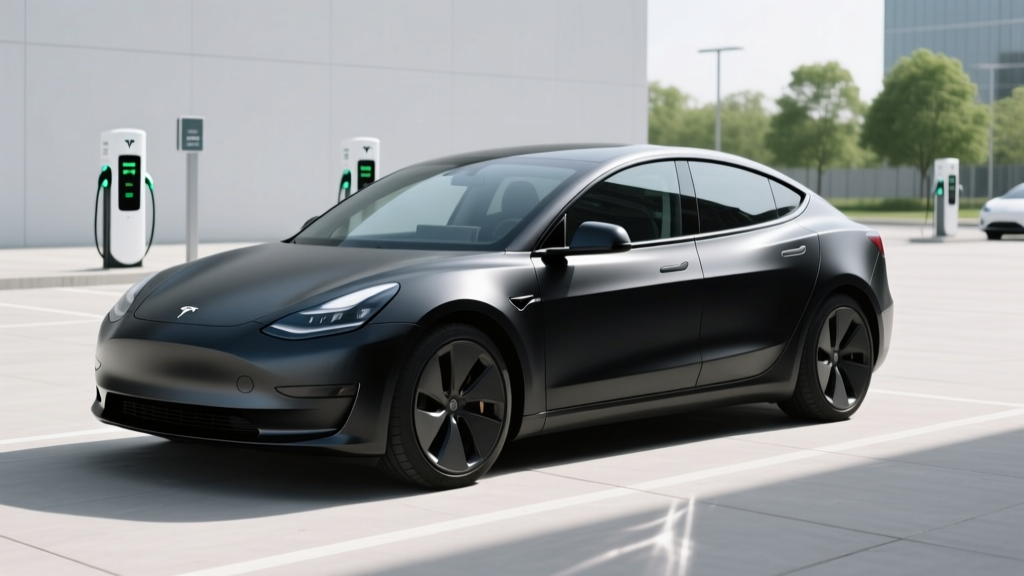
The Tesla Model 3 remains one of the most popular electric sedans in the U.S., and for 2026, the "chrome delete" aesthetic — where all exterior chrome trim is replaced with gloss black or satin black finishes — has become a dominant trend among owners and even influences Tesla's own factory color and trim configurations. But beyond the sleek, blacked-out look, the Model 3's engineering fundamentals determine whether it's the right EV for your daily commute, road trips, or family duties. This review covers the 2026 Tesla Model 3 Long Range AWD and Rear-Wheel Drive trims with exact range, charging, performance, and pricing data — plus the real-world ownership factors that spec sheets leave out.
2026 Tesla Model 3 at a Glance: Key Specs
| Spec | Long Range AWD | Rear-Wheel Drive (Standard) |
|---|---|---|
| EPA Range | 341 miles | 272 miles |
| Battery (usable) | ~75 kWh (NMC) | ~60 kWh (LFP) |
| Peak DC Fast Charge | 250 kW | 170 kW |
| 10–80% DC Charge Time | ~27 min | ~25 min |
| Level 2 Home Charge | 11.5 kW (~44 mi/hr) | 11.5 kW (~44 mi/hr) |
| 0–60 mph | 4.2 sec | 5.8 sec |
| Horsepower | 346 hp (dual motor) | 271 hp (single motor) |
| Drivetrain | AWD (dual motor) | RWD |
| Efficiency | 134 MPGe / 25 kWh/100mi | 132 MPGe / 26 kWh/100mi |
| Cargo Volume | 23 cu ft (trunk + frunk) | 23 cu ft (trunk + frunk) |
| Rear Legroom | 35.3 in | 35.3 in |
| Base MSRP | $42,130 | $38,990 |
| Battery Warranty | 8 yr / 120,000 mi | 8 yr / 100,000 mi |
Sources: EPA Fueleconomy.gov, Tesla Model 3 Design. Pricing excludes destination fee; MSRP current as of early 2026.
Real-World Range: What the EPA Sticker Doesn't Tell You
EPA Estimated: 341 miles
Real-World Highway (70–80 mph): ~270–295 miles
Real-World City / Mixed: ~310–330 miles
Cold Weather (below 32°F): ~230–270 miles (20–30% reduction)
Highway driving at sustained speeds, headwinds, elevation gain, and cold temperatures all reduce range below the EPA combined figure. Plan road-trip charging stops at ~200–230 miles of buffer in winter.
The Long Range AWD's 341-mile EPA figure is among the best in its class, but the EPA combined cycle blends city regenerative braking with moderate highway speeds. On a flat 75-mph interstate run at 70°F, expect roughly 280–295 miles before hitting 10% State of Charge. In winter conditions — say, a January drive from Denver to Vail — range can drop to 240 miles or less due to cabin heating, battery resistance, and denser air.
The RWD trim's 60-kWh LFP (lithium iron phosphate) battery delivers 272 miles EPA. LFP chemistry sacrifices some energy density for longevity and thermal stability. Real-world highway range lands around 215–235 miles in moderate weather, making it ideal for commuters with home charging but tighter for cross-country road trips.
Charging Speed: DC Fast Charging and Home Level 2
| Charge Level | Power / Rate | Miles Added per Hour | Notes |
|---|---|---|---|
| Level 1 (120V outlet) | ~1.4 kW | ~3–5 mi/hr | Emergency/trickle only |
| Level 2 (240V home) | 11.5 kW | ~44 mi/hr | Full charge in 6–8 hours |
| DC Fast (V3 Supercharger) | Up to 250 kW (LR) / 170 kW (RWD) | ~1,000+ mi/hr peak | 10–80% in ~25–27 min |
Tesla's Supercharger network remains the gold standard for public DC fast charging. The Long Range AWD peaks at 250 kW on V3 Superchargers, though sustained rates average around 100–130 kW across the full 10–80% session due to the charge curve taper. That taper becomes aggressive above 80% State of Charge — charging from 80% to 100% can take nearly as long as 10% to 80%. For road trips, plan stops at 10–15% remaining and charge to 80% to minimize time at the stall.
At home, an 11.5-kW Level 2 wall connector on a 60-amp circuit adds roughly 44 miles of range per hour. A full overnight charge from 20% to 100% takes about 6–7 hours. The RWD's smaller 60-kWh LFP battery charges to full in closer to 5–6 hours. One LFP advantage: Tesla recommends regularly charging to 100% on LFP packs for accurate battery calibration, unlike NMC packs where daily limits of 80% prolong longevity.
Performance, Efficiency, and the Chrome Delete Aesthetic
The Long Range AWD's dual-motor setup produces 346 horsepower and hits 0–60 mph in 4.2 seconds — quick enough to merge confidently onto any freeway. The RWD's single rear motor delivers 271 hp and a 5.8-second sprint, which still outpaces most gas-powered compact sedans off the line thanks to instant electric torque.
Efficiency is where the Model 3 shines. At 134 MPGe combined (Long Range) and 132 MPGe (RWD), it's one of the most efficient EVs sold in the U.S. That translates to roughly 25–26 kWh per 100 miles of driving. At the national average electricity rate of ~$0.16/kWh (EIA, 2025 data), that's about $4.00–$4.16 per 100 miles — compared to $12–$15 for a 30-MPG gas sedan at $3.60/gallon.
On the chrome delete trend: The refreshed Model 3 (internally "Highland") already ships with significantly less exterior chrome than pre-2024 models. Window trim, badges, and wheel accents lean toward body-color or black finishes from the factory. Many owners pursue a full aftermarket chrome delete — applying gloss-black vinyl wrap to remaining chrome window surrounds, mirror caps, and the Tesla badge — for a stealth, monochromatic look. Professional chrome-delete wraps typically cost $800–$1,500 depending on coverage and film quality. Tesla does not offer a factory "chrome delete" package, so this remains an owner-driven customization. Note that vinyl wrap does not affect range, charging, or warranty, but poor-quality installations can trap moisture against trim.
Pricing, Trims, and Federal Tax Credit Eligibility
| Trim | Base MSRP | Est. After §30D Credit | Federal Credit Eligible? |
|---|---|---|---|
| RWD (Standard) | $38,990 | ~$31,490* | Up to $7,500 (if sourcing/income requirements met) |
| Long Range AWD | $42,130 | ~$34,630* | Up to $7,500 (if sourcing/income requirements met) |
| Performance | $52,990 | ~$45,490* | Up to $7,500 (MSRP under $55K sedan cap) |
*Estimated after-tax-credit prices assume full $7,500 eligibility under IRS §30D. Actual credit depends on battery critical-mineral sourcing, buyer income, and MSRP caps. Point-of-sale transfer is available, reducing the purchase price at delivery. Verify current eligibility at IRS.gov before ordering.
- MSRP Cap: Sedans must be under $55,000 (all Model 3 trims qualify)
- Buyer Income Cap: AGI ≤ $150K single / $225K head of household / $300K joint
- Battery Sourcing: Critical minerals and battery components must meet escalating North American/free-trade thresholds — partial credit ($3,750) if only one requirement is met
- Point-of-Sale Transfer: Credit can be applied at purchase, reducing upfront cost
- VIN Verification: Confirm your specific vehicle's battery sourcing at fueleconomy.gov
Interior, Tech, and Driver Assistance
The Model 3 cabin is minimalist by design — a single 15.4-inch center touchscreen handles navigation, media, climate, and vehicle settings. There is no traditional instrument cluster; speed and range information lives in the upper-left corner of the main display. The refreshed Highland interior adds ventilated front seats, ambient lighting, rear-seat ventilation, and improved sound insulation over pre-2024 models.
Standout tech features:
- Tesla Supercharger network access (17,000+ stalls in North America)
- Over-the-air software updates that add features post-purchase
- Tesla app with remote climate, location tracking, and Sentry Mode camera access
- Native NACS (North American Charging Standard) connector — no adapter needed at Superchargers
- Heat pump for efficient cabin heating in cold weather
Notable drawbacks:
- No physical buttons for climate or volume — everything routes through the touchscreen
- Turn-signal stalks removed on Highland refresh; signals activated via steering-wheel buttons (polarizing for many drivers)
- Rear-seat headroom is tight for passengers over 6 feet due to the sloping roofline
- No Apple CarPlay or Android Auto — Tesla's proprietary infotainment only
Autopilot and FSD: What Level of Automation?
Tesla's Autopilot and Full Self-Driving (Supervised) are not self-driving systems. The driver must remain fully engaged, hands on or near the wheel, and eyes on the road at all times. Only Level 4 services like Waymo operate without a human driver in geofenced areas. FSD (Supervised) adds automated lane changes, traffic-light recognition, and city-street navigation, but still requires constant driver supervision and intervention.
Every Model 3 includes basic Autopilot (traffic-aware cruise control and lane centering). The FSD (Supervised) package costs an additional $8,000 or $99/month. While FSD has improved significantly in urban navigation, it can still make unexpected decisions at complex intersections or construction zones. Treat it as an advanced driver assist, not a replacement for attentive driving.
Warranty, Ownership Costs, and Who Should Buy
Tesla's battery and drive-unit warranty covers 8 years or 120,000 miles (Long Range AWD) and 8 years or 100,000 miles (RWD), whichever comes first, with a minimum 70% capacity retention threshold. The limited vehicle warranty is 4 years or 50,000 miles. These terms are competitive with rivals like the Hyundai Ioniq 6 and BMW i4.
Insurance costs remain a Model 3 pain point. Average annual premiums run $2,200–$3,200 depending on state, age, and driving record — roughly 30–50% higher than comparable gas sedans due to repair costs and Tesla's aluminum-intensive body structure. Get quotes before ordering.
- Class-leading efficiency (134 MPGe)
- Supercharger network — best public charging infrastructure
- Strong real-world range (341 mi EPA on LR AWD)
- OTA updates keep the car current
- Low cost per mile vs. gas equivalents
- Excellent acceleration and handling
- No Apple CarPlay / Android Auto
- Turn-signal buttons on steering wheel (no stalk)
- Higher insurance premiums than gas rivals
- Minimalist interior not for everyone
- Rear headroom limited for tall passengers
- FSD costs extra and isn't true self-driving
Who the Model 3 suits best: The Long Range AWD is ideal for tech-forward commuters and road-trippers who value Supercharger access and want a sporty, efficient sedan. The RWD trim fits budget-conscious urban drivers with reliable home charging who need a daily commuter under $40K (before credits). Families needing maximum rear-seat space and cargo flexibility should cross-shop the Tesla Model Y or Hyundai Ioniq 5.
Frequently Asked Questions
What is the real-world range of the 2026 Tesla Model 3?
The Long Range AWD achieves 341 miles EPA, but expect 270–295 miles on sustained highway drives at 70–80 mph and 230–270 miles in freezing weather. The RWD delivers 272 miles EPA, with real-world highway range around 215–235 miles in moderate temperatures.
How fast does the Model 3 charge at home and on the road?
On a Level 2 home charger (11.5 kW), the Model 3 adds about 44 miles of range per hour, fully charging overnight in 5–8 hours depending on trim. On a V3 Supercharger, the Long Range peaks at 250 kW and charges from 10–80% in roughly 27 minutes; the RWD peaks at 170 kW with a similar 10–80% time of about 25 minutes due to its smaller battery.
How much does the Tesla Model 3 cost after the federal tax credit?
The RWD starts at $38,990 and could drop to approximately $31,490 with the full $7,500 §30D credit, if you meet income, MSRP, and battery-sourcing requirements. The Long Range AWD starts at $42,130 (~$34,630 after credit). Confirm your vehicle's sourcing eligibility and your AGI before relying on the credit.
Is the Model 3 worth buying over the Hyundai Ioniq 6 or BMW i4?
The Model 3 wins on charging infrastructure (Supercharger network), efficiency, and software. The Ioniq 6 offers comparable range (361 mi EPA) and 800V ultra-fast charging capability, plus physical buttons and CarPlay. The BMW i4 provides a more traditional luxury interior but at a higher price and lower range. If Supercharger access and OTA updates matter most, the Model 3 leads. If you prefer a conventional cabin layout, cross-shop the Ioniq 6.
Does a chrome delete affect the Model 3's warranty or range?
No. A vinyl-wrap chrome delete is a cosmetic modification that does not affect aerodynamics, range, charging, or the vehicle's powertrain warranty. However, improper installation that damages trim or paint could void cosmetic warranty claims on affected panels.
Does the 2026 Tesla Model 3 qualify for the federal EV tax credit?
All Model 3 trims fall under the $55,000 sedan MSRP cap. Eligibility for the full $7,500 depends on your adjusted gross income (≤$150K single / ≤$300K joint), and whether Tesla's battery meets the 2026 critical-mineral and component sourcing thresholds. Check your specific VIN's eligibility at fueleconomy.gov and consult a tax professional for your situation.