Quick Verdict: Is the 2026 Tesla Model 3 the Charging-Speed Benchmark?
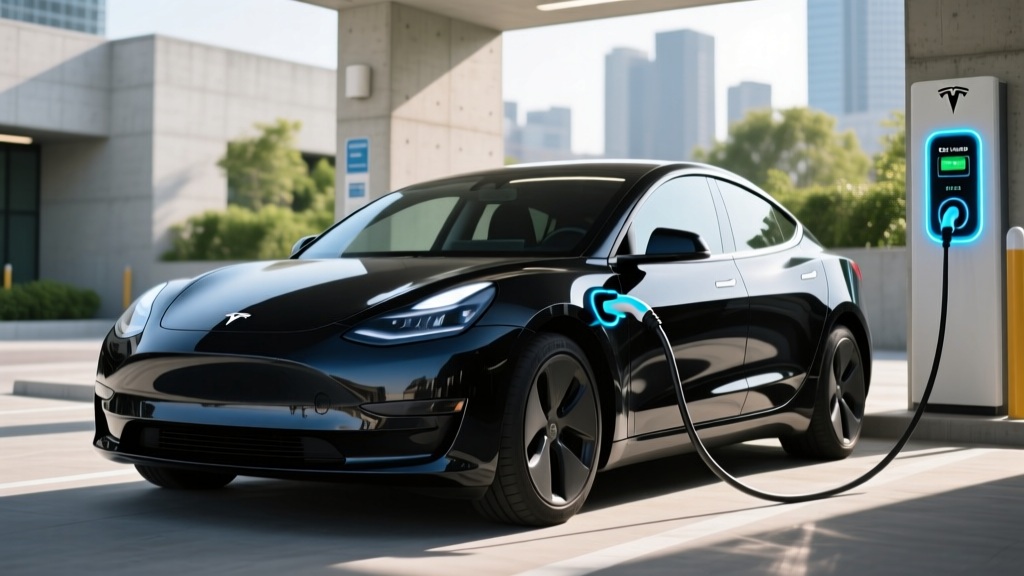
If you're searching "how long do a Tesla take to charge," the answer depends on which 2026 Model 3 variant you buy and where you plug in. The Long Range AWD with its 79 kWh NMC pack can recover 10-80% state of charge in roughly 25 minutes at a V3 Supercharger (250 kW peak), while the base Rear-Wheel-Drive with its 60 kWh LFP battery takes about 27 minutes at the same stall. At home on a Level 2 wall connector, you're adding roughly 32-44 miles of range per hour depending on trim. That's among the fastest and most reliable charging ecosystems in the industry — but it's not the whole story.
This review covers every 2026 Model 3 trim with exact specs, real-world range expectations, ownership costs, and how it stacks up against rivals like the Hyundai Ioniq 6 and BMW i4.
2026 Tesla Model 3 Specs at a Glance
| Spec | RWD (Base) | Long Range AWD | Performance AWD |
|---|---|---|---|
| EPA Range | 272 mi | 363 mi | 315 mi |
| Battery (usable) | ~60 kWh (LFP) | ~79 kWh (NMC) | ~79 kWh (NMC) |
| MPGe (combined) | 132 MPGe | 134 MPGe | 125 MPGe |
| kWh/100 mi | 25 | 25 | 27 |
| 0-60 mph | 5.8 sec | 4.2 sec | 2.9 sec |
| Horsepower | 271 hp | 346 hp | 510 hp |
| Drivetrain | RWD (single motor) | AWD (dual motor) | AWD (dual motor) |
| Max DC Charge Rate | 170 kW peak | 250 kW peak | 250 kW peak |
| 10-80% DC Fast Charge | ~27 min | ~25 min | ~25 min |
| Level 2 Home Charging | 7.6 kW (~30 mi/hr) | 11.5 kW (~44 mi/hr) | 11.5 kW (~44 mi/hr) |
| Base MSRP | $38,990 | $47,740 | $52,990 |
Source: fueleconomy.gov and Tesla's official 2026 spec sheet. Prices exclude destination.
Real-World Range vs. EPA Estimates
EPA Sticker: 272 mi (RWD) / 363 mi (Long Range) / 315 mi (Performance)
Real-World Expectation: In mixed driving at 70-75 mph, expect roughly 240-250 mi from the RWD, 310-330 mi from the Long Range, and 270-285 mi from the Performance. In cold weather (below 32°F), range can drop 15-30% due to battery resistance and cabin heating demands — a Long Range might deliver 240-260 mi on a winter highway trip. City regenerative driving can match or slightly exceed EPA figures.
Tesla's efficiency remains class-leading. The Model 3's low drag coefficient (0.219 Cd), heat pump (standard on all 2026 trims), and aggressive regenerative braking squeeze more miles from each kWh than most competitors. But highway speeds and cold temperatures are the great equalizers — no EV escapes physics.
How Long Does a Tesla Take to Charge? (DC Fast, Level 2, Level 1)
This is the core question, and the answer varies dramatically by charger type:
| Charging Level | Power / Voltage | Miles Added per Hour | Use Case |
|---|---|---|---|
| Level 1 (120V outlet) | ~1.4 kW | 3-5 mi/hr | Emergency/overnight trickle |
| Level 2 (240V home) | 7.6-11.5 kW | 30-44 mi/hr | Daily home charging |
| DC Fast (V3 Supercharger) | 170-250 kW peak | ~170-1,000+ mi/hr (peak) | Road trips, quick top-ups |
| DC Fast (V4 Supercharger) | Up to 350 kW (future-capable) | Higher peak rates | Expanding network |
Understanding the charge curve matters. A 250 kW peak rate doesn't mean sustained 250 kW across the entire session. The Model 3 Long Range will pull peak power roughly from 10-30% state of charge, then taper progressively. By 60%, you're seeing around 100-120 kW; above 80%, speeds drop sharply to protect battery health. That's why manufacturers quote 10-80% times — the last 20% can take as long as the first 80%.
Preconditioning is critical. If you navigate to a Supercharger in the Tesla nav system, the car automatically warms the battery to optimal temperature before arrival, enabling faster charge acceptance. Skipping preconditioning (or arriving at a charger with a cold-soaked battery) can add 5-10 minutes to your session.
Pricing, Tax Credits, and Total Cost
| Trim | Base MSRP | Est. After §30D Credit | Credit Eligibility |
|---|---|---|---|
| Model 3 RWD | $38,990 | ~$31,490 | Eligible (partial $3,750-$7,500 depending on battery sourcing) |
| Model 3 Long Range AWD | $47,740 | ~$40,240 | Eligible (partial — verify current critical-mineral sourcing) |
| Model 3 Performance | $52,990 | ~$45,490 | Eligible (partial — verify current sourcing) |
The federal EV tax credit under IRS §30D has three moving parts that determine your actual savings:
- MSRP Cap: Sedans must be under $55,000 — all Model 3 trims qualify.
- Income Cap: AGI must be under $150,000 (single) / $300,000 (joint) / $225,000 (head of household).
- Battery Sourcing: The $7,500 credit splits into $3,750 for critical-mineral sourcing and $3,750 for battery-component sourcing. Tesla's domestic manufacturing gives it an advantage, but exact eligibility shifts as supply chains evolve. Verify current-year rules on irs.gov or with a tax professional.
The credit can now be transferred at the point of sale, reducing your purchase price directly rather than waiting for a tax refund.
Interior, Tech, and Driver Assistance
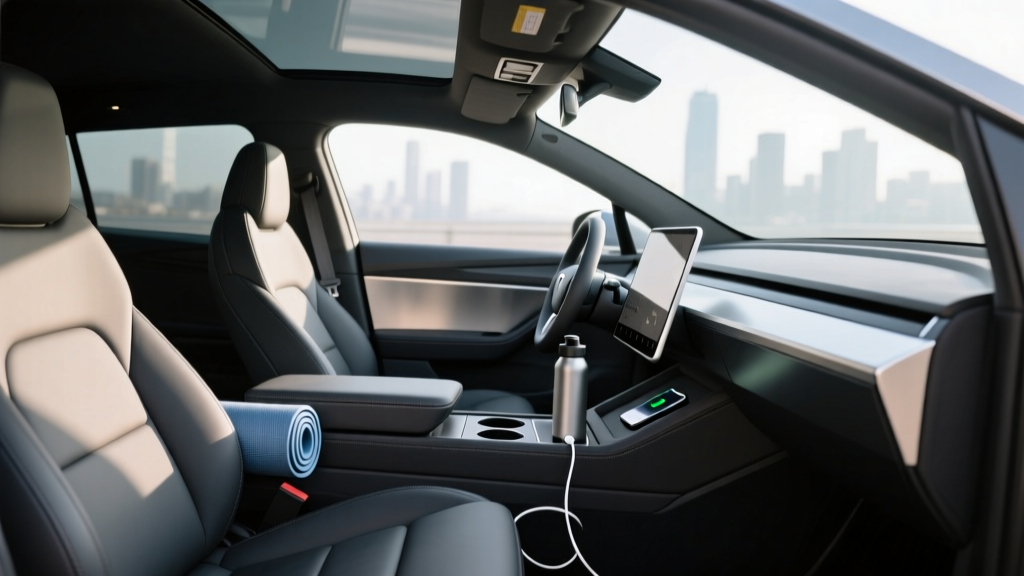
The 2026 Model 3 "Highland" refresh brought meaningful interior upgrades: ventilated front seats, ambient lighting, acoustic glass all around, rear-seat touchscreen, and improved material quality. The minimalist cabin still routes nearly everything through the 15.4-inch center display — including the glovebox release and wiper controls — which remains polarizing.
Cargo and passenger space:
- Front legroom: 42.4 in / Rear legroom: 35.3 in
- Cargo volume: 23 cu ft (rear trunk) + 3.1 cu ft (frunk) = 26.1 cu ft total
- 60/40 split-folding rear seats expand cargo to ~56 cu ft
Driver assistance: Tesla's Basic Autopilot (traffic-aware cruise + lane centering) is standard. Enhanced Autopilot ($6,000) adds auto lane change and Navigate on Autopilot. Full Self-Driving (Supervised) remains a $8,000 option — but it is emphatically SAE Level 2, meaning the driver must remain fully attentive with hands on the wheel. It is not autonomous driving.
Warranty and Battery Longevity
Tesla's warranty package:
- Basic Vehicle: 4 years / 50,000 miles
- Battery & Drive Unit: 8 years / 100,000 miles (RWD) or 8 years / 120,000 miles (Long Range/Performance)
- Capacity retention threshold: 70% minimum during warranty period
The LFP battery in the RWD model trades energy density for longevity — LFP chemistry tolerates daily 100% charging without accelerated degradation, making it ideal for commuters who want to charge fully every night. The NMC packs in Long Range and Performance trims are best kept between 20-80% for daily use, charging to 100% only before long trips. Tesla's thermal management system is among the most sophisticated in the industry, contributing to strong long-term State of Health data across the fleet.
Pros and Cons
Pros
- Class-leading efficiency (25 kWh/100 mi) translates to lower charging costs
- Supercharger network is the most reliable public charging ecosystem in the US
- Over-the-air updates continuously add features
- LFP battery on RWD allows daily 100% charging without degradation concerns
- Strong resale value relative to most EVs
- Excellent safety ratings (NHTSA 5-star)
Cons
- Minimalist interior isn't for everyone — no physical buttons, stalkless turn signals
- Rear seat is tighter than competitors (Ioniq 6 offers more legroom)
- RWD's 170 kW peak charge rate trails the Long Range's 250 kW
- Service center availability varies by region
- FSD (Supervised) is expensive and still requires full driver attention
- No Apple CarPlay or Android Auto
Who Should Buy the 2026 Tesla Model 3?
Choose the Model 3 RWD if: You commute under 50 miles daily, can charge at home, want the lowest entry price (~$31,490 after credit), and value LFP battery longevity for daily full charges.
Choose the Model 3 Long Range AWD if: You road-trip regularly, live in a cold climate where AWD matters, or need the 363-mi EPA range to minimize charging stops. The 250 kW peak charge rate saves real time on long drives.
Choose the Model 3 Performance if: You want sports-car acceleration (2.9 sec 0-60) with daily usability, and can accept the range/price trade-off.
Look elsewhere if: You need maximum rear-seat space (Ioniq 6), prefer physical controls and Apple CarPlay (BMW i4), or want a more traditional luxury interior.
Frequently Asked Questions
How long does a Tesla take to charge at home?
On a Level 2 Tesla Wall Connector (240V, 48A), the Long Range adds roughly 44 miles of range per hour, going from 10-100% in about 8-9 hours. The RWD adds about 30 miles per hour, charging fully in roughly 7-8 hours. Both easily recharge overnight.
How long does a Tesla take to charge at a Supercharger?
At a V3 Supercharger (250 kW), the Long Range and Performance models charge from 10-80% in approximately 25 minutes. The RWD peaks at 170 kW and takes roughly 27 minutes for the same session. Always precondition by navigating to the charger for optimal speeds.
Does the 2026 Model 3 qualify for the $7,500 federal tax credit?
All trims fall under the $55,000 MSRP sedan cap. Eligibility for the full $7,500 depends on your income (under $150K single / $300K joint) and the current battery-sourcing requirements. As of 2026, the Model 3 typically qualifies for at least $3,750 and often the full $7,500 — but verify on irs.gov before purchasing, as sourcing rules update periodically.
What's the real-world range of the Model 3 Long Range?
Expect 310-330 miles in mixed 70-75 mph driving in moderate temperatures. In winter highway conditions, plan for 240-260 miles. City driving with regenerative braking can meet or exceed the 363-mile EPA estimate.
Is the Tesla Model 3 worth it vs. the Hyundai Ioniq 6 or BMW i4?
The Model 3 wins on charging infrastructure (Supercharger network), efficiency, and software. The Ioniq 6 offers more interior space and an 800V architecture for faster peak charging. The BMW i4 provides a more traditional luxury feel with physical controls and CarPlay. For most buyers prioritizing low total cost of ownership and road-trip convenience, the Model 3 remains the default recommendation.
Can I charge a Tesla on non-Tesla chargers?
Yes. The 2026 Model 3 comes with the NACS (North American Charging Standard) connector natively, which is the Tesla plug. For CCS chargers (Electrify America, many others), you'll need a NACS-to-CCS adapter. Tesla also provides a J1772 adapter for Level 2 public chargers in the box.