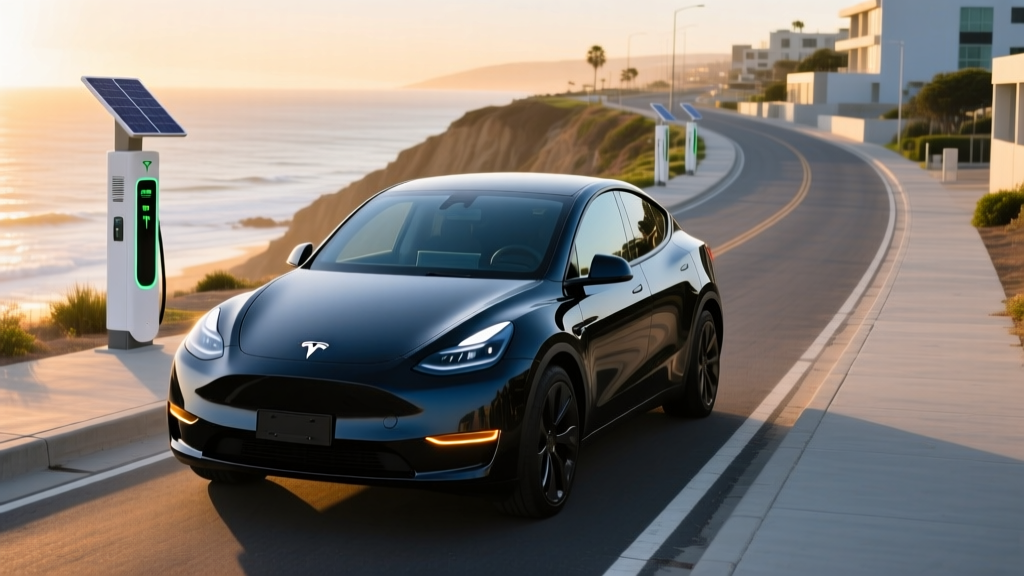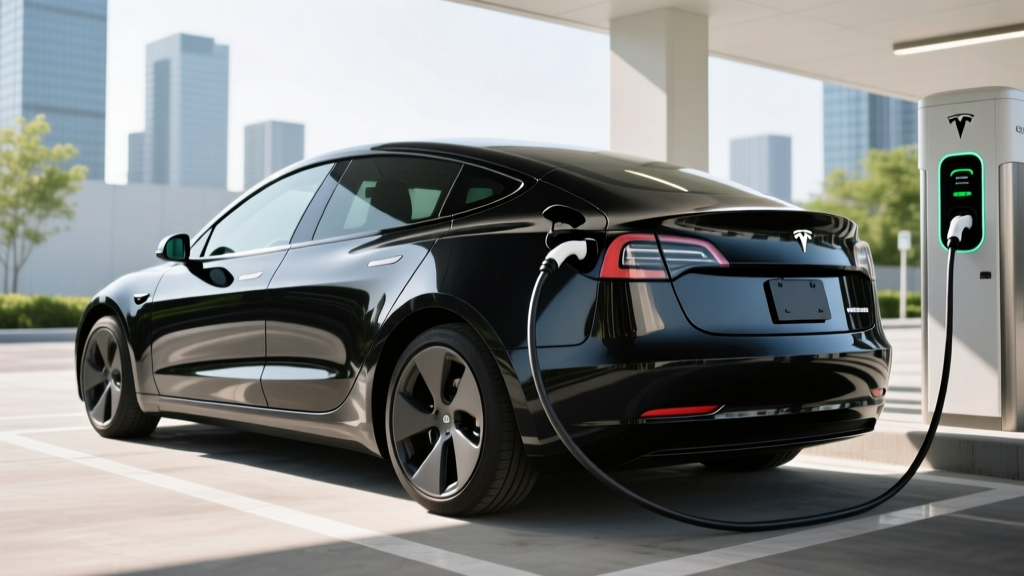
The Tesla Model 3 remains the benchmark compact electric sedan in 2026, and for good reason: its efficiency, Supercharger network access, and iterative hardware updates keep it competitive against a swelling field of rivals. But the question buyers actually ask is more specific — how does the Tesla Model 3 charge in the real world, and does the EPA range hold up outside the lab? We break down every number that matters.
Tesla Model 3 Quick Specs at a Glance
| Spec | RWD (Standard Range) | Long Range AWD | Performance |
|---|---|---|---|
| EPA Range | 272 mi | 363 mi | 325 mi |
| Battery (usable) | ~60 kWh (LFP) | ~75 kWh (NMC) | ~75 kWh (NMC) |
| Peak DC Fast Charge | 170 kW | 250 kW | 250 kW |
| 10–80% DC Time | ~25 min | ~25 min | ~25 min |
| Level 2 (11.5 kW) | ~30 mi/hr | ~44 mi/hr | ~44 mi/hr |
| 0–60 mph | 5.8 sec | 4.2 sec | 2.9 sec |
| Horsepower | 271 hp | 346 hp | 510 hp |
| Drivetrain | RWD | Dual-Motor AWD | Dual-Motor AWD |
| MPGe (Combined) | 132 MPGe | 125 MPGe | 115 MPGe |
| Base MSRP (2026) | $38,990 | $45,990 | $52,990 |
| Battery Warranty | 8 yr / 100,000 mi | 8 yr / 120,000 mi | 8 yr / 120,000 mi |
Real-World Range vs. EPA Sticker
The Model 3's efficiency is where Tesla's engineering still shows its teeth. At roughly 24–26 kWh per 100 miles (Long Range), it extracts more distance per kilowatt-hour than nearly any competitor in its class. That efficiency matters as much as battery size — a 75 kWh pack in a less aerodynamic SUV would deliver far fewer miles.
City driving with frequent regenerative braking can actually push range above the EPA combined figure, especially in the RWD trim. Tesla's heat pump, standard across all trims since the 2021 refresh, significantly reduces winter cabin-heating energy draw compared to older resistive systems.
How Fast Does the Tesla Model 3 Charge?
Understanding the Tesla Model 3 charge experience requires separating peak power from sustained power. The 250 kW peak on Long Range and Performance trims is only available at low states of charge (roughly 10–25% SoC). The charge curve tapers progressively:
| Charging Level | Power / Rate | Miles Added | Notes |
|---|---|---|---|
| Level 1 (120V) | ~1.4 kW | ~3–5 mi/hr | Emergency/trickle only |
| Level 2 (240V, 48A) | 11.5 kW | ~30–44 mi/hr | Full overnight charge in 7–9 hours |
| DC Fast (V3 Supercharger) | Up to 250 kW peak | ~200 mi in 15 min (LR) | Peak only at low SoC; tapers above 50% |
| DC Fast (10–80%) | Avg ~120–140 kW sustained | ~25 minutes (LR) | Preconditioning required for max rate |
| NACS Adapter (non-Tesla DC) | Up to 250 kW (charger dependent) | Varies | Native NACS port on 2025+ models |
The critical ownership insight: preconditioning is non-negotiable for fast charging. When you navigate to a Supercharger in the Tesla nav system, the car automatically warms the battery to optimal temperature. Skip this (for example, by driving to a charger without using nav) and your peak charge rate can drop by 30–50%, turning a 25-minute stop into a 40-minute stop.
Home charging on a Level 2 Wall Connector at 48 amps delivers roughly 44 miles of range per hour on the Long Range. A full overnight session (8 hours) adds ~350 miles — more than enough for any daily commute. Most owners who charge at home never visit a Supercharger except for road trips.
For 2025 and newer Model 3 vehicles, Tesla uses the native NACS (North American Charging Standard) port, eliminating the need for an adapter at Tesla Superchargers. Non-Tesla networks like Electrify America and EVgo now support NACS via adapter or are transitioning their stations.
Battery Chemistry: LFP vs. NMC — What It Means for You
The RWD (Standard Range) Model 3 uses an LFP (lithium iron phosphate) battery, while the Long Range and Performance use NMC (nickel manganese cobalt). This is not a trivial difference:
| Factor | LFP (RWD) | NMC (Long Range / Performance) |
|---|---|---|
| Energy Density | Lower (smaller range for same weight) | Higher (enables 363 mi range) |
| Cycle Life | Longer (3,000+ cycles typical) | Moderate (1,500–2,000 cycles) |
| Daily Charging to 100% | Recommended by Tesla | Limit to 80% for daily; 100% for trips only |
| Cold-Weather Performance | Slightly worse in extreme cold | Better low-temp charge acceptance |
| Cost | Lower (contributes to lower MSRP) | Higher |
| Cobalt Content | None (ethically simpler supply chain) | Contains cobalt |
For daily commuters who charge at home every night and rarely road-trip, the LFP RWD is arguably the smarter buy — you can charge to 100% without guilt, and the battery will likely outlast the car. For frequent long-distance travelers, the Long Range NMC's superior range and cold-weather charge acceptance justify the premium.
Pricing, Trims & Federal Tax Credit Eligibility
| Trim | Base MSRP | Federal Credit (§30D) | Effective Price (if eligible) |
|---|---|---|---|
| RWD (Standard Range) | $38,990 | Up to $7,500 | ~$31,490 |
| Long Range AWD | $45,990 | Up to $7,500 | ~$38,490 |
| Performance | $52,990 | Up to $7,500 | ~$45,490 |
Federal tax credit eligibility under IRS §30D is not automatic. Key rules for 2026:
- MSRP Cap: Sedans must be under $55,000. All Model 3 trims qualify.
- Income Cap: Buyer AGI must not exceed $150,000 (single), $225,000 (head of household), or $300,000 (joint).
- Battery Sourcing: Critical minerals and battery components must meet phased-in domestic/free-trade-partner thresholds. Tesla's US-built batteries have largely met these requirements, but confirm at point of sale.
- Point-of-Sale Transfer: You can now transfer the credit to the dealer at purchase, reducing your out-of-pocket cost immediately rather than waiting for tax filing.
Always verify current eligibility with your tax professional and the dealer before assuming the full $7,500. Sourcing rules tighten annually, and credit availability can shift mid-year.
Interior, Cargo & Daily Practicality
The Model 3's cabin is famously minimalist — a 15.4-inch center touchscreen controls nearly everything, including climate vents, mirror adjustment, and glovebox release. There is no instrument cluster; all driving info appears on the central screen. This is polarizing: some owners find it liberating, others find it distracting.
Concrete dimensions:
- Cargo (trunk + frunk): 23 cu ft combined (19.8 trunk, 3.1 frunk)
- Rear legroom: 35.2 inches
- Front headroom: 40.3 inches
- Seating: 5 passengers (tight for 3 adults in back on long trips)
Compared to the Hyundai Ioniq 6 (12.3 cu ft trunk) or BMW i4 (16.6 cu ft), the Model 3's cargo space is generous. The frunk adds useful space for charging cables or a small bag. However, the rear seat is tighter than a Toyota Camry or Honda Accord — families with tall teenagers should test-fit before buying.
Tech, Driver Assistance & Safety
All Model 3 vehicles include Tesla Autopilot as standard — a SAE Level 2 driver-assistance system combining adaptive cruise control and lane-centering. This is not self-driving; the driver must remain attentive with hands on the wheel at all times.
Full Self-Driving (Supervised) remains an $8,000 option (or $99/month subscription as of 2026). It adds automated lane changes, traffic-light recognition, and city-street navigation, but still requires active driver monitoring. Real-world reliability has improved significantly since 2024, but it remains a driver-assist tool, not a chauffeur replacement.
The Model 3 earned the IIHS Top Safety Pick+ rating and a 5-star overall rating from NHTSA, with top marks in every crash-test subcategory.
Who Should Buy the Tesla Model 3?
- Your daily commute is under 60 miles round-trip
- You charge at home and rarely road-trip more than 200 miles
- You want the lowest purchase price and lowest cost per mile
- You prefer LFP's longevity and 100% daily charging
- You regularly drive 300+ miles in a single day
- You live in a cold climate where range loss is significant
- You want AWD traction for snow and rain
- You value the extra 91 miles of EPA range as a buffer
- Acceleration and track capability are priorities
- You want adaptive suspension and track mode
- Budget allows the $52,990 MSRP and you still clear the §30D MSRP cap
- You need more than 23 cu ft of cargo or regularly carry 4+ adults
- You want Apple CarPlay/Android Auto (Tesla uses proprietary software only)
- You prefer traditional dealer service networks over Tesla's mobile-ranger/Service Center model
Pros & Cons
- Class-leading efficiency (24–26 kWh/100mi)
- Access to Tesla Supercharger network (19,000+ US stalls)
- Over-the-air updates continuously improve the car
- LFP battery on RWD allows daily 100% charging
- Strong resale value relative to most EVs
- Excellent safety ratings (IIHS TSP+, NHTSA 5-star)
- No Apple CarPlay or Android Auto
- Minimalist interior isn't for everyone (no stalks, no instrument cluster)
- Rear seat is tighter than midsize sedans
- Service center availability varies by region
- FSD subscription cost adds up; still Level 2 only
- Ride quality on Performance trim can be firm on rough roads
How It Stacks Up Against Competitors
| Spec | Tesla Model 3 LR | Hyundai Ioniq 6 SEL | BMW i4 eDrive40 |
|---|---|---|---|
| EPA Range | 363 mi | 361 mi | 307 mi |
| Battery | 75 kWh (NMC) | 77.4 kWh (NMC) | 81.5 kWh (NMC) |
| Peak DC Charge | 250 kW | 235 kW | 205 kW |
| 10–80% Time | ~25 min | ~18 min (800V arch) | ~31 min |
| MPGe (Combined) | 125 | 140 | 109 |
| 0–60 mph | 4.2 sec | 5.1 sec | 5.5 sec |
| Base MSRP | $45,990 | $42,600 | $57,900 |
| Tax Credit (§30D) | Eligible (verify sourcing) | Not eligible (Korea-built) | Not eligible (Germany-built) |
The Ioniq 6's 800-volt architecture charges faster (10–80% in ~18 minutes) and it's slightly more efficient. But it's built in South Korea, disqualifying it from the federal credit, and it lacks access to the Supercharger network without an adapter. The BMW i4 offers a more traditional luxury interior but at a significant price premium and without tax credit eligibility. The Model 3's combination of range, Supercharger access, and credit-eligible pricing remains hard to beat for US buyers.
Frequently Asked Questions
What is the real-world range of the Tesla Model 3?
The Long Range AWD delivers approximately 290–320 miles on the highway in moderate temperatures, and 230–260 miles in sub-30°F winter conditions. The RWD (LFP) delivers roughly 220–250 highway miles in moderate weather and 180–210 in deep cold. City driving with regen braking can exceed EPA estimates.
How fast does the Tesla Model 3 charge at home and on the road?
On a Level 2 home charger (11.5 kW / 48A), the Long Range adds ~44 miles per hour, fully charging in about 7–8 hours. On a V3 Supercharger, it peaks at 250 kW and charges 10–80% in roughly 25 minutes with battery preconditioning. The RWD peaks at 170 kW and takes a similar 10–80% time due to its smaller battery.
How much does the Tesla Model 3 cost after tax credits?
If you meet all IRS §30D requirements (income under $150K single / $300K joint, and the vehicle meets battery-sourcing rules), the RWD drops from $38,990 to approximately $31,490, the Long Range from $45,990 to ~$38,490, and the Performance from $52,990 to ~$45,490. Always confirm eligibility with your tax advisor.
Does the Tesla Model 3 qualify for the federal EV tax credit?
Yes — as of 2026, the Model 3 is assembled in the US and has met battery-sourcing thresholds for the full $7,500 credit, subject to buyer income caps and MSRP limits. Rules tighten annually; verify at IRS.gov and with your dealer at purchase.
Is the Tesla Model 3 worth buying over competitors?
For US buyers prioritizing range, Supercharger network reliability, and tax-credit pricing, the Model 3 Long Range is the strongest all-around value in its segment. If ultra-fast DC charging matters most, the Hyundai Ioniq 6's 800V system is quicker. If you want a traditional luxury interior, the BMW i4 is compelling but pricier and credit-ineligible. Test-drive all three before deciding.
What is the battery warranty on the Tesla Model 3?
The RWD covers the battery for 8 years or 100,000 miles (whichever comes first), with a minimum 70% capacity retention guarantee. The Long Range and Performance extend that to 8 years or 120,000 miles, also with 70% retention. Real-world degradation data from Tesla owners shows most packs retain 90%+ capacity at 100,000 miles.
Is Tesla Autopilot or FSD self-driving?
No. Both are SAE Level 2 driver-assistance systems. You must remain fully attentive, keep your hands on the wheel, and be prepared to take over at any moment. FSD (Supervised) handles more scenarios but is not autonomous. Only Level 4 robotaxi services like Waymo operate without a human driver, and those are limited to geofenced areas in select cities.