Quick Verdict: The Benchmark Still Holds
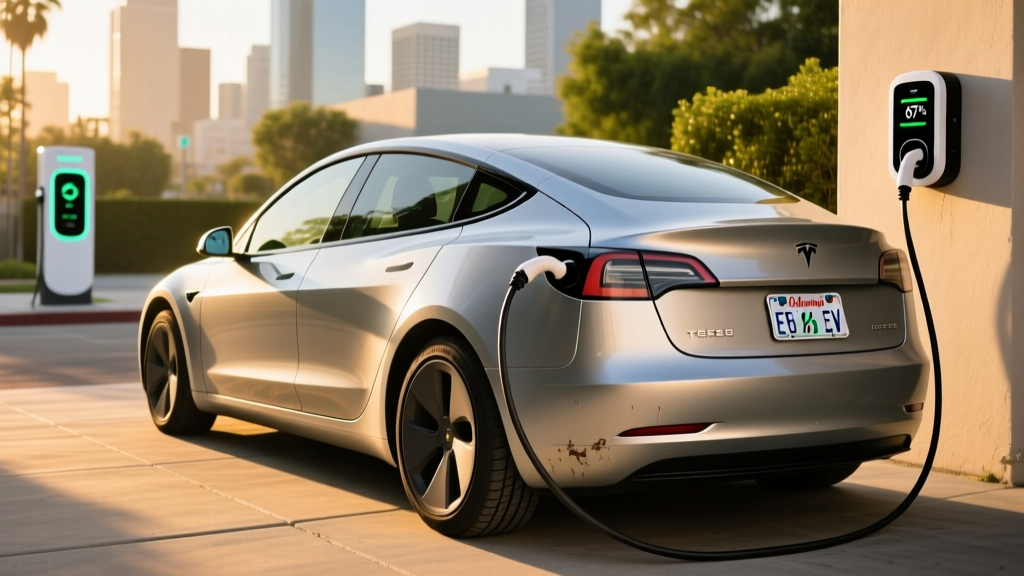
The 2026 Tesla Model 3 remains the default answer for first-time EV buyers who want proven efficiency, access to the largest fast-charging network, and a starting price that undercuts most rivals. But the Highland refresh is no longer the only game in town — the Hyundai Ioniq 6, BMW i4, and refreshed Polestar 2 all close the gap in interior quality and ride comfort. What Tesla still owns is the charge level-to-range efficiency ratio: no midsize electric sedan extracts more miles per kWh on the highway.
This review breaks down every number that matters — from the Model 3's peak DC fast-charge kW and real-world highway range to its federal tax credit eligibility under current IRS §30D rules — so you can decide whether it fits your commute, your budget, and your charging setup.
Range and Efficiency: EPA vs. the Real World
The 2026 Model 3 lineup spans three trims, each with a different battery size, drivetrain, and EPA-rated range. Tesla does not publish usable kWh figures officially, but teardown data and third-party testing confirm the approximate usable capacities below.
| Trim | Drivetrain | Battery (usable kWh) | Chemistry | EPA Range | MPGe (combined) | kWh/100 mi |
|---|---|---|---|---|---|---|
| Standard Range RWD | Rear-Wheel Drive | ~60 kWh | LFP (CATL) | 272 mi | 132 MPGe | 25 |
| Long Range AWD | Dual-Motor AWD | ~79 kWh | NMC | 363 mi | 132 MPGe | 25 |
| Performance AWD | Dual-Motor AWD | ~79 kWh | NMC | 315 mi | 118 MPGe | 28 |
The Model 3's efficiency edge comes from its low drag coefficient (Cd 0.219), heat pump standard on all trims, and aggressive regenerative braking. On the EPA's fueleconomy.gov listing, the Long Range AWD ties many smaller EVs at 25 kWh/100 mi combined — remarkable for a 4,000-lb dual-motor sedan.
Charge Level Breakdown: How Fast Does the Model 3 Actually Charge?
Understanding the Tesla Model 3 charge level at every tier — Level 1, Level 2, and DC fast charging — is essential for planning daily use and road trips. Here's what each tier delivers.
| Charge Level | Connector | Max Power (kW) | Charge Time | Miles Added per Hour |
|---|---|---|---|---|
| Level 1 (120V household) | NACS (J3400) | ~1.4 kW | ~48 hrs (10–80%) | ~3–5 mi/hr |
| Level 2 (240V home/public) | NACS (J3400) | 11.5 kW | ~7–8 hrs (10–80%) | ~30–44 mi/hr |
| DC Fast Charge (V4 Supercharger) | NACS (J3400) | 250 kW (peak) | ~25 min (10–80%) | ~600+ mi/hr (peak) |
DC Fast-Charging Curve: Peak Is Not Sustained
The Model 3 Long Range peaks at 250 kW on a V3 or V4 Tesla Supercharger, but that rate holds only between roughly 10–30% state of charge. The charge curve tapers progressively: by 50% SoC, you're seeing ~150 kW; by 80%, it drops below 60 kW. That 25-minute 10–80% claim reflects the integrated curve, not a sustained 250 kW pull.
The Standard Range RWD with its LFP battery peaks lower — around 170 kW — but LFP cells tolerate frequent 100% charging without degradation concerns, which partially offsets the slower peak rate for daily use. Tesla recommends charging LFP packs to 100% at least once weekly for accurate SoC calibration.
Home Level 2 Charging: What You Actually Need
The Model 3's onboard charger accepts up to 11.5 kW on Level 2 (48 amps on a 60-amp circuit). To achieve this, you'll need a Tesla Wall Connector or any NACS-compatible Level 2 EVSE hardwired to a 60-amp breaker. On a more common 40-amp circuit (32 amps), expect ~7.7 kW — still enough for a full overnight charge on any trim.
Installation costs for a 240V Level 2 home circuit typically range from $800 to $2,500 depending on panel proximity and whether your electrical panel needs an upgrade. The Tesla Wall Connector itself retails for around $475.
Performance and Driving Dynamics
| Trim | Horsepower | 0–60 mph | Top Speed | Drivetrain |
|---|---|---|---|---|
| Standard Range RWD | 271 hp | 5.8 sec | 125 mph | Rear-Wheel Drive |
| Long Range AWD | 346 hp | 4.2 sec | 125 mph | Dual-Motor AWD |
| Performance AWD | 510 hp | 2.9 sec | 163 mph | Dual-Motor AWD |
Even the base RWD model feels quick in city driving thanks to instant torque delivery. The Performance trim's 2.9-second 0–60 time puts it in supercar territory, and Tesla's new adaptive dampers (standard on Performance, optional on Long Range) finally address the firm ride quality that plagued pre-Highland Model 3s. Steering remains precise but numb — a trade-off most Tesla buyers accept.
Interior, Cargo, and Technology
The Highland redesign brought meaningful interior improvements: ventilated front seats, ambient lighting, rear-seat touchscreen, and substantially better sound insulation. Build quality has crept closer to European rivals, though panel gaps still vary by production batch.
Dimensions and Space
- Cargo volume: 23 cu ft (trunk) + 3.1 cu ft (frunk) = 26.1 cu ft total
- Front headroom: 40.3 in
- Rear legroom: 35.2 in
- Wheelbase: 113.2 in
- Curb weight: 3,862 lb (RWD) / 4,034 lb (Long Range AWD)
Rear-seat space remains the Model 3's compromise. At 35.2 inches of legroom, it trails the Hyundai Ioniq 6 (38.4 in) and feels tight for adults over 6 feet on longer trips. The trunk is generous but the sedan's narrow opening limits bulky cargo compared to a hatchback like the Model Y or Ioniq 5.
Tech and Driver Assistance
The 15.4-inch center touchscreen runs Tesla's proprietary infotainment — no Apple CarPlay or Android Auto, which remains a dealbreaker for some buyers. Navigation, media, and vehicle controls all funnel through the screen, including the glovebox release and windshield wiper controls.
Autopilot (basic lane-centering and adaptive cruise) is standard. FSD (Supervised) remains a $8,000 option or $99/month subscription. Despite the name, FSD in 2026 still requires active driver supervision and can make erratic routing decisions in construction zones and unprotected left turns.
Pricing, Trims, and Federal Tax Credit
| Trim | Base MSRP | As-Tested (typical options) | §30D Federal Credit | Effective Price |
|---|---|---|---|---|
| Standard Range RWD | $38,990 | $39,990 (w/ paint) | Up to $7,500 | ~$31,490–$32,490 |
| Long Range AWD | $45,990 | $48,490 (w/ FSD sub, paint) | Up to $7,500 | ~$38,490–$40,990 |
| Performance AWD | $52,990 | $55,490 | Up to $7,500 | ~$45,490–$47,990 |
Federal Tax Credit Eligibility (§30D)
As of 2026, the Tesla Model 3 qualifies for the full $7,500 federal EV tax credit under IRS §30D, provided the buyer meets all requirements. Since January 2024, the credit can be transferred to the dealer at point of sale as an immediate price reduction — you don't need to wait until tax filing.
- MSRP cap: Sedan MSRP must not exceed $55,000 (all Model 3 trims currently comply)
- Buyer income cap: Modified AGI ≤ $150,000 (single) / $300,000 (joint) / $225,000 (head of household)
- Battery sourcing: Critical minerals and battery components must meet escalating domestic-sourcing thresholds — Tesla's US-built packs currently satisfy these requirements
- Assembly: Vehicle must undergo final assembly in North America (Fremont, CA qualifies)
Important: Tax credit rules are subject to change. Consult a tax professional and verify current eligibility at fueleconomy.gov before purchasing.
Warranty and Battery Longevity
Tesla provides the following coverage on the 2026 Model 3:
- Basic vehicle warranty: 4 years / 50,000 miles
- Battery & drive unit: 8 years / 100,000 miles (Standard Range RWD)
- Battery & drive unit: 8 years / 120,000 miles (Long Range & Performance AWD)
- Capacity retention threshold: Tesla warrants the battery will retain at least 70% of original capacity during the warranty period
Real-world degradation data from Tesla's fleet indicates NMC packs lose roughly 10–12% capacity over the first 100,000 miles, with the steepest drop in the first 10,000 miles before leveling off. LFP packs in the Standard Range model show slower long-term degradation but may exhibit SoC estimation drift if not periodically charged to 100%.
Out-of-warranty battery replacement for the Model 3 currently costs between $12,000 and $16,000 depending on pack size and service center — a figure that has declined as remanufactured packs become more available.
Pros, Cons, and Who Should Buy
- Best-in-class efficiency (25 kWh/100 mi combined for Long Range)
- Access to 20,000+ Tesla Superchargers (now open to other brands, but Tesla owners still get priority pricing and seamless plug-and-charge)
- Over-the-air updates continuously add features
- Strong resale value relative to non-Tesla EVs
- Point-of-sale $7,500 tax credit brings RWD below $32,000
- LFP battery option tolerates daily 100% charging
- No Apple CarPlay or Android Auto
- Tight rear-seat legroom (35.2 in) vs. rivals
- FSD (Supervised) remains Level 2 — expensive and imperfect
- Turn signals on steering wheel, wiper controls on touchscreen
- Non-Tesla DC chargers require NACS adapter (included, but still a friction point)
- Insurance costs run 15–25% above segment average
Who the Model 3 Suits Best
Buy the Model 3 if: You're a tech-forward commuter or two-person household who prioritizes efficiency, fast road-trip charging, and a low effective price after tax credits. The Long Range AWD is the sweet spot for frequent highway drivers covering 300+ miles between stops.
Look elsewhere if: You regularly carry rear-seat passengers (consider the Ioniq 6 or BMW i4 for more space), you refuse to live without CarPlay, or you want a more traditional luxury interior with physical controls.
Frequently Asked Questions
What is the real-world range of the 2026 Tesla Model 3?
The Long Range AWD delivers roughly 310–330 highway miles at 75 mph in mild weather, versus its 363-mile EPA rating. In freezing temperatures, expect 240–280 miles. The Standard Range RWD yields about 220–250 real-world highway miles in mild conditions.
How fast does the Tesla Model 3 charge at each charge level?
On a V3/V4 Supercharger (DC fast), the Long Range peaks at 250 kW and reaches 10–80% in about 25 minutes. On a home Level 2 charger (11.5 kW), a full charge takes 7–8 hours. On a standard 120V outlet (Level 1), expect 3–5 miles of range per hour — only practical for overnight top-ups.
Does the 2026 Tesla Model 3 qualify for the $7,500 federal EV tax credit?
Yes, all Model 3 trims currently qualify for the full $7,500 credit under IRS §30D, subject to buyer income caps ($150K single / $300K joint), the $55,000 sedan MSRP cap, and domestic battery-sourcing requirements. The credit can be applied at point of sale as an immediate price reduction.
Is the Model 3 worth buying over the Hyundai Ioniq 6 or BMW i4?
The Model 3 wins on efficiency, Supercharger network access, and effective price after tax credits. The Ioniq 6 offers more rear-seat room and CarPlay; the BMW i4 delivers a more traditional luxury experience. If charging infrastructure and total cost of ownership are your priorities, the Model 3 remains the strongest choice.
What's the biggest drawback of owning a Tesla Model 3?
The lack of Apple CarPlay/Android Auto and the touchscreen-only interface for basic controls (wipers, glovebox, mirror adjustment) frustrate many owners. Insurance premiums also run notably higher than comparable non-Tesla EVs.
Is Tesla's Full Self-Driving worth the $8,000 cost?
For most buyers, no. FSD (Supervised) is a Level 2 driver-assist system that still requires full attention and can make unpredictable decisions. Basic Autopilot (included) handles highway lane-centering and adaptive cruise competently. Unless you're specifically interested in beta-testing autonomous driving features, the $99/month subscription is a better way to try it before committing.