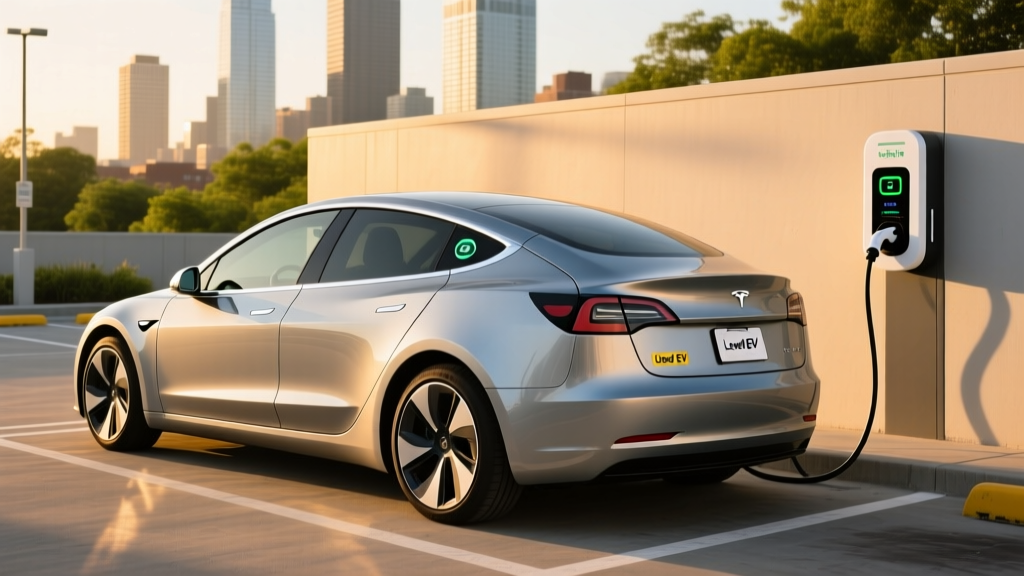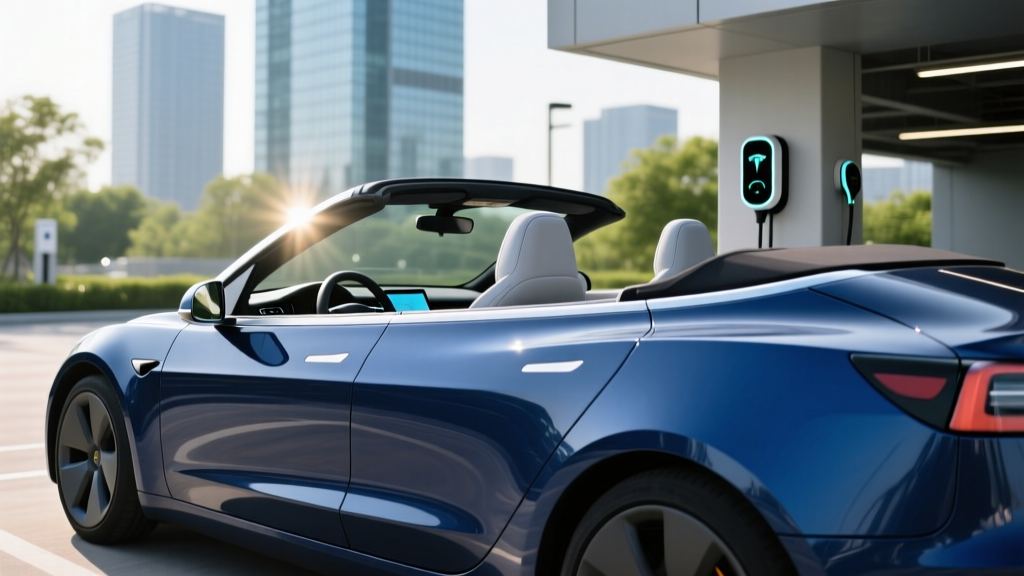
The Truth About the Tesla Model 3 Cabriolet
Search for a "Tesla Model 3 cabriolet" and you will find renderings, one-off custom conversions, and a lot of wishful thinking — but no factory-produced drop-top from Tesla. As of 2026, Tesla has never offered a convertible version of the Model 3, nor has the company announced one for any upcoming model year. Elon Musk once teased the idea of a Tesla convertible in passing, but no production program has materialized.
That has not stopped a small aftermarket ecosystem from attempting the conversion, and it has not stopped shoppers from searching. This article addresses the reality of the Tesla Model 3 cabriolet concept head-on: what exists today, what a third-party conversion actually involves, what it costs, and which production EVs can scratch the open-air itch without voiding your battery warranty.
What a Model 3 Convertible Conversion Actually Requires
The few shops that have converted a Tesla Model 3 sedan into a cabriolet — most notably a Swiss firm called RemetzCar, which gained attention for a Model S convertible and has fielded inquiries about the Model 3 — describe a process that is far more involved than simply slicing off a roof.
The Model 3 uses a unibody structure where the roof panel contributes significantly to torsional rigidity. Removing it requires:
- Structural reinforcement: Steel or aluminum bracing along the sills, A-pillars, and floor pan to compensate for the lost roof structure — adding 100–200 lbs of weight.
- Custom soft-top or retractable hardtop mechanism: Fabricated from scratch, since no OEM drop-top hardware fits the Model 3's dimensions.
- High-voltage system preservation: The 12V and high-voltage wiring harnesses, glass roof heating elements, and cabin camera all run through or near the roof area and must be rerouted.
- Safety system recalibration: Side curtain airbags, which deploy from the roof rail, must be replaced with alternative occupant protection — often seat-mounted side airbags with pop-up roll hoops.
- Software and sensor integration: The cabin camera (used for Autopilot driver monitoring) and the glass roof's electrochromic dimming (on refreshed models) are lost or require custom solutions.
The result is a vehicle that costs roughly $50,000–$75,000 in conversion labor and parts alone, on top of the $38,990–$52,990 purchase price of the donor Model 3. Total project cost typically lands between $90,000 and $130,000, with a lead time of 6–12 months. Production runs, where they exist at all, are limited to single-digit units per year.
Tesla Model 3 Specs (The Donor Car You Would Be Converting)
If you were to source a 2026 Tesla Model 3 as a conversion candidate, here are the specs of the stock vehicle you would start with. These figures apply to the current-generation "Highland" refresh Model 3 sold in the US market.
| Specification | Long Range RWD | Long Range AWD | Performance AWD |
|---|---|---|---|
| EPA Range | 363 miles | 341 miles | 315 miles |
| Battery (usable) | ~75 kWh, NMC | ~75 kWh, NMC | ~75 kWh, NMC |
| 0–60 mph | 4.9 sec | 4.2 sec | 2.9 sec |
| Horsepower | 271 hp | 346 hp | 510 hp |
| Drivetrain | RWD (single motor) | AWD (dual motor) | AWD (dual motor) |
| Max DC Fast Charge | 250 kW (CCS/NACS) | 250 kW (CCS/NACS) | 250 kW (CCS/NACS) |
| 10–80% DC Charge | ~25 min | ~25 min | ~25 min |
| Level 2 Home Charging | 11.5 kW (~44 mi/hr) | 11.5 kW (~44 mi/hr) | 11.5 kW (~44 mi/hr) |
| MPGe (combined) | 132 MPGe | 121 MPGe | 113 MPGe |
| Efficiency | 25 kWh/100 mi | 28 kWh/100 mi | 30 kWh/100 mi |
| Cargo Volume | 23 cu ft (trunk + frunk) | 23 cu ft (trunk + frunk) | 23 cu ft (trunk + frunk) |
| Rear Legroom | 35.2 in | 35.2 in | 35.2 in |
| Battery Warranty | 8 yr / 100,000 mi | 8 yr / 120,000 mi | 8 yr / 120,000 mi |
| Base MSRP | $38,990 | $42,990 | $52,990 |
Source: fueleconomy.gov and Tesla US specifications. Figures reflect 2025/2026 model year Highland refresh.
Why Tesla Hasn't Built a Convertible — And Likely Won't
Tesla's engineering priorities explain the absence of a Model 3 cabriolet. The company's vehicles are designed around a skateboard platform optimized for structural rigidity, crash safety, and manufacturing efficiency. The glass roof panel on the Model 3 is a structural component bonded to the body — it contributes to the car's torsional stiffness and side-impact protection.
Building a factory convertible would require:
- A dedicated body-in-white with reinforced sills and A-pillars (new stamping dies, new assembly line fixtures).
- A folding roof mechanism that does not intrude on the battery pack or trunk space.
- Re-engineering of the side curtain airbag system and cabin camera placement.
- Validation of NVH (noise, vibration, harshness) performance without a fixed roof — a significant challenge in an EV where there is no engine noise to mask wind and road sound.
For a company that has streamlined its lineup to maximize production throughput at Gigafactories, a low-volume convertible variant does not align with Tesla's manufacturing philosophy. The business case for a Model 3 cabriolet simply does not exist at Tesla's scale.
The Warranty and Safety Problem with Aftermarket Conversions
This is the deal-breaker for most buyers seriously considering a third-party Model 3 convertible conversion:
Beyond the financial risk, there are safety implications. The Model 3 earned a 5-star overall safety rating from NHTSA and a Top Safety Pick+ designation from IIHS — ratings achieved with the factory roof structure intact. A convertible conversion has not been crash-tested by either agency, and the conversion shop's engineering judgment replaces decades of OEM safety validation.
Federal Tax Credit Implications for a Converted Model 3
If you purchase a new 2026 Tesla Model 3 and then send it to a coachbuilder for a convertible conversion, the IRS §30D federal EV tax credit eligibility is determined at the time of original purchase — before conversion. Here is how the rules apply:
| Requirement | Model 3 Status |
|---|---|
| MSRP Cap (sedans: ≤$55,000) | Long Range RWD ($38,990) ✅ / AWD ($42,990) ✅ / Performance ($52,990) ✅ |
| Buyer Income Cap (AGI: $150K single / $300K joint) | Varies by buyer — check IRS.gov |
| Battery Sourcing (critical minerals + component requirements) | Partial credit likely — Tesla's US-built packs meet some but not all 2026 thresholds; verify at point of sale |
| Point-of-Sale Transfer | Available — credit can be applied as a down payment reduction at purchase |
| Maximum Credit | Up to $7,500 (subject to sourcing compliance) |
The key point: the conversion cost ($50,000–$75,000) is not eligible for any additional EV tax credit. Your total out-of-pocket for a converted Model 3 cabriolet is the donor car price (minus any applicable credit) plus the full conversion cost. Consult a tax professional to confirm your personal eligibility — IRS §30D rules include income phase-outs, sourcing requirements that tighten annually, and MSRP caps that vary by vehicle class.
Real Open-Air EV Alternatives for 2026
If the open-air driving experience is what you actually want, here are the production EVs and near-EV options that deliver it without the conversion risk:
Best Production Option: Mini Cooper SE Convertible
Type: BEV (limited EV range)
EPA Range: ~130 miles (estimated, limited US availability)
Price: ~$40,000–$45,000 (import/conversion dependent)
Trade-off: Short range, 2 seats, limited US availability. But it is a factory-built, warrantied EV convertible.
Best Plug-In Hybrid Option: Jeep Wrangler 4xe
Type: PHEV (removable roof panels/soft top)
Electric-Only Range: 22 miles EPA
Combined MPGe: 49 MPGe (electric) / 20 MPG (gas)
Price: From ~$51,000
Trade-off: Not a pure EV, but open-air + electrified + warrantied + widely available.
Sunroof Compromise: Tesla Model 3 Glass Roof
Type: BEV (factory glass roof, fixed)
EPA Range: Up to 363 miles
Price: From $38,990
Trade-off: Not a convertible, but the panoramic glass roof provides significant open-air feel with zero warranty or safety compromise. Full EV range, Supercharger access, Autopilot.
Who Should (and Shouldn't) Pursue a Model 3 Cabriolet Conversion
This path makes sense if you:
- Have $100,000+ in discretionary vehicle budget and view the car as a bespoke collector piece.
- Accept that Tesla's warranty, Supercharger access (potentially), and factory service support may be affected.
- Plan to drive it as a fair-weather weekend car, not a daily commuter.
- Live in a jurisdiction where aftermarket structural modifications pass inspection without issue.
Walk away if you:
- Need a reliable daily driver with full warranty coverage.
- Are counting on the $7,500 federal tax credit to make the math work — it only applies to the base vehicle, not the conversion.
- Want Supercharger network reliability — Tesla's terms of service could theoretically restrict charging access on structurally modified vehicles, though this has not been widely enforced.
- Plan to finance the conversion — most lenders will not finance aftermarket coachwork on a unibody EV.
Frequently Asked Questions
Does Tesla make a Model 3 convertible or cabriolet?
No. Tesla has never produced, announced, or sold a convertible version of the Model 3. All Model 3 vehicles sold globally are fixed-roof sedans with a glass roof panel. Any "Tesla Model 3 cabriolet" you see online is either a digital rendering or a one-off aftermarket conversion performed by an independent coachbuilder at the owner's expense and risk.
How much would a Tesla Model 3 convertible conversion cost?
Based on the few documented conversions performed by European shops, expect to pay $50,000–$75,000 for the conversion work alone, on top of the $38,990–$52,990 purchase price of the donor Model 3. Total project cost typically falls between $90,000 and $130,000. Lead times are 6–12 months, and availability is extremely limited — most shops do one or two per year at most.
Will a convertible conversion void the Tesla warranty?
Yes. Removing the structural roof panel of a Model 3 voids Tesla's 8-year battery and drive unit warranty as well as the 4-year basic vehicle limited warranty. Tesla's warranty terms exclude failures caused by third-party modifications. Any issue with the high-voltage system, thermal management, body structure, or safety systems after conversion will be your financial responsibility.
Does the Tesla Model 3 qualify for the federal EV tax credit?
The 2026 Tesla Model 3 qualifies for a partial or full IRS §30D clean vehicle credit of up to $7,500, depending on battery sourcing compliance at the time of purchase, buyer adjusted gross income (capped at $150,000 single / $300,000 joint), and the vehicle's MSRP (all Model 3 trims fall under the $55,000 sedan cap). The credit can be transferred to the dealer as a point-of-sale reduction. However, this credit applies only to the base Model 3 purchase — the aftermarket conversion cost is not eligible for any additional credit. Always verify current-year rules at IRS.gov and consult a tax professional.
What is the best open-air electric vehicle I can actually buy?
For a pure BEV convertible, options remain extremely limited — the Mini Cooper SE Convertible is the closest production example but has restricted US availability and short range. For an electrified open-air experience with full warranty and dealer support, the Jeep Wrangler 4xe plug-in hybrid (22 miles electric-only, removable roof/doors) is the most practical choice. If you want Tesla's range and Supercharger network with maximum openness, the Model 3's fixed glass roof provides a bright, airy cabin without the compromises of a conversion.
Has Tesla ever hinted at making a convertible?
Elon Musk has occasionally mentioned the idea of a Tesla convertible or roadster-style open-top vehicle in social media posts and informal Q&A sessions, but no production program has been formally announced. The Tesla Roadster (second generation), which has been announced with a removable glass roof option, remains unreleased as of 2026 with no firm delivery timeline. It is expected to be priced well above $200,000, placing it in a completely different market segment than the Model 3.