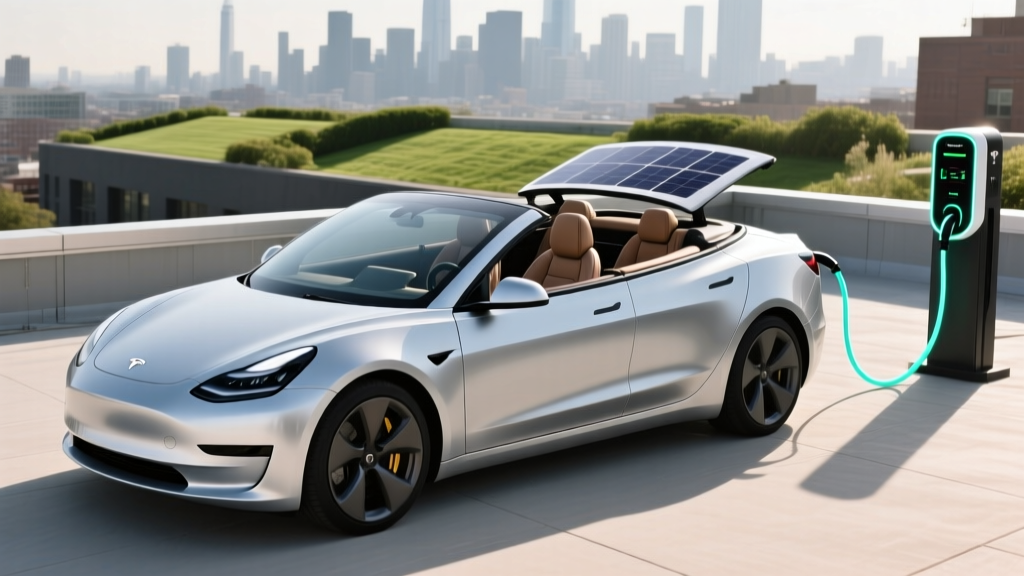
If you've been searching for a Tesla Model 3 cabrio, you're not alone. The idea of an open-air electric sedan — wind in your hair, silent propulsion, zero tailpipe emissions — is undeniably appealing. But here's the reality check every prospective buyer needs: Tesla does not manufacture a factory convertible Model 3, and as of 2026, no official Model 3 cabriolet exists in Tesla's lineup.
That hasn't stopped a niche aftermarket industry from attempting to fill the gap. A handful of European coachbuilders have experimented with one-off convertible conversions, and the search volume around "Tesla Model 3 cabrio" reflects genuine consumer curiosity. This article dissects what's actually possible, what it costs, what you sacrifice, and which factory-built open-air EVs make more sense for most buyers.
Why Tesla Has Never Built a Model 3 Convertible
Tesla's engineering philosophy prioritizes structural rigidity, manufacturing efficiency, and aerodynamic optimization — three qualities that directly conflict with traditional convertible design. The Model 3's unibody architecture relies heavily on its fixed steel and aluminum roof structure for torsional stiffness. Removing that roof compromises crash performance, handling precision, and the vehicle's ability to manage the immense torque delivered to the wheels.
There's also the battery pack. The Model 3's structural battery tray contributes to the car's overall rigidity. A convertible conversion adds weight (reinforcement bracing, power-folding roof mechanisms) while removing structural material, creating an engineering paradox that Tesla has shown no interest in solving at scale.
Elon Musk confirmed years ago that Tesla has no plans for a convertible variant of the Model 3 or Model Y. The company's resources remain focused on high-volume production vehicles, the Cybertruck platform, next-generation models, and autonomous driving development.
Aftermarket Tesla Model 3 Cabrio Conversions: What Exists
A small number of specialty coachbuilders — primarily in Germany and the Netherlands — have produced one-off or limited-run convertible conversions of the Tesla Model 3. These are not Tesla-sanctioned projects. Companies like Carrozzeria Touring-style boutique shops and independent EV modifiers have chopped roofs, installed fabric or retractable hardtop mechanisms, and reinforced chassis structures to compensate for the missing roof.
Here's what these conversions typically involve:
| Aspect | Detail |
|---|---|
| Base Vehicle | Tesla Model 3 Long Range or Performance (any year) |
| Roof Type | Soft-top fabric or powered retractable hardtop |
| Structural Reinforcement | Steel/aluminum bracing along sills, A-pillars, rear deck |
| Added Weight | 150–300 lbs (mechanism + bracing) |
| Conversion Cost | $25,000–$60,000+ depending on mechanism and finish |
| Lead Time | 3–8 months |
| Warranty Impact | Void Tesla factory warranty on body, structure, and potentially electrical |
Base Specs: What You Start With (2026 Tesla Model 3 Long Range AWD)
If you're considering a cabrio conversion, you'd likely start with the Long Range AWD trim for its balance of range and performance. Here are the stock 2026 specifications before any modification:
| Specification | Value |
|---|---|
| EPA Range | 341 miles |
| Battery (usable) | ~75 kWh, NMC chemistry |
| Drivetrain | Dual Motor AWD |
| Horsepower | ~384 hp combined |
| 0–60 mph | 4.2 seconds |
| Max DC Fast Charge | 250 kW peak (V3 Supercharger) |
| 10–80% DC Charge | ~25 minutes |
| Level 2 Home Charge | 11.5 kW (~44 mi/hr) |
| Efficiency | 132 MPGe combined / 25 kWh/100mi |
| Cargo Volume | 23 cu ft (trunk + frunk) |
| Base MSRP | $47,740 (before incentives) |
| Battery Warranty | 8 years / 120,000 miles (70% minimum capacity) |
How a Convertible Conversion Affects Range, Performance, and Charging
Removing a vehicle's roof and adding reinforcement and a folding mechanism introduces measurable penalties:
- Weight gain: 150–300 lbs of bracing and roof mechanism. This directly reduces efficiency — expect roughly 3–5% range loss even with the top up.
- Aerodynamic drag: With the top down, the Model 3's carefully optimized 0.23 Cd drag coefficient degrades significantly. Highway range at 70 mph with the top down could drop by 15–20% compared to the EPA sticker.
- Torsional flex: Even with reinforcement, chassis flex increases. This can affect suspension geometry, tire wear, and handling precision — particularly noticeable during aggressive cornering or on uneven roads.
- Charging behavior: The battery and charging hardware remain unchanged, so DC fast-charging speeds (250 kW peak, ~25 min 10–80%) and Level 2 rates (11.5 kW) stay the same. However, the added weight means slightly more kWh consumed per mile.
Tax Credit and Pricing Reality for a Model 3 Cabrio Project
Understanding the financial picture requires separating the base vehicle cost from the conversion cost — and knowing how the federal tax credit applies.
| Item | Estimated Cost |
|---|---|
| 2026 Model 3 Long Range AWD (base MSRP) | $47,740 |
| Aftermarket convertible conversion | $30,000–$50,000 |
| Total project cost | $77,740–$97,740 |
| Federal §30D Tax Credit (if eligible) | Up to $7,500 (applies to base vehicle only) |
| Effective total after max credit | $70,240–$90,240 |
Federal tax credit eligibility (§30D): The IRS new clean vehicle credit applies to the purchase of a new qualifying EV — in this case, the Tesla Model 3 itself. The conversion cost is not credit-eligible. Key 2026 requirements include:
- MSRP cap: Sedars must be $55,000 or less. The Model 3 Long Range AWD at $47,740 qualifies; the Performance trim may exceed the cap depending on options.
- Buyer income limits: Modified AGI of $150,000 (single), $225,000 (head of household), or $300,000 (joint).
- Battery sourcing: Critical minerals and battery component requirements phase in annually. Tesla's supply chain has largely complied, but verify current-year status on the IRS qualified vehicle list before purchasing.
- Point-of-sale transfer: Eligible buyers can transfer the credit to the dealer at purchase, reducing the upfront price rather than waiting for a tax refund.
Better Alternatives: Factory-Built Open-Air EVs
Rather than undertaking a risky and expensive aftermarket conversion, consider these factory-built open-air electric vehicles that offer warranty coverage, safety certification, and manufacturer support:
| Vehicle | Type | EPA Range | Starting MSRP | Key Advantage |
|---|---|---|---|---|
| Mini Cooper SE Convertible | Factory soft-top | ~150 mi (est.) | ~$38,000 | Only factory EV convertible; iconic style |
| Ford Mustang Mach-E (panoramic roof) | Glass roof SUV | 320 mi | $42,995 | Open, airy cabin; full warranty |
| Tesla Model 3 (glass roof) | Fixed panoramic glass | 341 mi (LR AWD) | $47,740 | Expansive sky view; no structural compromise |
| Polestar 2 (panoramic roof) | Glass roof liftback | 320 mi | $49,800 | Scandinavian design; open feel |
| BMW i4 (moonroof) | Glass moonroof sedan | 307 mi | $52,200 | Premium build; traditional open-roof experience |
The Mini Cooper SE Convertible remains the only true factory-built electric convertible available in the US market as of 2026. Its range is modest, but for city driving and fair-weather cruising, it delivers the open-air EV experience without voiding warranties or compromising safety structures.
Who Should (and Shouldn't) Pursue a Model 3 Cabrio Conversion
Consider it if:
- You view the car as a passion project, not a daily driver
- You have a second vehicle for practical transportation
- You live in a mild, dry climate (Southern California, Mediterranean regions)
- You understand and accept the warranty, insurance, and resale-value risks
- Budget is not a primary concern ($80K+ all-in)
Skip it if:
- You need a reliable daily commuter
- You live in a region with rain, snow, or extreme heat
- You rely on Tesla's warranty and Supercharger network support
- You plan to finance the vehicle (lenders may not approve modified vehicles)
- Resale value matters to you
Frequently Asked Questions
Does Tesla make a Model 3 convertible or cabriolet?
No. Tesla has never produced a factory convertible Model 3, and the company has confirmed no plans to do so. All "Tesla Model 3 cabrio" vehicles are aftermarket conversions performed by third-party coachbuilders, not by Tesla.
How much would a Tesla Model 3 cabrio conversion cost?
Expect to pay $25,000 to $60,000 for the conversion itself, on top of the $47,740+ base price of a new Model 3 Long Range AWD. Total project cost typically falls between $75,000 and $100,000+.
Will a convertible conversion void my Tesla warranty?
Yes. Removing the roof structure voids Tesla's New Vehicle Limited Warranty on body structure, restraint systems, and potentially the electrical/high-voltage system. Tesla Service Centers may decline to service a modified vehicle entirely.
Does the Tesla Model 3 qualify for the federal EV tax credit?
The 2026 Model 3 Long Range RWD and Long Range AWD generally qualify for the §30D federal tax credit (up to $7,500), subject to buyer income limits ($150K single / $300K joint), the $55,000 sedan MSRP cap, and battery-sourcing requirements. The credit applies to the base vehicle purchase only — not to aftermarket conversion costs. Verify current eligibility on the IRS qualified vehicle list before purchasing.
What is the only factory-built electric convertible available in 2026?
The Mini Cooper SE Convertible is currently the only mass-produced electric convertible sold in the US market. It offers a factory soft-top with full warranty and safety certification, though its range (~150 miles) is significantly less than the Model 3.
How does the Model 3's glass roof compare to a convertible?
The Model 3's fixed panoramic glass roof provides an open, airy cabin feel with zero structural compromise, no wind noise, no weather sealing concerns, and no impact on range or warranty. For many buyers, the glass roof satisfies the desire for an open cabin without the risks and costs of a convertible conversion.