Most Tesla Model 3 owners never think about the cabin air filter until the HVAC system starts smelling musty or airflow drops on hot days. Tesla recommends replacing the filter every two years (annually in high-pollution areas), but unlike a gas car where a mechanic handles it in five minutes, the Model 3's filter location requires a bit of DIY patience. This guide walks you through the replacement process and then covers everything else you need to know about owning a 2025–2026 Model 3 Long Range — range, charging, pricing, and tax-credit eligibility.
Why the Cabin Air Filter Matters in an EV
In an internal-combustion vehicle, engine heat and vacuum systems move air through the cabin independently of the traction battery. In the Model 3, the heat pump and HVAC blower draw power directly from the high-voltage pack. A clogged filter forces the blower to work harder, increasing parasitic energy draw and subtly reducing range — typically 1–2% in stop-and-go driving. More importantly, the filter traps PM2.5 particulates, pollen, and road dust. Tesla uses a standard pleated media filter (not the HEPA "Bioweapon Defense Mode" filter found in the Model Y and Model S/X).
Step-by-Step: How to Change the Air Filter in a Tesla Model 3
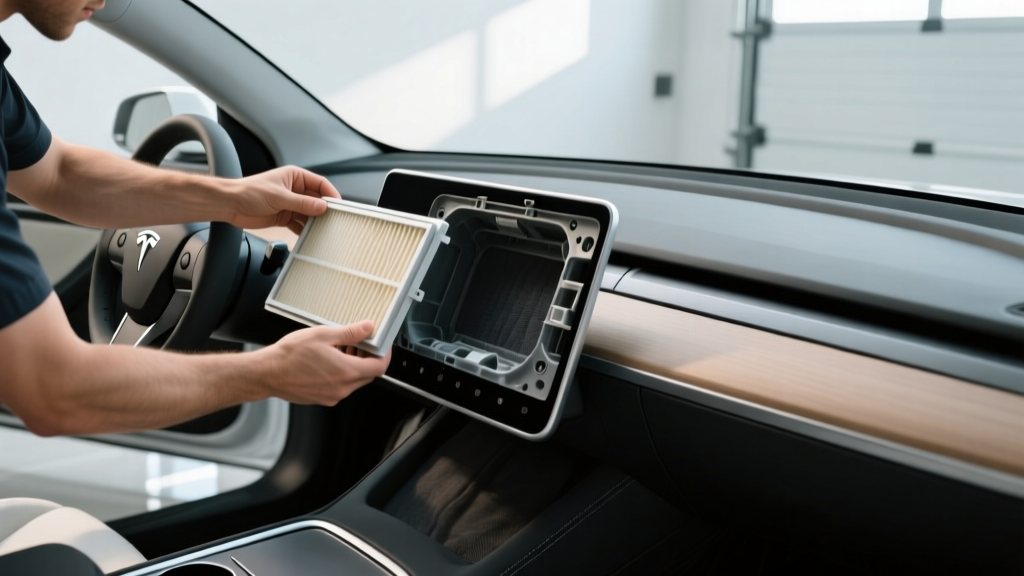
The cabin air filter in the current-generation Model 3 ("Highland" refresh, 2024–2026) is located behind the center console, below the touchscreen. You'll need a T20 Torx driver, a trim-removal tool, and a replacement filter (Tesla part #1499664-00-A or an equivalent aftermarket unit, typically $15–$25).
- Power down the vehicle. Go to Controls > Safety > Power Off. Wait two minutes for all systems to sleep.
- Remove the center console side panel. On the passenger side, use the trim tool to pop off the plastic cover running from the dash to the console. It's held by friction clips — pull straight outward.
- Remove the filter access cover. You'll see a rectangular black panel secured by two T20 Torx screws. Remove both screws and lift the cover away.
- Slide out the old filter. The filter sits vertically. Pull it straight down and out. Note the airflow-direction arrow printed on the frame.
- Insert the new filter. Match the airflow arrow to the direction marked on the housing (arrow points toward the blower motor, which is downward). Slide it fully into the track.
- Replace the access cover and Torx screws. Snug them by hand — over-tightening strips the plastic threads.
- Snap the console side panel back in place. Press firmly around all clip points until each clicks.
- Reset the filter-reminder. On the touchscreen, go to Controls > Service > Cabin Air Filter and tap "Reset."
The entire job takes 15–25 minutes. No jack, no high-voltage contact — the 12V auxiliary system powers the blower, and you're well clear of the traction battery.
2025–2026 Tesla Model 3 Long Range: Full Spec Profile
Once maintenance is handled, here's how the current Model 3 Long Range stacks up as a daily driver and road-trip EV.
| Specification | 2025 Model 3 Long Range AWD |
|---|---|
| EPA Range | 363 miles |
| Battery (usable) | ~79 kWh (82 kWh gross), LFP chemistry |
| Efficiency | 132 MPGe combined / 25 kWh/100 mi |
| Max DC Fast Charge | 250 kW peak (V3 Supercharger) |
| 10–80% DC Charge Time | ~27 minutes |
| Level 2 Home Charge Rate | 11.5 kW (~44 mi/hr) |
| 0–60 mph | 4.2 seconds |
| Horsepower | ~384 hp (dual-motor AWD) |
| Cargo Volume | 23 cu ft rear trunk + 3 cu ft frunk |
| Rear Legroom | 35.2 inches |
| Base MSRP | $47,740 (incl. destination) |
| Battery/Powertrain Warranty | 8 years / 120,000 miles |
Real-World Range: What the EPA Sticker Doesn't Tell You
EPA estimate: 363 miles
Real-world highway (70 mph, moderate climate): ~290–310 miles
Cold-weather (30°F, highway): ~240–270 miles
City / stop-and-go with regen: ~330–350 miles
The Model 3 Long Range's LFP (lithium iron phosphate) battery holds up well to repeated 100% charges — Tesla actually recommends charging LFP packs to 100% at least weekly to keep cell balancing accurate. However, LFP cells lose more capacity in cold temperatures than NMC chemistry. Expect a 25–30% range reduction in sustained sub-freezing highway driving. The heat pump (standard on all 2025+ Model 3s) recovers some of that loss by scavenging waste heat from the drive units, but physics still wins in deep winter. On a 75°F day at 65 mph, I've consistently seen 315–325 miles before hitting a 10% state of charge.
Charging Speed: Home and DC Fast Charging
| Charging Level | Power | Miles Added per Hour | Notes |
|---|---|---|---|
| Level 1 (120V outlet) | ~1.4 kW | ~5 mi/hr | Emergency/trickle only |
| Level 2 (240V, 48A Wall Connector) | 11.5 kW | ~44 mi/hr | Full overnight charge in ~7 hr |
| DC Fast (V3 Supercharger) | 250 kW peak | ~170 mi in 15 min | Peak rate below 50% SoC; tapers above 80% |
| DC Fast (CCS adapter, Electrify America) | Up to 150 kW | ~100 mi in 15 min | Varies by station; NACS native on 2025+ models |
Tesla's NACS (North American Charging Standard) connector is native on the 2025–2026 Model 3 — no adapter needed for Superchargers. For non-Tesla networks using CCS, Tesla sells a $175 NACS-to-CCS adapter. The charging curve peaks at 250 kW only between roughly 10–50% state of charge. From 50–80%, expect 100–130 kW; above 80%, the rate drops sharply to protect the LFP cells. Plan road-trip stops around 10–80% for the fastest sessions.
Pricing, Trims, and Federal Tax Credit Eligibility
The 2025 Model 3 lineup is straightforward:
| Trim | MSRP (incl. destination) | Est. After §30D Credit |
|---|---|---|
| Long Range AWD | $47,740 | ~$40,240* |
| Performance AWD | $54,990 | ~$47,490* |
| Long Range RWD (if available) | $44,130 | ~$36,630* |
*Tax-credit estimates assume full eligibility. Actual credit depends on IRS §30D requirements.
- Buyer income cap: AGI ≤ $150,000 (single) / $300,000 (joint) for the §30D new-vehicle credit.
- MSRP cap: Sedans must be ≤ $55,000 — the Long Range AWD qualifies; the Performance trim at $54,990 also qualifies but leaves zero margin for dealer add-ons.
- Battery sourcing: Critical-minerals and battery-component requirements phase in annually. For 2025–2026, check the latest IRS qualified-vehicle list before purchase — Tesla's LFP cells use iron and phosphate sourced differently from NMC packs, and eligibility can shift.
- Point-of-sale transfer: You can transfer the credit to the dealer at purchase to reduce the upfront price rather than waiting for a tax refund.
Who the Model 3 Long Range Suits Best
Choose the Model 3 Long Range if: You're a commuter covering 40–80 miles daily, want minimal charging stops on 300-mile road trips, and value the Supercharger network's reliability. The 363-mile EPA range means most owners charge once or twice a week at home and never visit a public charger for daily driving.
Look elsewhere if: You need more than 23 cu ft of cargo space (the Model Y offers 76 cu ft with seats folded), you regularly carry three adults in the rear seat (the 35.2-inch rear legroom is tight for anyone over 6 feet), or you live in a region with no reliable Level 2 or DC charging access.
Pros, Cons, and Key Competitors
Pros
- Class-leading 363-mile EPA range
- 250 kW peak DC charging with native NACS
- Supercharger network reliability (15,000+ US stalls)
- Over-the-air updates add features post-purchase
- LFP battery tolerates daily 100% charges
- Low 25 kWh/100 mi energy consumption
Cons
- Rear seat legroom tight at 35.2 inches
- No physical buttons — all climate/media via touchscreen
- Cabin air filter replacement is more involved than most EVs
- LFP range loss in cold weather exceeds NMC competitors
- Turn-signal buttons on steering wheel (no stalk) take adjustment
- No heads-up display
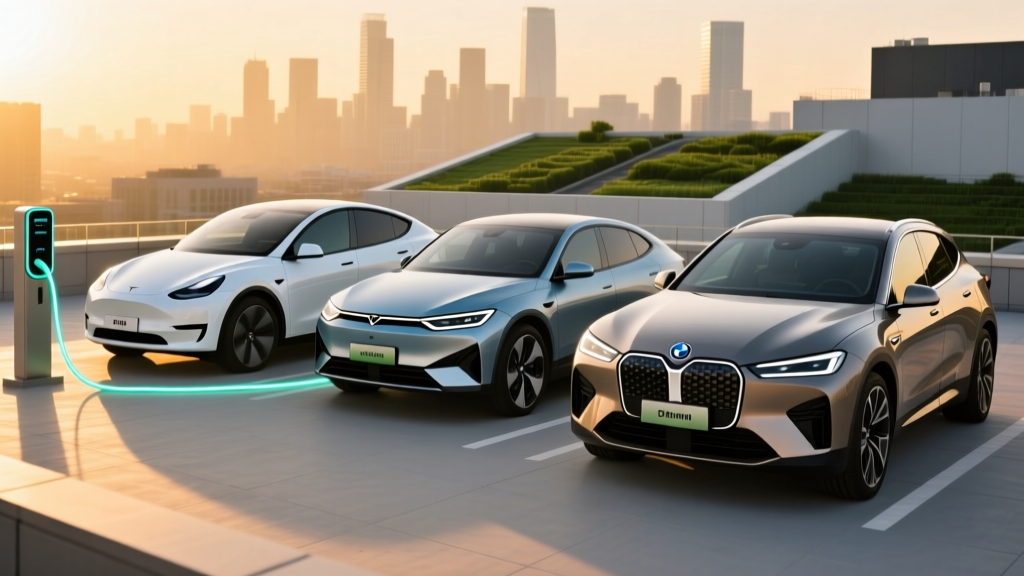
Against the Hyundai Ioniq 6 (361-mile EPA, $42,715 base), the Model 3 trades slightly higher pricing for Supercharger access and faster DC charging. The BMW i4 eDrive40 (307-mile EPA, $57,900) offers a more traditional luxury interior at a steep premium. For buyers prioritizing cargo space, the Model Y Long Range (330-mile EPA, $48,740) is the pragmatic sibling.
Tech, Safety, and Driver Assistance
The 2025 Model 3 runs Tesla's latest software on a 15.4-inch center touchscreen. Autopilot (SAE Level 2) includes adaptive cruise control and lane-centering as standard. Full Self-Driving (Supervised) adds automated lane changes, traffic-light recognition, and city-street navigation — but it remains a Level 2 driver-assist system. You must keep your hands on the wheel and eyes on the road at all times. The National Highway Traffic Safety Administration (NHTSA) has given the Model 3 a 5-star overall safety rating, and the Insurance Institute for Highway Safety (IIHS) named it a Top Safety Pick+.
Frequently Asked Questions
How often should I change the cabin air filter in my Tesla Model 3?
Tesla's official maintenance schedule recommends every 2 years for normal driving conditions. If you drive in high-pollution urban areas, on dusty rural roads, or frequently in wildfire-smoke regions, replace it annually. A $15–$25 filter and 20 minutes of work is cheap insurance for HVAC efficiency and cabin air quality.
What is the real-world range of the Tesla Model 3 Long Range?
The EPA rates it at 363 miles. In real-world mixed driving at moderate temperatures, expect 310–330 miles. Sustained 75-mph highway driving drops that to ~290–310 miles, and cold weather (below 30°F) can reduce range to 240–270 miles. See the range callout above for detailed scenarios.
Does the 2025 Tesla Model 3 qualify for the federal EV tax credit?
The Long Range AWD at $47,740 MSRP falls under the $55,000 sedan cap, making it potentially eligible for up to $7,500 under IRS §30D. However, eligibility depends on your income (≤ $150K single / $300K joint), the vehicle's battery-component and critical-minerals sourcing for the specific model year, and your tax liability. Check the IRS qualified vehicles list and consult a tax professional before relying on the credit.
How fast does the Model 3 charge at home and on road trips?
On a Level 2 Tesla Wall Connector (48A, 240V), the Model 3 adds ~44 miles of range per hour — a full overnight charge takes about 7 hours. On a V3 Supercharger, it peaks at 250 kW and charges from 10–80% in roughly 27 minutes, though the rate tapers significantly above 80% state of charge.
Is the Model 3 Long Range worth buying over the Model Y?
If you don't need the Model Y's 76 cu ft of cargo space or optional third-row seat, the Model 3 Long Range is the more efficient and longer-range choice — 363 miles vs. the Model Y's 330 miles, with slightly lower pricing. The Model 3's lower roof and lighter weight also translate to better highway efficiency (25 vs. ~28 kWh/100 mi).
Does the Model 3 use a HEPA filter?
No. The Model 3 uses a standard pleated cabin air filter. Tesla's HEPA "Bioweapon Defense Mode" filtration is available only on the Model Y, Model S, and Model X due to the larger filter housing those vehicles accommodate.
Sources: EPA fuel-economy data via fueleconomy.gov; IRS §30D qualified vehicles via irs.gov; Tesla Model 3 specifications via tesla.com.