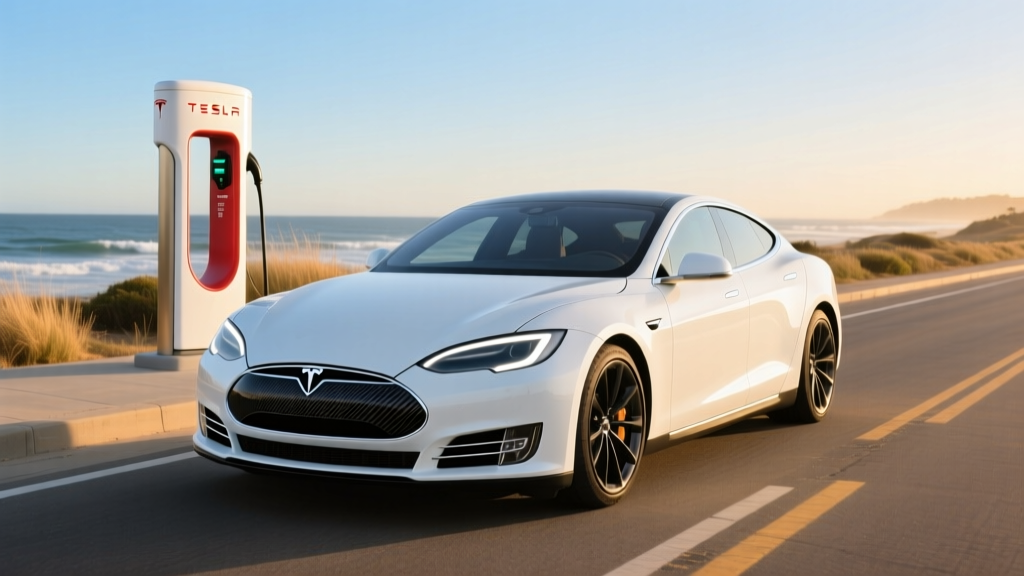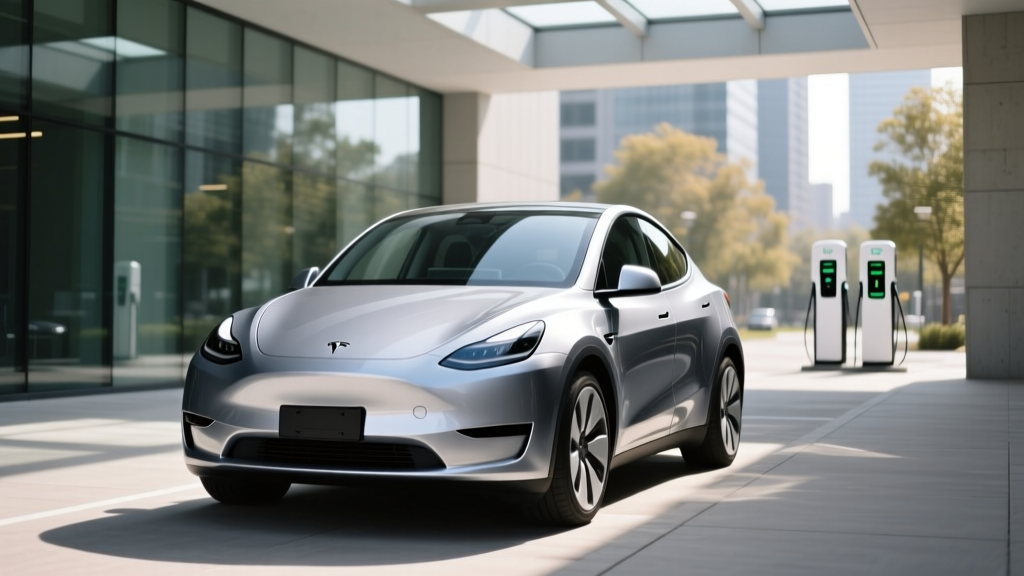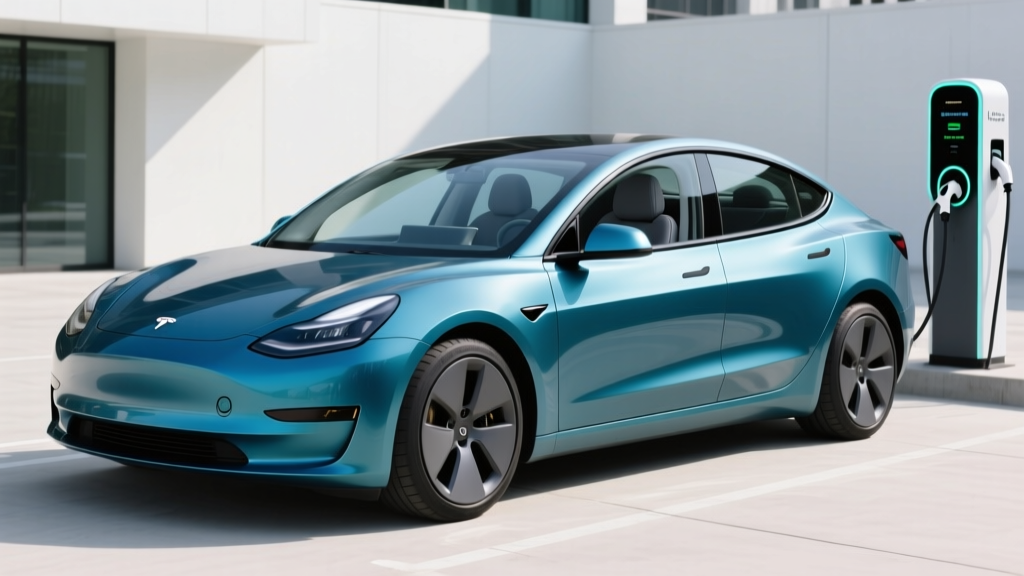
The Tesla Model 3 remains one of the most-searched electric sedans on the market, and for 2026, Tesla has introduced a fresh exterior color that's generating significant buyer interest: Blue Ash. This muted, metallic blue-gray replaces previous palette options and gives the refreshed Model 3 a more premium, understated look that stands apart from the common Pearl White and Solid Black seen on roads everywhere.
But paint is only skin-deep. What matters to EV buyers is whether the 2026 Model 3 — in Blue Ash or any other color — still delivers the range, charging speed, and value that made it a segment benchmark. This review breaks down every spec that matters, from real-world highway range to DC fast-charging curves, and explains exactly how the federal tax credit applies in 2026.
2026 Tesla Model 3 Blue Ash: Quick Verdict
The Blue Ash paint option ($2,000 upgrade) is available across both the Long Range RWD and Long Range AWD trims of the 2026 Model 3. Mechanically, nothing changes with the color — you get the same 75 kWh (usable) LFP battery pack, the same EPA-estimated 341 miles of range on the RWD variant, and the same 250 kW peak DC fast-charging capability. Blue Ash is purely cosmetic, but it's arguably the most sophisticated color Tesla has offered on the Model 3 since the 2024 Highland refresh.
If you're cross-shopping the Model 3 against the Hyundai Ioniq 6, BMW i4, or Polestar 2, the Tesla's Supercharger network access, efficiency, and software integration remain strong differentiators — though interior material quality and ride comfort are areas where competitors have closed the gap.
Range, Battery, and Efficiency
Real-World Expectation: Expect 280–310 miles on mixed highway driving at 70–75 mph. In freezing temperatures (below 32°F), plan for 220–260 miles due to battery chemistry limitations and cabin heating load. City driving with regenerative braking can match or slightly exceed the EPA sticker.
The 2026 Model 3 Long Range uses a 75 kWh usable lithium iron phosphate (LFP) battery pack. Tesla has standardized on LFP chemistry for all non-Performance Model 3 variants, which carries distinct trade-offs compared to the nickel-manganese-cobalt (NMC) packs used in higher-end EVs:
- Advantage: LFP offers superior cycle life (3,000+ full cycles before significant degradation), lower risk of thermal runaway, and Tesla recommends charging to 100% daily — no need to baby the battery at 80%.
- Trade-off: LFP has lower energy density than NMC, which is why the Model 3's pack is physically larger than some competitors' to achieve similar range. Cold-weather range loss is also more pronounced — roughly 25–35% in sub-freezing conditions versus 15–25% for NMC.
Efficiency is rated at 132 MPGe combined (Long Range RWD), which translates to roughly 25 kWh per 100 miles — among the most efficient sedans in its class. Tesla's heat pump, introduced with the Highland refresh, significantly reduces winter energy consumption compared to resistive cabin heating.
| Specification | Long Range RWD | Long Range AWD |
|---|---|---|
| EPA Range | 341 miles | 330 miles |
| Battery (usable) | 75 kWh, LFP | 75 kWh, LFP |
| MPGe (combined) | 132 MPGe | 127 MPGe |
| kWh / 100 mi | 25 | 26 |
| 0–60 mph | 5.8 seconds | 4.2 seconds |
| Horsepower | 271 hp | 346 hp |
| Drivetrain | Rear-Wheel Drive | Dual-Motor AWD |
| Base MSRP | $38,990 | $43,990 |
Charging Speed: DC Fast Charge and Home Level 2
Charging remains one of the Model 3's strongest suits, thanks to both Tesla's Supercharger network (now open to other brands via NACS adapters) and the vehicle's strong charge curve.
| Charging Level | Max Power | Speed / Time |
|---|---|---|
| Level 1 (120V household) | ~1.4 kW | ~3–4 miles per hour |
| Level 2 (240V home/public) | 11.5 kW (48A) | ~37 miles per hour; full charge in ~8 hours |
| DC Fast Charge (Supercharger V3/V4) | 250 kW peak | 10–80% in ~25 minutes |
Charging curve reality check: The 250 kW peak rate is sustained only between roughly 10–30% state of charge. From 30–60%, expect ~170–190 kW. Above 80%, the rate tapers sharply to protect the LFP cells — charging from 80–100% at a DC fast charger is slow enough that Tesla recommends you only charge to 100% at home on Level 2. On a road trip, plan your stops around 10–80% increments for the fastest experience.
The Model 3 uses the NACS (North American Charging Standard) connector natively, giving it seamless access to over 20,000 Tesla Supercharger stalls nationwide. With preconditioning enabled (the car warms the battery as you navigate to a charger), real-world charging sessions at V3 Superchargers consistently hit the advertised 10–80% time within a minute or two.
Performance and Driving Dynamics
The Long Range AWD's 4.2-second 0–60 mph time makes it genuinely quick — quicker than most buyers will ever need. The dual-motor setup provides confident all-weather traction, and Tesla's traction control system is among the best in the industry for snow and ice.
The RWD variant's 5.8-second 0–60 is still brisk for daily driving, and the single-motor setup yields slightly better efficiency and lower weight over the front axle, translating to marginally sharper turn-in feel.
Ride quality improved significantly with the 2024 Highland refresh and carries forward into 2026. The updated suspension tuning absorbs road imperfections better than pre-2024 models, though competitors like the BMW i4 and Genesis Electrified G80 still offer a more plush, isolated ride. Road noise is well-managed at highway speeds — a notable improvement over earlier Model 3 generations.
Interior, Tech, and Cargo Space
The Model 3's minimalist interior remains polarizing. There are no physical buttons, no instrument cluster, and no traditional stalks — turn signals live on the steering wheel rim, and gear selection is via the touchscreen or the center console capacitive strip.
Infotainment: The 15.4-inch center touchscreen runs Tesla's proprietary OS, which is fast, responsive, and packed with features (Netflix, YouTube, arcade games while charging, live traffic visualization). However, the lack of Apple CarPlay and Android Auto remains a dealbreaker for some buyers.
Driver Assistance: Basic Autopilot (lane centering + adaptive cruise) is standard. Enhanced Autopilot ($6,000) adds auto lane change, autosteer on navigation, and summon. Full Self-Driving (Supervised) at $8,000 adds traffic light/stop sign recognition and city street autosteering. This is SAE Level 2 driver assistance — the driver must remain fully engaged and responsible at all times.
| Dimension | Measurement |
|---|---|
| Front Legroom | 42.7 inches |
| Rear Legroom | 35.2 inches |
| Trunk (rear cargo) | 23.0 cu ft |
| Frunk (front trunk) | 3.1 cu ft |
| Total Cargo Volume | 26.1 cu ft |
Rear-seat space is adequate for adults on shorter trips but tight for taller passengers on long drives — the sloping roofline cuts into headroom, and the seat cushion is relatively flat. Families with rear-facing child seats will find it workable but not generous.
Pricing, Trims, and Federal Tax Credit (2026)
| Trim / Option | MSRP |
|---|---|
| Long Range RWD (base) | $38,990 |
| Long Range AWD | $43,990 |
| Performance AWD | $52,990 |
| Blue Ash Paint (add-on) | +$2,000 |
| Enhanced Autopilot | +$6,000 |
| FSD (Supervised) | +$8,000 |
| 19" Nova Wheels (upgrade) | +$1,500 |
Federal Tax Credit (§30D) — 2026 Rules: The Model 3 Long Range (both RWD and AWD) qualifies for up to $7,500 in federal tax credits, but eligibility depends on several factors that change annually:
- MSRP Cap: Sedans must be under $55,000 MSRP. The Long Range RWD ($38,990) and AWD ($43,990) qualify. The Performance trim ($52,990) qualifies. Adding Blue Ash paint and FSD can push total price above $55K, but the MSRP cap applies to base MSRP + factory options before destination.
- Buyer Income Cap: Modified adjusted gross income (MAGI) must not exceed $150,000 (single), $225,000 (head of household), or $300,000 (joint filers).
- Battery Sourcing: The $7,500 credit splits into two halves — $3,750 for critical minerals and $3,750 for battery component manufacturing. As of 2026, the Model 3 built at Giga Nevada continues to meet both requirements for the full $7,500. Verify current eligibility at IRS.gov before purchasing.
- Point-of-Sale Transfer: You can transfer the credit to Tesla at purchase, reducing your out-of-pocket cost immediately rather than waiting to claim it on your tax return.
| Configuration | MSRP | After $7,500 Credit |
|---|---|---|
| Long Range RWD + Blue Ash | $40,990 | $33,490 |
| Long Range AWD + Blue Ash | $45,990 | $38,490 |
| Performance + Blue Ash | $54,990 | $47,490 |
Warranty Coverage
Tesla's warranty structure is competitive but not class-leading:
- Basic Vehicle: 4 years / 50,000 miles (whichever comes first)
- Battery & Drive Unit: 8 years / 120,000 miles for Long Range variants, with a minimum 70% capacity retention guarantee over the warranty period
- Roadside Assistance: 4 years / 50,000 miles
The 70% retention threshold is standard for the industry. Real-world data from Tesla's fleet suggests LFP packs in the Model 3 degrade approximately 5–8% over the first 100,000 miles, well within warranty limits. LFP's longevity advantage means most owners will never approach the warranty threshold under normal use.
Model 3 Blue Ash vs. Key Competitors
- You want access to the most reliable, extensive DC fast-charging network (Superchargers)
- Maximum efficiency and lowest cost-per-mile are top priorities
- You value over-the-air software updates and a tech-forward interior
- You can charge at home and want a sedan with 300+ miles of range under $40K after credits
- You need Apple CarPlay / Android Auto (check the Hyundai Ioniq 6 or BMW i4)
- Rear-seat space and ride comfort are primary concerns (consider the Genesis Electrified G70 or BMW i4 Gran Coupe)
- You want a more traditional interior with physical controls
- Blue Ash is unavailable or backordered — Tesla's paint options rotate and production slots fill quickly
Against the Hyundai Ioniq 6 (EPA 361 mi, starting ~$37,500), the Model 3 trades a slight range disadvantage for faster DC charging and a more mature charging network. The Ioniq 6 offers CarPlay and a more conventional interior but charges at a peak of 240 kW with a slightly longer 10–80% curve.
The BMW i4 eDrive40 (EPA 301 mi, starting ~$52,200) wins on build quality, ride refinement, and infotainment, but costs significantly more and offers less range. It's the driver's choice if budget is flexible.
Pros
- 341-mi EPA range is among the best in the segment
- 250 kW DC fast charging with strong sustained curve
- Supercharger network remains the gold standard for road trips
- Industry-leading efficiency (25 kWh/100 mi)
- LFP battery can charge to 100% daily without degradation concern
- Blue Ash is a distinctive, premium color option
- Full $7,500 federal tax credit eligibility (verify at purchase)
Cons
- No Apple CarPlay or Android Auto
- Rear seat is tight for tall adults on long trips
- LFP battery loses more range in extreme cold vs. NMC
- Turn signals on steering wheel rim take adjustment
- FSD (Supervised) remains Level 2 — not autonomous
- Minimalist interior isn't for everyone
- Insurance costs tend to run higher than segment average
Who Should Buy the Model 3 in Blue Ash?
Best for: Daily commuters with home charging access who want maximum range and efficiency, tech-forward buyers who enjoy Tesla's software ecosystem, and road-trippers who value Supercharger reliability. The Blue Ash color specifically appeals to buyers who want a Model 3 that doesn't look like every other white or black one in the parking lot — it photographs well, hides light dirt better than darker colors, and carries a subtle premium feel.
Not ideal for: Large families needing generous rear-seat space, buyers in extreme cold-weather climates where LFP's winter range loss compounds (consider an NMC-equipped competitor or the Model 3 Performance), and anyone who refuses to adapt to a screen-centric control interface.
Frequently Asked Questions
What is the real-world range of the 2026 Tesla Model 3 Long Range?
The EPA rates it at 341 miles (RWD) or 330 miles (AWD). In real-world highway driving at 70–75 mph, expect 280–310 miles. In freezing temperatures, plan for 220–260 miles. City driving with regenerative braking can match or exceed the EPA figure.
How fast does the Model 3 charge at home and on DC fast chargers?
On a home Level 2 charger (240V, 48A), it adds ~37 miles per hour, fully charging in about 8 hours. On a Tesla V3/V4 Supercharger, it peaks at 250 kW and charges from 10–80% in approximately 25 minutes, though the rate tapers significantly above 80%.
How much does the Model 3 Blue Ash cost after the federal tax credit?
A Long Range RWD with Blue Ash paint is $40,990 MSRP. With the full $7,500 federal credit (subject to income and sourcing eligibility), the effective price drops to $33,490. The AWD version comes to $38,490 after credit. Always verify current eligibility at IRS.gov.
Does the 2026 Model 3 qualify for the full $7,500 federal EV tax credit?
As of early 2026, the Model 3 Long Range qualifies for the full $7,500 under §30D, provided the buyer meets income caps ($150K single / $300K joint) and the vehicle's battery sourcing meets current critical-mineral and component-manufacturing requirements. Tesla lists credit eligibility on its website, and you can confirm via the IRS. Rules can change — verify before ordering.
Is the Tesla Model 3 worth buying over the Hyundai Ioniq 6 or BMW i4?
It depends on priorities. The Model 3 wins on charging network access, efficiency, and software. The Ioniq 6 wins on range (361 mi EPA) and CarPlay support. The BMW i4 wins on ride quality, interior refinement, and traditional controls. For most buyers who can charge at home, the Model 3's total cost of ownership and Supercharger access make it the most practical choice.
Is Blue Ash a limited-edition color?
Tesla has not announced Blue Ash as a limited run, but Tesla routinely rotates paint options without advance notice. If Blue Ash is important to you, order sooner rather than later — Tesla's color availability can change between quarters.
Sources: EPA range and efficiency data via fueleconomy.gov. Federal tax credit rules via IRS.gov §30D. Vehicle specifications per Tesla.com.