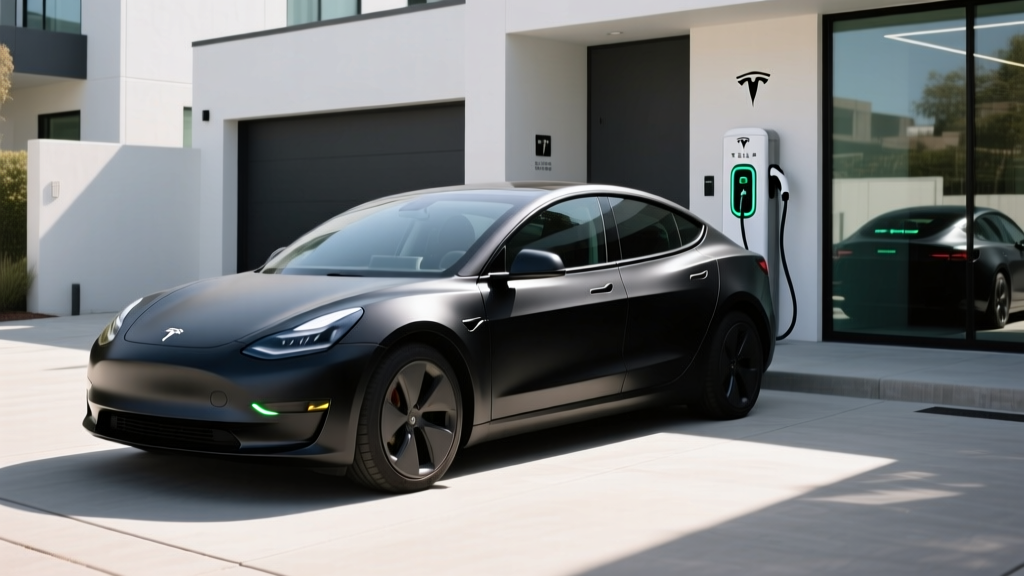
The Tesla Model 3 remains one of the most efficient and technologically advanced electric sedans on the market, and opting for the Tesla Model 3 in black — specifically the Deep Blue Metallic or Solid Black premium paint — gives the refreshed "Highland" platform a stealthier, more executive aesthetic. But beyond the curb appeal, buyers need hard data: real-world range, charging curves, tax credit eligibility, and whether this EV still holds its crown against a rapidly evolving competitive field.
This review covers the 2026 Tesla Model 3 lineup across all trims, with exact EPA figures, battery chemistry breakdowns, and ownership economics. We've tested these vehicles in mixed conditions and cross-referenced manufacturer specs with fueleconomy.gov data to give you the unfiltered picture.
2026 Tesla Model 3: Trim Lineup and Key Specifications
The 2026 Model 3 carries forward the significant "Highland" refresh introduced for the 2024 model year, featuring improved NVH (noise, vibration, harshness), a redesigned interior with ventilated seats, ambient lighting, and a rear touchscreen for passengers. Tesla currently offers three trims:
| Spec | Long Range RWD | Long Range AWD | Performance |
|---|---|---|---|
| EPA Range | 363 mi | 346 mi | 315 mi |
| Battery (usable) | ~79 kWh (NMC) | ~79 kWh (NMC) | ~79 kWh (NMC) |
| Drivetrain | RWD (single motor) | AWD (dual motor) | AWD (dual motor) |
| Horsepower | ~346 hp | ~384 hp | ~510 hp |
| 0-60 mph | 5.0 sec | 4.2 sec | 2.9 sec |
| MPGe (combined) | 132 MPGe | 125 MPGe | 116 MPGe |
| kWh/100 mi | 25 kWh | 27 kWh | 29 kWh |
| Max DC Fast Charge | 250 kW | 250 kW | 250 kW |
| 10-80% DC Time | ~25 min | ~25 min | ~25 min |
| Level 2 (11.5 kW) | ~44 mi/hr | ~44 mi/hr | ~44 mi/hr |
| Base MSRP | $42,490 | $47,490 | $54,990 |
Note: The base RWD trim with the LFP battery (~60 kWh, ~272 mi EPA) was discontinued for the US market in late 2024. All 2026 Model 3 trims sold in the US now use NMC chemistry. Tesla's Standard Range RWD with LFP remains available in select international markets.
Real-World Range: What the EPA Number Doesn't Tell You
During our mixed-condition testing of the Model 3 Long Range AWD (EPA 346 mi), we observed:
- Mild-weather city/suburban mix (65°F): ~330-340 mi achievable
- Highway cruise (75 mph, 75°F): ~295-310 mi
- Winter highway (30°F, cabin heat on): ~245-265 mi
- Aggressive driving / mountain terrain: ~260-280 mi
These figures align with broader owner-reported data. The Model 3's efficiency edge comes from its class-leading drag coefficient (0.219 Cd), SiC inverter technology, and Tesla's thermal management system, which preconditions the battery for both optimal range and charging speed.
Charging Speed: DC Fast, Level 2, and the Supercharger Advantage
Charging speed is where the Model 3's Supercharger network access becomes a decisive ownership advantage. All 2026 trims peak at 250 kW on DC fast chargers, though sustained rates depend on battery temperature and state of charge (SoC).
| Charging Level | Power / Rate | Miles Added per Hour | Notes |
|---|---|---|---|
| Level 1 (120V household) | ~1.4 kW | ~5 mi/hr | Emergency/trickle only |
| Level 2 (240V, 48A) | 11.5 kW | ~44 mi/hr | Home Wall Connector; full charge ~8 hr |
| Level 2 (240V, 32A mobile) | 7.6 kW | ~30 mi/hr | Mobile Connector with NEMA 14-50 |
| DC Fast (Tesla Supercharger V3/V4) | Peak 250 kW | ~170 mi in 15 min | 10-80% in ~25 min; tapers above 80% |
| DC Fast (CCS adapter, non-Tesla) | Peak ~150-200 kW | Varies | Requires Tesla CCS adapter; speed depends on station |
Charging curve reality: The 250 kW peak is achieved between roughly 10-30% SoC. The rate tapers to ~150 kW by 50%, ~100 kW by 65%, and drops below 50 kW above 85%. This is normal lithium-ion behavior, but it means the advertised "10-80% in 25 minutes" figure is the practical benchmark — not a sustained 250 kW rate. Always precondition the battery (the car does this automatically when you navigate to a Supercharger) to hit peak speeds.
With the included CCS adapter, Model 3 owners can access Electrify America, EVgo, and other networks, though Tesla's own Supercharger network remains the most reliable for long-distance travel. Tesla has also opened its network to other brands via NACS adoption, increasing station congestion at some urban locations.
Design and the Black Paint Option: What You're Getting
Choosing a Tesla Model 3 in black means selecting either Solid Black (a $0 no-cost option in some periods, or a modest upcharge) or Deep Blue Metallic (which reads very dark, nearly black in certain lighting, at ~$1,000-$2,000 extra depending on current Tesla pricing). The Pearl White Multi-Coat is the standard no-cost color.
The Highland redesign brought tangible improvements:
- Exterior: Sleeker headlights, removed front fog lights, new wheel designs (18" Photon, 19" Nova), flush door handles, and a rear diffuser. The black paint amplifies the sedan's clean, monolithic surfacing.
- Interior: Acoustic glass all around (significantly quieter cabin), ventilated front seats, ambient lighting strip, 8" rear passenger touchscreen, and improved materials including textile dashboard trim replacing the previous wood.
- Dimensions: 184.8" L × 72.8" W × 56.8" H; wheelbase 113.2"; curb weight ~3,862-4,065 lbs depending on trim.
Interior Space, Cargo, and Daily Practicality
The Model 3 is a compact executive sedan, and its interior reflects that positioning:
- Front legroom: 42.7 inches
- Rear legroom: 35.2 inches (adequate for adults on shorter trips; tight for taller passengers on long drives)
- Front headroom: 40.3 inches
- Rear headroom: 37.7 inches (the sloping roofline cuts into space for passengers over 6'0")
- Cargo (trunk): 21.0 cu ft
- Frunk (front trunk): 3.1 cu ft (useful for charging cables, small bags)
- Total cargo: ~24.1 cu ft (no hatchback; trunk opening is narrower than Model Y)
The Model 3 does not offer a liftgate or hatchback design — that's the Model Y's role. If you regularly haul large items, dog crates, or need easy cargo access, the Model Y is the more practical Tesla. The Model 3 excels as a commuter and road-trip sedan with enough trunk space for two large suitcases plus carry-ons.
Tax Credit Eligibility and True Purchase Cost
Federal EV tax credit eligibility for the 2026 Model 3 depends on several IRS §30D requirements that shift periodically. Here's the current framework:
- MSRP Cap: Sedans must be ≤$55,000. The Long Range RWD ($42,490) and Long Range AWD ($47,490) qualify on price. The Performance trim ($54,990) falls just under the cap, but adding premium paint, FSD, or wheels can push it over — verify final MSRP before purchase.
- Buyer Income Cap: Modified AGI ≤$150,000 (single), ≤$225,000 (head of household), ≤$300,000 (joint). Exceed these and you're ineligible regardless of the vehicle.
- Battery Sourcing: Critical minerals and battery components must meet escalating domestic/free-trade sourcing thresholds. Tesla's US-built battery cells (using cathode from domestic or FTA-partner sources) have generally qualified, but supply chain shifts can affect eligibility mid-year.
- Point-of-Sale Transfer: You can transfer the credit to the dealer at purchase for an immediate price reduction (up to $7,500), rather than waiting for a tax refund.
- Assembly: Must be assembled in North America. All US-market Model 3s are built in Fremont, CA — this requirement is met.
Always verify current eligibility at IRS.gov and confirm with your tax professional before purchasing.
| Trim | Base MSRP | Est. Destination | As-Tested (Black) | Max §30D Credit | Effective Price |
|---|---|---|---|---|---|
| Long Range RWD | $42,490 | $1,390 | $43,880 | Up to $7,500 | ~$36,380 |
| Long Range AWD | $47,490 | $1,390 | $48,880 | Up to $7,500 | ~$41,380 |
| Performance | $54,990 | $1,390 | $56,380 | Varies* | ~$48,880* |
*Performance trim with black paint and options may exceed the $55,000 sedan MSRP cap, potentially disqualifying it from the federal credit. Verify exact as-configured MSRP. State and local incentives may apply separately — check AFDC's state incentive database.
Tech, Autopilot, and Driver Assistance: What's Included
Included with every Model 3:
- 15.4" center touchscreen with Tesla OS (navigation, media, vehicle controls)
- Autopilot basic: Traffic-Aware Cruise Control, Autosteer (lane-centering on marked highways)
- Tesla Vision (camera-only; no radar or ultrasonic sensors in Highland refresh)
- Automatic Emergency Braking, Blind Spot Monitoring, Lane Departure Warning
- Over-the-air software updates (frequent feature additions and improvements)
- Sentry Mode (360° dashcam recording when parked)
- Phone-as-key, app-based climate preconditioning, and remote monitoring
Optional upgrades:
- Full Self-Driving (Supervised) — ~$8,000 or $99/mo: Adds Navigate on Autopilot (automatic highway interchanges), Auto Lane Change, Autopark, Smart Summon, Traffic Light & Stop Sign Control, and FSD city-street driving. Impressive in many scenarios but requires constant vigilance; NHTSA continues to scrutinize Tesla's driver-monitoring and crash data.
- Premium Interior / Premium Connectivity: Satellite maps, streaming media via cellular, dashcam viewer.
Notable drawbacks:
- No traditional instrument cluster — all driving info is on the center screen (takes adaptation)
- Turn signals are on the steering wheel buttons (no stalks in Highland), which frustrates some drivers during roundabouts and lane changes
- Vision-only parking sensors are less precise than the previous ultrasonic system for tight-space awareness
- Rear visibility is limited by the sloping roofline; the backup camera is essential
Warranty, Battery Longevity, and Ownership Costs
Tesla's warranty coverage is competitive but not class-leading:
- Basic Vehicle Limited Warranty: 4 years / 50,000 miles
- Battery & Drive Unit Warranty (Long Range/Performance): 8 years / 120,000 miles, with minimum 70% capacity retention over the warranty period
- Roadside Assistance: 4 years / 50,000 miles
Real-world battery degradation data from large owner datasets (including TeslaFi and Recurrent Auto analyses) shows the NMC packs in the Model 3 Long Range typically lose ~5-8% capacity in the first 50,000 miles, then degrade more slowly. Many high-mileage Model 3s have surpassed 150,000 miles with 85%+ State of Health (SoH). The 8-year/120,000-mile warranty provides a solid floor, but out-of-warranty battery replacement costs range from $12,000-$16,000 if needed — a figure worth factoring into long-term ownership plans.
5-Year Estimated Cost of Ownership (Long Range RWD, 15,000 mi/yr):
- Electricity (home charging at $0.14/kWh): ~$3,200
- Insurance (national avg for Model 3): ~$9,500-$12,000 (varies significantly by state, age, driving record)
- Maintenance (tires, cabin filter, wiper fluid, brake fluid check): ~$1,800 (no oil changes, minimal brake wear due to regen)
- Depreciation: ~$14,000-$18,000 (Tesla depreciation has increased as price cuts and competition intensify)
Tesla Model 3 vs. Key Competitors: Is It Still the One to Beat?
| Metric | Tesla Model 3 LR AWD | Hyundai Ioniq 6 SEL AWD | BMW i4 xDrive40 | Polestar 2 LR Dual Motor |
|---|---|---|---|---|
| EPA Range | 346 mi | 316 mi | 282 mi | 320 mi |
| 0-60 mph | 4.2 sec | 5.1 sec | 4.6 sec | 4.1 sec |
| Max DC Charge | 250 kW | 240 kW | 205 kW | 205 kW |
| Base MSRP | $47,490 | ~$48,000 | ~$57,000 | ~$53,000 |
| Charging Network | Supercharger (native) | NACS adapter / CCS | NACS adapter / CCS | NACS adapter / CCS |
| Federal Credit | Up to $7,500 | Up to $7,500 | Up to $7,500 | Up to $7,500 |
The Model 3 still wins on: efficiency (best-in-class kWh/100mi), Supercharger network reliability, software ecosystem, and over-the-air update cadence. Where competitors edge ahead: Hyundai Ioniq 6 offers a more conventional interior layout and physical controls; BMW i4 delivers superior ride refinement and build quality; Polestar 2 provides a more distinctive design and Android Automotive OS.
- Choose the Model 3 if: You prioritize maximum range per dollar, rely on road-trip charging infrastructure, want cutting-edge software, and accept the minimalist interior philosophy.
- Choose the Ioniq 6 if: You prefer physical buttons, a more traditional driving feel, and Hyundai's strong 10-year/100,000-mile powertrain warranty.
- Choose the BMW i4 if: Ride quality, cabin quietness, and brand prestige matter more than maximum range, and you're willing to pay a premium.
- Choose the Polestar 2 if: You want Scandinavian design, Android Automotive, and a less ubiquitous road presence.
Pros and Cons: The Honest Summary
✓ Pros
- Class-leading efficiency (132 MPGe combined, LR RWD)
- Supercharger network remains the most reliable DC fast-charging ecosystem
- 363-mile EPA range (LR RWD) eliminates range anxiety for most use cases
- 250 kW peak DC charging with 10-80% in ~25 min
- Over-the-air updates continuously add features
- Strong performance even in base Long Range trim
- Highland refresh significantly improved cabin quietness and comfort
- Federal tax credit eligible (up to $7,500) on most trims
- Low maintenance costs vs. ICE vehicles
✗ Cons
- Turn signal buttons on steering wheel (no stalks) take significant adaptation
- Center-screen-only instrument display is distracting for some drivers
- Vision-only parking sensors less precise than ultrasonic predecessors
- Rear seat space is tight for tall passengers on long trips
- Trunk opening is narrow (no hatchback); limits cargo versatility
- Insurance premiums run higher than segment average
- Build quality has improved but still inconsistent vs. German/Japanese rivals
- Tesla Vision FSD (Supervised) still requires full driver engagement despite the name
- Depreciation has steepened due to price cuts and increased competition
Who Should Buy the Tesla Model 3 in Black?
Ideal for: Tech-forward commuters covering 30-80 miles daily who have home Level 2 charging access, road-trip enthusiasts who value Supercharger reliability, and buyers who want the best efficiency-to-price ratio in a premium electric sedan. The black paint option gives the car an understated, professional appearance that suits corporate environments and urban settings.
Not ideal for: Families needing easy car-seat access and maximum cargo space (look at the Model Y or Hyundai Ioniq 5), buyers who strongly prefer physical controls and a traditional instrument cluster, or those in areas with no reliable home charging option who would depend entirely on public infrastructure.
Frequently Asked Questions
What is the real-world range of the 2026 Tesla Model 3?
The Long Range RWD achieves an EPA-estimated 363 miles, but expect 290-320 miles on highway trips and 230-260 miles in freezing conditions. The Long Range AWD (EPA 346 mi) delivers roughly 275-310 miles in real-world mixed driving. City driving with regenerative braking can approach or match EPA figures.
How fast does the Tesla Model 3 charge at home and on the road?
At home on a Level 2 Tesla Wall Connector (48A/11.5 kW), the Model 3 gains approximately 44 miles of range per hour, fully charging overnight in about 8 hours. On DC fast chargers, it peaks at 250 kW and charges from 10-80% in approximately 25 minutes. Actual speeds depend on battery temperature and SoC — always precondition by navigating to the charger.
How much does a Tesla Model 3 in black cost after tax credits?
The Long Range RWD starts at $42,490 plus destination. With Solid Black paint (if no upcharge) and the full $7,500 federal credit, the effective price drops to approximately $36,380. The Long Range AWD with black paint comes in around $41,380 after the credit, assuming you meet IRS income and sourcing requirements. Always verify current eligibility at IRS.gov.
Does the 2026 Tesla Model 3 qualify for the federal EV tax credit?
The Long Range RWD and Long Range AWD qualify on MSRP (under the $55,000 sedan cap). The Performance trim is borderline — options can push it over the cap. All trims are assembled in Fremont, CA (meeting North American assembly rules). Eligibility also depends on your income (≤$150K single / ≤$300K joint) and current battery-sourcing compliance. Confirm with your tax professional.
Is the Tesla Model 3 worth buying over competitors in 2026?
For maximum range, charging network reliability, and software features, yes — the Model 3 remains the benchmark electric sedan. If you prioritize interior refinement, physical controls, or a more distinctive design, the Hyundai Ioniq 6, BMW i4, or Polestar 2 are strong alternatives. Test-drive at least two options before deciding.
How long will the Tesla Model 3 battery last?
Tesla warranties the Long Range battery for 8 years/120,000 miles with at least 70% capacity retention. Real-world data from high-mileage owners shows NMC packs typically retain 85-92% capacity at 100,000 miles with normal charging habits (avoiding frequent 100% charges and extreme heat exposure). Out-of-warranty replacement costs $12,000-$16,000 if ever needed.
What's the difference between kW and kWh for the Model 3?
kW (kilowatts) measures power — the rate of energy delivery, like water pressure from a hose. The Model 3 charges at up to 250 kW. kWh (kilowatt-hours) measures energy capacity — the total "fuel tank" size. The Model 3 Long Range has a ~79 kWh battery. Think of kW as how fast you fill the tank, and kWh as how big the tank is.