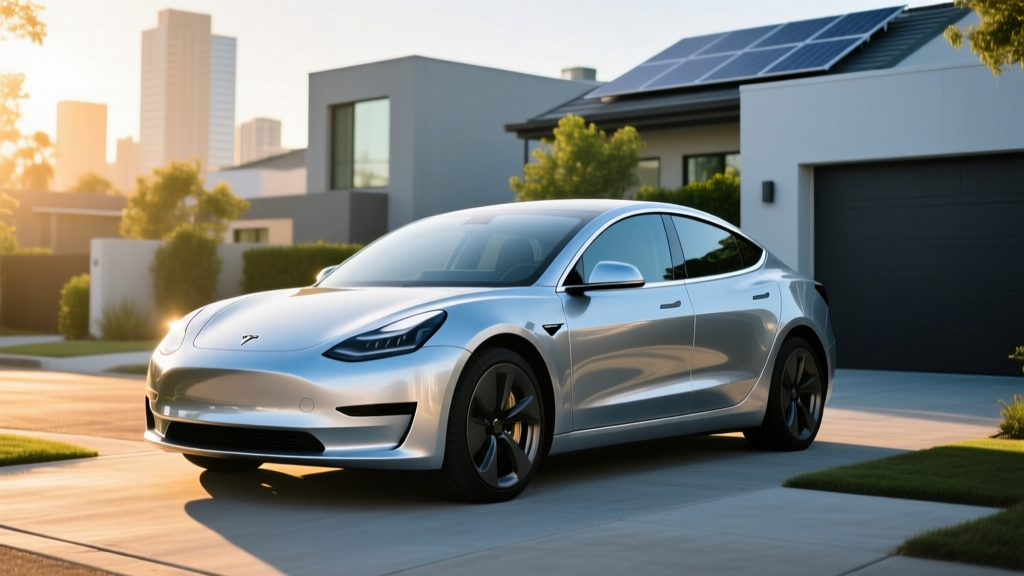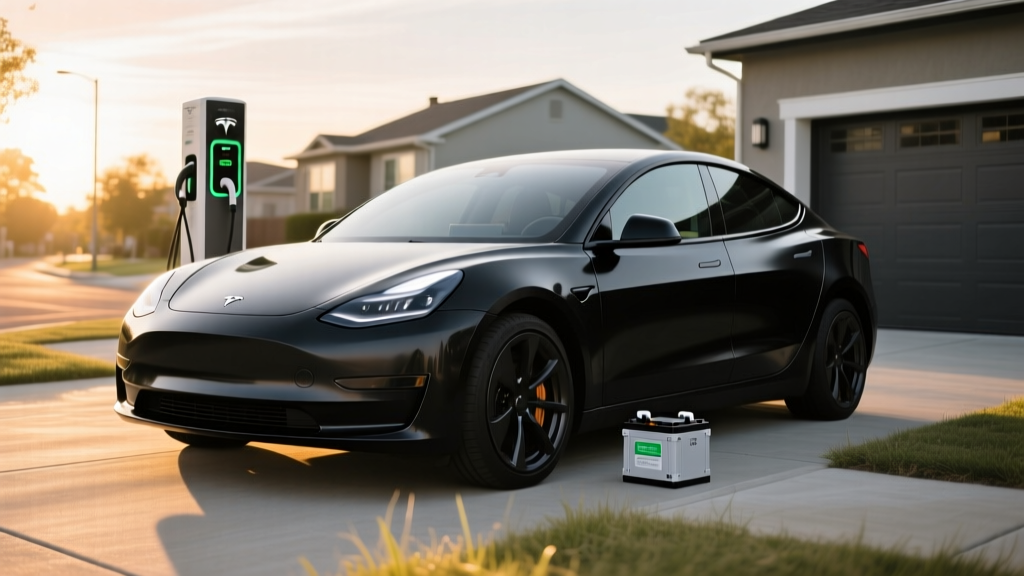
If you've been searching for a Tesla 3 Black configuration, you're likely eyeing one of the most popular aesthetic and trim combinations Tesla offers: the Model 3 in Solid Black (or the newer Ultra Red on darker trims) paired with the Long Range RWD or Long Range AWD powertrain. For 2026, Tesla has streamlined the Model 3 lineup following the Highland refresh, and the black-on-black aesthetic remains the stealth favorite among commuters and tech-forward buyers alike. This profile covers everything you need to decide whether the blacked-out Model 3 earns a spot in your driveway — with exact EPA numbers, real-world range reconciliation, charging curves, and current federal tax credit rules.
2026 Tesla Model 3 Lineup: Where the Black Config Fits
Tesla's 2026 Model 3 is offered in three primary trims. The Solid Black multi-coat paint ($1,500 premium) is available across all of them, and buyers frequently pair it with the black interior for the full monochrome look. Here's how the trims break down:
| Spec | RWD | Long Range RWD | Long Range AWD |
|---|---|---|---|
| Base MSRP | $38,990 | $42,490 | $47,490 |
| EPA Range | 272 mi | 363 mi | 341 mi |
| Battery (usable) | ~57.5 kWh (LFP) | ~75 kWh (NMC) | ~75 kWh (NMC) |
| Drivetrain | Rear-Wheel Drive | Rear-Wheel Drive | Dual-Motor AWD |
| Horsepower | 271 hp | 346 hp | 440 hp |
| 0-60 mph | 5.8 sec | 5.1 sec | 4.2 sec |
| MPGe (combined) | 132 MPGe | 134 MPGe | 125 MPGe |
| Efficiency | 25 kWh/100mi | 24 kWh/100mi | 26 kWh/100mi |
Adding Solid Black paint ($1,500) to any trim pushes the as-tested price higher, and 19-inch Nova wheels ($1,500) or 20-inch Curzon wheels ($2,500) are common upgrades on blacked-out builds. A typical black-on-black Long Range AWD with 19-inch wheels lands around $50,490 before incentives.
EPA Range vs. Real-World Expectations
- EPA Estimate: 341 miles
- Real-World Highway (70-75 mph, moderate climate): ~280-305 miles
- Real-World Mixed Commuting: ~310-330 miles
- Cold Weather (below 30°F, highway): ~220-260 miles (25-35% reduction)
The Model 3's heat pump helps mitigate cold-weather losses compared to older EVs, but sustained highway speeds above 70 mph and winter temperatures still compress range meaningfully. Plan road trips around 250-270 miles between stops to keep a comfortable buffer.
The RWD trim's LFP battery delivers its EPA 272 miles more consistently in city driving — LFP chemistry tolerates frequent 100% charges without degradation concerns, making it ideal for daily commuters who charge at home nightly. The Long Range trims use NMC chemistry, which Tesla recommends charging to 80% for daily use, reserving 100% for road trips. That effective daily range on the Long Range AWD is closer to 273 usable miles at 80% SoC — still excellent for the segment.
Charging Speed: DC Fast Charge, Level 2, and the Charge Curve
Charging speed is where the Model 3's 2026 architecture shows its maturity. The Long Range trims support up to 250 kW peak DC fast charging on V3 and V4 Superchargers, while the RWD trim peaks around 175 kW due to its smaller LFP pack.
| Charging Method | RWD (LFP) | Long Range (NMC) |
|---|---|---|
| DC Fast Charge (peak) | 175 kW | 250 kW |
| 10-80% DCFC Time | ~25 min | ~18 min (preconditioned) |
| Sustained DCFC (avg 10-80%) | ~120 kW | ~170 kW |
| Level 2 Home (11.5 kW / 48A) | ~30 mi/hr | ~44 mi/hr |
| Level 2 Home (7.7 kW / 32A) | ~20 mi/hr | ~30 mi/hr |
| Level 1 (120V, 12A) | ~3 mi/hr | ~3 mi/hr |
Critical nuance on the charge curve: The 250 kW peak on Long Range models is sustained only between roughly 10-30% SoC with a preconditioned battery. Above 50% SoC, the rate tapers to ~120 kW, and above 80% it drops further to ~50-60 kW. This is normal lithium-ion behavior to protect cell longevity, but it means a 10-90% session takes closer to 30-32 minutes, not the 18-minute headline figure.
For home charging, Tesla's Wall Connector ($420) delivers up to 11.5 kW on a 60A circuit (48A continuous), which adds roughly 44 miles of range per hour on the Long Range trims — enough to fully replenish overnight on a standard NEMA 14-50 or hardwired install. A typical home Level 2 installation runs $500-$2,000 depending on panel proximity and local permitting, per data from Tesla's installation partners.
Performance, Efficiency, and Daily Driving
The Long Range AWD — the most common "Tesla 3 black" build — hits 60 mph in 4.2 seconds with 440 hp across its dual-motor setup. That's sports-sedan territory, and the instant torque delivery makes it feel even quicker in real-world merging scenarios. The RWD model's 5.8-second sprint is still brisker than most gas-powered compact sedans.
Efficiency is where Tesla continues to lead the industry. At 134 MPGe combined (Long Range RWD), the Model 3 converts electricity to motion with less waste than nearly any competing EV. For context, that translates to roughly $0.045-$0.055 per mile at the US average residential electricity rate of $0.17/kWh — compared to $0.12-$0.15/mile for a 30 MPG gas sedan at $3.50/gallon.
The Highland refresh brought meaningful improvements to ride quality and cabin noise. Acoustic glass, revised suspension tuning, and ventilated front seats make the 2026 Model 3 a genuine long-distance cruiser. Rear-seat legroom measures 35.2 inches, and cargo volume stands at 23 cubic feet (trunk + frunk combined), which is adequate for a family of four's weekend luggage but trails the Model Y's hatchback utility.
Tax Credits, Pricing, and What You'll Actually Pay
Federal EV tax credit eligibility for the 2026 Model 3 depends on several IRS §30D requirements that shift based on battery sourcing rules and buyer income. Here's the current framework:
| Factor | Requirement / Detail |
|---|---|
| Maximum Credit | $7,500 (split: $3,750 battery components + $3,750 critical minerals) |
| MSRP Cap (sedans) | Vehicle MSRP must not exceed $55,000 |
| Buyer Income Cap | $150K single / $225K HOH / $300K joint (MAGI) |
| Battery Sourcing | Must meet escalating domestic/FTA content thresholds per IRS |
| Point-of-Sale Transfer | Eligible buyers can transfer credit to dealer for instant price reduction |
| Model 3 RWD ($38,990) | Under MSRP cap — partial or full credit depending on sourcing |
| Model 3 LR RWD ($42,490) | Under MSRP cap — check current sourcing compliance |
| Model 3 LR AWD ($47,490) | Under MSRP cap — check current sourcing compliance |
| Model 3 LR AWD + options ($50,490+) | Approaching cap — high option packages may push over $55K |
Important caveat: Battery component and critical mineral sourcing requirements tighten annually. For 2026, a growing percentage of Tesla's US-built cells qualify for the full $7,500, but eligibility can shift mid-year. Always verify current status at fueleconomy.gov and cross-reference with IRS §30D guidance before purchasing. The point-of-sale transfer option means you don't need to wait until tax filing — the credit reduces your purchase price at delivery if you qualify.
For the popular blacked-out Long Range AWD at ~$50,490 (with Solid Black paint and 19-inch wheels), a qualifying buyer could pay as little as $42,990 after the full $7,500 credit — making it one of the most compelling value propositions in the premium electric sedan segment.
Tech, Driver Assistance, and What's Missing
The 2026 Model 3 runs Tesla's latest software on a 15.4-inch front touchscreen with an 8-inch rear display for climate and media control. Wireless phone mirroring is still absent — Tesla uses its own app ecosystem — but the built-in navigation, streaming, and gaming capabilities are industry-leading.
Tesla's Autopilot (standard) and Full Self-Driving Supervised ($8,000 option or $99/mo subscription) are SAE Level 2 driver-assistance systems. They require continuous driver attention and hands-on-wheel monitoring. These are not self-driving systems. You are responsible for the vehicle at all times. Only Level 4 services like Waymo operate without a human driver in defined geofenced areas.
Standard Autopilot includes Traffic-Aware Cruise Control and Autosteer, which handles highway lane-keeping competently. FSD Supervised adds automatic lane changes, traffic light/stop sign recognition, and city-street navigation — impressive in capability but variable in execution. Some owners report excellent daily performance; others encounter phantom braking and overly cautious merges. Budget-conscious buyers can skip FSD and rely on standard Autopilot for highway commuting.
Notable drawbacks of the 2026 Model 3 include the absence of traditional turn signal stalks (replaced by steering-wheel buttons and auto-cancel logic that requires an adjustment period), no physical instrument cluster, and a minimalist rear-seat experience that some passengers find less engaging than competitors with rear screens and USB-C clusters.
Warranty, Reliability, and Long-Term Battery Outlook
Tesla covers the Model 3 with a 4-year/50,000-mile limited vehicle warranty and an 8-year/120,000-mile battery and drive unit warranty for Long Range trims (8-year/100,000-mile for RWD). The battery warranty guarantees retention of at least 70% capacity over the warranty period.
Real-world degradation data from Tesla's fleet reports and independent analyses show NMC packs in the Long Range models typically lose 5-8% capacity over the first 50,000 miles, then plateau with a very gradual decline. LFP packs in the RWD model show similar or slightly better retention, particularly when charged to 100% regularly as Tesla recommends for that chemistry. At 150,000 miles, most Model 3 packs retain 88-93% of original capacity — well above the warranty threshold.
Out-of-warranty battery replacement costs remain a concern for long-term owners: current estimates range from $12,000-$16,000 for a Long Range pack, though prices have been trending downward as cell manufacturing scales. For most buyers who plan to own the vehicle for 5-8 years and sell before 100,000 miles, battery replacement is unlikely to be a personal expense.
Pros, Cons, and the Final Verdict
✅ Pros
- Class-leading efficiency (134 MPGe combined on LR RWD)
- 250 kW DC fast charging with ~18 min 10-80% times
- Extensive Supercharger network (20,000+ stalls in North America, NACS native)
- Over-the-air updates continuously improve the vehicle post-purchase
- Strong resale value relative to most EV competitors
- Qualifies for up to $7,500 federal tax credit (verify sourcing compliance)
- Excellent real-world range on Long Range trims (300+ mi mixed driving)
❌ Cons
- Turn signal buttons on steering wheel require significant adaptation
- No Apple CarPlay or Android Auto
- FSD Supervised is expensive and still requires full driver engagement
- Rear visibility is limited; relies heavily on camera display
- Ride firmness on 19/20-inch wheels noticeable on rough pavement
- Insurance premiums run 15-30% higher than comparable gas sedans
- Service center availability varies by region; mobile service can't handle everything
Who Should Buy the Tesla Model 3 Black?
Choose the Model 3 Long Range AWD in black if: You want a 300+ mile daily driver with fast Supercharger access, strong acceleration, and a premium-tech cabin — and you live in a region with reliable Supercharger coverage. Ideal for tech-savvy commuters, couples without large cargo needs, and road-trippers willing to plan around 250-mile charging stops.
Choose the Model 3 RWD in black if: Your commute is under 60 miles round-trip, you charge at home nightly, and you want the lowest entry price with LFP battery durability. Best for urban/suburban solo commuters and second-car EV adopters.
Look elsewhere if: You need hatchback cargo space (consider the Model Y or Hyundai Ioniq 5), you want Apple CarPlay, you regularly carry rear-seat adults on long trips, or you live in a rural area far from Supercharger corridors.
Frequently Asked Questions
What is the real-world range of the Tesla Model 3 Long Range AWD?
EPA-rated at 341 miles, expect approximately 280-305 miles on sustained highway drives at 70-75 mph, and 310-330 miles in mixed city/highway commuting. Cold weather below 30°F reduces range by 25-35%, bringing winter highway range to roughly 220-260 miles. The heat pump helps, but physics still applies.
How fast does the Tesla Model 3 charge at home and on DC fast chargers?
On a DC fast charger (Supercharger V3/V4), the Long Range trims peak at 250 kW and charge from 10-80% in approximately 18 minutes when preconditioned. At home on a Level 2 Tesla Wall Connector (11.5 kW), the Long Range adds ~44 miles of range per hour, fully replenishing overnight. The RWD model peaks at 175 kW DC and takes ~25 minutes for 10-80%.
How much does the Tesla Model 3 cost after federal tax credits?
The RWD starts at $38,990 and could drop to ~$31,490 with the full $7,500 credit. The Long Range AWD starts at $47,490, potentially $39,990 after the credit. A blacked-out Long Range AWD with options at ~$50,490 could land around $42,990. Eligibility depends on buyer income (≤$300K joint), MSRP (≤$55K for sedans), and battery sourcing compliance per IRS §30D rules.
Does the 2026 Tesla Model 3 qualify for the $7,500 federal EV tax credit?
Most Model 3 trims fall under the $55,000 MSRP sedan cap and Tesla's US-assembled vehicles have increasingly met battery sourcing requirements. However, eligibility can vary by production batch and changes throughout the year. Verify at fueleconomy.gov before purchase. You must also meet income caps ($150K single / $300K joint MAGI) to qualify.
Is the Tesla Model 3 worth buying vs. the Hyundai Ioniq 6 or BMW i4?
The Model 3 wins on efficiency, Supercharger network access, and software. The Ioniq 6 offers comparable range (361 mi EPA) with faster 800V charging (~18 min 10-80%) and CarPlay support, but a less mature charging network. The BMW i4 provides a more traditional luxury interior and superior build materials at a higher price point (~$57,000+). For most buyers prioritizing range-per-dollar and charging infrastructure, the Model 3 Long Range remains the benchmark.
Is Tesla's Full Self-Driving worth the $8,000 cost?
For most buyers, no. FSD Supervised is an SAE Level 2 system that still requires your full attention. Standard Autopilot handles highway driving well. If you commute in heavy stop-and-go traffic daily, the $99/month subscription is a lower-risk way to test FSD before committing $8,000. Do not expect autonomous driving — you remain the driver.