Why Tesla Model 3 Approved Tires Matter More Than You Think
When Tesla engineers tuned the Model 3's suspension, regenerative braking, and thermal management, they did it around a very specific set of tire characteristics: low rolling resistance, high-load capacity for the battery's weight, and acoustic foam to suppress cabin noise. Swap to a generic all-season tire without checking those parameters, and you can lose 5–12% of your EPA-rated range, increase road noise by several decibels, and trigger uneven wear from the instant torque delivery that defines EV powertrains.
This guide breaks down the OEM tire specifications for every current Model 3 trim, explains what "Tesla-approved" actually means in engineering terms, and recommends replacements that preserve the car's range, ride, and safety profile — whether you're replacing a punctured 18-inch Aero cover or upgrading the Performance model's 20-inch setup.
OEM Tire Sizes and Specifications by Trim
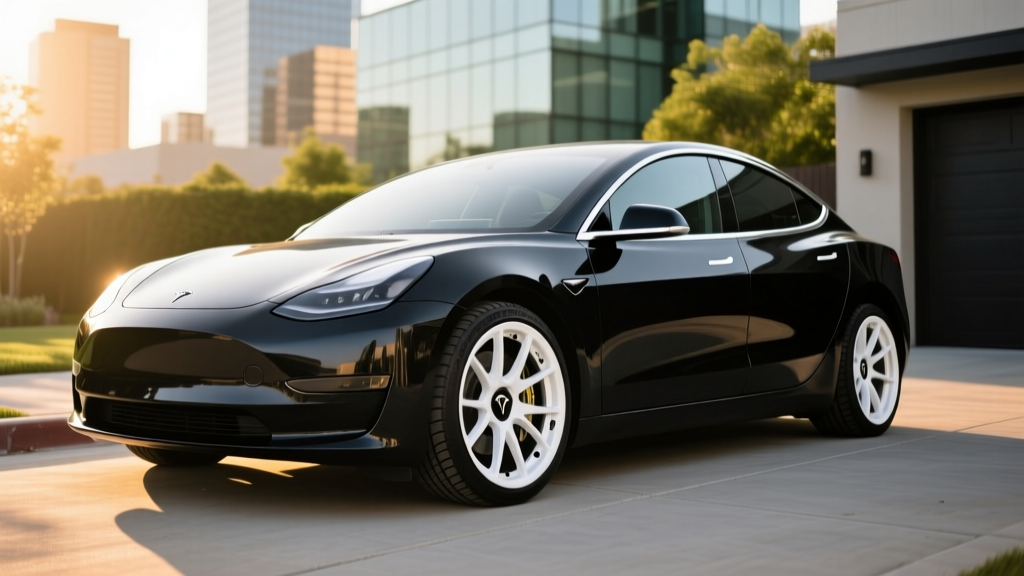
Tesla fits the 2026 Model 3 with three wheel-and-tire combinations depending on trim and option selection. The critical numbers aren't just width and diameter — load index and speed rating directly affect how the tire handles the sedan's 3,800–4,050 lb curb weight under hard acceleration and regenerative braking loads.
| Trim / Wheel | Tire Size | OEM Tire | Load Index | Speed Rating |
|---|---|---|---|---|
| RWD / Long Range (18" Aero) | 235/45R18 | Michelin Primacy All-Season (T0) | 98 XL | W (168 mph) |
| Long Range (19" Sport) | 235/40R19 | Hankook Ventus S1 evo3 (T0) | 96 XL | Y (186 mph) |
| Performance (20" Überturbine) | 235/35R20 | Pirelli P Zero (T0/T1) | 92 XL | Y (186 mph) |
The T0 or T1 marking on the sidewall is Tesla's OEM homologation code. It indicates the tire was co-developed with Tesla to meet specific rolling-resistance, noise, and load targets. A non-marked version of the same tire model may look identical but use a different compound or internal construction.
What "Tesla Approved" Actually Means
Tesla does not publish a formal certification program the way Porsche or BMW do with their star- and N-marked tires. Instead, Tesla uses the T0/T1 sidewall designation to flag tires that passed its internal validation for:
- Rolling resistance coefficient (RRC): Typically below 7.0 kg/t for 18" fitments, critical for preserving the Model 3's class-leading efficiency of ~24–26 kWh/100 mi.
- Acoustic foam liner: A polyurethane foam ring bonded inside the tire cavity to reduce hollow-body resonance by 3–9 dB. Tesla's minimalist interior lacks sound deadening, making this essential.
- Load index XL (Extra Load): EV batteries add 600–900 lbs over comparable ICE sedans. Standard-load tires will overheat and wear prematurely.
- Instant-torque compound tuning: EV-specific tires use stiffer tread blocks and silica-rich compounds to resist the micro-slip that causes rapid center-tread wear under electric motor torque.
You can safely mount a non-T0 tire that matches these specs — many owners do — but you sacrifice the guaranteed efficiency and noise baseline Tesla engineered around.
How Tire Choice Affects Range, Efficiency, and Charging
Tire rolling resistance is the single largest variable in real-world EV efficiency after ambient temperature. Here's what testing and owner data show for the Model 3:
OEM Michelin Primacy T0 (18"): Baseline — EPA 341 mi
Low-RR aftermarket (e.g., Continental EcoContact 6 Q): –2 to –4% range (~325–335 mi)
Ultra-high-performance summer (e.g., Michelin Pilot Sport 4S non-T0): –8 to –14% range (~290–315 mi)
All-terrain / aggressive tread: –15%+ range — not recommended
That 14% loss on a performance tire translates to roughly 48 fewer miles per charge on a Long Range model — enough to turn a comfortable road-trip leg into a two-stop ordeal. It also means you're pulling more kWh from the grid per mile, which raises home-charging costs and adds time at DC fast chargers since you need more total energy to reach 80%.
According to fueleconomy.gov, the 2026 Model 3 Long Range AWD achieves 132 MPGe combined (25 kWh/100 mi) on its OEM tires. Switching to a high-RR tire pushes that to 28–30 kWh/100 mi, dropping MPGe into the 110–115 range.
Top Tesla Model 3 Approved Tire Replacements for 2026
Best Overall (18" — Range & Comfort)
Michelin Primacy All-Season T0 — The OEM fitment for a reason. 98 XL load index, foam-lined, and among the lowest RRC tires in its class. Expect 35,000–45,000 miles of tread life with proper rotation every 6,250 miles. Pricing runs $230–$265 per tire.
Best Value (18" — Efficiency Focused)
Continental EcoContact 6 Q — Not T0-marked, but engineered specifically for EVs with a "Q" speed rating optimized for reduced noise. Rolling resistance is within 3% of the Michelin Primacy. ~$180–$210 per tire. Trade-off: slightly less wet grip and a firmer ride.
Best Performance (20" — Grip & Handling)
Pirelli P Zero T1 (PNCS) — The OEM Performance tire with Pirelli Noise Cancelling System foam. Max summer grip, but expect 15,000–22,000 miles of tread life and a significant range hit in cold weather below 45°F. ~$310–$350 per tire.
Best All-Season Performance (19" — Year-Round)
Hankook iON evo AS T0 — Hankook's EV-specific all-season with T0 homologation, acoustic foam, and a 50,000-mile treadwear warranty. A strong replacement for 19" Sport wheel owners who want year-round usability without sacrificing too much range. ~$215–$245 per tire.
Best Winter (18" — Snow & Ice)
Nokian Hakkapeliitta R5 EV — Purpose-built for electric vehicles with a low-RR winter compound, XL load rating, and acoustic foam. One of the few winter tires that doesn't punish your range as severely — expect a 6–9% range reduction versus summer OEM, compared to 12–18% for conventional winter tires. ~$245–$280 per tire.
Tire Maintenance Tips Specific to the Model 3
EV tire wear patterns differ from gas cars due to weight distribution, regenerative braking, and instant torque. Follow these practices to maximize tread life:
- Rotate every 6,250 miles (Tesla's official interval). The Model 3's rear-biased weight distribution and rear-motor torque on RWD/AWD models cause faster rear-axle wear.
- Maintain 42 psi cold pressure (check the door-jamb sticker — it varies by wheel size). Underinflation by even 4 psi can cost 3–5% range and cause shoulder wear.
- Alignment check annually or after any impact. The Model 3's low-slung battery and precise steering geometry make it sensitive to toe-out wear, which accelerates inner-tread loss.
- Use the Tesla app's tire-pressure monitoring to catch slow leaks early. TPMS warnings trigger at 25% below recommended pressure — by then, you've already lost range and accelerated wear.
- Precondition before fast charging — this is for the battery, but it also warms the tires on cold mornings, improving grip and reducing the rolling-resistance penalty of cold rubber (which can be 10–15% higher than at operating temperature).
Cost of Ownership: Tire Budget for a Model 3
| Item | Cost |
|---|---|
| First set (OEM Michelin Primacy T0 × 4) | $940–$1,060 |
| Replacement set at ~40,000 mi | $940–$1,060 |
| Rotation & balance (8 services × $35) | $280 |
| Alignment (annual × 5) | $500–$750 |
| Total 5-year tire budget | $2,660–$3,150 |
For comparison, a Toyota Camry's 5-year tire budget runs $1,400–$1,900. The premium is real, but it's a fraction of the fuel savings the Model 3 delivers over the same period.
Frequently Asked Questions
Do I have to buy Tesla-marked T0 tires, or can I use any tire in the correct size?
You can mount any tire that matches the OEM size, load index (XL), and speed rating. However, non-T0 tires typically have higher rolling resistance and no acoustic foam, which means measurable range loss and more cabin noise. If you prioritize efficiency and quiet, stick with T0-marked or EV-specific tires.
Will switching to non-OEM tires void my Tesla warranty?
No. The Magnuson-Moss Warranty Act prevents Tesla from voiding your vehicle warranty solely for using aftermarket tires. However, if a tire-related failure (e.g., a blowout damaging the fender liner or suspension component) can be traced to an incorrect load rating, that specific repair may not be covered.
How much range will I lose with winter tires on my Model 3?
Expect a 6–18% range reduction depending on the tire. EV-specific winter tires like the Nokian Hakkapeliitta R5 EV lose 6–9%, while conventional winter tires can cost 12–18%. On a Long Range AWD rated at 341 mi EPA, that's 20–60 fewer miles per charge. Cold temperatures themselves also reduce battery efficiency by 15–30%, compounding the effect.
Can I put wider tires on my Model 3 for more grip?
The 18" and 19" wheels are 8.0" and 8.5" wide respectively, limiting how much you can upsize. Going from 235 to 245 width may fit but increases rolling resistance (costing 3–6% range), adds unsprung weight, and can cause rubbing at full lock. We recommend staying with the OEM width and choosing a higher-grip compound instead.
Why do my Model 3 tires wear out faster than my old gas car's tires?
Three factors: the Model 3 weighs 3,800–4,050 lbs (heavier than a comparable gas sedan), delivers peak torque from 0 RPM (causing micro-slip under acceleration), and uses aggressive regenerative braking (adding deceleration wear). Combined, these can reduce tread life by 20–40% compared to an ICE vehicle on the same tire model.
Does Tesla sell tires directly, or should I buy from a tire shop?
Tesla sells replacement tires through its service centers and mobile service, but pricing is typically 15–25% higher than dedicated tire retailers. Most owners save by ordering from Tire Rack, Discount Tire, or a local shop that can source T0-marked tires and handle TPMS sensor reactivation.