Quick Verdict: Which Tesla Model 3 Trims Offer All-Wheel Drive?
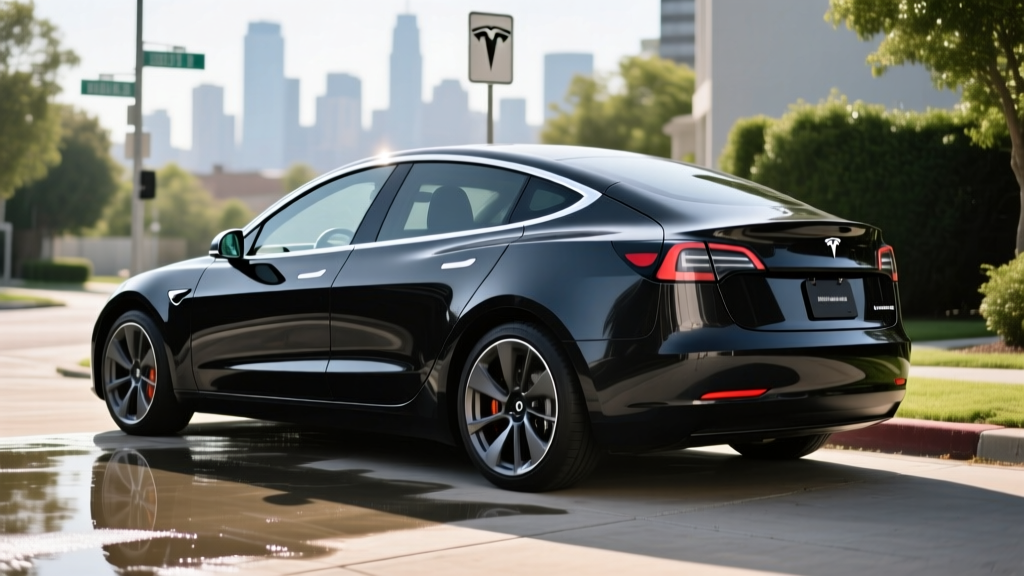
If you're asking "is the Tesla Model 3 all-wheel drive?" the answer depends on the trim. For 2026, Tesla offers the Model 3 in three configurations: a base Rear-Wheel Drive (RWD) variant, the dual-motor Long Range AWD, and the high-performance dual-motor Model 3 Performance AWD. Only the Long Range and Performance trims feature Tesla's dual-motor all-wheel-drive system, which independently distributes torque between the front and rear axles for superior traction in rain, snow, and spirited driving.
The AWD Model 3 isn't just about grip — it fundamentally changes the car's performance, range, and price profile. This review breaks down exactly what you get, what it costs after federal incentives, and whether the dual-motor upgrade is worth the premium over the RWD model.
| Spec | Long Range AWD | Performance AWD |
|---|---|---|
| EPA Range | 341 miles | 315 miles |
| Battery (usable) | ~79 kWh (NMC) | ~79 kWh (NMC) |
| Drivetrain | Dual-Motor AWD | Dual-Motor AWD |
| Horsepower | ~346 hp | ~510 hp |
| 0–60 mph | 4.2 seconds | 2.9 seconds |
| Top Speed | 125 mph | 163 mph |
| Max DC Fast Charge | 250 kW | 250 kW |
| 10–80% DC Charge | ~25 minutes | ~25 minutes |
| Level 2 Home Charging | 11.5 kW (~44 mi/hr) | 11.5 kW (~44 mi/hr) |
| MPGe (combined) | 131 MPGe | 121 MPGe |
| Base MSRP | $47,740 | $54,740 |
Real-World Range: What the EPA Sticker Doesn't Tell You
The EPA rates the 2026 Model 3 Long Range AWD at 341 miles and the Performance AWD at 315 miles. These are strong numbers, but real-world results vary based on speed, temperature, and terrain.
Real-World Range Expectations (Model 3 Long Range AWD)
- EPA Rated: 341 miles
- Highway (70–75 mph, moderate weather): ~280–300 miles
- City / mixed commuting: ~320–340 miles (regen braking helps)
- Cold weather (below 32°F): ~240–280 miles (battery preconditioning mitigates some loss)
- Mountain driving (high elevation gain): Expect 15–25% reduction depending on grade
Source: EPA Fuel Economy
Highway driving at sustained speeds above 70 mph is where EVs lose the most efficiency compared to their EPA ratings, since electric motors don't benefit from multi-gear transmissions the way ICE vehicles do. Cold weather compounds this — lithium-ion batteries experience increased internal resistance in freezing temperatures, and cabin heating draws significant energy. Tesla's standard heat pump (included on all 2026 Model 3 trims) recovers waste heat from the drivetrain to warm the cabin, reducing cold-weather range loss compared to older resistive-heater EVs.
The Model 3 Performance AWD's lower 315-mile EPA rating comes from stickier performance tires, a sport-tuned suspension that increases rolling resistance slightly, and more aggressive acceleration profiles that draw higher sustained current from the pack.
Charging Speed: DC Fast Charging and Home Level 2
Both AWD Model 3 trims support up to 250 kW peak DC fast charging on Tesla's V3 and V4 Superchargers, as well as on any CCS-compatible public fast charger using Tesla's included CCS adapter (or the native NACS connector on newer Superchargers).
| Charging Level | Power (kW) | Speed | Notes |
|---|---|---|---|
| Level 1 (120V household) | ~1.4 kW | ~5 mi/hr | Emergency/trickle only |
| Level 2 (240V, 48A) | 11.5 kW | ~44 mi/hr | Home Wall Connector; full charge in ~7–8 hrs |
| Level 2 (240V, 32A mobile) | 7.7 kW | ~30 mi/hr | Mobile connector with NEMA 14-50 |
| DC Fast Charge (peak) | 250 kW | ~175 mi in 15 min | Peak rate; tapers above 50–60% SoC |
| DC 10–80% Time | — | ~25 minutes | At V3/V4 Supercharger or equivalent CCS |
Understanding the charge curve: The 250 kW peak rate is not sustained across the entire session. The Model 3 AWD's NMC battery can accept peak power roughly between 10% and 35% State of Charge (SoC). Above 50%, the rate tapers progressively — by 80% SoC, you'll typically see 60–80 kW. This is why Tesla (and all EV makers) quote 10–80% times rather than 0–100%. Charging past 80% at a DC fast charger is inefficient and adds battery stress; reserve it for when you genuinely need the extra miles.
For home Level 2 charging, Tesla's Wall Connector at 48 amps delivers 11.5 kW, adding roughly 44 miles of range per hour. A full overnight charge from 20% to 100% takes about 7 hours. Installation costs for a 240V/60A circuit typically range from $800 to $2,500 depending on panel proximity and local permit requirements — factor this into your purchase budget.
Performance: Dual-Motor AWD in Practice
Tesla's dual-motor system uses a permanent-magnet motor on the rear axle and an induction motor on the front axle. This combination provides several advantages:
- Instant torque vectoring: Each axle responds independently in milliseconds — faster than any mechanical AWD system
- Efficiency optimization: The front induction motor can freewheel (disconnect) during light-load cruising to reduce parasitic drag, which is why the AWD Model 3 Long Range achieves nearly the same efficiency as some competitors' RWD-only sedans
- Regenerative braking on both axles: Recovers more energy during deceleration compared to single-motor setups
The Long Range AWD hits 0–60 mph in 4.2 seconds with approximately 346 hp. That's quick enough to merge onto any highway with authority and pass without hesitation. The Performance AWD drops that to a startling 2.9 seconds with ~510 hp, thanks to higher-output rear motor mapping and a track-tuned chassis. Both trims include Tesla's low center of gravity (battery pack mounted in the floor) which gives the Model 3 cornering composure that belies its sedan proportions.
In wet and snowy conditions, the dual-motor AWD system provides a tangible traction advantage over the RWD Model 3. Tesla's traction control software modulates torque to each axle faster than a traditional limited-slip differential, reducing wheel slip before you feel it. That said, winter tires remain the single biggest upgrade for snow-belt owners — AWD helps you accelerate, but all cars brake the same regardless of drivetrain.
Pricing, Trims, and Federal Tax Credit Eligibility
| Trim | Base MSRP | Federal §30D Credit | Effective Price |
|---|---|---|---|
| Long Range AWD | $47,740 | Up to $7,500* | ~$40,240 |
| Performance AWD | $54,740 | Up to $7,500* | ~$47,240 |
*Subject to IRS §30D eligibility requirements. See details below.
Both AWD Model 3 trims fall well under the IRS §30D MSRP cap of $55,000 for sedans, making them price-eligible for the federal credit. However, qualifying for the full $7,500 credit depends on several factors that change periodically:
- Buyer income caps: Modified AGI must not exceed $150,000 (single), $225,000 (head of household), or $300,000 (joint filers)
- Battery sourcing requirements: A percentage of critical minerals and battery components must be sourced from the US or free-trade-agreement countries — these thresholds tighten annually. Tesla's US-built battery packs have largely met these requirements, but always verify current eligibility at fueleconomy.gov before purchasing
- Point-of-sale transfer: As of 2024, buyers can elect to transfer the credit to the dealer (Tesla) at purchase, reducing the purchase price directly rather than waiting for a tax refund
For complete and current rules, consult the IRS Clean Vehicle Credits page or speak with a tax professional. State and local incentives (such as California's CVRP, Colorado's innovative motor vehicle credit, or utility-company rebates) may stack on top — check your specific jurisdiction.
Interior, Cargo, and Daily Usability
The 2026 Model 3's refreshed interior (introduced with the "Highland" redesign) brought meaningful improvements to materials, noise isolation, and comfort. Key dimensions:
- Front legroom: 42.2 inches
- Rear legroom: 35.2 inches
- Cargo volume (trunk): 23 cu ft
- Frunk (front trunk): 3.1 cu ft
- Total cargo: ~26 cu ft (seats up)
The rear seat fits adults comfortably on shorter trips, though the sloping roofline cuts headroom for passengers over 6 feet. The 23-cubic-foot trunk is generous for the segment and includes a wide-opening hatch. The frunk is useful for charging cables or a small bag but won't hold much more.
Notable interior features include ventilated front seats (a Highland addition), ambient lighting, a 15.4-inch center touchscreen, rear-seat entertainment screen, and acoustic glass that significantly reduces wind and road noise compared to pre-2024 models. The minimalist cabin eliminates physical buttons almost entirely — climate, mirrors, and glovebox are all controlled through the touchscreen, which some buyers love and others find distracting.
Tech, Driver Assistance, and Safety
Every Model 3 comes with Tesla Autopilot as standard, which includes adaptive cruise control, lane centering, and automatic emergency braking. This is a SAE Level 2 driver-assistance system — it does not make the car self-driving, and you must keep your hands on the wheel and eyes on the road at all times.
⚠ Autopilot & FSD: What They Do NOT Do
Tesla's Autopilot and optional Full Self-Driving (Supervised) are Level 2 systems per SAE classification. They require continuous driver supervision. They do not handle all road scenarios, construction zones, or adverse weather autonomously. You are legally and practically responsible for the vehicle at all times. Only Level 4 services like Waymo operate without a human driver — and those are geofenced robotaxis, not consumer vehicles.
Full Self-Driving (Supervised) remains an $8,000 option (or $99/month subscription as of early 2026). FSD adds automated lane changes, traffic light and stop sign recognition, and city-street navigation assistance. It has improved substantially but remains a supervised system — treat it as an advanced convenience feature, not a replacement for your attention.
The Model 3 earned a 5-star overall safety rating from NHTSA and has consistently scored top marks in IIHS crash testing. Standard safety tech includes automatic emergency braking with pedestrian detection, blind-spot monitoring, rear cross-traffic alert, and lane departure warning.
Battery Chemistry, Degradation, and Warranty
The Model 3 Long Range AWD and Performance AWD use an NMC (nickel manganese cobalt) lithium-ion battery pack with approximately 79 kWh of usable capacity. NMC chemistry offers higher energy density than LFP (lithium iron phosphate), which is why the Long Range achieves its 341-mile EPA rating in a relatively compact sedan platform.
NMC trade-offs versus LFP:
- Pros: Higher energy density (more range per pound), better cold-weather performance, faster peak charge rates
- Cons: Tesla recommends daily charging to 80% (not 100%) for longevity, slightly faster long-term degradation than LFP, higher material cost
Tesla's battery warranty covers the Model 3 Long Range and Performance AWD for 8 years or 120,000 miles (whichever comes first) with a guaranteed minimum 70% capacity retention. Real-world degradation data from high-mileage Tesla owners suggests most NMC packs retain 85–90% capacity at 100,000 miles when following recommended charging practices (80% daily limit, occasional 100% for trips, avoiding prolonged storage at very low or very high SoC).
✅ Pros
- Class-leading EPA range (341 mi Long Range AWD)
- 250 kW DC fast charging with widespread Supercharger network
- Dual-motor AWD with instant torque vectoring
- Strong federal tax credit eligibility under §30D
- Best-in-class software, OTA updates, and app integration
- Heat pump standard for cold-weather efficiency
- 5-star NHTSA safety rating
❌ Cons
- Almost no physical controls — touchscreen-only interface
- NMC battery: 80% daily charge limit recommended
- FSD (Supervised) is expensive and still Level 2
- Rear headroom tight for tall passengers
- No Apple CarPlay or Android Auto
- Insurance costs can be higher than comparable sedans
Is the AWD Model 3 Worth It vs. the Competition?
The dual-motor AWD Model 3 competes against several compelling electric sedans. Here's how it stacks up on key metrics:
- vs. Hyundai Ioniq 6 SEL AWD (~$47,000): The Ioniq 6 offers 316 miles EPA range and 800V architecture for faster charging (10–80% in ~18 min at 350 kW). The Model 3 wins on range (341 vs 316), Supercharger network access, and software ecosystem. The Ioniq 6 wins on charging speed at compatible stations and has physical buttons.
- vs. BMW i4 xDrive40 (~$57,000): The i4 offers a more traditional luxury interior and 282 miles EPA range. The Model 3 wins on range, price, and efficiency. The i4 wins on build quality, sound insulation, and dealer service infrastructure.
- vs. Model 3 RWD (~$38,990): The RWD model uses an LFP battery with 272 miles EPA range. You save ~$8,750 upfront but lose 69 miles of range, dual-motor AWD traction, and roughly 1 second of 0–60 time. For mild-climate commuters who charge at home daily, the RWD is a strong value. For snow-belt drivers or road-trippers, the AWD premium pays for itself.
Who Should Buy the Model 3 AWD?
Choose the Model 3 Long Range AWD if:
- You live in a region with rain, snow, or icy winters and need reliable AWD traction
- You regularly drive 200+ miles round-trip and want range buffer without charging mid-trip
- You want the best efficiency-per-dollar in a premium electric sedan
- You value Tesla's Supercharger network for hassle-free road trips
Choose the Model 3 Performance AWD if:
- You want sports-sedan acceleration (2.9s 0–60) with daily-driver practicality
- You'll use track mode or enjoy canyon driving
- You don't mind trading 26 miles of range for the performance upgrade
Skip the AWD and get the RWD if:
- You live in a mild climate and rarely encounter low-traction conditions
- Your daily commute is under 60 miles and you charge at home nightly
- You want the lowest purchase price and prefer LFP's 100% daily charging flexibility
Frequently Asked Questions
Is every Tesla Model 3 all-wheel drive?
No. The base Model 3 is Rear-Wheel Drive (RWD) with a single motor. Only the Long Range and Performance trims come with dual-motor All-Wheel Drive. The RWD model starts at approximately $38,990 and uses an LFP battery with 272 miles of EPA range.
Does the AWD Model 3 qualify for the $7,500 federal tax credit?
Both the Long Range AWD ($47,740) and Performance AWD ($54,740) are under the $55,000 MSRP cap for sedans under IRS §30D. However, eligibility also depends on buyer income limits, battery component and critical mineral sourcing requirements, and whether you've already claimed the lifetime credit limit. Verify current eligibility at fueleconomy.gov and consult a tax professional.
How does the dual-motor AWD system work in snow?
Tesla's system independently controls torque to the front and rear axles in milliseconds, far faster than a mechanical center differential. This provides excellent traction in snow and ice for acceleration and hill climbs. Pair the AWD system with dedicated winter tires for best results — AWD improves acceleration grip, but braking performance depends on your tires regardless of drivetrain.
What's the real cost to charge a Model 3 AWD at home?
With a ~79 kWh battery and national average electricity rate of $0.16/kWh, a full charge costs roughly $12.64. If you drive 12,000 miles per year at the Long Range's efficiency of ~25 kWh/100mi, annual home charging costs about $480 — compared to roughly $1,500+ for a gas sedan at 30 MPG and $3.75/gallon. Actual costs depend on your local utility rates; some utilities offer off-peak EV rates as low as $0.06–0.10/kWh.
Should I charge the NMC battery to 100% every day?
Tesla recommends setting the daily charge limit to 80% for NMC batteries to maximize long-term health. Charge to 100% only when you need the full range for a trip, and try to begin driving shortly after reaching full charge rather than letting the car sit at 100% SoC for extended periods. The RWD Model 3's LFP battery, by contrast, can and should be charged to 100% regularly.
How fast does the Model 3 AWD charge on a road trip?
At a Tesla V3 or V4 Supercharger (250 kW capable), you'll add roughly 175 miles in 15 minutes or go from 10% to 80% in about 25 minutes. Use the car's built-in navigation to route through Superchargers — it will automatically precondition the battery before you arrive, which is essential for achieving peak charge rates, especially in cold weather.