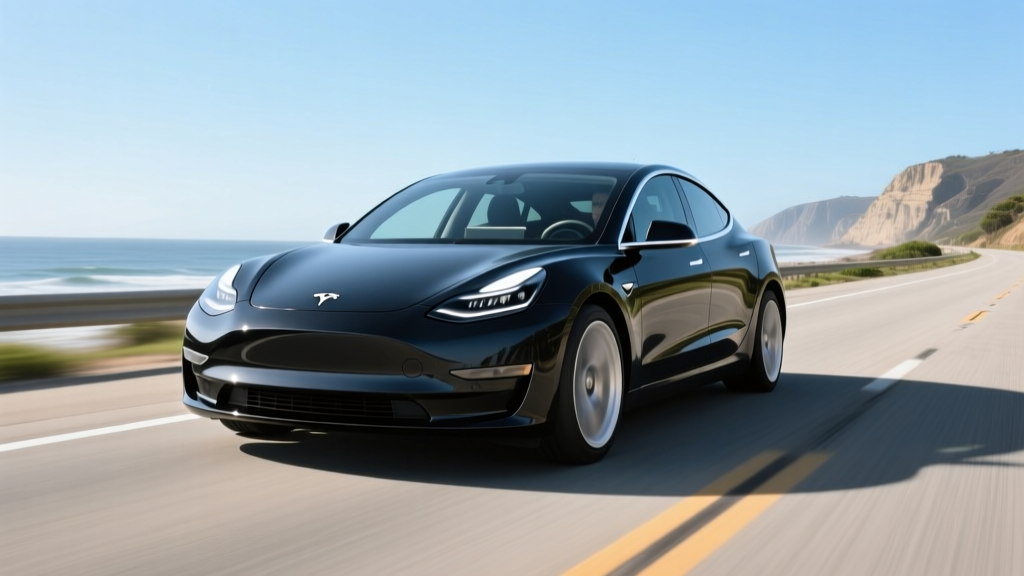
The Tesla Model 3 has long been the benchmark against which affordable electric sedans are measured. But for buyers who want more punch without stepping up to the dual-motor Performance trim, Tesla offers an over-the-air (OTA) software upgrade called the Acceleration Boost. Priced at around $2,000, it shaves roughly a full second off the Long Range AWD's 0–60 mph time. This review examines the 2026 Tesla Model 3 lineup end-to-end—with particular focus on what the Acceleration Boost actually delivers, how it affects efficiency and range, and whether the Long Range AWD with the upgrade is a smarter buy than the Performance variant.
2026 Tesla Model 3 Lineup: Trims, Pricing, and the Acceleration Boost Explained
The 2026 Model 3 carries over the refreshed "Highland" architecture introduced in late 2023, with continued refinements to NVH (noise, vibration, harshness), suspension tuning, and interior materials. Tesla currently offers three core configurations in the U.S. market:
| Trim | Drivetrain | 0–60 mph | EPA Range | Base MSRP |
|---|---|---|---|---|
| Rear-Wheel Drive (RWD) | Single motor, RWD | 5.8 sec | 341 mi | $38,990 |
| Long Range AWD | Dual motor, AWD | 4.2 sec (stock) | 346 mi | $45,990 |
| Long Range AWD + Acceleration Boost | Dual motor, AWD | 3.5 sec (est.) | ~340 mi | $47,990 |
| Performance | Dual motor, AWD | 2.9 sec | 315 mi | $52,990 |
The Tesla Model 3 Acceleration Boost is an over-the-air software purchase available exclusively on the Long Range AWD trim. It does not add hardware—no additional motor, no battery swap. Instead, it re-maps the inverter's torque delivery and raises the peak power output of both motors, unlocking approximately 35–40 additional horsepower (bringing combined system output to roughly 380–400 hp) and dropping the 0–60 mph time from 4.2 seconds to approximately 3.5 seconds.
This puts the boosted Long Range within striking distance of the Performance trim's straight-line speed, at a $5,000 discount. However, the Performance model still holds advantages in top speed (163 mph vs. ~145 mph), track-tuned suspension, high-performance brakes, and 20" wheels with stickier rubber.
Range, Battery, and Efficiency: What the Numbers Actually Mean
EPA sticker: 346 miles (stock) / ~340 miles (Acceleration Boost equipped)
Real-world highway (70–75 mph, mild weather): ~280–310 miles
Real-world cold weather (below 32°F, mixed driving): ~230–270 miles
The Acceleration Boost's more aggressive torque mapping can reduce efficiency by 2–5% in spirited driving. If you use the extra performance regularly, plan for ~320–330 miles of usable range in ideal conditions.
The Model 3 Long Range AWD uses an NMC (nickel-manganese-cobalt) lithium-ion battery pack with approximately 79 kWh of usable capacity (gross capacity ~82 kWh). NMC chemistry offers higher energy density than LFP (lithium iron phosphate), which is why the Long Range achieves more miles per kilogram of battery than the RWD model's smaller LFP pack (~60 kWh usable).
On the EPA's fueleconomy.gov testing cycle, the Long Range AWD posts an impressive 132 MPGe combined (roughly 25 kWh/100 mi). That's among the most efficient vehicles in its class. However, enabling the Acceleration Boost and regularly exploiting the extra torque will push consumption closer to 27–29 kWh/100 mi in mixed driving.
| Spec | Value |
|---|---|
| Battery chemistry | NMC (nickel-manganese-cobalt) |
| Usable capacity | ~79 kWh |
| EPA efficiency | 132 MPGe / 25 kWh/100 mi |
| EPA range (stock) | 346 miles |
| EPA range (w/ Acceleration Boost) | ~340 miles (est.) |
| Thermal management | Active liquid cooling + heat pump |
Charging Speed: DC Fast Charging and Home Level 2
Charging remains one of the Model 3's strongest suits, thanks to Tesla's mature Supercharger network and the vehicle's efficient charge-curve management. The 2026 Model 3 Long Range AWD supports a peak DC fast-charge rate of 250 kW on V3 Superchargers (and compatible CCS/NACS stations).
However, peak rate is not sustained rate. Here's what the charging curve actually looks like in practice:
| Charging Method | Power (kW) | Miles Added per Hour | Notes |
|---|---|---|---|
| Level 1 (120V household) | ~1.4 kW | ~5 mi/hr | Emergency/trickle only |
| Level 2 (240V, 48A) | 11.5 kW | ~44 mi/hr | Home Wall Connector; full charge ~8 hrs |
| Level 2 (240V, 32A) | 7.7 kW | ~30 mi/hr | Mobile Connector w/ 240V adapter |
| DC Fast (V3 Supercharger) | Peak 250 kW | — | 10–80% in ~25 min; tapers sharply above 80% |
| DC Fast (V4 Supercharger / CCS) | Up to 250 kW | — | NACS native; CCS via adapter |
Real-world DC fast-charging note: The 250 kW peak is achieved only at low state-of-charge (typically 5–15% SoC) with a preconditioned battery. By 50% SoC, the rate typically drops to ~150 kW, and above 80%, it falls below 50 kW. The 10–80% charge takes approximately 25 minutes under optimal conditions (battery preconditioned, V3 stall, moderate ambient temperature). Cold weather or a cold-soaked battery can add 5–10 minutes to this figure if preconditioning hasn't been initiated via navigation to a Supercharger.
For home charging, Tesla's Wall Connector at 48 amps (11.5 kW) remains the gold standard, adding roughly 44 miles of range per hour of charging. A full 10–100% session takes about 8 hours—ideal for overnight replenishment. Most owners will need a 60A circuit installed; budget $800–$2,000 for professional installation depending on panel proximity and local permit costs.
Acceleration Boost vs. Performance: Which Is the Smarter Buy?
This is the core question for shoppers cross-referencing the Tesla Model 3 Acceleration Boost. Let's put the two options head-to-head:
| Attribute | LR AWD + Boost ($47,990) | Performance ($52,990) |
|---|---|---|
| 0–60 mph | ~3.5 sec | 2.9 sec |
| Top speed | ~145 mph | 163 mph |
| EPA range | ~340 mi | 315 mi |
| Wheels | 18" or 19" (comfort-oriented) | 20" performance |
| Brakes | Standard | High-performance |
| Suspension | Comfort-tuned | Track-tuned, stiffer |
| Spoiler | None | Carbon-fiber lip |
| Price gap | $5,000 | |
- You want sub-4-second 0–60 times but prioritize daily comfort and maximum range.
- You don't plan to attend track days or drive aggressively on canyon roads.
- You prefer the quieter, more compliant ride of the 18"/19" wheel setup.
- Range matters more than the last 0.6 seconds to 60 mph.
- You want the full 2.9-second experience and 163 mph top speed.
- You value the upgraded brakes and track-capable suspension.
- You're willing to trade ~25 miles of EPA range for handling hardware.
- You simply want the top-of-line Model 3 with no further upgrades available.
Tax Credit Eligibility and Total Cost
Federal tax credit eligibility for the 2026 Tesla Model 3 depends on several IRS rules under §30D (Clean Vehicle Credit). As of the current tax year, the Long Range AWD variants (including those equipped with the Acceleration Boost) are expected to qualify for up to $7,500, but eligibility hinges on three gating requirements:
- MSRP cap: Sedans must have an MSRP at or below $55,000. The LR AWD ($45,990) and LR AWD + Boost ($47,990) both clear this threshold. The Performance ($52,990) also qualifies.
- Buyer income cap: Adjusted gross income must not exceed $150,000 (single), $225,000 (head of household), or $300,000 (joint filers).
- Battery sourcing: A percentage of critical minerals and battery components must be sourced from the U.S. or free-trade-agreement countries. Tesla has progressively shifted supply chains, but verify current-year eligibility on IRS.gov before purchasing.
Since January 2024, buyers can elect to transfer the credit to the dealer at point of sale, effectively reducing the purchase price on the spot rather than waiting to claim it on a tax return. This makes the effective cost of a Model 3 LR AWD + Acceleration Boost approximately $40,490 (before state incentives, destination fees, or taxes) for qualifying buyers.
| Configuration | MSRP | Est. §30D Credit | Effective Price |
|---|---|---|---|
| LR AWD (stock) | $45,990 | Up to $7,500 | ~$38,490 |
| LR AWD + Acceleration Boost | $47,990 | Up to $7,500 | ~$40,490 |
| Performance | $52,990 | Up to $7,500 | ~$45,490 |
State incentives vary by jurisdiction and may stack on top of the federal credit. Consult your state's energy office or a tax professional for current local programs.
Interior, Tech, and Daily Livability
The Highland-refreshed Model 3 interior is markedly more refined than pre-2024 versions. Soft-touch materials, ventilated front seats, ambient lighting, and a rear 8" touchscreen for passengers are now standard on Long Range trims. The cabin is noticeably quieter at highway speeds thanks to acoustic glass and improved sealing.
Key dimensions:
- Front legroom: 42.7 in
- Rear legroom: 35.2 in
- Cargo volume (trunk + frunk): 23.0 cu ft
- Curb weight: ~4,030 lbs (LR AWD)
Tech remains Tesla's hallmark. The 15.4" center touchscreen handles all vehicle functions, navigation, media, and climate. The native navigation system integrates Supercharger routing with automatic battery preconditioning—a critical feature for maximizing DC fast-charge speeds. Wireless Apple CarPlay is not supported; Tesla relies on its own interface and Bluetooth phone integration.
Driver assistance: Basic Autopilot (lane centering + adaptive cruise) is standard. Full Self-Driving (Supervised) remains an $8,000 option (or $99/month subscription). It is critical to understand that FSD is an SAE Level 2 driver-assist system—not autonomous driving. The driver must remain engaged, hands on the wheel, and eyes on the road at all times. Tesla's naming convention is aspirational, not descriptive of the system's actual capabilities.
Warranty and Long-Term Ownership
Tesla's warranty coverage for the 2026 Model 3 is competitive within the EV segment:
- Basic vehicle limited warranty: 4 years / 50,000 miles
- Battery & drive unit warranty: 8 years / 120,000 miles (Long Range AWD) with a minimum 70% capacity retention guarantee
- Roadside assistance: 4 years / 50,000 miles
The 70% retention threshold is the industry norm. Real-world degradation data from Tesla's fleet suggests most NMC packs retain ~88–92% capacity at 100,000 miles, with the steepest drop occurring in the first 20,000 miles before leveling off. Routine care—avoiding frequent 100% charges, minimizing DC fast-charging when Level 2 is available, and keeping the pack between 20–80% for daily use—can extend longevity further.
Insurance costs are worth noting: the Model 3 typically carries premiums 15–25% higher than comparable ICE sedans, though Tesla Insurance (available in many states) can sometimes offer competitive rates by using real-time driving data.
- Acceleration Boost delivers near-Performance 0–60 for $5,000 less
- Class-leading efficiency at 132 MPGe combined
- Access to Tesla Supercharger network (NACS native)
- 250 kW peak DC fast charging; 10–80% in ~25 min
- OTA software updates continuously add features
- Qualifies for up to $7,500 federal tax credit (§30D)
- Highly refined Highland interior with improved NVH
- No Apple CarPlay or Android Auto support
- FSD (Supervised) costs $8,000 extra; still Level 2 only
- Acceleration Boost may reduce range by 2–5% in aggressive use
- Rear visibility limited; relies heavily on cameras
- Insurance premiums above segment average
- Turn-signal stalks removed (steering-wheel buttons in Highland)
- Service center wait times can be long in some metro areas
Who the Model 3 Long Range AWD + Acceleration Boost Is For
This configuration targets a specific buyer: someone who wants serious straight-line performance without sacrificing range or daily comfort. It's ideal for:
- Tech-savvy commuters who want a quick, efficient sedan with access to the best charging network in North America.
- Road-trippers who need 300+ miles of real-world range and fast DC charging for highway travel.
- Performance-curious buyers who find the Performance trim's stiff ride and 20" wheels impractical for potholed city streets.
It's not the right choice for buyers who need cargo space (the crossover-shaped Model Y offers 30% more), rear-seat room for tall adults on long trips, or those who prefer traditional physical controls over a touchscreen-centric interface.
Frequently Asked Questions
What is the Tesla Model 3 Acceleration Boost, and how does it work?
The Acceleration Boost is a $2,000 over-the-air software upgrade available exclusively on the Model 3 Long Range AWD. It reprograms the dual-motor inverter mapping to increase peak torque output, reducing the 0–60 mph time from 4.2 seconds to approximately 3.5 seconds. No hardware changes are involved—it can be purchased and activated through the Tesla app at any time after delivery.
Does the Acceleration Boost reduce the Model 3's range?
Marginally. The EPA-rated range drops by an estimated 5–10 miles (from 346 to ~340 miles) due to the more aggressive power delivery. In practice, the real-world impact depends on driving style. If you regularly exploit the extra acceleration, expect efficiency to drop by 2–5%. Conservative drivers will notice minimal difference.
How fast does the Model 3 Long Range charge at home and on the road?
At home on a Level 2 Tesla Wall Connector (48A, 240V), the Model 3 LR AWD charges at 11.5 kW, adding approximately 44 miles of range per hour. A full charge takes about 8 hours. On DC fast chargers (V3 Supercharger), it peaks at 250 kW and charges from 10–80% in approximately 25 minutes with a preconditioned battery.
Is the Acceleration Boost worth buying over the Performance trim?
For most buyers, yes. The $5,000 savings over the Performance trim gets you a 3.5-second 0–60 time (vs. 2.9 seconds), 25 more miles of EPA range, a more comfortable ride on standard wheels, and still qualifies for the same $7,500 federal tax credit. Unless you need the track-tuned suspension, high-performance brakes, and 163 mph top speed, the Boost is the smarter value play.
Does the 2026 Model 3 qualify for the $7,500 federal EV tax credit?
As of the current tax year, all Model 3 trims (RWD, Long Range AWD, Performance) are expected to qualify for the full $7,500 §30D credit, subject to buyer income limits ($150K single / $300K joint) and battery-sourcing requirements. The credit can be transferred to the dealer at point of sale, reducing the purchase price immediately. Always verify current eligibility on IRS.gov before purchasing.
What is the real-world range of the Model 3 Long Range AWD with Acceleration Boost?
The EPA rates it at approximately 340 miles. In real-world highway driving at 70–75 mph in mild weather, expect 280–310 miles. In cold weather (below 32°F), plan for 230–270 miles. Preconditioning the battery and using seat heaters instead of cabin heat can help recover some cold-weather losses.
Can I add the Acceleration Boost after I buy the car?
Yes. The Acceleration Boost can be purchased at any time through the Tesla app on your phone, as long as your Model 3 is a Long Range AWD variant. The upgrade is applied over-the-air within minutes of purchase and is tied to the vehicle's VIN—not the owner—so it persists if you sell the car.
Sources: EPA fuel economy data via fueleconomy.gov; IRS Clean Vehicle Credit guidelines via IRS.gov; Tesla specifications via Tesla.com press materials.