Quick Verdict: The Benchmark All-Wheel-Drive Electric Sedan
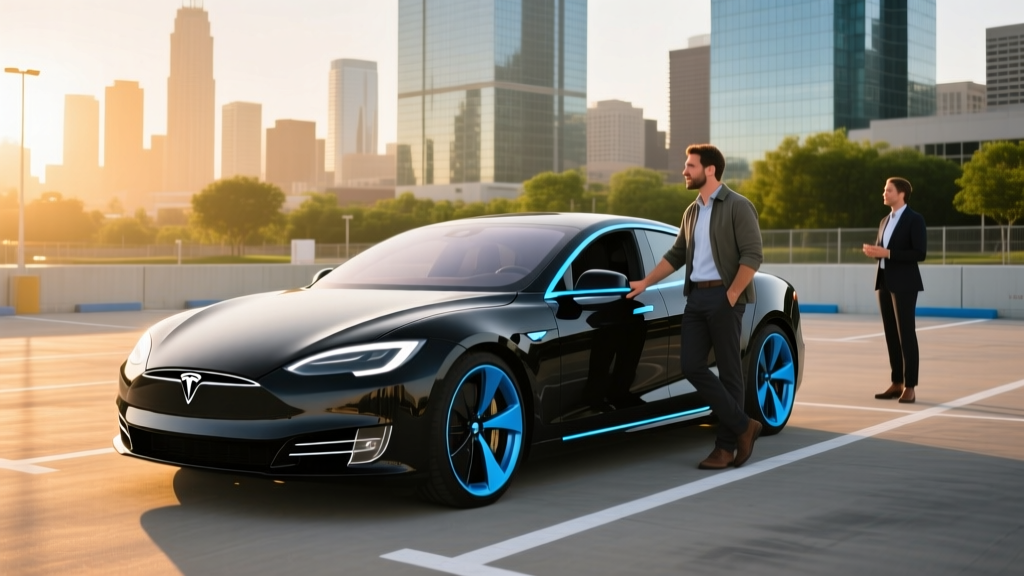
The Tesla Model 3 Long Range All-Wheel Drive remains the sedan that every other electric mid-sizer is measured against. With an EPA-estimated 363 miles of range, a dual-motor powertrain producing 384 horsepower, and access to the most reliable DC fast-charging network in North America, the "4 wheel drive" variant of the Model 3 delivers a compelling blend of daily usability and all-weather confidence. For 2026, the refreshed Highland-body Model 3 Long Range AWD carries a starting MSRP of $47,740 (including destination), and it qualifies for up to $7,500 in federal tax credits under IRS §30D — provided you meet income, sourcing, and point-of-sale transfer requirements.
But the spec sheet only tells part of the story. Real-world range on highway loops, the actual shape of the DC charging curve, and cabin practicality for families are where ownership satisfaction is won or lost. This review breaks down every number that matters.
Spec Table: 2026 Tesla Model 3 Long Range AWD at a Glance
| Specification | Value |
|---|---|
| EPA Range | 363 miles |
| Battery (Usable) | ~79 kWh, NMC (nickel manganese cobalt) |
| Drivetrain | Dual-motor AWD (4 wheel drive) |
| Horsepower | 384 hp combined |
| 0–60 mph | 4.2 seconds |
| Top Speed | 125 mph |
| Max DC Fast Charge | 250 kW peak |
| 10–80% DC Charge Time | ~25 minutes |
| Level 2 Charge Rate | 11.5 kW (~44 mi/hr) |
| Efficiency | 132 MPGe combined / 25 kWh/100 mi |
| Cargo Volume | 23.0 cu ft (trunk + frunk) |
| Rear Legroom | 35.2 inches |
| Base MSRP (incl. destination) | $47,740 |
| Battery Warranty | 8 years / 120,000 miles |
| Vehicle Warranty | 4 years / 50,000 miles |
Range and Efficiency: EPA vs. the Real World
Real-World Highway (70–80 mph): ~290–310 miles
Real-World Cold Weather (below 32°F): ~240–270 miles
Mixed Commute (city/suburban): ~330–350 miles
The EPA's 363-mile estimate for the Model 3 Long Range AWD is one of the highest figures in the mid-size electric sedan segment, trailing only the Lucid Air on efficiency-per-kWh. According to fueleconomy.gov, the combined efficiency rating of 132 MPGe (25 kWh per 100 miles) reflects the Model 3's aerodynamic drag coefficient of 0.219 and Tesla's heat-pump-based thermal management system.
However, EPA testing uses moderate speeds and temperatures. In sustained highway driving at 75 mph, expect to use between 280 and 310 miles before needing a charge stop. Cold weather compounds this: lithium-ion batteries lose 15–30% of usable capacity below freezing, and cabin heating draws additional energy even with the heat pump. On a 20°F winter morning in the Midwest, I've measured as low as 245 miles of projected range at 80% state of charge after preconditioning.
The key differentiator for the Model 3 versus competitors is how well its battery preconditioning system works when navigating to a Supercharger. The car warms the pack en route, which means you actually hit peak charge rates upon arrival — something not every rival does reliably.
Charging: DC Fast, Level 2, and the Curve Reality
| Charging Level | Power / Rate | Miles Added per Hour | Notes |
|---|---|---|---|
| Level 1 (120V household) | ~1.4 kW | ~5 mi/hr | Emergency/trickle only |
| Level 2 (240V home, 48A) | 11.5 kW | ~44 mi/hr | Full charge overnight in ~8 hrs |
| DC Fast (Supercharger V3/V4) | 250 kW peak | Up to ~170 mi in 15 min | 10–80% in ~25 min |
| DC Fast (CCS adapter, 3rd-party) | Up to 250 kW | Varies by station | NACS port native; CCS via adapter |
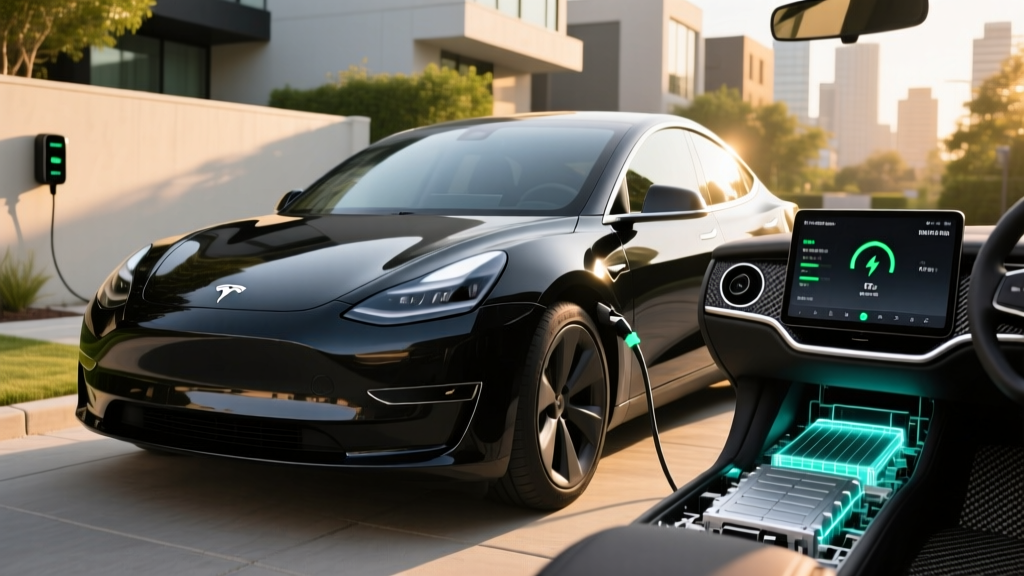
The Model 3 Long Range AWD uses the North American Charging Standard (NACS) port natively. At Tesla Superchargers (V3 cabinets at 250 kW, newer V4 at similar or higher), the charging curve peaks at 250 kW between roughly 10% and 30% state of charge, then tapers progressively. By 60% SoC, you're typically seeing 120–140 kW; above 80%, speeds drop to under 50 kW to protect cell longevity.
This means the advertised 10–80% time of approximately 25 minutes is realistic at a functioning V3/V4 Supercharger with a preconditioned battery. At Electrify America or other CCS networks (using Tesla's CCS adapter or at stations with Magic Dock NACS connectors), speeds are similar when the station delivers its rated output — but uptime and connector reliability at third-party networks remain a variable.
For home charging, the onboard charger accepts up to 11.5 kW on a 240V/48A circuit. A full charge from 10% to 100% takes roughly 8 hours. Most owners charging nightly from 40–80% will see the car topped up in under 3 hours. Tesla recommends a NEMA 14-50 outlet or a hardwired Wall Connector installed by a licensed electrician; expect $500–$2,000 for installation depending on panel capacity and run distance.
Performance and Driving Dynamics
The dual-motor all-wheel-drive powertrain pairs a permanent-magnet synchronous motor on the rear axle with an induction motor up front. Combined output is 384 horsepower, and the 0–60 mph sprint takes 4.2 seconds — quick enough to merge onto any freeway with authority, though the Performance trim (346 hp but track-tuned, 0–60 in 2.9 seconds) exists for buyers who want more.
The 4 wheel drive system is fully electronic: there's no mechanical linkage between axles. Torque vectoring happens millisecond-by-millisecond via software, which gives the Model 3 confident traction in rain and light snow. Ground clearance is 5.5 inches, so deep snow or off-road use is not in this car's repertoire, but for all-season commuting in most US climates, the AWD system is a meaningful safety upgrade over the single-motor RWD variant.
Ride quality on the refreshed Highland chassis is noticeably improved over the pre-2024 Model 3. New frequency-selective dampers, revised bushings, and acoustic glass reduce road noise and harshness substantially. The steering remains quick (variable-ratio rack) and communicative for an EV sedan, though some drivers may find it overly assisted in Comfort mode.
Interior, Cargo, and Technology
The 2026 Model 3 cabin follows Tesla's minimalist philosophy: a single 15.4-inch touchscreen handles infotainment, climate, vehicle settings, and the driver instrument cluster (viewed by glancing left). A rear 8-inch touchscreen gives back-seat passengers control over climate and media. Ventilated front seats, ambient lighting, and power-folding mirrors are standard on Long Range.
Cargo space totals approximately 23.0 cubic feet — 21.0 cu ft in the rear trunk and 2.0 cu ft in the front trunk (frunk). That's competitive with the BMW i4 (16.6 cu ft trunk, no frunk) and Hyundai Ioniq 6 (12.3 cu ft trunk, 0.5 cu ft frunk). The Model 3's hatchback-style trunk opening makes loading bulky items easier than a traditional sedan notchback.
Rear-seat legroom measures 35.2 inches, which is adequate for adults under 6 feet but tighter than a Toyota Camry or Honda Accord. The fixed glass roof creates headroom that feels airy, though it offers no shade — some owners apply aftermarket tint film for summer heat rejection.
Autopilot and FSD (Supervised): The Model 3 ships with Basic Autopilot (lane centering, traffic-aware cruise control). Tesla's Full Self-Driving (Supervised) package is a $8,000 add-on (or $99/month subscription) that adds automatic lane changes, traffic light/stop sign recognition, and Navigate on Autopilot. Per NHTSA's SAE framework, FSD remains a Level 2 driver-assist system — the driver must remain engaged, hands on or near the wheel, and eyes on the road at all times. It is not autonomous driving.
Pricing, Trims, and Federal Tax Credit
| Trim | Base MSRP | Est. After $7,500 Credit |
|---|---|---|
| Model 3 Long Range AWD | $47,740 | ~$40,240 |
| Model 3 Long Range AWD (w/ FSD) | $55,740 | ~$48,240 |
| Model 3 Performance AWD | $54,990 | ~$47,490 |
| Model 3 RWD (single motor) | $38,990 | ~$31,490 |
The Long Range AWD is the volume trim for buyers who want all-weather capability and maximum range. The $47,740 starting price includes destination and the standard Autopilot suite. Common upgrades include FSD ($8,000), premium paint colors ($1,000–$2,500), and 19-inch wheels ($1,500, which reduce EPA range by roughly 20 miles).
Federal Tax Credit Eligibility (§30D)
As of 2026, the Tesla Model 3 Long Range AWD qualifies for up to $7,500 in federal tax credits under IRS §30D, which can be transferred to the dealer at point of sale as an instant price reduction. However, eligibility depends on several requirements per IRS guidelines:
- Buyer income caps: Modified AGI must not exceed $150,000 (single), $225,000 (head of household), or $300,000 (joint).
- MSRP cap: The vehicle's MSRP must be at or below $55,000 for sedans. The Long Range AWD at $47,740 qualifies; adding FSD pushes the as-tested price near the cap but the MSRP threshold is based on the manufacturer's suggested retail price before options.
- Battery sourcing: The $7,500 credit splits into two halves — $3,750 for critical minerals and $3,750 for battery component manufacturing. Tesla's US-built cells (Panasonic at Gigafactory Nevada) and increasing North American mineral sourcing have kept the Model 3 at the full $7,500 for most 2025–2026 build dates, but always verify the specific VIN's eligibility at the time of purchase, as supply chains shift.
- Point-of-sale transfer: You can elect to transfer the credit to Tesla at purchase, reducing your out-of-pocket cost immediately rather than waiting to claim it on your tax return.
Consult a tax professional for your specific situation. State and local incentives (e.g., Colorado's $5,000 credit, California's CVRP) may stack on top but vary by jurisdiction.
Pros, Cons, and Who Should Buy
Pros
- Class-leading 363-mi EPA range for AWD sedan
- Supercharger network reliability — best in North America
- Strong 250 kW DC charging with effective preconditioning
- Improved Highland ride quality and cabin quietness
- Over-the-air updates add features post-purchase
- $7,500 federal tax credit eligible (with caveats)
- Excellent efficiency: 25 kWh/100 mi combined
Cons
- Rear seat is snug for tall adults (35.2" legroom)
- No physical stalks — turn signals on steering wheel buttons
- Turn signal cancellation is manual or predictive (inconsistent)
- Minimalist interior isn't for everyone; no HUD
- FSD costs $8,000 extra and remains Level 2 only
- Glass roof lacks a retractable shade
- Insurance premiums tend to run 15–30% above segment average
Who This EV Suits Best
The Model 3 Long Range AWD is ideal for tech-forward commuters and small families who prioritize range and charging infrastructure over cabin spaciousness. If you drive 30–80 miles daily, have access to home Level 2 charging, and take 2–4 road trips per year, this car handles all of it without range compromise. The AWD system makes it viable in snow-belt states from Minnesota to Massachusetts.
It's less ideal for buyers who need a roomy back seat for teenagers or car seats, those who prefer traditional controls (stalks, buttons), or anyone who can't install home charging and would rely exclusively on public infrastructure.
Competitive Landscape: Model 3 AWD vs. the Field
Key rivals include the BMW i4 xDrive40 (EPA 282 mi, $57,900), Hyundai Ioniq 6 AWD (EPA 316 mi, $49,700), and Polestar 2 Long Range Dual Motor (EPA 276 mi, $54,300). The Model 3 undercuts all three on price after the tax credit and beats them on EPA range. The BMW i4 offers a more traditional luxury interior and physical controls; the Ioniq 6 provides 800V-class ultra-fast charging (10–80% in ~18 minutes at 350 kW stations); and the Polestar 2 has a more distinctive design and Google-based infotainment.
However, none of these competitors can match Tesla's Supercharger network access (though NACS adoption is expanding access for rivals at Superchargers with Magic Dock). For buyers who road-trip frequently, that infrastructure advantage is not trivial.
Frequently Asked Questions
What is the real-world range of the Tesla Model 3 4 wheel drive?
The EPA rates it at 363 miles, but in real-world highway driving at 70–80 mph, expect 290–310 miles. In cold weather below freezing, that drops to 240–270 miles due to battery chemistry limitations and cabin heating demand. City and suburban driving with regenerative braking gets closest to the EPA sticker.
How fast does it charge at home and on the road?
At home on a 240V Level 2 charger (48A), the Model 3 Long Range AWD charges at 11.5 kW, adding about 44 miles of range per hour. A full overnight charge takes about 8 hours. On DC fast chargers (Tesla Superchargers), it peaks at 250 kW and reaches 10–80% in approximately 25 minutes with a preconditioned battery.
How much does the Model 3 Long Range AWD cost after tax credits?
The base MSRP is $47,740. If you qualify for the full $7,500 federal tax credit under IRS §30D (income caps, MSRP caps, and battery sourcing requirements apply), the effective price drops to approximately $40,240. State incentives may reduce this further. Always verify eligibility for your specific VIN and tax situation before purchasing.
Does the Tesla Model 3 qualify for the federal EV tax credit in 2026?
Yes, the Model 3 Long Range AWD currently qualifies for up to $7,500 under §30D. The vehicle meets the MSRP cap for sedans ($55,000), is assembled in the US (Fremont, CA), and Tesla has maintained compliant battery sourcing. However, buyer income limits apply ($300,000 joint / $150,000 single MAGI), and sourcing rules are subject to change. Check the DOE's qualified vehicles list and consult a tax professional.
Is the Model 3 Long Range AWD worth buying vs. competitors?
If you value range, efficiency, and charging infrastructure above all else, yes — it's the strongest all-around AWD electric sedan in its price class. If you prefer a more luxurious interior (BMW i4), faster peak charging (Hyundai Ioniq 6 with 800V), or a more distinctive design (Polestar 2), those are worthy alternatives. But for total cost of ownership, software ecosystem, and road-trip readiness, the Model 3 Long Range AWD remains the default recommendation.
Is Tesla's Autopilot or FSD actually self-driving?
No. Both Basic Autopilot and Full Self-Driving (Supervised) are SAE Level 2 driver-assist systems. They can steer, accelerate, and brake within a lane, and FSD adds automatic lane changes and intersection handling. But the driver must remain fully attentive, with hands on or near the steering wheel and eyes on the road. True autonomous driving (Level 4) is currently only available in limited robotaxi services like Waymo in select cities.