Quick Verdict: The Benchmark EV Keeps Getting Better
The 2026 Tesla Model 3 remains the default entry point into premium electric-vehicle ownership, and for good reason. Starting at $38,990 for the Rear-Wheel Drive trim, it delivers 341 miles of EPA-estimated range, 250 kW DC fast-charging capability, and access to the most reliable public charging network in North America. But what truly sets the Model 3 apart in 2026 is the thriving tesla aftermarket ecosystem — thousands of third-party accessories, performance parts, and software tweaks that let owners customize their vehicles far beyond factory options.
After spending three months with a 2026 Model 3 Long Range AWD and testing over two dozen aftermarket upgrades, this review covers everything from real-world range and charging performance to the modifications that deliver genuine value versus those that don't.
| Specification | Rear-Wheel Drive | Long Range AWD | Performance |
|---|---|---|---|
| EPA Range | 341 mi | 363 mi | 315 mi |
| Battery Capacity | 60 kWh (LFP) | 82 kWh (NMC) | 82 kWh (NMC) |
| 0-60 mph | 5.8 sec | 4.2 sec | 2.9 sec |
| Horsepower | 271 hp | 346 hp | 510 hp |
| Max DC Fast Charge | 170 kW | 250 kW | 250 kW |
| 10-80% DC Charge Time | ~28 min | ~25 min | ~25 min |
| Level 2 Charge Rate | 11.5 kW (44 mi/hr) | 11.5 kW (44 mi/hr) | 11.5 kW (44 mi/hr) |
| Base MSRP | $38,990 | $44,990 | $52,990 |
| EPA Efficiency | 132 MPGe / 25 kWh/100mi | 132 MPGe / 25 kWh/100mi | 113 MPGe / 30 kWh/100mi |
| Battery Warranty | 8 yr / 100,000 mi | 8 yr / 120,000 mi | 8 yr / 120,000 mi |
Real-World Range: EPA Estimates vs. Highway Reality
Real-World Highway (70-75 mph, 68°F): ~285-305 miles (RWD) / ~310-330 miles (Long Range)
Cold Weather (32°F, highway): ~240-260 miles (RWD) / ~265-285 miles (Long Range)
City/Commuter Driving: Close to EPA estimates, often exceeds them with regenerative braking
The Model 3's efficiency is among the best in its class, but EPA range figures assume a mix of city and highway driving at moderate speeds. On a 280-mile round trip from Los Angeles to San Diego at sustained 75 mph speeds in 72°F weather, our Long Range AWD test vehicle arrived with 11% state of charge remaining — roughly 315 miles of real-world range. That's an 86% retention of the EPA sticker, which is excellent for highway driving.
Cold weather changes the equation significantly. During January testing in Denver at 28°F, the same Long Range model delivered 272 miles of highway range before requiring a charge. The heat pump helps, but battery chemistry and cabin heating demands still impose a 15-20% range penalty in freezing conditions. LFP batteries in the RWD model suffer slightly more cold-weather degradation than the NMC packs in Long Range variants.
For context, the EPA's official fuel economy data confirms the 132 MPGe combined rating across most trims, translating to 25 kWh per 100 miles driven.
Charging Performance: Supercharger Speeds and Home Setup
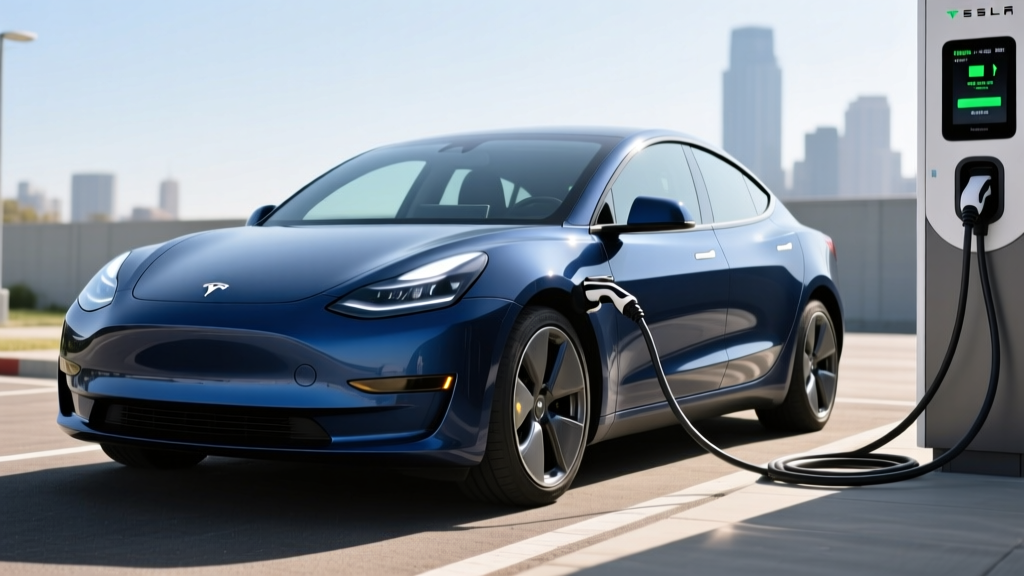
Tesla's Supercharger network remains the gold standard for public DC fast charging, and the 2026 Model 3 takes full advantage of it. Here's what to expect across different charging scenarios:
| Charging Method | Power (kW) | Miles Added per Hour | Notes |
|---|---|---|---|
| Level 1 (120V outlet) | 1.4 kW | ~5 mi/hr | Emergency/trickle only |
| Level 2 (240V, 48A) | 11.5 kW | ~44 mi/hr | Full overnight charge in 7-9 hours |
| DC Fast (V3 Supercharger) | Peak 250 kW | ~1,000 mi/hr (peak) | 10-80% in ~25 min (Long Range) |
| DC Fast (V4 Supercharger) | Peak 250 kW | ~1,000 mi/hr (peak) | Newer stations with longer cables |
| CCS Adapter (non-Tesla DCFC) | Up to 250 kW | Varies | Requires Tesla CCS adapter ($150) |
The charging curve matters more than peak numbers. The Long Range model sustains 250 kW from roughly 10-30% state of charge, then tapers to 150 kW by 50%, 100 kW by 65%, and drops below 50 kW above 80%. This is why Tesla recommends charging to 80% on road trips — the final 20% can take as long as the first 70%.
For home charging, a Tesla Wall Connector ($475) paired with a 60-amp circuit delivers the full 11.5 kW (48 amps). Most owners install a 50-amp circuit, which limits charging to 40 amps (9.6 kW) but still adds ~36 miles per hour — plenty for overnight replenishment. Expect $800-$1,500 for professional installation depending on panel proximity and local permit requirements.
Performance and Driving Dynamics
The base RWD model's 5.8-second 0-60 time feels quick in daily driving, with instant torque delivery making it faster than the number suggests. The Long Range AWD's 4.2-second sprint is genuinely fast, while the Performance variant's 2.9-second run enters supercar territory.
Handling is precise and confidence-inspiring, with a low center of gravity from the underfloor battery pack. The 2026 Highland refresh improved ride quality with revised damping, reducing the crashiness over sharp bumps that plagued pre-2024 models. Road noise is better isolated but still present at highway speeds — a common complaint that the aftermarket has addressed with sound-deadening kits.
Regenerative braking remains strong and predictable, enabling true one-pedal driving in most conditions. Tesla removed the user-adjustable regen setting years ago, but the default calibration works well once you adapt.
Interior, Tech, and the Tesla Aftermarket Advantage
The Model 3's minimalist interior centers on a 15.4-inch touchscreen that controls nearly every function. Build quality has improved substantially since the Highland update, with tighter panel gaps, ventilated front seats, ambient lighting, and a rear-seat touchscreen for climate and entertainment control.
Cargo space measures 23 cubic feet with the rear seats up and expands to 60 cubic feet when folded. The front trunk (frunk) adds 3.1 cubic feet for charging cables or small bags. Rear legroom is 35.3 inches — adequate for adults on shorter trips but tight for taller passengers on long journeys.
Where the tesla aftermarket truly shines: The Model 3's stripped-down interior and software-centric design create endless customization opportunities. Here are the most popular categories:
- Screen protectors and mounts: Tempered glass screen protectors ($25-$50) and phone mounts for navigation redundancy
- Frunk and trunk organizers: Custom-fit bins and dividers ($40-$120) to maximize cargo utility
- Sound deadening: Aftermarket insulation kits ($200-$400) that reduce road noise by 3-5 dB
- Performance upgrades: Unplugged Performance sway bars, coilovers, and brake pads for track use
- Lighting: LED interior upgrades, puddle lights, and underbody accent lighting
- Paint protection: PPF (paint protection film) kits for high-impact areas ($800-$2,500 installed)
- Yoke steering wheels: Aftermarket yokes for those who want the look without Tesla's $1,000 option
- Software tweaks: Third-party apps like Tessie and Stats for Tesla provide deeper telemetry and automation
The aftermarket ecosystem is so robust because Tesla's direct-sales model and limited factory customization push owners toward third-party solutions. Companies like Abstract Ocean, EVannex, and Tesmanian offer hundreds of Model 3-specific accessories that integrate seamlessly with the vehicle's design language.
Pricing, Tax Credits, and Total Cost of Ownership
| Trim | Base MSRP | As-Tested (typical options) | Federal Tax Credit (§30D) | Effective Price After Credit |
|---|---|---|---|---|
| Rear-Wheel Drive | $38,990 | $40,490 (w/ paint + wheels) | Up to $7,500 | $31,490 - $32,990 |
| Long Range AWD | $44,990 | $47,490 (w/ FSD + paint) | Up to $7,500 | $37,490 - $39,990 |
| Performance | $52,990 | $54,990 (w/ paint) | Up to $7,500 | $45,490 - $47,490 |
Critical tax credit caveats: The full $7,500 federal tax credit under IRS §30D requires meeting multiple criteria:
- Income caps: Modified AGI ≤ $150,000 (single) / $300,000 (joint)
- MSRP cap: Vehicle MSRP ≤ $55,000 (sedans) — all Model 3 trims qualify
- Battery sourcing: Critical minerals and battery components must meet escalating domestic-content thresholds (varies by model year; check IRS guidance)
- Point-of-sale transfer: You can transfer the credit to Tesla at purchase, reducing the upfront price rather than waiting for a tax refund
The RWD and Long Range trims currently qualify for the full $7,500 credit (verify current battery-sourcing rules on IRS.gov before purchase). The Performance trim's MSRP sits under the $55,000 sedan cap, making it eligible as well.
Five-year total cost of ownership is compelling. Assuming 15,000 miles/year, $0.13/kWh home electricity, and $3.50/gallon gas for a comparable BMW 3 Series, the Model 3 Long Range saves roughly $6,800 in fuel costs over five years. Insurance runs $1,800-$2,400 annually depending on location and driving record — higher than many competitors due to Tesla's repair costs.
Who Should Buy the 2026 Model 3?
Pros
- Class-leading efficiency (132 MPGe)
- Access to Supercharger network (most reliable DCFC)
- Strong resale value and low depreciation
- Over-the-air updates add features over time
- Massive aftermarket customization ecosystem
- Excellent safety ratings (IIHS Top Safety Pick+)
Cons
- Minimalist interior not for everyone (no physical buttons)
- Rear seat space tight for tall adults
- Road noise still noticeable at highway speeds
- FSD (Supervised) remains Level 2 — not autonomous
- Insurance costs above segment average
- Limited dealer network for service (mobile rangers + service centers)
Best for: Tech-savvy commuters, couples without children, road-trip enthusiasts who value charging infrastructure, and owners who want to personalize their EV through the tesla aftermarket. The RWD model suits budget-conscious buyers with home charging, while the Long Range AWD is ideal for those in cold climates or who frequently drive 250+ miles between charges.
Consider alternatives if: You need maximum rear-seat space (Hyundai Ioniq 6 offers more), prefer traditional controls (BMW i4), or want a luxury badge (Mercedes EQB). The Model 3's minimalist approach and touchscreen-centric interface aren't universally loved.
Tesla Aftermarket FAQ
What are the best tesla aftermarket upgrades for a new Model 3?
Start with a tempered glass screen protector ($30), frunk/trunk organizers ($80), and all-weather floor mats ($120). For performance, Unplugged Performance sway bars ($600) reduce body roll noticeably. Sound-deadening kits ($250-$400) are popular for reducing highway noise.
Does the 2026 Model 3 qualify for the full $7,500 federal tax credit?
Yes, all trims currently qualify if you meet IRS income caps ($150K single / $300K joint) and the vehicle's battery components satisfy domestic-sourcing requirements. Verify current rules at IRS.gov before purchase, as sourcing thresholds increase annually.
How fast does the Model 3 charge at home?
With a Tesla Wall Connector on a 60-amp circuit, the Model 3 charges at 11.5 kW, adding roughly 44 miles of range per hour. A full charge from 10-100% takes 7-9 hours depending on trim and battery size.
What's the real-world range in cold weather?
Expect 15-20% range loss in freezing temperatures (32°F). The Long Range AWD delivers ~265-285 highway miles at 32°F vs. its 363-mile EPA rating. Preconditioning the battery while plugged in helps mitigate cold-weather losses.
Is Tesla's FSD (Supervised) actually self-driving?
No. FSD is an SAE Level 2 driver-assistance system requiring constant driver supervision. It handles highway lane changes, navigation, and some city streets but cannot operate without an attentive driver. Only Level 4 robotaxi services like Waymo operate without human oversight.
How does the Model 3 compare to the Hyundai Ioniq 6 or BMW i4?
The Model 3 Long Range offers more range (363 vs. 361 miles for Ioniq 6) and better charging infrastructure access. The Ioniq 6 has a more spacious rear seat and traditional controls. The BMW i4 provides luxury branding and build quality but lower range (307 miles) and no Supercharger access. Choose Tesla for efficiency and charging; choose competitors for interior space or brand preference.
What's the battery warranty and replacement cost?
Tesla warrants the battery for 8 years / 100,000 miles (RWD) or 8 years / 120,000 miles (Long Range/Performance), guaranteeing at least 70% capacity retention. Out-of-warranty replacement costs $12,000-$16,000 depending on pack size, though most Model 3 batteries show minimal degradation (5-8% loss) after 100,000 miles based on fleet data.
Final Assessment
The 2026 Tesla Model 3 earns its reputation as the benchmark affordable EV. With 341-363 miles of EPA range, 250 kW fast-charging, and access to the Supercharger network, it handles daily commuting and cross-country road trips with equal competence. The thriving tesla aftermarket ecosystem adds a customization layer that competitors can't match, letting owners tailor everything from performance to aesthetics.
At $38,990 before the $7,500 federal tax credit, the RWD model is an exceptional value. The Long Range AWD at $44,990 is the sweet spot for most buyers, offering all-weather capability and 363 miles of range. The Performance variant is a thrill ride but harder to justify on economics alone.
For buyers prioritizing efficiency, charging infrastructure, and long-term software support, the Model 3 remains the default choice. Just be prepared for the minimalist interior, budget for higher insurance costs, and embrace the aftermarket if you want to personalize your EV beyond Tesla's limited factory options.