Why Tesla Halts Production — and Why It Matters for Your Purchase
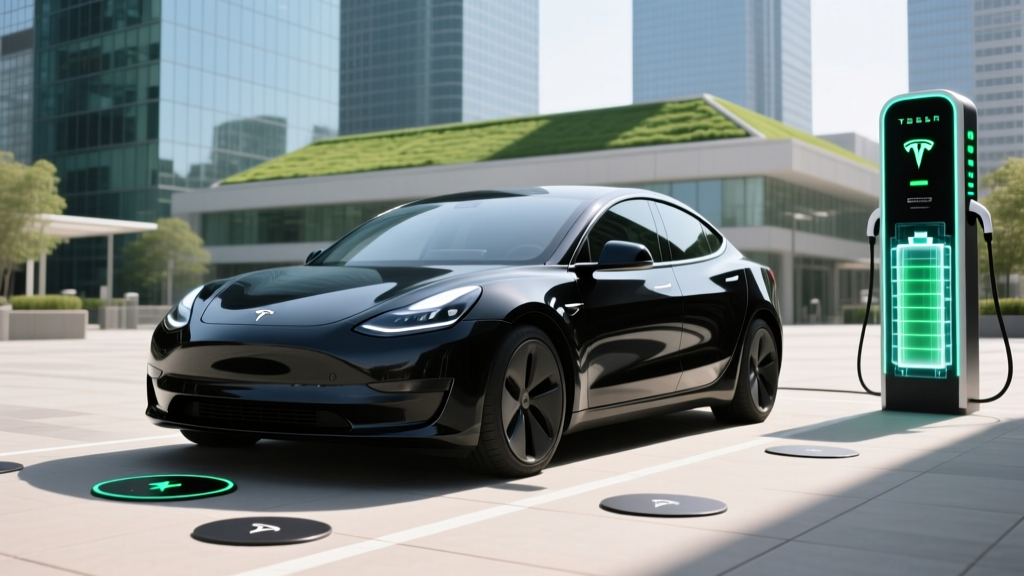
When Tesla halts production at its Fremont or Gigafactory Texas lines, it's rarely a sign of trouble — it's typically a retooling window for a model-year update, a battery chemistry changeover, or a manufacturing process revision. In early 2026, Tesla briefly paused Model 3 assembly to integrate the latest HW5 sensor suite and transition additional trims to the next-generation 4680-cell structural battery pack. For buyers, production halts create a narrow window: outgoing inventory may carry discounts, while incoming refreshed models bring updated specs that shift the value calculus.
This review covers the 2026 Tesla Model 3 lineup as it resumes production — including the Long Range RWD, Long Range AWD, and Performance variants — with exact figures on range, charging, pricing, and federal tax credit eligibility under current IRS §30D rules.
| Spec | Long Range RWD | Long Range AWD | Performance |
|---|---|---|---|
| EPA Range | 363 mi | 346 mi | 328 mi |
| Battery (usable) | 79 kWh (LFP) | 79 kWh (NMC) | 79 kWh (NMC) |
| Peak DC Fast Charge | 250 kW | 250 kW | 250 kW |
| 10–80% DCFC Time | ~25 min | ~25 min | ~25 min |
| Level 2 Home Charge | 11.5 kW (~44 mi/hr) | 11.5 kW (~44 mi/hr) | 11.5 kW (~44 mi/hr) |
| 0–60 mph | 5.8 sec | 4.2 sec | 3.1 sec |
| Horsepower | 346 hp | 441 hp | 510 hp |
| Drivetrain | RWD (single motor) | AWD (dual motor) | AWD (dual motor) |
| MPGe (combined) | 132 MPGe | 125 MPGe | 118 MPGe |
| Efficiency | 25 kWh/100 mi | 27 kWh/100 mi | 28 kWh/100 mi |
| Base MSRP | $38,990 | $43,990 | $52,990 |
Range and Efficiency: EPA Sticker vs. Real-World Reality
The 2026 Model 3 Long Range RWD carries an EPA-estimated 363 miles of range — among the highest of any sedan under $45,000. But EPA tests use a mix of city and highway driving at moderate temperatures with climate control at a fixed setting. Real-world results depend heavily on how and where you drive.
EPA Estimate: 363 mi (Long Range RWD) / 346 mi (Long Range AWD) / 328 mi (Performance)
Real-World Expectation: On a 70-mph highway trip in mild weather (65–75°F), expect approximately 300–320 miles from the Long Range RWD before reaching 10% SoC. In freezing temperatures (below 32°F), range drops 20–30% — plan for 250–270 miles. City driving with regenerative braking can match or slightly exceed the EPA figure.
The LFP (lithium iron phosphate) battery in the RWD trim offers excellent cycle life and can be charged to 100% daily without degradation concerns — a practical advantage over NMC chemistry, which Tesla recommends keeping between 20–80% for daily use. The trade-off: LFP has lower energy density, which is why the RWD variant's range, while impressive, doesn't exceed the AWD NMC pack's usable capacity. Tesla's heat pump, standard across all trims, significantly reduces cold-weather cabin-heating energy draw compared to resistive heaters.
Source: EPA Fuel Economy — 2026 Tesla Model 3
Charging Speed: DC Fast Charging and Home Setup
Charging speed is where Tesla's Supercharger network advantage becomes tangible. The 2026 Model 3 peaks at 250 kW on V3 Superchargers and compatible CCS/NACS DC fast chargers. However, peak rate is not sustained rate — the charge curve tapers significantly above 50% SoC to protect battery health.
| Charging Level | Power (kW) | Speed (mi/hr added) | Notes |
|---|---|---|---|
| Level 1 (120V household) | ~1.4 kW | ~5 mi/hr | Emergency/trickle only |
| Level 2 (240V, 48A home) | 11.5 kW | ~44 mi/hr | Full charge overnight (~9 hrs 10–100%) |
| DC Fast (V3 Supercharger) | Peak 250 kW | ~1,000 mi/hr (peak) | 10–80% in ~25 min; tapers above 50% |
| DC Fast (V4 Supercharger) | Peak 250 kW | ~1,000 mi/hr (peak) | Same peak; V4 cabinet supports future higher rates |
Preconditioning matters. When you navigate to a Supercharger in the Tesla navigation system, the car automatically warms or cools the battery to optimal temperature for fast charging. Without preconditioning — for instance, arriving at a third-party charger without route navigation — your initial charge rate may be significantly lower, especially in cold weather. Plan for 25–30 minutes for a 10–80% session under ideal conditions; add 5–10 minutes in freezing temperatures.
For home charging, a Tesla Wall Connector on a 60-amp circuit (48A continuous) delivers the full 11.5 kW. Installation typically costs $800–$2,000 depending on panel proximity and whether your electrical panel needs an upgrade. A NEMA 14-50 outlet is a lower-cost alternative (~$500–$1,200 installed) delivering up to 32A (7.7 kW) with the Mobile Connector.
Performance and Driving Dynamics
The Model 3 Performance remains a benchmark in the electric sport sedan segment: 3.1 seconds to 60 mph, 510 horsepower, and adaptive dampers that were introduced with the Highland refresh and refined for 2026. The dual-motor AWD system provides torque vectoring that makes the car feel planted in corners and confident in wet or snowy conditions.
The Long Range RWD, at 5.8 seconds to 60 mph, is no slouch either — it matches many turbocharged gas sport sedans while delivering superior efficiency. The single-motor rear-wheel-drive layout also means slightly lower maintenance complexity over the vehicle's lifetime (one fewer drive unit to service).
Regenerative braking in the Model 3 is aggressive enough for near-one-pedal driving in most conditions. Tesla removed the user-adjustable regen setting several years ago, so the intensity is fixed — most owners adapt within a week, but if you prefer a coasting feel, this is worth a test drive.
Pricing, Trims, and Federal Tax Credit Eligibility
The 2026 Model 3 starts at $38,990 for the Long Range RWD, placing it in a competitive position against the Hyundai Ioniq 6, BMW i4 eDrive35, and Polestar 2. The Performance trim at $52,990 pushes into BMW i4 M50 and Audi RS e-tron GT territory but undercuts both significantly.
| Trim | Base MSRP | As-Tested (typical options) | §30D Credit (est.) | Effective Price |
|---|---|---|---|---|
| Long Range RWD | $38,990 | $40,490 (w/ FSD transfer) | Up to $7,500* | From ~$31,490 |
| Long Range AWD | $43,990 | $45,990 (w/ paint + wheels) | Up to $7,500* | From ~$36,490 |
| Performance | $52,990 | $54,490 (w/ Ultra Red) | Up to $7,500* | From ~$45,490 |
Federal tax credit caveats (IRS §30D, 2026 rules): The full $7,500 credit requires meeting both critical-mineral and battery-component sourcing thresholds, which shift annually. The Model 3 has historically qualified, but Tesla's supply chain adjustments can affect eligibility quarter to quarter. Additionally:
- MSRP cap: Sedans must be under $55,000 MSRP — the Performance trim at $52,990 clears this, but options can push the sticker above the cap depending on configuration.
- Income cap: Modified adjusted gross income must not exceed $150,000 (single), $225,000 (head of household), or $300,000 (joint).
- Point-of-sale transfer: As of 2024, buyers can transfer the credit to the dealer at purchase, reducing the out-of-pocket price immediately rather than waiting for tax filing.
Always verify current eligibility on IRS.gov or with a tax professional before committing. State and local incentives vary by jurisdiction — check your state's energy office for additional rebates.
Interior, Cargo, and Technology
The post-Highland Model 3 interior is markedly quieter and more refined than pre-2024 models. Ambient lighting, ventilated front seats, and a rear touchscreen for passengers are now standard. The 15.4-inch center display handles all vehicle controls — there is no traditional instrument cluster, which remains polarizing but functional after a short adjustment period.
Cargo and passenger space:
- Rear cargo (trunk): 23 cu ft — a liftback design makes loading easier than a traditional sedan trunk
- Front trunk (frunk): 3.1 cu ft — useful for charging cables or a small bag
- Rear legroom: 35.2 inches — adequate for adults on shorter trips; taller passengers may find it snug compared to the Model Y
- Front headroom: 40.3 inches
The infotainment system remains Tesla's proprietary software — no Apple CarPlay or Android Auto. For most Tesla owners this is a non-issue given the integrated navigation, Supercharger routing, Spotify/Tidal streaming, and over-the-air updates. For CarPlay-dependent buyers, it's a dealbreaker worth acknowledging honestly.
Driver assistance: Basic Autopilot (traffic-aware cruise control + lane centering) is standard. Full Self-Driving (Supervised) remains a $8,000 add-on or $99/month subscription. Despite the name, FSD is an SAE Level 2 system — you must keep your hands on the wheel and eyes on the road at all times. It handles many highway and surface-street scenarios competently but does not make the car autonomous.
SAE Automation Level: Tesla Autopilot and FSD (Supervised) are Level 2 driver-assistance systems. The driver is responsible for all vehicle operation and must remain fully engaged. This is not self-driving. Level 4 autonomous operation (no driver required) is currently only available in geofixed robotaxi services like Waymo in select cities.
Warranty and Long-Term Ownership
Tesla's warranty structure is straightforward:
- Basic vehicle: 4 years / 50,000 miles
- Battery and drive unit: 8 years / 120,000 miles (Long Range and Performance); 8 years / 100,000 miles (RWD)
- Battery capacity retention: Tesla warrants that the battery will retain at least 70% of its original capacity during the warranty period
The 70% retention threshold is industry-standard — Hyundai, Ford, and GM use similar benchmarks. Real-world degradation data from Tesla's fleet suggests most Model 3 packs retain approximately 85–90% capacity at 100,000 miles, with LFP packs showing particularly flat degradation curves. A full battery replacement outside warranty currently costs approximately $12,000–$16,000 depending on the pack, though prices continue to decline.
Pros, Cons, and Who Should Buy
Pros
- Class-leading efficiency (25 kWh/100 mi on RWD)
- Supercharger network access — the most reliable DC fast-charging ecosystem in the US
- LFP battery option allows daily 100% charging without degradation worry
- Over-the-air updates continuously add features
- Strong resale value relative to most EV competitors
- Excellent performance across all trims (3.1–5.8 sec 0–60)
Cons
- No Apple CarPlay or Android Auto
- Rear seat space is tighter than Model Y or Hyundai Ioniq 6
- FSD (Supervised) remains Level 2 despite the marketing name — $8,000 for a driver-assist system is steep
- Panel gaps and build consistency have improved but still draw scrutiny
- Production halts can delay delivery timelines by 2–6 weeks
- Insurance premiums tend to run 15–25% higher than comparable gas sedans
Choose the Model 3 Long Range RWD if: You want maximum range and lowest cost, commute under 80 miles round-trip, and can charge at home. The LFP battery's daily-charge tolerance makes this the most ownership-friendly configuration.
Choose the Model 3 Long Range AWD if: You live in a region with snow or frequent rain and need dual-motor traction, or regularly take road trips where the extra 46 miles of range over the Performance matters.
Choose the Model 3 Performance if: You want a genuine sports sedan experience under $55,000 and prioritize acceleration and handling over maximum range. Verify MSRP stays under the §30D cap with your chosen options.
Consider the Hyundai Ioniq 6 or BMW i4 instead if: You need Apple CarPlay, prefer a traditional dealership service experience, or want a more spacious rear seat for regular adult passengers.
Frequently Asked Questions
What is the real-world range of the 2026 Tesla Model 3?
The EPA rates the Long Range RWD at 363 miles. In real-world highway driving at 70 mph in moderate temperatures, expect 300–320 miles. In freezing weather, plan for 250–270 miles. City driving with regenerative braking can match or slightly exceed the EPA number.
How fast does the Model 3 charge at home and on the road?
On a Level 2 home charger (11.5 kW), the Model 3 adds approximately 44 miles of range per hour, fully recharging overnight in about 9 hours. On a V3 Supercharger (250 kW peak), a 10–80% session takes roughly 25 minutes under ideal conditions, with the charge rate tapering above 50% SoC.
Does the 2026 Model 3 qualify for the $7,500 federal EV tax credit?
The Model 3 has historically qualified for the full §30D credit, but eligibility depends on current battery-sourcing requirements, your income (capped at $150K single / $300K joint), and the vehicle's MSRP staying under $55,000 for sedans. Verify on IRS.gov at the time of purchase, as rules and sourcing compliance can shift quarterly.
How much does the Model 3 cost after tax credits?
If you qualify for the full $7,500 credit, the Long Range RWD drops from $38,990 to an effective $31,490 — making it one of the most compelling value propositions in the EV market. The point-of-sale transfer option lets you apply this at purchase rather than waiting for tax season.
Is the Model 3 worth buying vs. the Ioniq 6 or BMW i4?
The Model 3 wins on Supercharger network access, efficiency, and software integration. The Ioniq 6 offers more rear-seat room and CarPlay; the BMW i4 offers a traditional luxury dealership experience and a more conventional interior layout. If charging access and software are your priorities, the Model 3 remains the benchmark. If interior space or CarPlay matter more, test-drive the competitors.
Why does Tesla halt production, and how does it affect delivery?
Tesla periodically halts production for retooling, battery-pack transitions, or model-year updates. These pauses typically last 1–3 weeks and can delay delivery estimates by 2–6 weeks. If you're ordering during a known halt, ask your advisor for a revised timeline. Outgoing inventory before a refresh may carry unadvertised discounts.
Is Tesla's FSD actually self-driving?
No. Full Self-Driving (Supervised) is an SAE Level 2 driver-assist system. You must remain fully engaged — hands on wheel, eyes on road — at all times. It handles many scenarios well but requires constant supervision. True self-driving (Level 4) is currently limited to geofenced robotaxi services like Waymo.