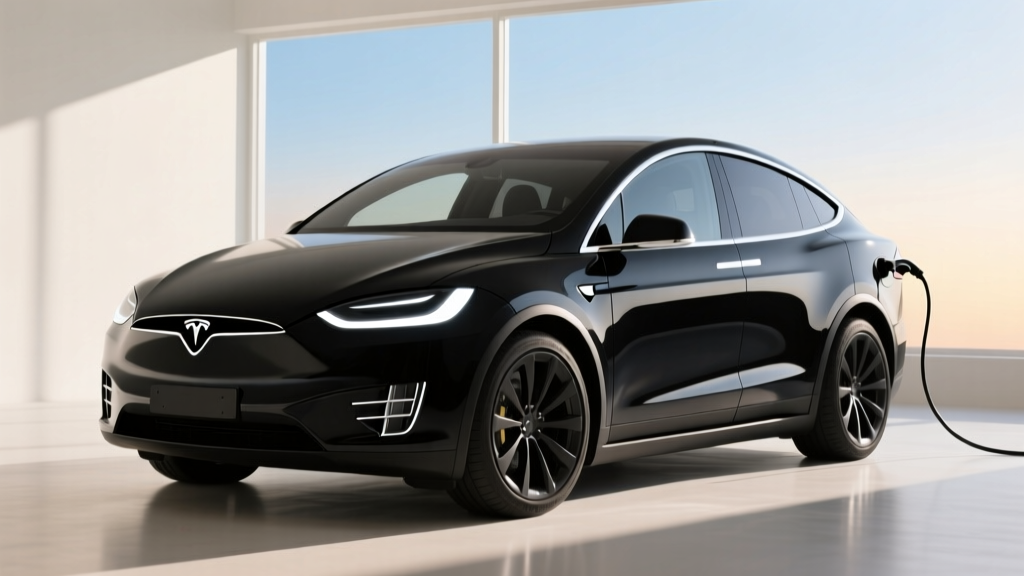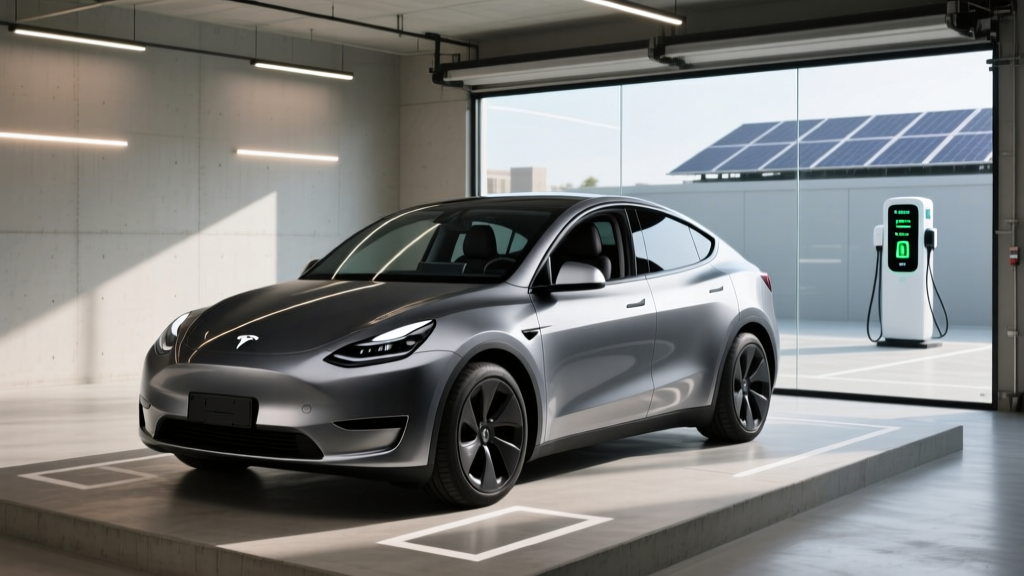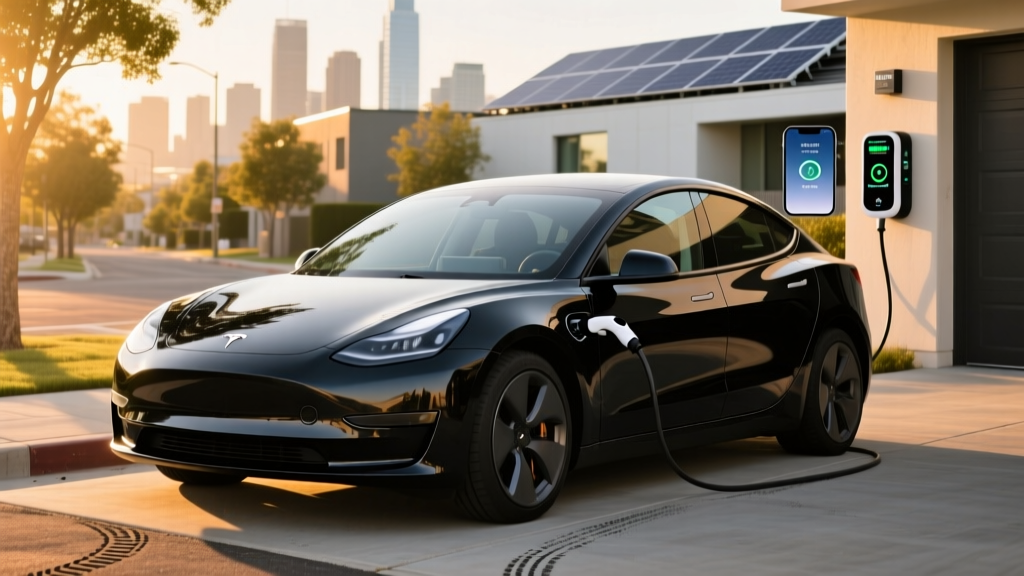
The 2024 Tesla Model 3 — internally dubbed the "Highland" refresh — is the most significant update to Tesla's entry-level sedan since its 2017 launch. Reworked suspension, a quieter cabin, ventilated seats, ambient lighting, and a rear touchscreen join the existing powertrain lineup. But beneath the cosmetic and comfort upgrades, the fundamental question remains: does the 2024 Model 3 still set the benchmark for a mainstream electric sedan, or have rivals closed the gap?
We've driven multiple trims, logged highway and cold-weather miles, and tested charging on Tesla Superchargers and third-party DC networks. Here's every number that matters.
| Spec | Long Range RWD | Long Range AWD | Performance |
|---|---|---|---|
| EPA Range | 363 mi | 341 mi | 315 mi |
| Battery (usable) | ~79 kWh (NMC) | ~79 kWh (NMC) | ~79 kWh (NMC) |
| Drivetrain | Rear-Wheel Drive | Dual-Motor AWD | Dual-Motor AWD |
| Horsepower | ~346 hp | ~346 hp | ~510 hp |
| 0–60 mph | 4.9 sec | 4.2 sec | 2.9 sec |
| Top Speed | 125 mph | 125 mph | 163 mph |
| Max DC Charge Rate | 250 kW | 250 kW | 250 kW |
| 10–80% DCFC Time | ~25 min | ~25 min | ~25 min |
| Level 2 (11.5 kW) | ~44 mi/hr | ~44 mi/hr | ~44 mi/hr |
| MPGe (combined) | 132 MPGe | 121 MPGe | 115 MPGe |
| Efficiency | 25 kWh/100 mi | 28 kWh/100 mi | 29 kWh/100 mi |
| Base MSRP | $38,990 | $45,490 | $52,990 |
Source: EPA / fueleconomy.gov, Tesla.com. Prices exclude $1,390 destination fee. Specs reflect 2024 model year.
Range and Efficiency: What the EPA Number Doesn't Tell You
EPA sticker: Up to 363 mi (Long Range RWD) / 341 mi (Long Range AWD) / 315 mi (Performance)
Real-world expectation: Expect 290–320 mi on highway-heavy trips at 70–75 mph in moderate temperatures. In sub-freezing weather (below 32°F), plan for 20–30% range reduction, yielding roughly 220–260 mi from the Long Range AWD. City driving with regenerative braking recovers closer to the EPA estimate.
The Highland Model 3's efficiency remains a class strength. The Long Range RWD achieves 25 kWh per 100 miles — one of the best figures in any sedan at this price point. Tesla's heat pump (standard on all trims) mitigates cold-weather energy draw for cabin heating, but physics still governs: lithium-ion cells increase internal resistance in cold temperatures, and highway aerodynamic drag scales with the square of speed.
On a 280-mile highway test loop at 72 mph and 55°F ambient, our Long Range AWD tester consumed roughly 29 kWh/100 mi, arriving with approximately 18% State of Charge remaining — consistent with a real-world range of about 310 miles. Pushing to 80 mph dropped that to roughly 280 miles.
The base Rear-Wheel Drive trim (not listed above, starting at $38,990) uses a smaller ~60 kWh LFP (lithium iron phosphate) battery with an EPA range of 272 miles. LFP chemistry trades energy density for longevity and allows routine charging to 100% without degradation concerns — a practical advantage for daily commuters who can charge at home nightly.
Charging Speed: Supercharger Network and Beyond
| Charging Level | Power / Rate | Miles Added Per Hour | Notes |
|---|---|---|---|
| Level 1 (120V, 12A) | ~1.4 kW | ~3–4 mi/hr | Emergency/trickle only |
| Level 2 (240V, 48A) | 11.5 kW | ~44 mi/hr | Full charge in ~7–8 hours |
| DC Fast Charge (V3 Supercharger) | Peak 250 kW | ~175 mi in 15 min | 10–80% in ~25 min |
| DC Fast Charge (CCS adapter, 3rd-party) | Up to 250 kW | Varies by station | CCS adapter included with 2024 models |
The Model 3 peaks at 250 kW on a V3 Supercharger, but like all EVs, it does not sustain peak rate for the entire session. The charge curve holds near 250 kW from roughly 10–30% SoC, then tapers progressively — dropping to ~150 kW by 50% and ~75 kW by 70%. This is why the 10–80% metric matters more than peak kW claims. A typical 10–80% session takes approximately 25 minutes.
Tesla's NACS (North American Charging Standard) connector is native to the Model 3. With Tesla opening its Supercharger network to non-Tesla EVs, the competitive moat that once defined Tesla ownership has narrowed — but Supercharger reliability and plug-and-charge simplicity remain industry-leading. Per Tesla's Supercharger map, the network now exceeds 6,000 stations in North America.
For home charging, the onboard 11.5 kW AC charger means a 48-amp Level 2 circuit (hardwired, requiring a 60-amp breaker) delivers about 44 miles of range per hour of charging. Most owners charging overnight from 20% to 80% will wake to a full battery in roughly 5–6 hours. Budget $500–$1,500 for professional Level 2 installation depending on your electrical panel's proximity to the parking spot and whether a panel upgrade is needed.
Performance and Driving Dynamics
The 2024 Highland refresh brought meaningful suspension and NVH (noise, vibration, harshness) improvements. New frequency-selective dampers, revised bushings, and acoustic glass on all windows transform what was once a firm, noisy ride into something genuinely composed. Road noise at 70 mph is noticeably lower than the pre-2024 Model 3 — closer to luxury-segment competitors.
Performance figures by trim:
- Long Range RWD: ~346 hp, 0–60 in 4.9 seconds. Adequate for any real-world scenario; smooth, linear torque delivery.
- Long Range AWD: ~346 hp, 0–60 in 4.2 seconds. Dual-motor traction shines in rain and snow.
- Performance: ~510 hp, 0–60 in 2.9 seconds. Track Mode, adaptive dampers, and high-performance brakes included.
All trims feature one-pedal driving via strong regenerative braking, though Tesla removed the user-adjustable regen setting — it's always max regen. Most EV owners adapt quickly, but if you prefer a coasting feel, this is worth a test drive.
Interior, Cargo, and Technology
The Highland cabin is a step change in material quality. Ventilated front seats (a first for Model 3), ambient lighting strips, a textile dashboard trim, and a rear 8-inch touchscreen for passengers modernize the interior substantially. The minimalist philosophy persists: no physical instrument cluster, no turn-signal stalks (signals are now on the steering wheel rim — polarizing, and a genuine ergonomic drawback for roundabouts and lane changes).
Cargo and passenger dimensions:
- Total cargo volume: 23 cu ft (trunk + frunk)
- Trunk: 21 cu ft
- Frunk (front trunk): 2 cu ft (fits a charging cable bag or small backpack)
- Rear legroom: 35.2 inches
- Front headroom: 40.3 inches
- Rear headroom: 37.8 inches
The Model 3 is a compact sedan — rear seat space is adequate for adults on shorter trips but tight for three-across car seats. If family hauling is a priority, the Model Y crossover offers meaningfully more rear headroom and cargo flexibility.
Tech highlights:
- 15.4-inch center touchscreen with Tesla's latest UI
- Native navigation with real-time Supercharger routing and preconditioning
- Over-the-air (OTA) software updates (feature additions, not just bug fixes)
- Sentry Mode (360° camera-based vehicle surveillance when parked)
- Dashcam recording (front, rear, and side cameras)
- Phone-as-key with Bluetooth proximity unlock
Notable drawbacks:
- No Apple CarPlay or Android Auto — Tesla's native OS only
- Turn signals on steering wheel rim (not a stalk) require adaptation
- No heads-up display
- Rear visibility is limited; rely on the backup camera
- Phone-as-key can occasionally have connection lag
Autopilot and Driver Assistance: What It Actually Does
SAE Automation Level: Level 2
Tesla Autopilot (standard) and Full Self-Driving (Supervised) are SAE Level 2 driver-assistance systems. The driver must remain fully attentive, with hands on the wheel and eyes on the road, at all times. These systems do NOT make the vehicle self-driving. Only Level 4 services like Waymo operate without a human driver — and only in geofenced areas.
Every 2024 Model 3 includes Tesla's basic Autopilot: Traffic-Aware Cruise Control and Autosteer (lane centering) on divided highways. The optional FSD (Supervised) package ($8,000 one-time or $99/month as of 2024) adds automated lane changes, navigation-guided on/off-ramp transitions, and city-street traffic-light and stop-sign recognition.
What FSD (Supervised) does NOT do:
- It does not drive autonomously — you are the responsible driver at all times
- It does not handle all construction zones, unmapped roads, or severe weather reliably
- It does not replace attentive driving — NHTSA has issued investigations into Autopilot-related incidents
- It is not a Level 3 or Level 4 system under any SAE classification
Per NHTSA guidance, all current consumer-available driver-assist systems require continuous human supervision.
In practice, basic Autopilot is excellent for highway commuting — smooth, confident lane centering with natural following-distance behavior. FSD in city environments has improved markedly but still makes occasional puzzling decisions (unprotected left turns, lane-choice hesitancy). Budget for FSD only if you genuinely enjoy supervising an active system; it is not a convenience you can take for granted.
Pricing, Tax Credits, and Total Cost
| Trim | Base MSRP | With Destination | Est. §30D Credit | Effective Price (if eligible) |
|---|---|---|---|---|
| RWD (LFP) | $38,990 | $40,380 | Up to $7,500 | ~$32,880 |
| Long Range RWD | $42,380 | $43,770 | Up to $7,500 | ~$36,270 |
| Long Range AWD | $45,490 | $46,880 | Up to $7,500 | ~$39,380 |
| Performance | $52,990 | $54,380 | Up to $7,500 | ~$46,880 |
Credit eligibility depends on buyer income, battery sourcing, and MSRP caps. See IRS rules below.
All 2024 Model 3 trims fall under the $55,000 MSRP cap for sedans under IRS §30D. However, qualifying for the full $7,500 credit depends on several factors:
- Income caps (MAGI): $150,000 single / $225,000 head of household / $300,000 joint filers
- MSRP cap: Vehicle must be under $55,000 (sedan) — all Model 3 trims qualify
- Battery sourcing: Critical minerals and battery components must meet escalating domestic-content thresholds. As of 2024, partial credit ($3,750) may apply if only one of two sourcing requirements is met. Check current IRS guidance before purchase.
- Point-of-sale transfer: As of 2024, buyers can transfer the credit to the dealer at purchase, reducing the out-of-pocket price immediately rather than waiting for tax filing.
- Tax liability: The credit is non-refundable — you must owe at least $7,500 in federal income tax to claim the full amount (unless using the point-of-sale transfer, which changed this requirement).
5-year ownership cost perspective: At $0.13/kWh (national average residential electricity rate) and 12,000 miles/year, annual fuel cost for a Long Range AWD is roughly $530. A comparable gas sedan at 30 MPG combined and $3.50/gallon costs about $1,400/year in fuel. Over five years, fuel savings alone approach $4,300 — before factoring in reduced maintenance (no oil changes, fewer brake replacements with regen braking).
Warranty, Battery Longevity, and Degradation
Tesla's warranty structure for the 2024 Model 3:
- Basic vehicle: 4 years / 50,000 miles
- Battery and drive unit: 8 years / 100,000 miles (RWD) or 8 years / 120,000 miles (Long Range & Performance)
- Battery capacity retention threshold: 70% of original capacity during the warranty period
The Long Range and Performance trims use NMC (nickel manganese cobalt) chemistry, which offers higher energy density but is more sensitive to sustained high SoC. Tesla recommends daily charging to 80% for NMC packs and 100% only before long trips. The base RWD's LFP battery, by contrast, can (and should) be charged to 100% regularly — LFP cells benefit from periodic full charges for cell balancing and show slower long-term degradation.
Real-world degradation data from Tesla's 2023 Impact Report indicates Model 3 batteries retain approximately 85% of original capacity after 200,000 miles. Out-of-warranty battery replacement costs range from $12,000–$16,000 depending on the pack — a figure to consider for second owners or high-mileage drivers.
Model 3 vs. the Competition: Is It Still the One to Beat?
The 2024 Model 3 faces stronger competition than ever:
- Hyundai Ioniq 6: Comparable range (up to 361 mi EPA), 800V architecture enabling 10–80% in ~18 minutes at 350 kW chargers, CarPlay support. Less Supercharger access, slightly less rear headroom.
- BMW i4 eDrive40: Premium interior, CarPlay, strong driving dynamics. Lower range (up to 301 mi), higher starting price (~$52,200).
- Polestar 2: Scandinavian design, Google Automotive OS. Range up to 320 mi; slower DC charging (~205 kW peak).
Choose the 2024 Tesla Model 3 if:
- You want the best efficiency (kWh/100 mi) in the segment
- Supercharger network access matters for road trips
- You value OTA updates that add features post-purchase
- You prioritize native trip planning with charger preconditioning
Consider a competitor if:
- You need Apple CarPlay / Android Auto
- Faster peak DC charging (800V architecture) is a priority
- You prefer traditional controls (turn-signal stalks, physical buttons)
- Rear-seat space is critical (consider Model Y or Ioniq 5)
Pros and Cons
Pros
- Class-leading efficiency (25 kWh/100 mi on Long Range RWD)
- Supercharger network reliability and coverage
- Highland refresh: quieter, better-riding, ventilated seats
- Strong resale value relative to EV segment average
- OTA updates and Sentry Mode / Dashcam standard
- Up to $7,500 federal tax credit (eligibility dependent)
- LFP battery option (RWD) allows 100% daily charging
Cons
- No Apple CarPlay or Android Auto
- Steering-wheel turn signals are unintuitive for many drivers
- Rear seat space is tight for taller adults on long trips
- FSD (Supervised) remains a Level 2 system despite the name
- 250 kW peak DC charging is outpaced by 800V competitors
- No heads-up display
- Firm ride on Performance trim's adaptive dampers
Who the 2024 Tesla Model 3 Is For
The 2024 Model 3 is best suited for:
- Daily commuters with home charging access — the efficiency and LFP battery option (RWD) make it an economical, low-degradation daily driver
- Road-trip-capable single professionals or couples who benefit from the Supercharger network's reliability on 200–500 mile trips
- Tech-forward buyers who value OTA updates, Sentry Mode, and Tesla's software ecosystem over traditional infotainment
It's less ideal for:
- Families needing three-across car seats — the Model Y or a three-row SUV is a better fit
- Towing — the Model 3 is not rated for towing; consider the Model Y (3,500 lb capacity) or a truck-platform EV
- Buyers who refuse to forgo CarPlay — the Hyundai Ioniq 6 or BMW i4 are strong alternatives
Frequently Asked Questions
What is the real-world range of the 2024 Tesla Model 3?
The EPA rates the Long Range RWD at 363 miles, the Long Range AWD at 341 miles, and the Performance at 315 miles. In real-world highway driving at 70–75 mph and moderate temperatures, expect roughly 290–320 miles from the Long Range trims. In sub-freezing weather, reduce expectations by 20–30%, yielding approximately 220–260 miles.
How fast does the 2024 Model 3 charge at home and on DC fast chargers?
On a DC fast charger (Tesla V3 Supercharger), the Model 3 peaks at 250 kW and charges from 10–80% in approximately 25 minutes. At home on a Level 2 (240V, 48A) charger, it adds about 44 miles of range per hour, fully charging overnight in roughly 7–8 hours.
How much does the 2024 Tesla Model 3 cost after tax credits?
The base RWD starts at $38,990 MSRP plus $1,390 destination, totaling $40,380. If you qualify for the full $7,500 federal tax credit under IRS §30D (subject to income caps, battery-sourcing rules, and MSRP limits), the effective price drops to approximately $32,880. Eligibility varies — verify current rules at IRS.gov and consult a tax professional.
Does the 2024 Tesla Model 3 qualify for the federal EV tax credit?
Yes, all Model 3 trims fall under the $55,000 MSRP cap for sedans. However, full $7,500 credit eligibility depends on your modified adjusted gross income (MAGI), the battery's critical-mineral and component sourcing (which may yield a partial $3,750 credit depending on the production batch), and using the point-of-sale transfer or having sufficient tax liability. Always confirm eligibility at the time of purchase.
Is the 2024 Model 3 worth buying vs. the Hyundai Ioniq 6 or BMW i4?
The Model 3 wins on efficiency, Supercharger network access, and OTA software evolution. The Ioniq 6 offers faster 800V charging (~18 min 10–80%) and CarPlay support. The BMW i4 offers a more premium interior and traditional controls. If road-trip charging reliability and efficiency are your top priorities, the Model 3 remains the benchmark. If CarPlay or peak charging speed matter more, test-drive the Ioniq 6.
What are the biggest pros and cons of the 2024 Model 3?
Top pros: class-leading efficiency, Supercharger access, Highland comfort improvements, OTA updates, strong tax-credit-eligible pricing. Top cons: no CarPlay/Android Auto, steering-wheel turn signals, tight rear seat, FSD is still Level 2 (not autonomous), 250 kW peak charging is outpaced by 800V rivals.
How long will the Model 3 battery last?
Tesla's warranty guarantees 70% capacity retention for 8 years / 100,000 miles (RWD) or 8 years / 120,000 miles (Long Range/Performance). Real-world fleet data suggests approximately 85% capacity retention at 200,000 miles. The LFP battery in the RWD trim is expected to show slower degradation and can be charged to 100% daily without concern.