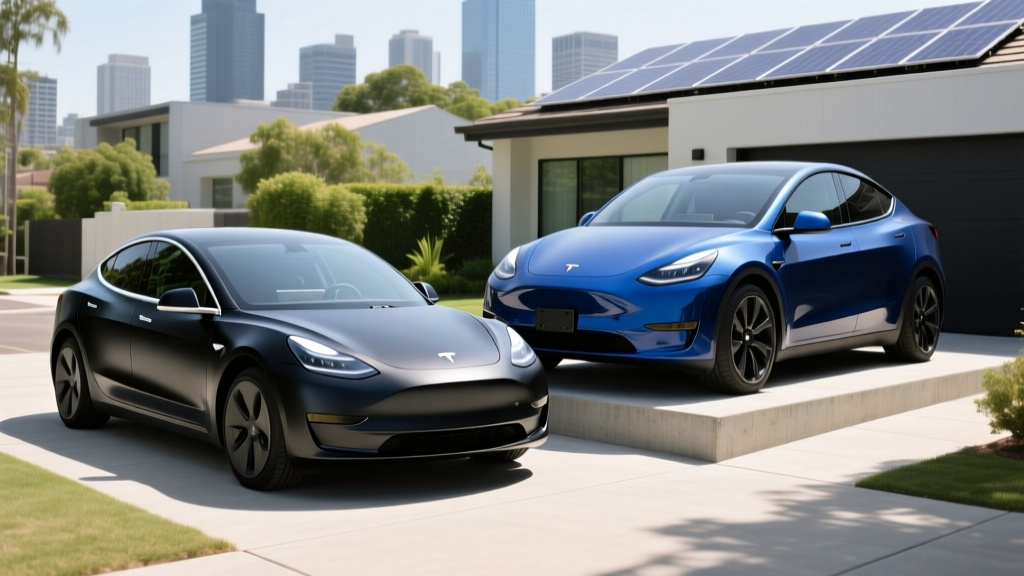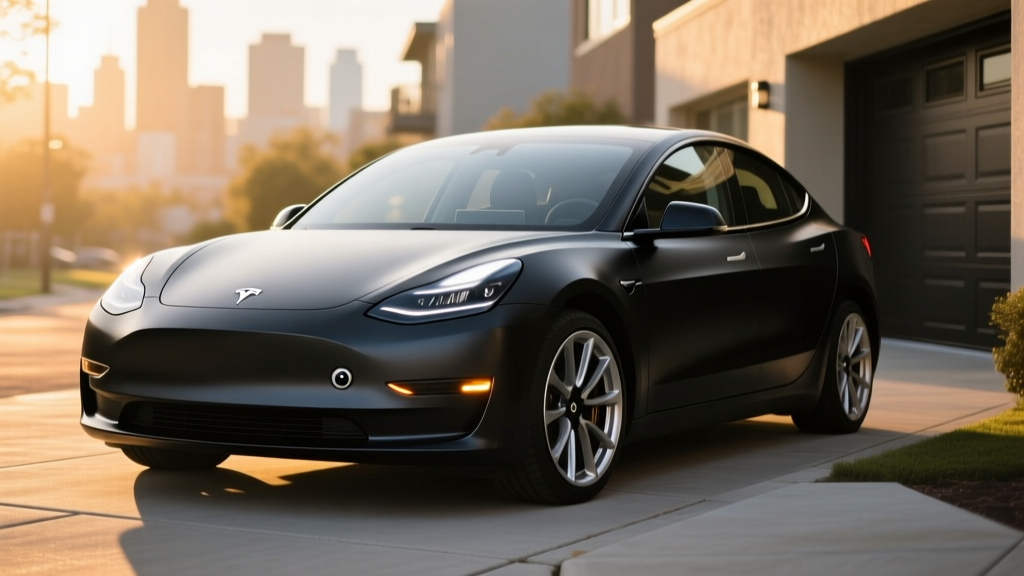
The 2023 Tesla Model 3 occupies a unique position in the used EV market heading into 2026. As Tesla's refreshed "Highland" Model 3 rolled out for the 2024 model year with significant interior and suspension upgrades, the pre-refresh 2023 version has depreciated into a compelling value proposition — particularly for buyers who want Supercharger network access and proven powertrain reliability without paying new-car premiums. But does the 2023 Model 3 still hold up against newer competitors? This review breaks down the real-world range, charging behavior, ownership costs, and tax-credit math you need to make the call.
2023 Model 3 Lineup: Trims, Battery Chemistry, and Specs at a Glance
Tesla offered the 2023 Model 3 in three primary configurations in the U.S. market. The base Rear-Wheel Drive (RWD) uses a lithium iron phosphate (LFP) battery, while the Long Range AWD and Performance trims use nickel-manganese-cobalt (NMC) chemistry. This distinction matters enormously for long-term ownership: LFP batteries tolerate regular 100% charging with minimal degradation, while NMC packs are best kept between 20-80% for daily use to maximize cycle life.
| Spec | RWD (Base) | Long Range AWD | Performance |
|---|---|---|---|
| EPA Range | 272 mi | 358 mi | 315 mi |
| Battery (usable) | ~57.5 kWh (LFP) | ~78.4 kWh (NMC) | ~78.4 kWh (NMC) |
| Drivetrain | Rear-Wheel Drive | Dual-Motor AWD | Dual-Motor AWD |
| Horsepower | 283 hp | 346 hp | 510 hp |
| 0-60 mph | 5.8 sec | 4.2 sec | 3.1 sec |
| Top Speed | 140 mph | 145 mph | 162 mph |
| EPA Efficiency | 132 MPGe (25 kWh/100mi) | 131 MPGe (26 kWh/100mi) | 115 MPGe (29 kWh/100mi) |
| Max DC Charge Rate | 170 kW | 250 kW | 250 kW |
| 10-80% DCFC Time | ~28 min | ~30 min | ~30 min |
| Level 2 Rate (11.5 kW) | ~30 mi/hr | ~44 mi/hr | ~44 mi/hr |
| Cargo Volume | 23 cu ft (trunk + frunk combined) | ||
| Rear Legroom | 35.2 in | ||
| Original Base MSRP | $38,990 | $45,990 | $50,990 |
Real-World Range: What the EPA Numbers Don't Tell You
EPA range estimates are a useful baseline, but every EV owner learns quickly that real-world results depend heavily on speed, temperature, and terrain. The 2023 Model 3's efficiency is among the best in its class — Tesla's heat pump and thermal management system are partly responsible — but physics still applies.
RWD (EPA 272 mi): Expect 230-250 mi on mixed highway driving at 70-75 mph. In freezing temperatures (below 32°F), plan for 180-210 mi due to cabin heating demand and battery resistance.
Long Range AWD (EPA 358 mi): Real-world highway range lands around 290-320 mi in moderate weather. Cold-weather highway driving drops this to roughly 230-270 mi. City and suburban driving with regen braking can match or slightly exceed the EPA figure.
Performance (EPA 315 mi): Expect 260-285 mi highway in fair conditions. Aggressive driving and cold weather can reduce this to 200-230 mi.
Note: Tesla's navigation includes real-time range prediction that factors in elevation, wind, and temperature — one of the most accurate in the industry. Trust it over the dashboard percentage.
The LFP battery in the RWD trim offers a practical advantage: Tesla recommends charging it to 100% regularly (at least once per week for calibration), meaning you actually use all 272 EPA miles. NMC owners in the Long Range and Performance trims should set daily charge limits to 80%, effectively giving them ~286 and ~252 usable miles respectively for daily driving. Reserve 100% charges for road trips.
Charging Speed and Infrastructure: Supercharger Advantage
Charging speed is where the 2023 Model 3's trim divergence becomes most apparent. The RWD's 170 kW peak DC fast-charge rate is adequate but not class-leading. The Long Range and Performance trims peak at 250 kW on V3 Superchargers — though sustained rates taper significantly above 50-60% state of charge.
| Charging Method | Power | RWD (mi/hr) | Long Range / Perf (mi/hr) |
|---|---|---|---|
| Level 1 (120V outlet) | ~1.4 kW | ~4-5 mi/hr | ~4-5 mi/hr |
| Level 2 (240V, 32A Mobile Connector) | 7.7 kW | ~20 mi/hr | ~30 mi/hr |
| Level 2 (240V, 48A Wall Connector) | 11.5 kW | ~30 mi/hr | ~44 mi/hr |
| DC Fast Charge (V3 Supercharger) | 170 kW (RWD) / 250 kW (LR/Perf) | 10-80% in ~28 min | 10-80% in ~30 min |
Charging curve reality check: The Long Range's 250 kW peak only holds briefly at low state of charge (roughly 5-15%). By 40% SoC, the rate typically drops to 120-150 kW, and above 70% it falls below 60 kW. The 10-80% time of ~30 minutes is accurate, but 80-100% can add another 30-40 minutes. On road trips, plan stops to 80% and keep moving — that's where the Supercharger network's density (20,000+ stalls in North America) pays off.
For home charging, the Tesla Wall Connector ($420) on a 60-amp circuit delivers the full 11.5 kW (48A). A typical overnight charge (8 hours) adds 240-350 miles depending on trim — more than enough for any daily commute. Home installation costs vary widely: expect $800-$2,000 for a straightforward install near your electrical panel, or $2,500-$5,000+ if a panel upgrade from 100A to 200A service is needed.
As of 2024, Tesla opened its Supercharger network to non-Tesla EVs via the NACS standard. This means the 2023 Model 3's native NACS connector is now the North American industry standard — every major automaker is switching to it through 2025-2026. You'll never need an adapter for Tesla Superchargers, and CCS adapters are available for Electrify America and other networks if needed.
Performance, Ride Quality, and Daily Driving
Even the base RWD Model 3 delivers 283 horsepower and a 5.8-second 0-60 mph time — quicker than most gas-powered compact sedans. The instant torque from the rear permanent-magnet motor makes city driving and highway merging effortless. The Long Range's dual-motor AWD adds traction confidence in rain and snow, while the Performance trim's 3.1-second sprint puts it in sports-car territory.
The 2023 Model 3's pre-Highland ride quality is its most common criticism. The suspension is firm — some would say harsh — over potholes and expansion joints. Road noise is noticeable at highway speeds compared to luxury competitors. If ride comfort is a top priority, the 2024+ Highland refresh significantly improved both, but at a higher used-market price.
Handling, however, is excellent. The low center of gravity (battery pack under the floor) and precise steering make the Model 3 genuinely engaging on back roads. Track Mode on the Performance trim adjusts stability control and regen behavior for closed-course use.
Interior, Tech, and Driver Assistance
The 2023 Model 3 interior is minimalist to a fault — there's a 15-inch center touchscreen and essentially nothing else. No instrument cluster, no physical buttons for climate or mirrors (everything routes through the screen), and no heads-up display. This approach divides buyers: some find it clean and distraction-free; others find it frustrating, especially adjusting mirrors or checking speed at a glance.
Infotainment: The Tesla interface remains the benchmark for responsiveness. Navigation with real-time traffic, Supercharger routing, and battery preconditioning is seamless. Streaming (Spotify, Apple Music), Netflix/YouTube (while parked), and a solid Bluetooth phone connection round out the package. No Apple CarPlay or Android Auto — Tesla's ecosystem is self-contained.
Autopilot and FSD: Every 2023 Model 3 ships with Basic Autopilot (traffic-aware cruise control and lane centering). Enhanced Autopilot ($6,000 option) adds auto lane-change, Navigate on Autopilot, and Smart Summon. Full Self-Driving (Supervised) — $8,000 or $99/month as of 2026 — adds stop-light recognition and city-street autosteer.
All Tesla driver-assistance features (Autopilot, Enhanced Autopilot, FSD Supervised) are SAE Level 2 systems. This means the driver must remain fully attentive, keep hands on the wheel (or demonstrate engagement via the cabin camera), and be prepared to take over instantly. These are not self-driving systems. Level 4 driverless operation (no human needed) is currently limited to geofenced robotaxi services like Waymo in select cities.
Safety: The 2023 Model 3 earned a 5-star overall rating from NHTSA and Top Safety Pick+ from IIHS. Standard active safety features include automatic emergency braking, blind-spot monitoring, and lane-departure warning.
Pricing, Tax Credits, and Used Market Value in 2026
The 2023 Model 3's original MSRP ranged from $38,990 (RWD) to $50,990 (Performance before options). In the 2026 used market, well-maintained examples with average mileage (25,000-40,000 miles) are trading approximately in these ranges:
- RWD: $24,000-$28,000
- Long Range AWD: $29,000-$34,000
- Performance: $33,000-$38,000
These prices represent significant depreciation from new — particularly for the RWD, which lost roughly 30-35% of its original MSRP. For buyers, this is an opportunity.
Federal Tax Credit for Used EVs (IRS §25E)
Buying a 2023 Model 3 from a licensed dealer in 2026 may qualify you for the used-EV federal tax credit under IRS §25E — up to $4,000 or 30% of the sale price, whichever is lower. Key eligibility rules per IRS.gov:
- Price cap: Sale price must be $25,000 or less.
- Income caps: Modified AGI ≤ $75,000 (single), $112,500 (head of household), $150,000 (joint).
- Vehicle requirements: Must be purchased from a licensed dealer, model year at least 2 years old, battery ≥ 7 kWh.
- Frequency limit: One used-EV credit per buyer every 3 years.
What this means practically: Only the RWD trim, at the lower end of its used price range, may qualify — and only if the dealer sale price is at or below $25,000. Long Range and Performance models exceed the $25,000 cap. The §25E credit is non-refundable (you need tax liability to use it) but can be transferred to the dealer as a point-of-sale discount. Always confirm eligibility with a tax professional before relying on the credit.
The new-EV §30D credit ($7,500) does not apply to used purchases. If you're considering a new 2026 Model 3 instead, that credit has its own MSRP cap ($55,000 for sedans), income limits, and battery-sourcing requirements that change annually.
Ownership Costs: Insurance, Maintenance, and Depreciation
Tesla insurance premiums are above the compact-sedan average. Expect $1,800-$2,800 annually depending on state, driving record, and trim (Performance costs significantly more to insure). Tesla offers its own insurance product in many states, which uses real-time driving data to set premiums — safe drivers can save, but aggressive braking and hard cornering will raise rates.
Maintenance is minimal: no oil changes, no spark plugs, no transmission fluid. Cabin air filter replacement every 2-3 years (~$50-$100 DIY), tire rotation every 6,250 miles, and brake fluid checks are the main items. Brake pads last 80,000-100,000+ miles thanks to regenerative braking. Tesla's mobile service handles many repairs at your home or office.
Battery warranty: The 2023 Model 3's battery and drive unit are covered for 8 years or 100,000 miles (RWD) / 8 years or 120,000 miles (Long Range/Performance), whichever comes first, with a minimum 70% capacity retention threshold. Tesla's degradation data across millions of vehicles shows typical loss of 10-12% over 100,000 miles — most packs retain 88-90% capacity at that point. Full battery replacement out of warranty costs approximately $12,000-$16,000 depending on the pack, but premature failures are statistically rare.
Pros, Cons, and Who Should Buy the 2023 Model 3
- Class-leading efficiency (25-29 kWh/100mi)
- Native NACS / Supercharger network access — no adapter needed
- LFP battery (RWD) allows daily 100% charging with minimal degradation
- Excellent safety ratings (NHTSA 5-star, IIHS TSP+)
- Strong used-market value and low maintenance costs
- Over-the-air updates continue to add features
- 23 cu ft cargo (trunk + frunk) is generous for a sedan
- Firm ride and noticeable road noise (pre-Highland refresh)
- Controls buried in touchscreen (no physical buttons, no instrument cluster)
- No Apple CarPlay or Android Auto
- Rear seat is snug for tall adults (35.2" legroom)
- RWD DCFC peaks at only 170 kW — slower road-trip charging
- Insurance costs above segment average
- FSD purchase price is steep and the feature remains Level 2
Choose the RWD if: You're a commuter with home charging, drive under 200 miles daily, want the lowest purchase price, and value the LFP battery's 100% daily-charge convenience. Best for warm-to-moderate climates where 230 real-world miles suffice.
Choose the Long Range AWD if: You take regular road trips (300+ miles), live in a cold-weather region, need AWD for snow, or simply want the range buffer to charge less frequently. The most versatile trim.
Choose the Performance if: Acceleration thrills matter, you enjoy track days, and you accept the range and insurance trade-offs. A niche pick.
Look elsewhere if: You need a spacious rear seat for car seats or tall passengers, prefer physical controls and Apple CarPlay, or prioritize a plush ride over sporty handling — consider the Hyundai Ioniq 6 or BMW i4 instead.
How the 2023 Model 3 Compares to Key Competitors
In the 2026 used market, the 2023 Model 3 competes against several strong alternatives:
- Hyundai Ioniq 6 (2023): Similar EPA range (up to 361 mi), 800V architecture charges faster (10-80% in ~18 min), more comfortable ride, but uses CCS (requires NACS adapter for Superchargers). Used pricing is comparable.
- BMW i4 eDrive40 (2023): Premium interior, Apple CarPlay, 301 mi EPA range, but slower charging (~200 kW peak) and higher used prices ($35,000-$42,000).
- Polestar 2 (2023): Scandinavian design, Google Automotive OS, 276 mi EPA range (single motor). Switching to NACS for 2024+. Used pricing slightly lower than Model 3.
The Model 3's decisive advantage remains Supercharger access and the maturing NACS ecosystem. Competitors are catching up on range and charging speed, but Tesla's routing, preconditioning, and network reliability are still the road-trip benchmark.
Frequently Asked Questions
What is the real-world range of the 2023 Tesla Model 3?
For the Long Range AWD, expect 290-320 miles on highway drives in moderate weather and 230-270 miles in freezing temperatures. The RWD delivers 230-250 miles highway in fair conditions, dropping to 180-210 miles in cold weather. City driving with regenerative braking can match or exceed EPA estimates.
How fast does the 2023 Model 3 charge at home and on the road?
At home on a 48A Level 2 Tesla Wall Connector (11.5 kW), the Long Range adds ~44 miles per hour — a full overnight charge covers any daily need. On V3 Superchargers, the Long Range and Performance peak at 250 kW (10-80% in ~30 minutes), while the RWD peaks at 170 kW (10-80% in ~28 minutes). Charging slows significantly above 80%.
Does the 2023 Model 3 qualify for any federal tax credit?
The new-vehicle §30D credit does not apply to used purchases. However, buying a 2023 Model 3 from a licensed dealer for $25,000 or less may qualify for the used-EV credit (§25E) of up to $4,000, subject to buyer income caps ($75K single / $150K joint) and a once-every-3-years limit. In practice, only lower-priced RWD examples typically qualify. Consult a tax professional to confirm eligibility.
Is the 2023 Model 3 worth buying vs. the refreshed 2024+ Highland model?
The 2024+ Highland Model 3 offers a noticeably quieter cabin, improved suspension, ventilated seats, ambient lighting, and a rear touchscreen. If ride comfort and interior refinement are priorities, the Highland is worth the premium ($5,000-$8,000 more on the used market). If value and proven reliability are paramount, the 2023 model delivers 90% of the EV experience at a significant discount.
How long will the 2023 Model 3 battery last?
Tesla's battery warranty covers 8 years / 100,000 miles (RWD) or 8 years / 120,000 miles (LR/Performance) with a 70% minimum capacity retention guarantee. Fleet data shows typical degradation of 10-12% over 100,000 miles. LFP batteries in the RWD trim show even slower degradation. Many Tesla packs are projected to last 200,000-300,000 miles before reaching 70% capacity.
Can I charge a 2023 Model 3 at non-Tesla charging stations?
Yes, with a CCS adapter (available from Tesla for ~$250). The 2023 Model 3 uses the NACS connector natively, which works at all Tesla Superchargers. For Electrify America, EVgo, and other CCS-based networks, the adapter enables compatibility. As more stations add NACS cables through 2025-2026, adapter dependence will decrease.
Sources: EPA Fuel Economy — 2023 Tesla Model 3, Tesla Model 3 Owner's Manual, IRS Used Clean Vehicle Credit (§25E).