Quick Verdict: Still a Benchmark Used EV in 2026
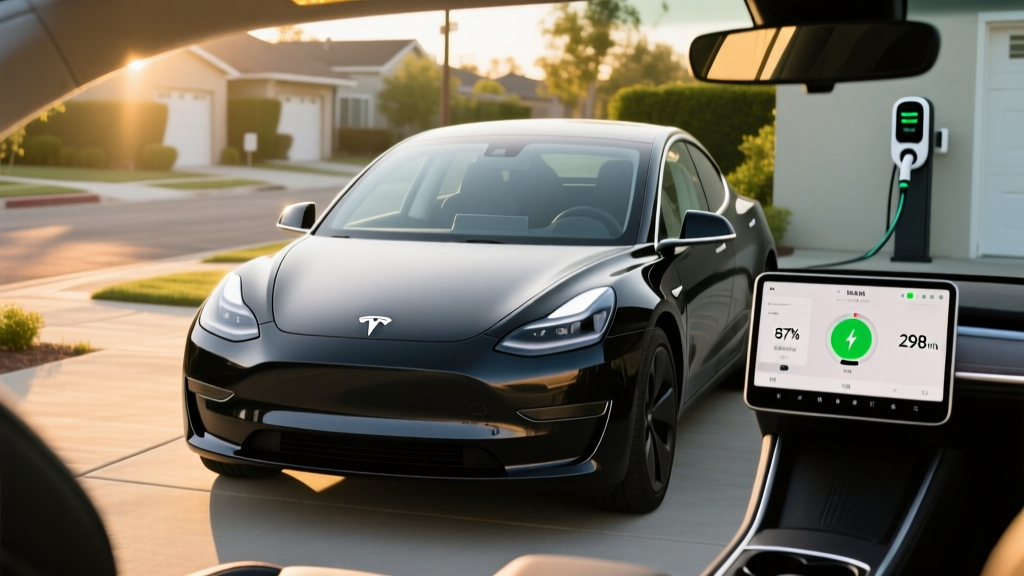
The 2022 Tesla Model 3 remains one of the most efficient, best-charging electric sedans on the used market. With EPA range up to 358 miles (Long Range AWD), access to Tesla's Supercharger network, and a starting used price that has dropped significantly since new, it's a compelling entry point into EV ownership. But buyers need to understand the differences between the Standard Range RWD (LFP battery) and Long Range/Performance trims (NMC battery), as the chemistry affects everything from daily charging habits to cold-weather range.
| Spec | Standard Range RWD | Long Range AWD | Performance AWD |
|---|---|---|---|
| EPA Range | 272 mi | 358 mi | 315 mi |
| Battery (usable) | ~57.5 kWh (LFP) | ~75 kWh (NMC) | ~75 kWh (NMC) |
| 0-60 mph | 5.8 sec | 4.2 sec | 3.1 sec |
| Horsepower | 283 hp | 346 hp | 450 hp |
| Drivetrain | RWD (single motor) | AWD (dual motor) | AWD (dual motor) |
| MPGe (combined) | 132 MPGe | 131 MPGe | 125 MPGe |
| EPA Efficiency | 25 kWh/100mi | 25 kWh/100mi | 27 kWh/100mi |
| Peak DC Fast Charge | 170 kW | 250 kW | 250 kW |
| 10-80% DCFC Time | ~30 min | ~25 min | ~25 min |
| Level 2 Home Charge | 11.5 kW (~44 mi/hr) | 11.5 kW (~44 mi/hr) | 11.5 kW (~44 mi/hr) |
| Cargo Volume | 23 cu ft (trunk + frunk combined) | ||
| Rear Legroom | 35.2 in | ||
| Original Base MSRP (2022) | $46,990 | $53,990 | $62,990 |
| Typical Used Price (2026) | $22,000-$27,000 | $28,000-$35,000 | $35,000-$42,000 |
| Battery/Drive Unit Warranty | 8 yr / 100,000 mi | 8 yr / 120,000 mi | |
Sources: EPA / fueleconomy.gov, Tesla owner's manual.
Real-World Range: What the EPA Sticker Doesn't Tell You
EPA vs. Reality: The Long Range AWD's 358-mile EPA estimate is achievable in mixed city/suburban driving at moderate speeds. Expect ~280-310 miles on the highway at 70-75 mph, and ~240-270 miles in freezing temperatures (below 32°F) due to cabin heating demand and battery chemistry. The Standard Range RWD's 272 EPA miles translates to roughly 215-235 highway miles in fair weather and potentially under 180 miles in deep cold.
The 2022 Model 3 is among the most efficient EVs ever sold, routinely achieving 250-275 Wh/mile in real-world mixed driving according to owner-reported data on TeslaFi and similar platforms. That efficiency is the result of Tesla's heat pump (standard on all 2022 trims), excellent aerodynamics (0.23 Cd), and aggressive regenerative braking.
The LFP factor on Standard Range: The 2022 RWD model uses a lithium iron phosphate (LFP) battery supplied primarily by CATL. LFP has lower energy density than NMC, which is why the RWD has less range despite similar exterior dimensions. However, LFP offers two major ownership advantages: it can (and should) be charged to 100% daily without accelerating degradation, and it has a longer cycle life. The trade-off is worse cold-weather performance — LFP cells lose more usable capacity in sub-freezing temperatures than NMC cells.
Cold-weather specifics: Tesla's heat pump helps, but any EV loses range in winter. Plan for a 20-30% reduction in freezing weather, and precondition the battery while plugged in to minimize losses. The Model 3's navigation-based battery preconditioning warms the pack automatically when you route to a Supercharger, improving charge speeds in cold weather.
Charging: Speeds, Networks, and Home Setup
| Charging Level | Power | Speed (approx.) | Use Case |
|---|---|---|---|
| Level 1 (120V) | ~1.4 kW | ~5-6 mi/hr | Emergency / overnight trickle |
| Level 2 (240V home) | 11.5 kW max | ~44 mi/hr | Daily home charging |
| DC Fast (V3 Supercharger) | Up to 250 kW | ~175 mi in 15 min (Long Range) | Road trips |
| DC Fast (V3 Supercharger) | Up to 170 kW | ~120 mi in 15 min (RWD) | Road trips |
The 2022 Model 3 uses Tesla's proprietary connector (now being adopted industry-wide as NACS). By 2026, Tesla Superchargers are open to non-Tesla EVs at many locations via the NACS standard, but Model 3 owners retain native plug-and-charge convenience with no adapter needed.
Charging curve reality: The 250 kW peak on Long Range and Performance trims is only sustained from roughly 10-30% State of Charge (SoC). The curve tapers progressively — expect ~150 kW around 50% SoC, ~75 kW at 70%, and a crawl above 90%. This is why Tesla (and the industry) quote 10-80% times rather than 0-100%. A realistic 10-80% session at a V3 Supercharger takes about 25 minutes for Long Range/Performance and about 30 minutes for the RWD.
Home Level 2 charging: The onboard charger accepts up to 11.5 kW (48 amps), which means you need a 60-amp dedicated circuit and a Tesla Wall Connector or compatible J1772/NACS Level 2 unit. A full home installation typically runs $800-$2,000 depending on panel proximity and local permitting. For a Long Range model, an overnight charge from 20% to 80% adds roughly 215 miles of range — more than enough for any daily commute.
LFP daily charging tip: If you buy the Standard Range RWD with the LFP battery, Tesla recommends charging to 100% at least once per week. This is the opposite of the typical NMC advice (stop at 80-90% for daily use). LFP's flat voltage curve requires periodic full charges for the battery management system to accurately track SoC.
Performance and Driving Dynamics
Even the base RWD Model 3 delivers 283 hp and a 5.8-second 0-60 mph time — quicker than most gas-powered sport sedans. The single-motor RWD is the lightest variant and feels the most tossable in corners, with well-weighted steering and a firm but composed ride.
The Long Range dual-motor AWD adds a front motor for 346 hp combined and all-weather traction, dropping 0-60 to 4.2 seconds. The Performance trim pushes 450 hp and 3.1 seconds to 60, with larger brakes, a lowered sport suspension, and 20-inch wheels (which reduce range slightly due to higher rolling resistance).
All 2022 Model 3s feature one-pedal driving via strong regenerative braking, though unlike earlier model years, Tesla allowed owners to adjust regen strength via software in 2022. The low center of gravity (battery pack under the floor) gives the Model 3 planted handling that belies its sedan proportions.
Tech, Interior, and Driver Assistance
The 2022 Model 3 interior is famously minimalist: a single 15-inch center touchscreen handles all infotainment, climate, and vehicle controls. There is no instrument cluster — speed and range appear in the upper-left corner of the touchscreen. Build quality improved significantly by 2022 compared to earlier Model 3 production, with tighter panel gaps and better interior material quality from the Fremont and Shanghai factories.
Autopilot and FSD: Every 2022 Model 3 includes Basic Autopilot (Traffic-Aware Cruise Control and Autosteer for lane centering on highways). Full Self-Driving (FSD) was available as a $12,000 option or $199/month subscription in 2022. As of 2026, FSD (Supervised) has improved substantially but remains an SAE Level 2 driver-assistance system — the driver must remain attentive and keep hands on the wheel at all times. It is not autonomous driving.
SAE Automation Level: Level 2. Tesla Autopilot and FSD (Supervised) require continuous driver supervision. The system can steer, accelerate, and brake under certain conditions, but the driver is legally and operationally responsible. This is fundamentally different from Level 4 robotaxi services like Waymo, which operate without a human driver in defined geographic areas.
Notable drawbacks: The lack of physical controls (no stalks for turn signals on the 2022 refresh — though this was debated; the 2022 Model 3 still has stalks, unlike the 2024 Highland refresh) can frustrate some drivers. The glass roof provides no shade in summer heat. Rear visibility is limited. And the ride on 19- or 20-inch wheels can be harsh on broken pavement. Rear-seat passengers get 35.2 inches of legroom, which is adequate but tight for adults on long trips compared to a midsize sedan.
Pricing, Tax Credits, and Ownership Costs
| Trim | Original 2022 MSRP | Typical 2026 Used Price | Federal Used EV Credit (§25E) | Effective Price After Credit |
|---|---|---|---|---|
| Standard Range RWD | $46,990 | $22,000-$27,000 | Up to $4,000 (30% of sale price, max $4,000) | $18,000-$23,000 |
| Long Range AWD | $53,990 | $28,000-$35,000 | Up to $4,000 | $24,000-$31,000 |
| Performance AWD | $62,990 | $35,000-$42,000 | Up to $4,000 | $31,000-$38,000 |
Tax credit rules for used EVs (2026): The 2022 Model 3 is no longer eligible for the new-vehicle §30D credit (which applied at original purchase). However, buyers purchasing from a licensed dealer may qualify for the §25E Used Clean Vehicle Credit: 30% of the sale price, up to a maximum of $4,000. Key requirements:
- Sale price must be $25,000 or less (this limits eligibility to the Standard Range RWD and some Long Range examples)
- Buyer income caps: $75,000 single / $112,500 head of household / $150,000 joint (modified AGI)
- Vehicle must be purchased from a licensed dealer (private-party sales do not qualify)
- The vehicle must be at least 2 model years old (2022 models qualify in 2026)
- Credit can be transferred to the dealer at point of sale as a price reduction
5-year ownership cost estimate (Long Range AWD, 15,000 mi/yr):
| Category | Estimated Cost |
|---|---|
| Purchase price (after credit) | ~$27,000 |
| Home electricity (avg $0.16/kWh) | ~$4,500 |
| Insurance (avg) | ~$12,000 |
| Maintenance (tires, cabin filter, fluid top-offs) | ~$2,500 |
| Estimated depreciation (5 yr) | ~$10,000 |
| Total 5-year cost | ~$56,000 |
For comparison, a similarly equipped gas sedan averaging 30 MPG at $3.50/gallon would spend ~$8,750 on fuel alone over 75,000 miles — nearly double the Model 3's electricity cost. The Model 3's maintenance costs are also dramatically lower: no oil changes, no transmission fluid, and regenerative braking extends pad life significantly.
Warranty and Battery Longevity
Tesla's battery and drive unit warranty for the 2022 Model 3:
- Standard Range RWD (LFP): 8 years / 100,000 miles, whichever comes first, with minimum 70% capacity retention
- Long Range & Performance (NMC): 8 years / 120,000 miles, whichever comes first, with minimum 70% capacity retention
- Basic vehicle limited warranty: 4 years / 50,000 miles
Real-world degradation data from Tesla's 2023 Impact Report and owner crowdsourcing (TeslaFi) shows that Model 3 batteries typically lose about 5-8% capacity in the first 50,000 miles, then the degradation curve flattens significantly. Most Model 3s are projected to retain 85-90% of original capacity at 150,000 miles. LFP batteries tend to show even slower degradation in terms of cycle life, though they are more sensitive to extreme cold.
Out-of-warranty replacement cost: A full battery replacement for a 2022 Model 3 currently runs $12,000-$16,000 at Tesla service centers, though this is rare — most degradation stays well above the 70% warranty threshold. Refurbished packs may be available at lower cost.
2022 Model 3 vs. Key Competitors (Used Market 2026)
| Spec | 2022 Tesla Model 3 LR | 2022 Hyundai Ioniq 6 SEL | 2022 BMW i4 eDrive40 | 2022 Polestar 2 LR DM |
|---|---|---|---|---|
| EPA Range | 358 mi | 305 mi | 301 mi | 276 mi |
| Battery | 75 kWh NMC | 77.4 kWh NMC | 83.9 kWh NMC | 78 kWh NMC |
| Peak DC Charge | 250 kW | 235 kW | 205 kW | 205 kW |
| 10-80% DCFC | ~25 min | ~18 min | ~31 min | ~32 min |
| 0-60 mph | 4.2 sec | 5.1 sec | 5.5 sec | 4.5 sec |
| Typical Used Price | $28K-$35K | $22K-$28K | $30K-$38K | $24K-$30K |
| Charging Network | Native Supercharger | CCS (adapter for NACS) | CCS (adapter for NACS) | CCS (adapter for NACS) |
The Model 3 Long Range still leads the pack in EPA range and offers the most seamless charging experience via the Supercharger network. The Ioniq 6 charges faster (its 800V architecture enables a quicker 10-80% time) and costs less on the used market. The BMW i4 offers a more traditional luxury interior and driving dynamics but at a price premium. The Polestar 2 is a strong alternative for buyers who want Android Automotive OS and a more distinctive design, but it gives up significant range.
Choose the 2022 Model 3 if: You want maximum range per dollar, native Supercharger access without adapters, class-leading efficiency, and strong over-the-air software updates that keep the car improving.
Choose a competitor if: You need more rear-seat space (Ioniq 6, BMW i4), prefer physical buttons and a traditional instrument cluster, want faster peak charging (Ioniq 6), or prioritize interior luxury over efficiency (BMW i4).
Pros and Cons
Pros
- Best-in-class efficiency (~25 kWh/100mi)
- Up to 358 miles EPA range (Long Range)
- Native Supercharger access — most reliable DCFC network
- Strong over-the-air update history keeps software current
- LFP battery on RWD allows daily 100% charging
- Minimal maintenance costs vs. gas vehicles
- Qualifies for up to $4,000 used EV tax credit (if under $25K sale price)
Cons
- Tight rear seat (35.2" legroom) for a family sedan
- All controls via touchscreen — no physical buttons or knobs
- Glass roof offers no sunshade; cabin gets hot in summer
- Ride quality harsh on larger wheels (19"/20")
- Insurance premiums typically 15-25% higher than comparable gas sedans
- Autopilot/FSD is Level 2 only — not self-driving despite marketing
- 2022 model predates the Highland refresh (no ventilated seats, no rear screen, no ambient lighting)
Frequently Asked Questions
What is the real-world range of the 2022 Tesla Model 3?
The Long Range AWD achieves 280-310 miles on the highway at 70-75 mph in fair weather, and up to 358 miles in mixed city driving near the EPA estimate. The Standard Range RWD delivers roughly 215-235 highway miles. In freezing temperatures, expect a 20-30% reduction on both trims, with the LFP-equipped RWD being more affected by cold.
How fast does the 2022 Model 3 charge at home and on the road?
At home on a Level 2 (240V, 48A) charger, the Model 3 adds about 44 miles of range per hour — a full overnight session easily replenishes a day's driving. On a V3 Supercharger (250 kW peak for Long Range/Performance), a 10-80% session takes about 25 minutes. The Standard Range RWD peaks at 170 kW and takes about 30 minutes for the same 10-80% session.
Does the 2022 Model 3 qualify for any federal tax credit in 2026?
Not the new-vehicle §30D credit, which applied at original purchase. However, buyers who purchase a 2022 Model 3 from a licensed dealer for $25,000 or less may qualify for the §25E Used Clean Vehicle Credit — 30% of the sale price, up to $4,000. Income caps apply ($75K single / $150K joint). Consult a tax professional for your specific eligibility.
Is the 2022 Model 3 worth buying in 2026 vs. newer EVs?
For buyers prioritizing range, charging infrastructure, and efficiency, the 2022 Model 3 Long Range is still one of the best values on the used EV market. It trades some interior space and luxury for best-in-class efficiency and Supercharger convenience. If you need more rear-seat room, physical controls, or a quieter cabin, consider the 2022 Ioniq 6 or BMW i4 instead.
What are the biggest ownership costs to watch for?
Insurance is the most common surprise — Model 3 premiums run 15-25% higher than comparable gas sedans due to repair costs and parts pricing. Tires wear faster than on gas cars due to the vehicle's weight and instant torque; budget $800-$1,200 for a set of EV-rated tires every 30,000-40,000 miles. Beyond that, maintenance is minimal: cabin air filter replacement every 2 years, brake fluid checks, and windshield washer fluid.
How long will the 2022 Model 3 battery last?
Tesla warranties the battery for 8 years / 100,000-120,000 miles (depending on trim) with a 70% minimum capacity retention guarantee. Real-world data shows most Model 3 batteries retain 85-90% capacity at 150,000 miles. The LFP battery in the RWD variant has an even longer projected cycle life. Out-of-warranty replacement costs $12,000-$16,000, but full replacements are uncommon.