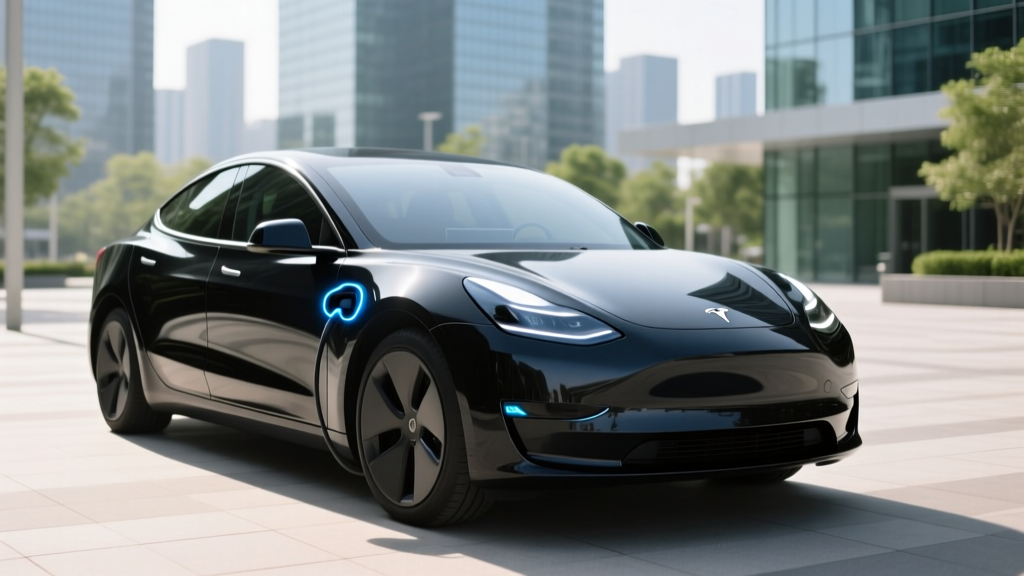
If you are shopping the used EV market in 2026, the Tesla Model 3 2018 model year keeps showing up. It was the first full production year of Tesla's mass-market sedan, and thousands of these cars are now coming off leases and entering the secondhand market at tempting prices. But a 2018 Model 3 is now eight years old — which raises critical questions about battery degradation, charging relevance, software support, and overall value against newer, cheaper EVs.
This review breaks down the exact specs, real-world range you can expect from an aging 75 kWh NMC pack, charging speeds on today's networks, and how a used 2018 Model 3 stacks up against modern competition. We'll also cover the used-EV federal tax credit that can knock up to $4,000 off the purchase price.
2018 Tesla Model 3 Quick Specs
| Spec | Long Range RWD | Long Range AWD | Performance AWD |
|---|---|---|---|
| EPA Range (original) | 310 mi | 310 mi | 310 mi |
| Battery (usable) | ~75 kWh (NMC) | ~75 kWh (NMC) | ~75 kWh (NMC) |
| Efficiency | 130 MPGe / 26 kWh/100mi | 120 MPGe / 28 kWh/100mi | 116 MPGe / 29 kWh/100mi |
| 0-60 mph | 5.1 sec | 4.5 sec | 3.3 sec |
| Horsepower | ~271 hp | ~346 hp | ~450 hp |
| Drivetrain | Rear-Wheel Drive | Dual-Motor AWD | Dual-Motor AWD |
| Max DC Fast Charge | ~145 kW peak | ~145 kW peak | ~145 kW peak |
| 10-80% DCFC Time | ~35 min | ~35 min | ~35 min |
| Level 2 Home Charge | 11.5 kW / ~37 mi/hr | 11.5 kW / ~37 mi/hr | 11.5 kW / ~37 mi/hr |
| Cargo Volume | 15 cu ft trunk + 2.1 cu ft frunk | ||
| Original MSRP | $49,000 | $53,000 | $64,000 |
| 2026 Used Price Range | $14,000–$18,000 | $16,000–$21,000 | $19,000–$25,000 |
| Battery Warranty (remaining) | 8 yr / 120,000 mi (expires 2026) | ||
Real-World Range: What You'll Actually Get
The 2018 Model 3 Long Range shipped with a ~75 kWh usable NMC (nickel manganese cobalt) battery pack. Tesla's NMC chemistry delivers excellent energy density but is more susceptible to calendar degradation than the LFP (lithium iron phosphate) packs Tesla introduced in later Standard Range models. According to aggregated fleet data from sources like fueleconomy.gov, eight-year-old NMC packs typically retain 85–93% of original capacity depending on charging habits and climate exposure.
If you are evaluating a specific 2018 Model 3, check the battery health via the Tesla app or the car's energy screen. Look at the rated range at 100% State of Charge (SoC) — if it shows below 270 miles, the pack has experienced above-average degradation. Cars that were routinely charged to 100% and left sitting in hot climates (Arizona, Texas) will show more capacity loss than those kept between 20–80% SoC in temperate regions.
For context, the EPA's official listing for the 2018 Model 3 Long Range RWD shows 130 MPGe combined and 26 kWh per 100 miles — figures that remain competitive with many 2025-era mid-size EVs.
Charging Speeds: DC Fast Charging and Home Level 2
The 2018 Model 3 supports a peak DC fast-charge rate of approximately 145 kW on a CCS or Tesla Supercharger (V2). This was respectable in 2018 but falls short of the 250 kW peak that Tesla introduced with the 2019 Model 3 refresh and V3 Superchargers. On a modern 350 kW Electrify America or EVgo station, the 2018 car will still peak at ~145 kW.
| Charging Level | Power | Speed (Miles Added) | Notes |
|---|---|---|---|
| Level 1 (120V household) | ~1.4 kW | ~3–4 mi/hr | Emergency/trickle only |
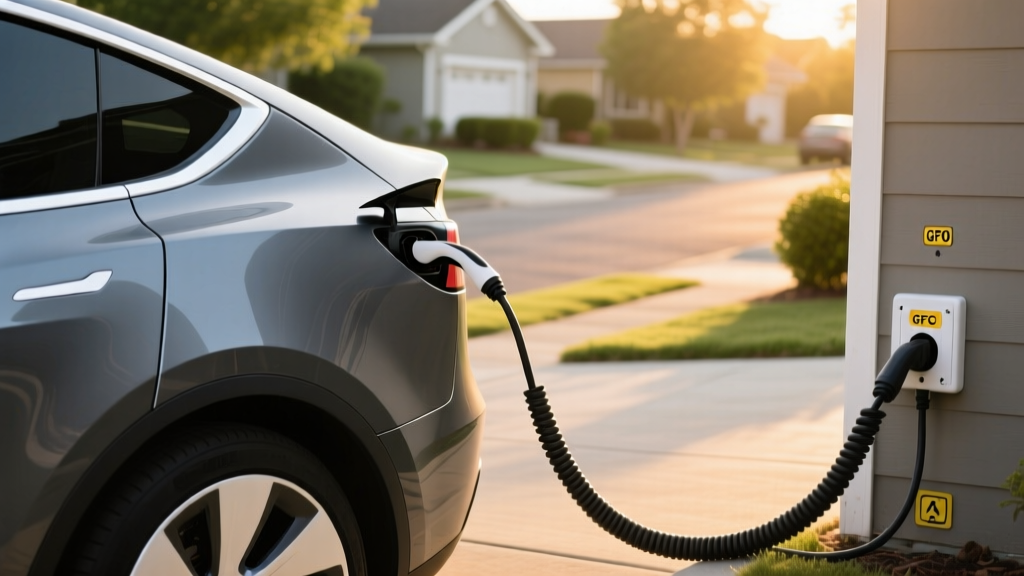
| Level 2 (240V home, 48A) | 11.5 kW | ~37 mi/hr | Full charge in ~7.5 hours |
| Level 2 (public, 40A) | 9.6 kW | ~31 mi/hr | Common at workplaces/hotels |
| DC Fast Charge (V2 Supercharger) | ~145 kW peak | ~170 mi in 30 min | 10-80% in ~35 minutes |
| DC Fast Charge (V3 Supercharger) | ~145 kW peak (car-limited) | Same as V2 | Car cannot use full 250 kW |
The charge curve matters here. The 2018 Model 3 sustains its peak rate from roughly 10% to 40% SoC, then tapers progressively. From 80% to 100%, charging slows dramatically — a characteristic of NMC chemistry. For road trips, plan your stops around the 10–80% window to minimize time at the charger.
The 2018 Model 3 uses the Tesla proprietary connector (now called NACS). With Tesla opening the Supercharger network to other brands via NACS adapters, this is actually an advantage in 2026 — you have native access to the most reliable fast-charging network in North America without needing an adapter.
Performance and Driving Dynamics
Even in 2026, the 2018 Model 3's performance holds up. The Long Range RWD delivers a 5.1-second 0-60 mph time with 271 horsepower from a single rear motor. The dual-motor Long Range AWD drops that to 4.5 seconds with 346 combined horsepower. The Performance variant — with its 450 hp and 3.3-second sprint — still embarrasses most gas-powered sports sedans at stoplights.
The 2018 Model 3 rides on a sport-tuned suspension that is notably firm. Road imperfections transmit sharply into the cabin, especially on models with the 19-inch Sport Wheels. The steering is quick and precise, and the low center of gravity (battery pack under the floor) gives the car genuinely engaging handling for a compact sedan.
One-pedal driving with strong regenerative braking is a highlight. The 2018 Model 3's regen is aggressive enough that most owners rarely touch the brake pedal in daily driving. Note that Tesla removed the user-adjustable regen setting in later software updates, though it was partially restored — check the software version on any car you're evaluating.
Interior, Tech, and Autopilot
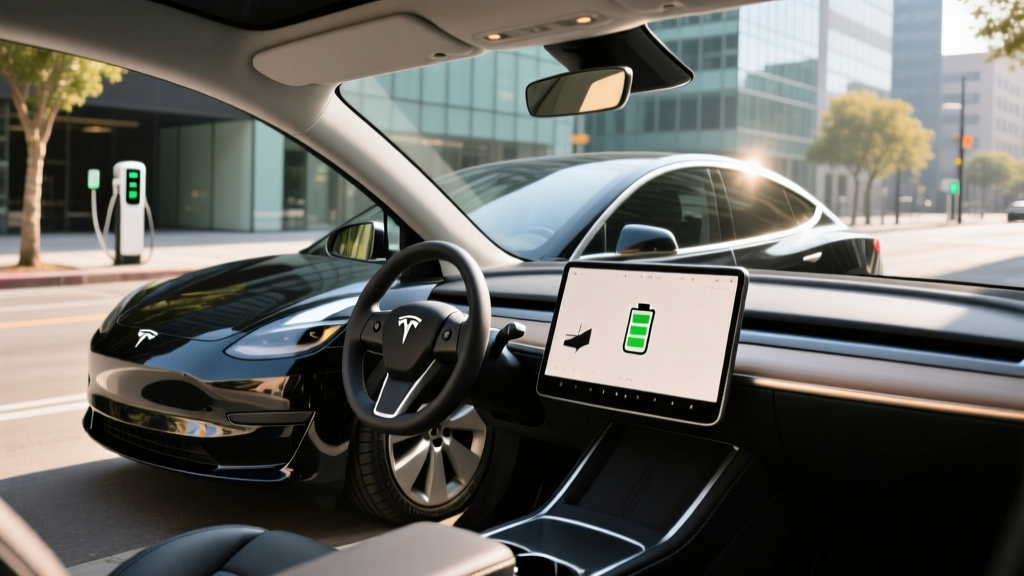
The 2018 Model 3 interior is famously minimalist: a single 15-inch landscape touchscreen controls everything. No instrument cluster, no physical buttons, no traditional stalks for wipers or turn signals (those are on the steering column). This design polarizes — some owners love the clean aesthetic, others find it distracting for daily driving.
The infotainment system remains one of the best in any car, new or used. Over-the-air (OTA) software updates have kept 2018 Model 3s current with features like streaming Netflix and YouTube (while parked), a modern navigation interface, Sentry Mode dashcam recording, and improved voice commands. Tesla's continued software support for eight-year-old hardware is a genuine differentiator in the EV space.
Autopilot and FSD: The 2018 Model 3 came with Tesla's Enhanced Autopilot hardware (HW2.5). This supports Traffic-Aware Cruise Control and Autosteer (lane centering) as standard features. Some 2018 cars were optioned with the $3,000 Enhanced Autopilot package (auto lane change, Navigate on Autopilot, Autopark, Summon). A small number may have the $5,000–$8,000 Full Self-Driving (FSD) capability package.
The HW2.5 computer in the 2018 Model 3 is a known limitation. Tesla offered free upgrades to HW3 (the "FSD Computer") for owners who had purchased the FSD package, but cars without FSD remain on the older hardware. If advanced driver-assist features matter to you, confirm which computer the car has before buying.
Pricing, Tax Credits, and Ownership Costs
Used 2018 Model 3 prices in 2026 have settled into attractive territory. Long Range RWD models typically trade between $14,000 and $18,000, while Long Range AWD examples run $16,000–$21,000. Performance variants command $19,000–$25,000 depending on mileage and condition.
| Cost Factor | Amount |
|---|---|
| Used Price (Long Range AWD, ~60k mi) | $17,000–$20,000 |
| Federal Used EV Tax Credit (§25E) | Up to $4,000 (30% of sale price, max $4k) |
| Estimated Price After Credit | $13,000–$16,000 |
| Annual Insurance (national avg) | $1,800–$2,400 |
| Annual Electricity (12,000 mi, $0.15/kWh) | ~$470–$540 |
| Estimated Maintenance/Year | $300–$500 (tires, cabin filter, wipers) |
Federal Used EV Tax Credit (§25E): The 2018 Model 3 qualifies for the federal used clean vehicle credit, which provides 30% of the sale price up to a maximum of $4,000. Per IRS rules, eligibility requires that the buyer's modified adjusted gross income does not exceed $75,000 (single), $112,500 (head of household), or $150,000 (joint). The vehicle must be purchased from a licensed dealer for $25,000 or less, and the credit can be transferred to the dealer at the point of sale to reduce the purchase price directly.
Note that the new-vehicle §30D credit does not apply to used car purchases — the §25E used-EV credit is the relevant incentive here. Always consult a tax professional to confirm your eligibility, as income thresholds and dealer reporting requirements apply.
Battery Warranty and Longevity
Tesla warranted the 2018 Model 3 Long Range battery and drive unit for 8 years or 120,000 miles (whichever comes first), with a guaranteed minimum 70% capacity retention. For most 2018 Model 3s, this warranty is expiring in 2026 — which is a significant consideration for used buyers.
If the car you're evaluating has under 120,000 miles and was purchased new in mid-to-late 2018, some months of warranty coverage may remain. However, once the warranty expires, a battery replacement would cost approximately $12,000–$16,000 at a Tesla Service Center, based on current remanufactured pack pricing. In practice, most 2018 Model 3 batteries are degrading gracefully and should deliver many more years of service — but the financial risk shifts entirely to the owner post-warranty.
The drive units (motors) are generally reliable, though some early 2018 Model 3s experienced front motor bearing noise at higher mileages. Tesla addressed this under warranty in most cases. Check for any unusual whining from the front axle during a test drive.
Pros, Cons, and the Competition
- Supercharger network access (NACS native, no adapter needed)
- Continued OTA software updates keep the car current
- Excellent efficiency: 26–29 kWh/100mi beats most modern EVs
- Strong performance even in base Long Range RWD trim
- Qualifies for up to $4,000 federal used-EV tax credit
- Large cargo area: 15 cu ft trunk + 2.1 cu ft frunk
- Minimalist interior has aged better than expected
- Battery warranty expiring in 2026 — financial risk shifts to owner
- DC fast-charge capped at ~145 kW (slower than 2020+ Model 3)
- No heat pump — significant cold-weather range loss
- Firm ride quality, especially on 19-inch wheels
- HW2.5 Autopilot computer limits advanced FSD features
- Minimalist controls (no physical buttons) distract some drivers
- No rear-seat USB-C ports (only USB-A in 2018 model)
Versus key competitors: A used 2018 Model 3 competes against the used 2019–2020 Hyundai Kona Electric (258 mi EPA, slower charging, smaller interior), the 2019–2021 Chevrolet Bolt EV (259 mi EPA, CCS charging, much cheaper but less refined), and newer budget EVs like the 2024–2025 Volvo EX30 or base Nissan Ariya. The Model 3's advantages are Supercharger access, software support, and driving dynamics. Its disadvantages are the aging battery warranty and slower charging compared to 2020+ EVs with 800V architectures.
Who Should Buy a 2018 Tesla Model 3?
- You want Supercharger access without adapters for road trips
- You commute 30–80 miles daily and can charge at home overnight
- You value software updates and a modern tech experience in a budget EV
- You qualify for the $4,000 used-EV tax credit, bringing effective cost below $16,000
- You live in a temperate climate where cold-weather range loss is manageable
- You need a warranty-backed battery for peace of mind
- You regularly drive in sub-freezing winters (no heat pump hurts)
- You want the fastest possible DC charging for frequent long road trips
- You prefer physical buttons and a traditional instrument cluster
Frequently Asked Questions
What is the real-world range of a used 2018 Tesla Model 3?
Expect 240–275 miles in mixed driving from an eight-year-old pack with typical degradation. Highway driving at 75 mph yields roughly 220–250 miles. In freezing weather, plan for 190–220 miles due to the lack of a heat pump and resistive cabin heating.
How fast does the 2018 Model 3 charge?
On a DC fast charger, it peaks at ~145 kW and charges from 10–80% in approximately 35 minutes. At home on a Level 2 (240V, 48A) charger, it adds about 37 miles of range per hour, reaching a full charge in roughly 7.5 hours.
Does the 2018 Model 3 qualify for any federal tax credit?
Yes — the federal used EV tax credit (§25E) provides up to $4,000 (30% of sale price) if purchased from a dealer for $25,000 or less, and if the buyer's income falls under IRS thresholds ($75k single / $150k joint). The new-vehicle §30D credit does not apply to used purchases.
Is the 2018 Model 3 still worth buying in 2026?
At $14,000–$21,000 before the used-EV credit, it offers excellent value — particularly for the Supercharger access, continued software updates, and strong efficiency. The main risks are the expiring battery warranty and slower DC charging versus newer EVs. If you find a low-mileage example with good battery health, it remains one of the best used EV deals available.
What should I check before buying a used 2018 Model 3?
Prioritize these items: (1) Battery health — check rated range at 100% SoC; (2) remaining battery/drive-unit warranty coverage; (3) Autopilot hardware version (HW2.5 vs upgraded HW3); (4) service history for any drive-unit or suspension repairs; (5) tire condition (EVs wear tires faster due to weight and instant torque); (6) title status — avoid salvage or rebuilt titles, as Tesla will not service them.