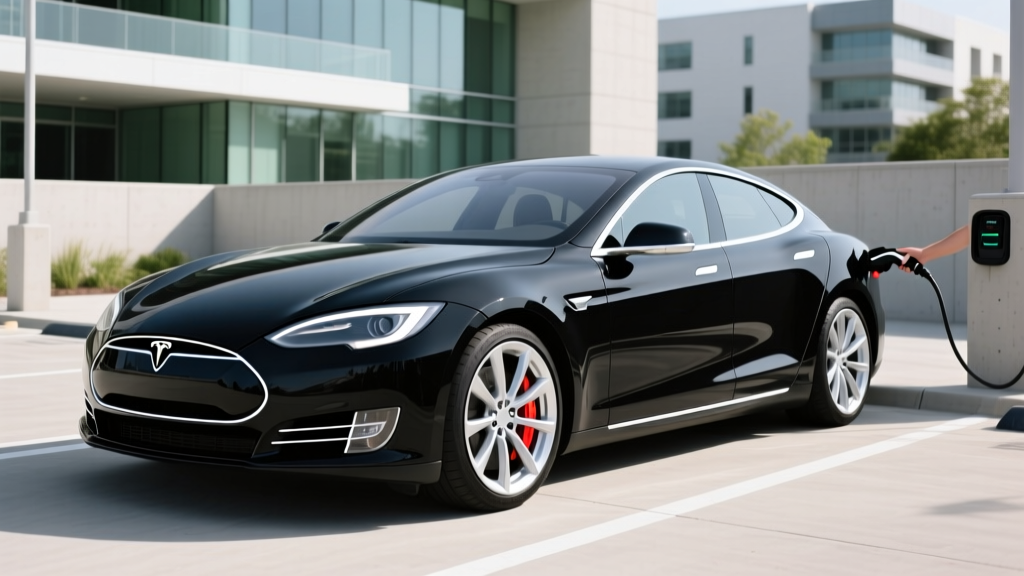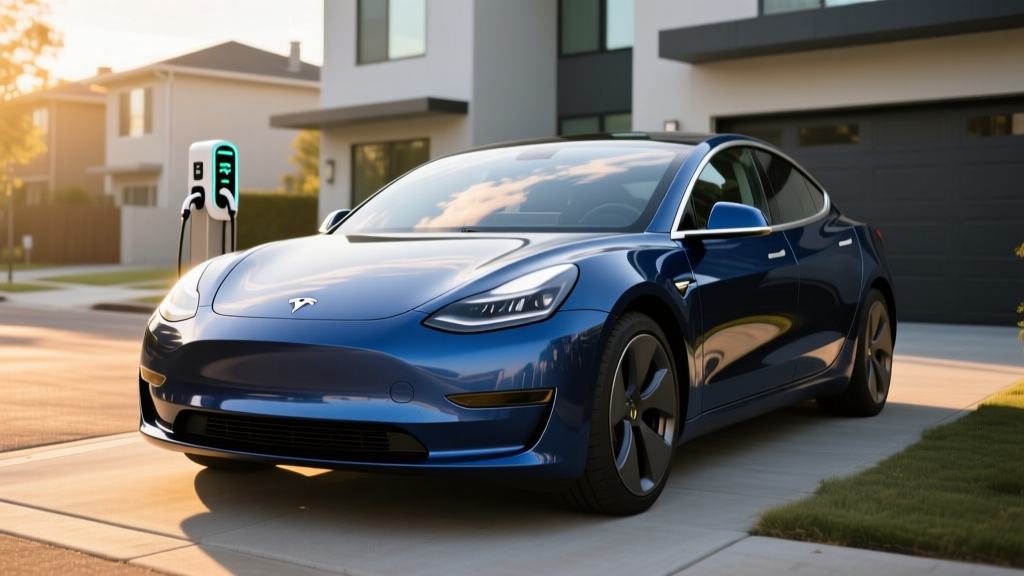
Tesla's promotional financing offers have become a key lever for driving Model 3 sales, and the Tesla Model 3 0.99% APR deal is one of the most attractive rates we've seen on a new EV in 2026. But low financing rates only matter if the underlying vehicle delivers where it counts: real-world range, charging speed, build quality, and total cost of ownership. In this review, we break down the 2026 Tesla Model 3 across every metric that matters to buyers — and assess whether this particular financing promotion makes it the best value in the electric sedan segment.
2026 Tesla Model 3 at a Glance: Full Spec Sheet
| Specification | Model 3 RWD | Model 3 Long Range AWD | Model 3 Performance |
|---|---|---|---|
| EPA Range | 272 mi | 363 mi | 315 mi |
| Battery (usable) | ~57.5 kWh (LFP) | ~79 kWh (NMC) | ~79 kWh (NMC) |
| MPGe (combined) | 132 MPGe | 134 MPGe | 124 MPGe |
| kWh/100 mi | 25 kWh | 25 kWh | 27 kWh |
| 0–60 mph | 5.8 sec | 4.2 sec | 2.9 sec |
| Horsepower | 271 hp | 346 hp | 510 hp |
| Drivetrain | RWD | Dual-Motor AWD | Dual-Motor AWD |
| Peak DC Charge Rate | 170 kW | 250 kW | 250 kW |
| 10–80% DC Fast Charge | ~30 min | ~25 min | ~25 min |
| Level 2 Home Charging | 11.5 kW (~37 mi/hr) | 11.5 kW (~37 mi/hr) | 11.5 kW (~37 mi/hr) |
| Base MSRP (2026) | $38,990 | $45,990 | $53,990 |
| Battery Warranty | 8 yr / 100,000 mi | 8 yr / 120,000 mi | 8 yr / 120,000 mi |
| Cargo Volume | 23 cu ft (trunk + frunk) | 23 cu ft | 23 cu ft |
Source: fueleconomy.gov and Tesla specifications. Prices exclude destination fee.
Real-World Range: What the EPA Number Doesn't Tell You
EPA sticker: 363 miles. Real-world highway driving at 70–75 mph: expect ~290–320 miles. In cold weather (below 32°F), plan for ~250–280 miles of usable range before needing a charger.
The 363-mile EPA rating on the Long Range AWD is among the highest of any EV sedan on the market. But EPA tests use a mix of city and highway driving at moderate speeds with climate control in a comfortable range. On a real 300-mile road trip at sustained highway speeds, the Model 3 Long Range typically returns between 290 and 320 miles depending on elevation changes, wind, and tire condition.
The RWD trim uses an LFP (lithium iron phosphate) battery, which is heavier and slightly less energy-dense than the NMC (nickel manganese cobalt) pack in the Long Range and Performance trims. LFP cells also lose more range in extreme cold — expect up to a 30% reduction in winter conditions versus 20–25% for the NMC variants. That said, LFP batteries offer a longer cycle life and can be charged to 100% daily without the degradation concerns that apply to NMC chemistry. Tesla recommends daily 100% charging for LFP-equipped vehicles, which is a practical advantage for commuters who want every available mile.
For context, the Hyundai Ioniq 6 SE Long Range delivers an EPA 361 miles, and the BMW i4 eDrive40 comes in at 301 miles. The Model 3 Long Range sits at the top of its class, but only if you're not exclusively driving at 80 mph in Montana winter.
Charging Speed: Supercharger Network Advantage
Charging is where the Model 3 continues to hold a meaningful edge over most competitors, largely thanks to Tesla's Supercharger network — now increasingly accessible to non-Tesla EVs via the NACS standard, but still most seamless for Tesla owners.
| Charging Level | Power | Speed (Miles Added/Hour) | Notes |
|---|---|---|---|
| Level 1 (120V household) | ~1.4 kW | ~3–5 mi/hr | Emergency/trickle only |
| Level 2 (240V home, 48A) | 11.5 kW | ~37 mi/hr | Full charge overnight in ~8–10 hours |
| DC Fast Charge (RWD) | Peak 170 kW | ~170 mi in 30 min | 10–80% in ~30 min; tapers sharply above 80% |
| DC Fast Charge (LR/Perf) | Peak 250 kW | ~200 mi in 15 min | 10–80% in ~25 min; preconditioning required |
The 250 kW peak charge rate on the Long Range and Performance trims is impressive, but sustained charging matters more than peak numbers. In real-world testing, the Model 3 Long Range holds above 200 kW from roughly 10% to 35% SoC, then gradually tapers. The entire 10–80% session takes about 25 minutes at a V3 Supercharger. Above 80%, the charge rate drops dramatically to protect battery health — plan your road-trip stops to charge to 80% and move on rather than waiting for a full top-off.
Preconditioning is critical here. If you navigate to a Supercharger using the car's built-in navigation, the battery will automatically warm to optimal charging temperature before you arrive. Arriving at a Supercharger with a cold battery without preconditioning can add 5–10 minutes to your session and reduce peak charge rates significantly.
According to Tesla's charging documentation, a 48-amp Level 2 home charger (like the Tesla Wall Connector) delivers up to 11.5 kW, adding roughly 37 miles of range per hour. Most owners will wake up to a full battery every morning with a standard overnight charge. Installation costs for a home Level 2 setup typically range from $800 to $2,000 depending on your electrical panel capacity and the distance from panel to charger location.
Performance and Driving Dynamics
The Model 3 Performance is a legitimate sports sedan: 510 hp, dual-motor AWD, and a 2.9-second 0–60 mph time that embarrasses most six-figure performance cars. The updated Highlandland refresh brought revised suspension tuning, adaptive dampers, and improved steering feel that addresses the numb steering complaint leveled at earlier Model 3 generations.
The Long Range AWD hits 60 mph in 4.2 seconds — plenty quick for daily driving and highway merging. The RWD base model, with its single rear motor and 271 hp, manages 5.8 seconds, which is adequate but noticeably less urgent. For buyers in snow-belt states, the dual-motor AWD variants provide substantially better traction and confidence in winter conditions.
Ride quality across the lineup has improved noticeably over the pre-2024 Model 3. The cabin is quieter (laminated glass on all windows), the seats are more supportive, and the suspension absorbs road imperfections with less harshness. It's still a firm-riding sedan compared to a BMW i4 or Mercedes EQB, but the gap has narrowed considerably.
Pricing, Trims, and the 0.99% APR Financing Deal
The headline 0.99% APR financing offer from Tesla is a manufacturer-subsidized rate designed to reduce the effective cost of ownership versus a standard auto loan. At a time when average new-car loan rates hover around 6–7% for well-qualified buyers, a 0.99% APR represents substantial savings over a 60- or 72-month term.
| Trim | Base MSRP | Est. §30D Credit | Effective Price | Monthly (0.99% APR, 72 mo)* |
|---|---|---|---|---|
| RWD | $38,990 | $3,750–$7,500 | $31,490–$35,240 | ~$455–$510 |
| Long Range AWD | $45,990 | $3,750–$7,500 | $38,490–$42,240 | ~$555–$610 |
| Performance | $53,990 | $0–$7,500 | $46,490–$53,990 | ~$670–$780 |
*Estimated monthly payments assume full credit amount applied as down-payment reduction, 72-month term at 0.99% APR. Actual terms vary. Excludes taxes, fees, and destination charge.
Federal Tax Credit Eligibility (§30D)
The Tesla Model 3's federal tax credit eligibility depends on the specific trim and your personal tax situation. Under current IRS §30D rules, the credit ranges from $3,750 to $7,500, determined by battery component and critical mineral sourcing requirements. The RWD trim, equipped with an LFP battery largely sourced from CATL (China), has historically qualified for only the partial $3,750 credit due to critical mineral restrictions. The Long Range and Performance trims, with NMC packs, have seen fluctuating eligibility depending on Tesla's supply-chain adjustments.
- MSRP cap: Sedans must be under $55,000 MSRP — the RWD and Long Range qualify, but the Performance at $53,990 fits under the cap as well (options can push it over).
- Income limits: Modified AGI must not exceed $150,000 (single), $225,000 (head of household), or $300,000 (joint filers).
- Battery sourcing: Critical minerals and battery components must meet escalating domestic/FTE-partner sourcing thresholds. Check fueleconomy.gov for the current credit amount by VIN before purchasing.
- Point-of-sale transfer: As of 2024, you can transfer the credit to the dealer at purchase, reducing the upfront price rather than waiting for a tax refund.
Consult a tax professional to confirm your eligibility — rules change, and your individual circumstances (income, filing status, tax liability) determine whether you can use the full credit.
Interior, Cargo, and Technology
The Model 3's minimalist interior is polarizing: a single 15.4-inch touchscreen handles virtually every function, from climate control to mirror adjustment. There is no instrument cluster — speed and navigation are displayed on the upper-left corner of the central screen. A rear 8-inch screen was added in the refresh for passenger climate and media controls.
Cargo capacity is 23 cubic feet combined (trunk plus front trunk/frunk). The trunk opening is a traditional sedan notchback rather than a hatchback, which limits usability for bulky items compared to a Model Y or Ioniq 5. Rear-seat legroom measures 35.3 inches — adequate for adults on shorter trips but tight for taller passengers on longer drives. Headroom is generous thanks to the glass roof, though the roof itself offers no shade and can make the cabin feel warm in direct summer sun.
Tech highlights include:
- Autopilot (standard): SAE Level 2 driver assistance with adaptive cruise, lane centering, and automatic emergency braking. The driver must remain attentive and hands-on at all times.
- Full Self-Driving Supervised ($8,000 option): Adds automated lane changes, traffic light/stop sign recognition, and navigation-based highway driving. Still SAE Level 2 — not autonomous driving.
- Over-the-air updates: Tesla continues to push feature improvements remotely, including UI refinements, efficiency optimizations, and entertainment additions.
- Sentry Mode / Dashcam: Built-in camera recording for security and incident capture, no third-party hardware needed.
Pros and Cons: Honest Assessment
Pros
- Class-leading EPA range (363 mi on Long Range)
- Supercharger network access — still the most reliable DC fast-charging ecosystem
- 250 kW peak charging on LR/Performance trims
- 0.99% APR financing dramatically reduces borrowing cost
- Over-the-air updates keep the car improving post-purchase
- Strong resale value relative to EV competitors
- LFP battery option allows daily 100% charging without degradation worry
Cons
- Sedan trunk opening limits cargo versatility vs hatchback competitors
- Rear-seat legroom is tight for tall adults
- No Apple CarPlay or Android Auto — Tesla-only ecosystem
- Touchscreen-dependent controls can be distracting while driving
- Performance trim may exceed $55K MSRP cap with options, losing tax credit
- RWD LFP battery loses more range in extreme cold
- FSD Supervised remains expensive at $8,000 and is not truly autonomous
Who Should Buy the Model 3 on 0.99% APR?
The 0.99% APR financing offer makes the Model 3 compelling for a specific buyer profile: someone with access to home Level 2 charging, a daily commute under 100 miles round-trip, and the ability to benefit from the federal tax credit. The combination of low borrowing costs, low fueling costs (electricity at $0.12–$0.16/kWh nationally translates to roughly $3.50–$5.00 per 100 miles), and minimal maintenance makes the Model 3 one of the lowest total-cost sedans you can buy over a five-year ownership period.
For road-trippers who regularly cover 400+ miles in a day, the Supercharger network and 25-minute 10–80% sessions make the Model 3 practical for long-distance travel — though you'll want the Long Range trim for the added buffer. Families needing more cargo space and rear-seat room should look at the Model Y or Hyundai Ioniq 5 instead. And if you can't install a home charger, the public-charging dependency may erode the convenience and cost advantages.
Competitor Comparison: Is the Model 3 Still the One to Beat?
The electric sedan segment has grown considerably. Here's how the Model 3 Long Range stacks up against key rivals:
- Hyundai Ioniq 6 SE LR ($45,500, EPA 361 mi): Comparable range, hatchback-adjacent liftback design, 800V architecture charges at up to 350 kW (10–80% in ~18 min). Includes Apple CarPlay. Less refined ADAS than Tesla, smaller charging network.
- BMW i4 eDrive40 ($52,200, EPA 301 mi): Superior build quality and driving dynamics, but 60 fewer miles of range and a higher price. CCS charging only — no NACS adapter included.
- Polestar 2 LR Dual Motor ($49,900, EPA 320 mi): Google built-in, CarPlay support, attractive Scandinavian design. Charges at 205 kW peak. Less efficient and less range than the Model 3.
The Model 3's combination of range, charging infrastructure, and now 0.99% APR financing is difficult to match on total cost. If CarPlay integration, hatchback versatility, or traditional luxury finishes are deal-breakers, the Ioniq 6 or BMW i4 deserve test drives. For pure efficiency-per-dollar, the Model 3 remains the benchmark.
Frequently Asked Questions
What is the real-world range of the Tesla Model 3?
The Long Range AWD is EPA-rated at 363 miles, but real-world highway driving at 70–75 mph typically yields 290–320 miles. In cold weather below freezing, expect 250–280 miles. The RWD trim's EPA 272 miles translates to roughly 220–240 miles in mixed real-world use.
How fast does the Model 3 charge at home and on DC fast chargers?
On a 48-amp Level 2 home charger, the Model 3 adds about 37 miles of range per hour (11.5 kW), reaching a full charge overnight. On DC fast chargers, the Long Range and Performance peak at 250 kW and charge 10–80% in approximately 25 minutes. The RWD peaks at 170 kW and takes about 30 minutes for the same session.
How much does the Model 3 cost after tax credits with 0.99% APR?
The Long Range AWD starts at $45,990. With a $3,750–$7,500 federal credit (depending on battery sourcing), the effective price drops to $38,490–$42,240. At 0.99% APR over 72 months, monthly payments land in the $555–$610 range, making it one of the most affordable ways to finance a 360+ mile EV.
Does the Tesla Model 3 qualify for the full $7,500 federal EV tax credit?
Eligibility varies by trim and current battery sourcing. The RWD with its LFP battery has typically qualified for $3,750 due to critical mineral sourcing from China. The Long Range and Performance trims have fluctuated between $3,750 and $7,500 depending on Tesla's supply-chain composition. Always verify the current credit amount at fueleconomy.gov before purchasing.
Is the Tesla Model 3 worth buying over the Hyundai Ioniq 6 or BMW i4?
If you prioritize range, charging infrastructure access, and low financing costs, the Model 3 is the strongest overall value — especially with 0.99% APR. If CarPlay support, hatchback cargo access, or traditional luxury interior quality matter more, the Ioniq 6 or BMW i4 are strong alternatives at higher price points.
Is Autopilot or FSD self-driving?
No. Both Autopilot and FSD (Supervised) are SAE Level 2 driver-assistance systems. You must remain fully engaged — hands on wheel, eyes on road — at all times. They assist with steering, acceleration, and braking but cannot handle all driving scenarios autonomously.