Tesla periodically rolls out promotional financing — including 0% APR offers on the Model 3 — to move inventory and counter rising competition from Hyundai, BMW, and Ford. For buyers who qualify, 0% financing eliminates thousands in interest charges and can make the Model 3 one of the most affordable premium electric sedans on the market. But does the math actually work in your favor? This review covers the 2026 Tesla Model 3's real-world range, charging speeds, total cost of ownership, and whether combining 0% financing with the federal §30D tax credit delivers the best deal in the EV sedan segment.
2026 Tesla Model 3: Quick Verdict
The refreshed Model 3 (internally called "Highland" and its subsequent updates) remains the benchmark for efficiency in the electric sedan class. With a starting MSRP around $38,990 for the Long Range RWD and up to 341 miles of EPA-estimated range, it undercuts competitors on price-per-mile of range. The 0% financing offer, when available, saves buyers roughly $4,000–$6,000 in interest over a 60-month term compared to prevailing auto loan rates of 5–7%. However, the minimalist interior, firm ride quality, and reliance on touchscreen controls remain polarizing. If you prioritize range, charging infrastructure access (via the Supercharger network), and software refinement, the Model 3 is hard to beat. If you want a traditional luxury interior or physical buttons, look at the BMW i4 or Hyundai Ioniq 6.
Range, Battery, and Efficiency
| Trim | EPA Range | Battery (usable kWh) | Chemistry | MPGe (combined) | kWh/100 mi |
|---|---|---|---|---|---|
| Long Range RWD | 363 mi | 79 kWh | NMC (Nickel Manganese Cobalt) | 132 MPGe | 25 |
| Long Range AWD | 341 mi | 79 kWh | NMC | 124 MPGe | 27 |
| Performance AWD | 315 mi | 79 kWh | NMC | 113 MPGe | 30 |
The Model 3 uses NMC (nickel manganese cobalt) lithium-ion cells across all 2026 trims. NMC offers higher energy density than LFP (lithium iron phosphate), which is why the Model 3 achieves its class-leading range in a relatively compact battery pack. Tesla sources cells from multiple suppliers including CATL and Panasonic, and battery chemistry specifics can vary by production batch. Tesla recommends daily charging to 80–90% for NMC batteries (unlike LFP, which tolerates regular 100% charges), reserving 100% for road trips.
Charging Speed: DC Fast Charge and Home Level 2
Charging speed is where the Model 3's 800V-compatible architecture (introduced with the Highland refresh) shows its advantage. Here's what to expect at each charging level:
| Level | Power / Rate | Time or Miles Added | Connector |
|---|---|---|---|
| Level 1 (120V household) | ~1.4 kW | ~3–4 miles per hour | NACS (native) |
| Level 2 (240V home / public) | 11.5 kW (48A) | ~44 miles per hour; full charge in ~8.5 hrs | NACS (native) |
| DC Fast Charge (V4 Supercharger) | Peak 250 kW | 10–80% in ~22 min; ~175 mi in 15 min | NACS (native) |
| DC Fast Charge (CCS adapter) | Up to ~150–200 kW (varies by station) | 10–80% in ~28–35 min | CCS1 via adapter |
Charging curve reality check: The Model 3 peaks at 250 kW only at low state-of-charge (roughly 10–30% SoC) and optimal battery temperature. Sustained average from 10–80% is closer to 150–170 kW. Above 80%, charging slows dramatically to protect battery health — expect 80–100% to take an additional 20+ minutes. Always precondition the battery via the car's navigation-routed Supercharger preconditioning for maximum charge speed.
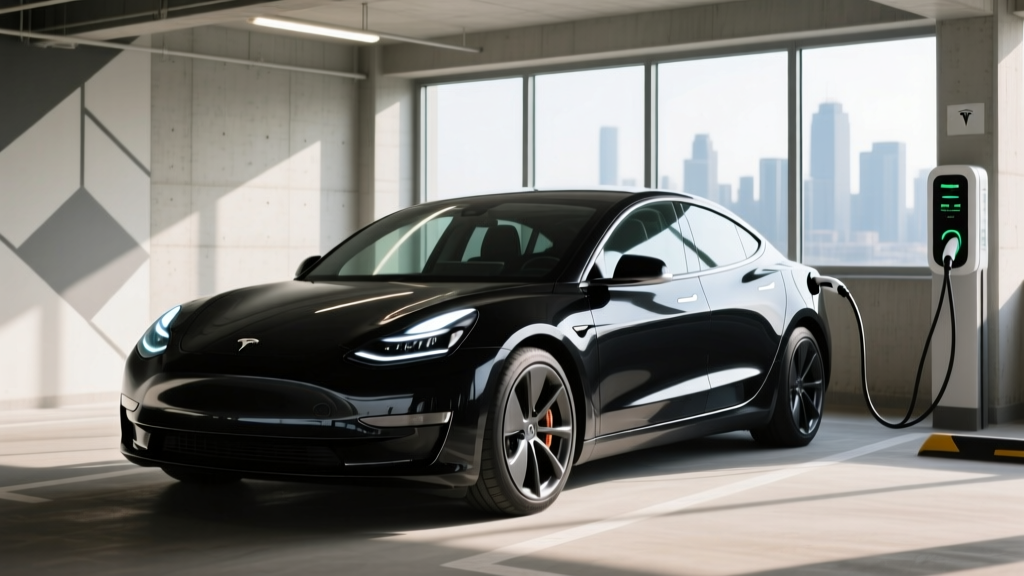
The native NACS (North American Charging Standard) connector means direct access to Tesla's Supercharger network — over 25,000 stalls in North America — without adapters. This remains the Model 3's single biggest charging advantage over competitors, as public CCS networks (Electrify America, EVgo) still trail in reliability and coverage. Tesla also includes a CCS adapter in the glovebox for non-Tesla DC fast chargers.
Performance and Driving Dynamics
| Trim | Drivetrain | Horsepower | 0–60 mph | Top Speed |
|---|---|---|---|---|
| Long Range RWD | Rear-Wheel Drive | ~271 hp | 5.8 sec | 125 mph |
| Long Range AWD | Dual-Motor AWD | ~346 hp | 4.2 sec | 125 mph |
| Performance AWD | Dual-Motor AWD | ~510 hp | 2.9 sec | 163 mph |
The Long Range AWD hits the sweet spot: dual-motor all-wheel drive for all-weather traction, a 4.2-second 0–60 time that's quicker than most gas sport sedans, and only a modest 22-mile range penalty versus the RWD. The Performance trim's 2.9-second sprint is supercar territory, but it costs significantly more and sacrifices ~50 miles of range.
Ride quality improved substantially with the Highland refresh — new frequency-selective dampers and revised bushings reduce the harshness that plagued pre-2024 Model 3s. It's still firmer than a BMW i4 or Mercedes EQB, but no longer punishing on broken pavement. Steering is quick and precise, though the lack of a traditional instrument cluster (all info lives on the center touchscreen) takes adjustment.
Pricing, 0% Financing, and Federal Tax Credit
| Trim | Base MSRP | Federal §30D Credit | Effective Price (if eligible) | Monthly (60-mo, 0% APR) |
|---|---|---|---|---|
| Long Range RWD | $38,990 | Up to $7,500 | ~$31,490 | ~$525/mo |
| Long Range AWD | $44,990 | Up to $7,500 | ~$37,490 | ~$625/mo |
| Performance AWD | $52,990 | Up to $7,500 | ~$45,490 | ~$758/mo |
About Tesla's 0% financing offers: Tesla periodically offers 0% APR financing for 36, 48, or 60 months through its captive finance arm or partner lenders. These promotions are typically available to buyers with excellent credit (FICO 720+) and may apply to specific trims or inventory. At 0% APR on a $38,990 Long Range RWD, you pay exactly $38,990 over the loan term — no interest. Compare that to a 6.5% APR loan, which would add roughly $6,800 in interest over 60 months.
Federal §30D tax credit eligibility: The Model 3 Long Range and Performance currently qualify for up to $7,500 under the IRS §30D clean vehicle credit, but eligibility depends on several factors:
- MSRP cap: Sedans must be under $55,000 MSRP. The Long Range RWD ($38,990) and Long Range AWD ($44,990) qualify. The Performance ($52,990) also qualifies. All current trims clear this cap.
- Buyer income cap: Modified adjusted gross income must not exceed $150,000 (single), $225,000 (head of household), or $300,000 (joint filers).
- Battery sourcing requirements: At least 60% of battery components must be manufactured or assembled in North America, and at least 50% of critical minerals must be sourced from the U.S. or free-trade-agreement countries. Tesla has worked to localize supply chains, but verify current-year compliance at fueleconomy.gov before purchasing.
- Point-of-sale transfer: You can transfer the credit to Tesla at purchase to reduce the upfront price by $7,500 — you don't need to wait until tax filing.
Key caveat: Battery sourcing and critical mineral rules tighten annually. A vehicle that qualifies in January may not qualify by December if supply chains shift. Always verify eligibility at the point of sale. Consult a tax professional for your specific situation.
Interior, Cargo, and Technology
The Model 3's cabin is the most minimalist in the segment. There are no physical buttons, no instrument cluster, and no traditional gauge display — everything routes through the 15.4-inch center touchscreen, including speed, gear selection (via swipe), and climate controls. This is either refreshingly clean or maddeningly impractical depending on your tolerance.
| Measurement | Value |
|---|---|
| Front legroom | 42.7 in |
| Rear legroom | 35.2 in |
| Front headroom | 40.3 in |
| Rear headroom | 37.8 in |
| Cargo (trunk) | 21.0 cu ft |
| Cargo (rear seats folded) | ~56 cu ft |
| Front trunk (frunk) | 3.1 cu ft |
Cargo space is competitive for the class — the 21-cubic-foot trunk easily swallows two large suitcases, and the 60/40-split rear seats fold nearly flat for longer items. The frunk is small (3.1 cu ft) but useful for charging cables. Rear-seat comfort improved with the Highland update: a slightly longer seat cushion and the addition of an 8-inch rear touchscreen for climate and entertainment help. However, rear headroom remains tight for passengers over 6 feet.
Standout tech: Tesla's software remains the industry benchmark. Over-the-air updates regularly add features, the navigation system integrates Supercharger routing with battery preconditioning, and the mobile app offers best-in-class remote control (climate, location, Sentry Mode cameras, software updates). The available FSD (Supervised) system is a SAE Level 2 driver-assist — it handles steering, acceleration, and braking on highways and some city streets, but requires continuous driver supervision and is not autonomous driving.
Notable drawbacks: The lack of Apple CarPlay and Android Auto frustrates many buyers (Tesla uses its own interface exclusively). Turn signals are on the steering wheel (not a stalk), which is awkward during roundabouts and lane changes. Panel gap quality, while improved, still varies between vehicles. There is no heads-up display, and the absence of physical climate controls means adjusting temperature while driving requires looking at the screen.
Warranty and Ownership Costs
| Coverage | Term |
|---|---|
| Basic vehicle | 4 years / 50,000 miles |
| Battery & drive unit | 8 years / 120,000 miles (Long Range RWD) |
| Battery & drive unit (AWD) | 8 years / 120,000 miles |
| Battery capacity retention | Minimum 70% over warranty period |
Tesla's 8-year/120,000-mile battery and drive unit warranty is competitive, guaranteeing at least 70% capacity retention. Real-world data from high-mileage Tesla owners suggests NMC packs typically retain 85–90% capacity at 100,000 miles when charged responsibly (avoiding frequent 100% charges and excessive DC fast charging). Tesla's warranty documentation covers defects and excessive degradation but not damage from misuse or unauthorized modifications.
Insurance costs tend to run 15–30% higher than comparable gas sedans due to repair costs and parts pricing. Expect annual premiums of $1,800–$2,600 depending on your state, driving record, and coverage level. Tesla Insurance is available in some states and may offer competitive rates based on real-time driving data.
Who the Model 3 Suits Best
Choose the Model 3 if:
- You commute 30–80 miles daily and want minimal charging stops
- You take regular road trips and value the Supercharger network
- You prioritize efficiency and range-per-dollar over luxury materials
- You're comfortable with touchscreen-only controls and a minimalist cabin
- You can install a Level 2 home charger for overnight charging convenience
Look elsewhere if:
- You want physical buttons, Apple CarPlay, or a traditional luxury interior (consider BMW i4, Genesis Electrified G80)
- You need a spacious rear seat for adults on long trips (consider Hyundai Ioniq 6 or Tesla Model Y)
- You frequently drive in extreme cold without garage parking (consider an EV with a larger battery buffer or a PHEV)
- You want the latest SAE Level 3+ hands-off driving capability (the Model 3 remains Level 2)
Pros and Cons
Pros
- Class-leading efficiency: 25 kWh/100 mi (Long Range RWD)
- Access to Tesla Supercharger network — most reliable DC fast-charging in the U.S.
- Up to 363 miles EPA range (Long Range RWD)
- 250 kW peak DC fast charging, 10–80% in ~22 min
- 0% financing saves $4,000–$6,000+ vs. standard APR when available
- Best-in-class software and over-the-air updates
- Strong §30D tax credit eligibility (up to $7,500 point-of-sale)
- Improved ride quality post-Highland refresh
Cons
- No Apple CarPlay or Android Auto
- All controls on touchscreen — no physical buttons or stalks
- Rear seat headroom tight for tall passengers
- Insurance premiums 15–30% above gas sedan average
- FSD (Supervised) is Level 2 only — not self-driving, requires $8,000 or $99/mo
- Panel gap and build quality still inconsistent between vehicles
- No heads-up display
- NMC battery requires more careful charging habits than LFP
Frequently Asked Questions
What is the real-world range of the Tesla Model 3?
The Long Range RWD achieves 363 miles EPA. In real-world highway driving at 70–75 mph, expect 290–310 miles. In freezing weather, plan for 230–260 miles. The AWD version drops to 341 EPA / ~270–290 highway.
How fast does the Model 3 charge at home and on the road?
At home on a 240V Level 2 charger (48A), the Model 3 charges at 11.5 kW, adding about 44 miles per hour — a full charge takes roughly 8.5 hours. On a V4 Supercharger, it peaks at 250 kW and charges from 10–80% in approximately 22 minutes.
How much does the Model 3 cost after tax credits and 0% financing?
The Long Range RWD starts at $38,990. With the full $7,500 §30D credit (if eligible), the effective price is ~$31,490. At 0% APR over 60 months, that's roughly $525/month with zero interest charges. Actual credit eligibility depends on income, MSRP, and battery sourcing rules.
Is the Model 3 worth buying vs. the Hyundai Ioniq 6 or BMW i4?
The Model 3 wins on range-per-dollar, charging infrastructure (Supercharger access), and software. The Ioniq 6 offers faster 800V charging (10–80% in ~18 min) and Apple CarPlay but less range and a smaller charging network. The BMW i4 delivers a more luxurious interior and physical controls but costs $15,000+ more and has less range. For most buyers prioritizing value and road-trip capability, the Model 3 remains the default choice.
Does the Model 3 qualify for the full $7,500 federal tax credit?
As of early 2026, the Model 3 Long Range and Performance trims qualify for up to $7,500 under §30D, subject to buyer income caps ($150K single / $300K joint), the $55K sedan MSRP cap, and battery component/critical mineral sourcing requirements. Verify at fueleconomy.gov and with your tax professional before purchase, as sourcing rules evolve.
Is Tesla's 0% financing offer always available?
No. Tesla's 0% APR promotions are periodic and inventory-dependent — they're typically offered during end-of-quarter pushes, holiday weekends, or when Tesla needs to clear stock. Check Tesla's website or contact a local showroom for current offers. You'll generally need a FICO score of 720+ to qualify for the best rates.
How long will the Model 3 battery last?
Tesla warranties the battery for 8 years / 120,000 miles with a minimum 70% capacity retention guarantee. Real-world data from high-mileage owners shows NMC packs retaining 85–90% capacity at 100,000 miles with proper charging habits (daily charge to 80–90%, avoid sitting at 100%). Battery replacement, if needed out of warranty, costs approximately $12,000–$16,000 including labor.
Sources: EPA Fuel Economy — Tesla Model 3, IRS §30D Clean Vehicle Credits, Tesla Model 3 Official Specs