The Tesla Model 3 in 2026: What 0% APR Financing Actually Gets You
Tesla periodically offers promotional financing on the Model 3, and the 0% APR deal is one of the most compelling incentives in the EV market when it surfaces. For the 2026 model year, Tesla has brought back 0% APR financing on select Model 3 configurations — typically for well-qualified buyers through Tesla's captive finance arm. But a low monthly payment means little if the car doesn't deliver on range, charging, and daily usability. This review dissects the 2026 Tesla Model 3 across every metric that matters to an EV buyer.
| Specification | RWD (Base) | Long Range AWD | Performance |
|---|---|---|---|
| EPA Range | 272 mi | 363 mi | 315 mi |
| Battery (usable) | ~60 kWh (LFP) | ~82 kWh (NMC) | ~82 kWh (NMC) |
| Drivetrain | Rear-Wheel Drive | Dual-Motor AWD | Dual-Motor AWD |
| 0–60 mph | 5.8 sec | 4.2 sec | 2.9 sec |
| Horsepower | 271 hp | 346 hp | 510 hp |
| Peak DC Fast Charge | 170 kW | 250 kW | 250 kW |
| 10–80% DCFC Time | ~25 min | ~18 min | ~18 min |
| Level 2 Home Charge | 11.5 kW (~44 mi/hr) | 11.5 kW (~44 mi/hr) | 11.5 kW (~44 mi/hr) |
| MPGe (combined) | 132 MPGe | 125 MPGe | 119 MPGe |
| kWh/100 mi | 25 | 27 | 28 |
| Base MSRP | $38,990 | $45,990 | $52,990 |
| Battery Warranty | 8 yr / 100,000 mi | 8 yr / 120,000 mi | 8 yr / 120,000 mi |
Source: fueleconomy.gov and Tesla's official 2026 spec sheet. Specs subject to change by model year.
Real-World Range: What to Actually Expect
EPA Sticker: 272 mi (RWD) / 363 mi (Long Range) / 315 mi (Performance)
Real-World Expectation:
- City/mixed driving (mild weather): Expect EPA numbers or slightly above — the Model 3's efficiency excels at lower speeds where regen braking recovers energy.
- Highway at 70–75 mph: Subtract 10–15%. The Long Range drops to roughly 310–325 mi; the RWD falls to ~235–245 mi.
- Cold weather (below 32°F): Budget for 20–30% range loss. The RWD with LFP chemistry is especially sensitive to cold, potentially yielding only 190–210 mi on a full charge in freezing highway conditions.
- Cold + highway combined: Worst-case scenario — Long Range may deliver ~250 mi, RWD as low as ~170 mi.
The heat pump (standard since the 2024 refresh) significantly helps cabin efficiency in cold weather, but battery chemistry still governs cold-weather losses. LFP cells in the RWD model lose more available capacity at low temperatures than the NMC cells in the Long Range and Performance trims.
For a daily commuter covering 30–50 miles round trip, even the RWD's worst-case range is more than adequate. Road-trippers should plan charging stops around the 200-mile mark in winter to maintain a comfort buffer.
Charging Speed: Home and DC Fast Charging
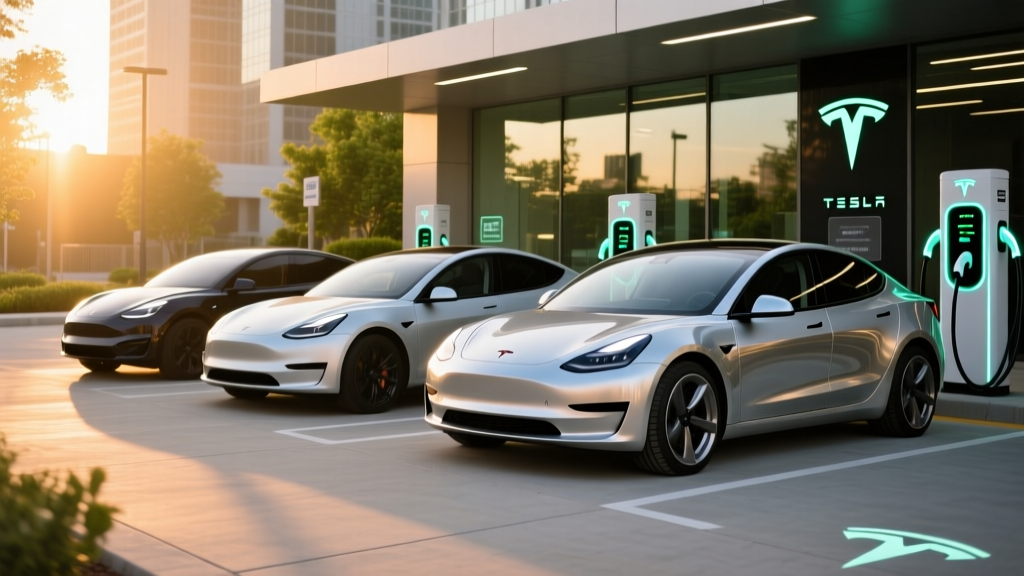
Charging speed remains one of the Model 3's strongest selling points, especially when paired with the Tesla Supercharger network — widely regarded as the most reliable public DC fast-charging network in the U.S.
| Charging Level | Power | Miles Added per Hour | Notes |
|---|---|---|---|
| Level 1 (120V standard outlet) | ~1.4 kW | ~5 mi/hr | Emergency/trickle only; ~55 hours for full charge |
| Level 2 (240V home, 48A circuit) | 11.5 kW | ~44 mi/hr | Full overnight charge in 6–8 hours; requires 60A breaker |
| DC Fast Charge (RWD) | Peak 170 kW | ~170 mi in 15 min | LFP taper starts early; 10–80% in ~25 min |
| DC Fast Charge (LR / Perf) | Peak 250 kW | ~200 mi in 15 min | Peak holds to ~50% SoC, then tapers; 10–80% in ~18 min |
Understanding the charge curve: The peak kW figure is not sustained across the entire session. On the Long Range, the 250 kW peak holds roughly from 10% to 50% state of charge (SoC), then tapers progressively. By 80% SoC, you're typically seeing 40–60 kW. This is why Tesla (and the industry) quotes 10–80% times rather than 0–100%.
Preconditioning matters: Navigate to a Supercharger using the car's built-in navigation, and the Model 3 will automatically warm the battery to optimal temperature before arrival. Without preconditioning — especially in cold weather — peak charge rates can drop by 30–50%. Always route through the nav system when heading to a charger.
For home charging, Tesla's Wall Connector ($420) delivers the full 11.5 kW / 48A rate. Budget $500–$1,500 for professional installation depending on your electrical panel's proximity to the garage. Homes with older 100A panels may need a $1,500–$3,000 service upgrade to support a dedicated 60A circuit. Consult a licensed electrician for a site-specific assessment.
Performance and Driving Dynamics
The Model 3 lineup spans practical commuter to genuine sports-sedan territory:
- RWD (271 hp, 5.8 sec 0–60): Quick enough for confident highway merging and passing. The single rear motor delivers smooth, linear acceleration. This is the efficiency champion of the lineup.
- Long Range AWD (346 hp, 4.2 sec 0–60): Dual motors provide all-weather traction and noticeably stronger acceleration. The extra weight of the front motor slightly reduces efficiency but the trade-off is worthwhile in snow-belt states.
- Performance (510 hp, 2.9 sec 0–60): Supercar acceleration with track-capable handling. Tesla's adaptive dampers (introduced in the 2024 refresh) make the ride compliant enough for daily use while remaining flat through corners.
All trims feature one-pedal driving via aggressive regenerative braking, which Tesla reinstated as a standard mode after briefly removing it. The steering is precise and quick-ratio, though some drivers find it artificially weighted. The cabin is remarkably quiet at highway speeds — a notable improvement from pre-2024 models thanks to acoustic glass and additional sound deadening.
Pricing, Tax Credits, and the 0% APR Math
The 0% APR financing offer is what makes the 2026 Model 3 financially compelling against similarly equipped competitors. Here's how the numbers work across trims:
| Trim | Base MSRP | Est. Federal Credit (§30D) | Effective Price | Monthly (72 mo, 0% APR) |
|---|---|---|---|---|
| RWD | $38,990 | Up to $7,500* | ~$31,490 | ~$437 |
| Long Range AWD | $45,990 | Up to $7,500* | ~$38,490 | ~$535 |
| Performance | $52,990 | Up to $7,500* | ~$45,490 | ~$632 |
*Federal §30D tax credit eligibility depends on buyer income, battery sourcing, and MSRP caps. See IRS guidelines. Credit can be applied as a point-of-sale reduction if transferred to the dealer. Consult a tax professional for your specific situation.
§30D Federal Tax Credit Checklist (2026 Rules):
- MSRP cap: Sedans must be under $55,000. All Model 3 trims qualify at base MSRP, but adding options to the Performance trim could push it over.
- Buyer income cap (MAGI): $150,000 single / $225,000 head of household / $300,000 joint filers.
- Battery sourcing: A percentage of critical minerals and battery components must be sourced from the U.S. or FTA partners. Tesla's shifting supply chain means the full $7,500 is not guaranteed for every build — check the fueleconomy.gov credit tracker for the specific VIN's eligibility before purchasing.
- Point-of-sale transfer: As of 2024+, you can transfer the credit to Tesla at purchase, reducing your financed amount directly — which makes the 0% APR deal even more powerful since you're financing a lower principal.
The 0% APR advantage in dollars: On a $38,990 RWD Model 3 financed over 72 months at a typical 6.5% APR, you'd pay roughly $8,100 in interest. At 0% APR, that $8,100 stays in your pocket. Combined with a $7,500 federal credit, the effective savings versus a conventional auto loan are substantial — potentially over $15,000 across the loan term.
Interior, Cargo, and Technology
Passenger space: The Model 3 seats five, with 40.3 inches of front legroom and 35.2 inches in the rear. Rear headroom is tight for passengers over 6 feet due to the sloping roofline — a common complaint versus the boxier Model Y.
Cargo volume: 23 cubic feet with the rear seats up (including the frunk), expanding to roughly 60 cubic feet with the 60/40 split rear seats folded. The frunk adds about 3 cubic feet — useful for charging cables or a small bag. The trunk opening is a traditional sedan shape, not a hatchback, which limits loading large items compared to the Model Y or Hyundai Ioniq 5.
Infotainment: All controls route through a 15.4-inch center touchscreen — there is no instrument cluster. Speed and navigation info appear in a slim strip on the driver's side of the screen. The interface is responsive and well-designed, but the lack of physical buttons for climate, mirrors, and glovebox remains polarizing. Wireless phone charging, ventilated front seats, and ambient lighting are standard across all trims.
Driver assistance — Autopilot and FSD (Supervised):
SAE Automation Level: Level 2
Tesla's Autopilot (standard) and Full Self-Driving Supervised ($8,000 option or $99/month subscription) are Level 2 driver-assistance systems. They provide adaptive cruise control, lane centering, and automated lane changes — but the driver must remain fully engaged, hands on or near the wheel, with eyes on the road at all times. This is not autonomous driving. Camera-based driver monitoring enforces attention.
Autopilot is competent for highway cruising. FSD (Supervised) handles city streets, stop signs, and traffic lights with increasing capability, but still requires frequent driver intervention in construction zones, unusual traffic patterns, and poor weather. For most buyers, the included Autopilot is sufficient; FSD remains a personal choice based on your commute complexity and tolerance for beta-level software.
Ownership Costs, Warranty, and Long-Term Value
Warranty coverage:
- Vehicle limited warranty: 4 years / 50,000 miles
- Battery & drive unit: 8 years / 100,000 miles (RWD) or 8 years / 120,000 miles (Long Range & Performance), with a minimum 70% capacity retention guarantee over the warranty period
- Roadside assistance: 4 years / 50,000 miles
Battery longevity beyond warranty: Tesla's NMC and LFP batteries have demonstrated strong real-world longevity. Data from fleet operators and owner surveys suggest the LFP pack in the RWD model may actually outlast the NMC packs in cycle life (LFP chemistry typically endures 3,000+ cycles vs. ~1,500–2,000 for NMC), though with lower energy density. Most Model 3 owners report 5–8% degradation after 100,000 miles. Full battery replacement outside warranty runs $12,000–$16,000 based on current Tesla service pricing.
Insurance: Model 3 insurance premiums tend to run 15–25% higher than comparable gas sedans due to repair costs and Tesla's aluminum-intensive body structure. Expect $1,800–$2,600 annually depending on your state, driving record, and trim. Tesla offers its own insurance product in many states, which uses real-time driving data and can be competitive for safe drivers.
Charging cost vs. gas: At the national average electricity rate of $0.17/kWh, charging a Model 3 Long Range (82 kWh battery) from 0–100% costs roughly $13.94 — yielding a cost per mile of about $0.04. The average gas sedan at 28 MPG and $3.30/gallon costs $0.12 per mile. Over 15,000 miles annually, that's a fuel savings of roughly $1,200/year.
Pros and Cons
Pros
- Best-in-class efficiency (25 kWh/100 mi on RWD)
- Supercharger network access — the most reliable DC fast-charging ecosystem
- 0% APR financing (when available) eliminates interest costs entirely
- Over-the-air updates continuously add features
- Strong resale value relative to most EV competitors
- Excellent driving dynamics and acceleration across all trims
- LFP battery option (RWD) offers superior cycle life for daily charging to 100%
Cons
- No physical buttons — all controls via touchscreen
- Rear headroom limited for tall passengers
- Sedan trunk shape limits cargo versatility vs. hatchback/SUV rivals
- FSD remains a Level 2 system despite its name and $8,000 price tag
- RWD LFP battery loses more range in extreme cold than NMC alternatives
- Insurance costs above segment average
- Ride quality on 19-inch wheels can be firm on rough pavement
How It Compares to Key Competitors
The Model 3's most direct competitors in 2026 include the Hyundai Ioniq 6, BMW i4, and Polestar 2:
- vs. Hyundai Ioniq 6: The Ioniq 6 SE offers comparable range (361 mi EPA) and slightly lower pricing, but charges on the CCS network (less reliable than Superchargers) and lacks 0% APR availability. The Model 3 wins on charging infrastructure and software.
- vs. BMW i4 eDrive40: The i4 offers a more traditional luxury interior and physical controls, but starts ~$14,000 higher and delivers only 307 mi of range. The Model 3 is the value play; the i4 is the prestige pick.
- vs. Polestar 2: The Polestar 2 Long Range Dual Motor is competitive on performance and build quality, but its 276-mi range and higher MSRP make it harder to justify unless you prefer the Scandinavian design language and Google Automotive OS.
Who Should Buy the 2026 Tesla Model 3?
Choose the RWD ($38,990) if: You commute under 60 miles daily, live in a mild climate, and want the lowest possible monthly payment with 0% APR and the federal credit. The LFP battery is ideal if you charge to 100% nightly.
Choose the Long Range AWD ($45,990) if: You take regular road trips, live in a cold-weather state, or need all-wheel-drive traction. The NMC battery handles cold better and the 363-mi range provides a generous highway buffer.
Choose the Performance ($52,990) if: You want sports-car acceleration and don't mind sacrificing some range and paying above the $55K MSRP cap threshold (which may affect tax credit eligibility when options are added).
Look elsewhere if: You need hatchback cargo versatility (consider the Model Y or Ioniq 5), you strongly prefer physical buttons, or your area has limited Supercharger coverage.
Frequently Asked Questions
What is the real-world range of the 2026 Tesla Model 3?
The EPA rates the RWD at 272 miles, the Long Range at 363 miles, and the Performance at 315 miles. In real-world highway driving at 70–75 mph, expect 10–15% less. In freezing temperatures, subtract an additional 20–30%. The Long Range AWD in mild conditions delivers the most usable real-world range — roughly 310–325 highway miles.
How fast does the Model 3 charge at home and on the road?
At home on a 240V Level 2 charger (48A), the Model 3 charges at 11.5 kW, adding about 44 miles of range per hour — a full overnight charge takes 6–8 hours. On DC fast chargers, the RWD peaks at 170 kW (10–80% in ~25 minutes), while the Long Range and Performance peak at 250 kW (10–80% in ~18 minutes). Tesla Superchargers remain the most reliable network for public fast charging.
Does the 2026 Tesla Model 3 qualify for the federal EV tax credit?
All Model 3 trims fall under the $55,000 MSRP cap for sedans under IRS §30D rules. However, full $7,500 credit eligibility also depends on your modified adjusted gross income (single filers: $150K cap; joint: $300K cap) and the battery's critical-mineral and component sourcing for the specific build. Always verify eligibility on fueleconomy.gov and consult a tax professional before relying on the credit.
How much does the Model 3 cost monthly with 0% APR financing?
With 0% APR over 72 months, the RWD at $38,990 comes to approximately $541/month before incentives. If you qualify for the full $7,500 federal credit applied at point of sale, the financed amount drops to ~$31,490, yielding roughly $437/month. Actual terms depend on creditworthiness and Tesla's current promotional offers.
Is the Tesla Model 3 worth it over the Hyundai Ioniq 6 or BMW i4?
The Model 3 wins on charging infrastructure (Supercharger network), software experience, efficiency, and value — especially with 0% APR and the federal credit. The Ioniq 6 is a strong alternative if you prefer a more traditional dealership experience and don't mind CCS charging. The BMW i4 is the pick if luxury interior quality and physical controls matter more than price. For most buyers, the Model 3's combination of range, charging speed, and financing incentives makes it the segment benchmark.
How long will the Model 3 battery last?
Tesla warranties the battery for 8 years / 100,000 miles (RWD) or 8 years / 120,000 miles (AWD trims), guaranteeing at least 70% capacity retention. Real-world data from high-mileage owners shows typical degradation of 5–8% after 100,000 miles. The LFP battery in the RWD may last longer in terms of charge cycles and can be charged to 100% daily without accelerated degradation — an advantage for daily commuters. Full replacement outside warranty costs $12,000–$16,000.