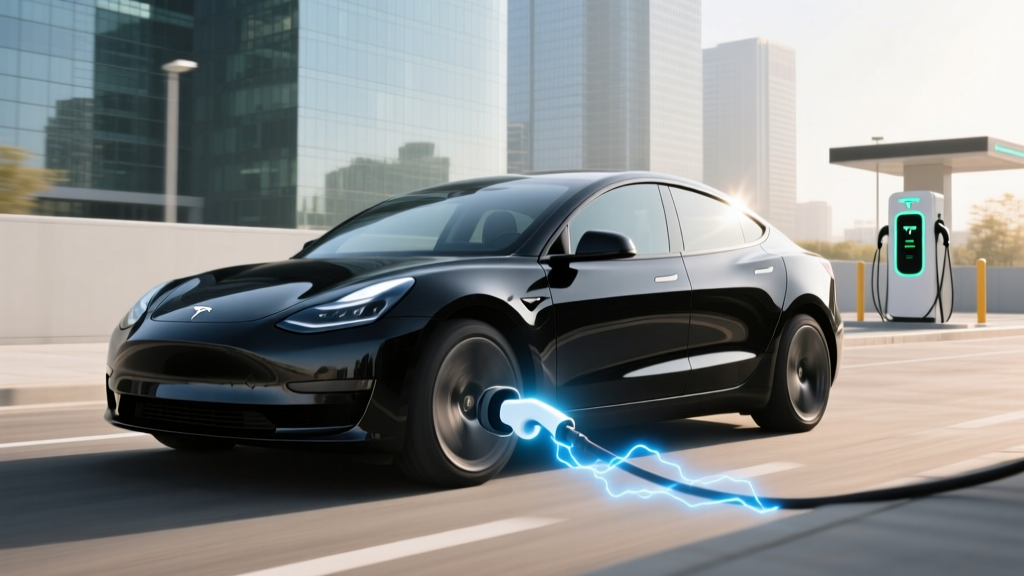
The Tesla Model 3 remains the benchmark that every new electric sedan is measured against. Now in its second generation (internally dubbed "Highland" and refreshed further for 2025–2026), the Model 3 blends strong acceleration, class-leading efficiency, and access to the most reliable DC fast-charging network in North America. But with competitors like the Hyundai Ioniq 6, BMW i4, and Polestar 2 closing the gap on interior quality and ride comfort, the question for 2026 buyers isn't just how fast the Model 3 is in a straight line — it's whether the whole package still makes sense.
This review breaks down every trim's Tesla 3 0-60 performance, real-world range, charging behavior, and total ownership cost so you can decide with data, not marketing.
2026 Tesla Model 3 Quick Specs at a Glance
| Spec | Long Range RWD | Long Range AWD | Performance AWD |
|---|---|---|---|
| Base MSRP | $44,130 | $47,130 | $54,630 |
| EPA Range | 363 mi | 346 mi | 315 mi |
| 0-60 mph | 5.8 sec | 4.2 sec | 2.9 sec |
| Horsepower | ~271 hp | ~384 hp | ~510 hp |
| Drivetrain | RWD (single motor) | AWD (dual motor) | AWD (dual motor) |
| Battery (usable) | ~75 kWh (NMC) | ~75 kWh (NMC) | ~75 kWh (NMC) |
| Max DC Fast Charge | 250 kW | 250 kW | 250 kW |
| 10-80% DC Time | ~25 min | ~25 min | ~25 min |
| Level 2 Home Charging | 11.5 kW (~44 mi/hr) | 11.5 kW (~44 mi/hr) | 11.5 kW (~44 mi/hr) |
| EPA Efficiency | 132 MPGe / 25 kWh/100mi | 124 MPGe / 27 kWh/100mi | 116 MPGe / 29 kWh/100mi |
| Battery Warranty | 8 yr / 120,000 mi | 8 yr / 120,000 mi | 8 yr / 120,000 mi |
Source: fueleconomy.gov and Tesla specifications. Prices reflect 2026 MSRP before destination or incentives.
Acceleration Deep-Dive: Every Model 3 Trim's 0-60 Time
The Tesla 3 0-60 performance varies sharply across the lineup, and the difference matters depending on what you value.
Long Range RWD — 5.8 seconds. This is the value play. A single rear motor delivers roughly 271 hp, which is more than adequate for highway merging and daily driving. You'll feel instant torque off the line (electric motors deliver peak torque at 0 RPM), but the RWD model prioritizes efficiency over brute force. For most commuters, 5.8 seconds is genuinely quick — quicker than a base Toyota Camry V6 of the previous decade.
Long Range AWD — 4.2 seconds. Adding a front motor for dual-motor all-wheel drive bumps output to approximately 384 hp. The 4.2-second 0-60 time puts this sedan in sports-car territory from a standing start, while also giving you better traction in rain and snow. This is the sweet spot for buyers who want all-weather capability and punchy acceleration without stepping to the Performance model's price premium.
Performance AWD — 2.9 seconds. Tesla's track-oriented variant uses tuned dual motors producing roughly 510 hp. The 2.9-second 0-60 time is supercar-level acceleration that will pin you to the seat. Tesla also includes track mode, larger brakes, lowered sport suspension, and 20-inch wheels. The trade-off: range drops to 315 miles EPA, and the ride is noticeably firmer over rough pavement.
Real-World Range: What the EPA Sticker Doesn't Tell You
EPA sticker: 346 miles
Realistic highway (70-75 mph, moderate temps): ~280–305 miles
Cold weather highway (below 32°F): ~230–260 miles
City/mixed driving (moderate temps): ~320–340 miles
The Model 3 Long Range AWD's 346-mile EPA rating is among the best in its class, but understanding real-world range requires accounting for driving style, speed, and temperature.
Electric vehicles lose efficiency at highway speeds far more than gas cars because aerodynamic drag scales with the square of velocity. At a sustained 75 mph, expect roughly 15–20% less range than the EPA combined figure. The Long Range RWD, with its 363-mile EPA rating, is the most efficient sedan Tesla sells — its single motor and lighter weight translate to a real-world highway range of approximately 295–320 miles in fair weather.
Cold weather compounds the loss. Lithium-ion batteries experience increased internal resistance below freezing, and cabin heating draws significant energy (the Model 3 uses a heat pump, which helps, but extreme cold still bites). In sustained sub-freezing highway driving, plan for 25–35% range reduction from the EPA sticker. If your commute is 150 miles one-way in a Minnesota winter, the Long Range AWD handles it, but the Performance model's 315-mile EPA rating becomes uncomfortably tight.
The Performance trim's 315-mile EPA figure reflects its stickier 20-inch summer tires and sport suspension tuning, which increase rolling resistance. Real-world highway range settles around 255–280 miles in moderate temperatures.
Charging Speed and Infrastructure
Charging is where the Model 3's ecosystem advantage shows most clearly. Tesla's Supercharger network remains the most reliable and widely deployed DC fast-charging infrastructure in North America, and the Model 3 now ships with the NACS (North American Charging Standard) connector natively — no adapter needed at Superchargers.
| Charging Level | Power | Speed (Miles Added) | Typical Use Case |
|---|---|---|---|
| Level 1 (120V household) | ~1.4 kW | ~3–5 mi/hr | Overnight trickle; emergency top-up |
| Level 2 (240V home) | Up to 11.5 kW | ~44 mi/hr | Daily home charging; full charge in ~7–8 hrs |
| DC Fast (Supercharger V3/V4) | Up to 250 kW peak | ~170 mi in 15 min | Road trips; 10-80% in ~25 minutes |
Understanding the charge curve: The 250 kW peak rate applies only at lower states of charge (roughly 10–30% SoC). Above 50%, the rate tapers progressively — by 80% SoC, you're typically seeing 40–60 kW. This is normal for all lithium-ion batteries to protect cell health, but it means the last 20% of a charge takes disproportionately long. For road trips, plan stops from 10–80% rather than trying to fill to 100%.
For home Level 2 charging, the Model 3's onboard charger accepts up to 11.5 kW (48 amps). You'll need a 60-amp dedicated circuit installed by a licensed electrician. With a Tesla Wall Connector or equivalent NACS-compatible Level 2 unit, a full overnight charge adds roughly 350 miles — more than enough to replenish a day's driving in 4–5 hours.
With the broader industry adopting NACS, Model 3 owners also gain access to Electrify America and other networks using the same connector (or via adapters), though Superchargers still lead in uptime and plug-and-charge simplicity.
Battery Chemistry, Degradation, and Warranty
The 2026 Model 3 Long Range and Performance trims use an NMC (nickel manganese cobalt) lithium-ion battery pack with approximately 75 kWh of usable capacity. NMC offers higher energy density than LFP (lithium iron phosphate), which is why it's used in the longer-range variants.
Tesla's battery warranty covers 8 years or 120,000 miles (whichever comes first) with a minimum 70% capacity retention threshold. If your battery degrades below 70% of its original capacity within that window, Tesla will repair or replace it at no cost. Real-world data from high-mileage Tesla owners and fleet studies suggest typical degradation of 10–15% over the first 100,000 miles, with the curve flattening afterward.
- For daily driving, set the charge limit to 80% (the car's software recommends this for NMC chemistry).
- Only charge to 100% when you need the full range for a road trip.
- Avoid leaving the car at very low SoC (below 10%) for extended periods, especially in extreme heat.
- Use preconditioning (via the app or scheduled departure) to warm or cool the battery before fast charging — this reduces stress on the cells and improves charge speed.
Out-of-warranty battery replacement costs remain high — typically $12,000–$16,000 for a Model 3 pack. However, the failure rate is low; most packs outlast the vehicle's useful life.
Interior, Tech, and Daily Livability
The second-generation Model 3 interior is markedly improved over the pre-2024 version. Materials are softer, road noise is significantly reduced thanks to acoustic glass and additional insulation, and the ventilated front seats are a welcome addition for warmer climates.
Dimensions:
- Front headroom: 40.3 in | Rear headroom: 37.2 in
- Front legroom: 42.7 in | Rear legroom: 35.2 in
- Cargo volume (trunk + frunk): 23 cu ft total
- Wheelbase: 113.2 in | Overall length: 189.8 in
The rear seat fits two adults comfortably on longer trips; three across is tight for anyone over average height. The 23 cu ft of combined cargo space (trunk plus front trunk, or "frunk") is competitive with compact sedans but trails hatchback rivals like the Hyundai Ioniq 5.
Infotainment and driver assist: The 15.4-inch center touchscreen runs Tesla's proprietary software, which remains the most responsive and feature-rich infotainment system in the EV market. Navigation, media, climate, and vehicle settings are all screen-controlled — there are no physical buttons for climate or audio, which some buyers love and others find distracting.
Tesla's Autopilot comes standard and provides solid lane-centering and adaptive cruise control. Full Self-Driving (Supervised) is an optional $8,000 add-on or $99/month subscription that enables automatic lane changes, traffic light/stop sign recognition, and city-street navigation.
Notable drawbacks include the absence of Apple CarPlay and Android Auto (Tesla uses its own interface exclusively), limited rearward visibility due to the sloping rear glass, and no traditional instrument cluster — speed and navigation info appear on the center screen or an optional small secondary display for rear passengers.
Pricing, Tax Credits, and Ownership Cost
| Trim | Base MSRP | Est. Federal Credit (§30D) | Effective Price |
|---|---|---|---|
| Long Range RWD | $44,130 | Up to $7,500* | ~$36,630* |
| Long Range AWD | $47,130 | Up to $7,500* | ~$39,630* |
| Performance AWD | $54,630 | Up to $7,500* | ~$47,130* |
*Federal EV tax credit eligibility under IRS §30D is subject to multiple requirements. Consult a tax professional and the IRS clean vehicle credits page for your specific situation.
- MSRP cap: Sedans must have an MSRP at or below $55,000 to qualify. The Long Range RWD and AWD trims clear this; the Performance model at $54,630 also qualifies, but adding certain options (special paint, FSD purchase, wheels) can push the sticker above $55,000, disqualifying it.
- Buyer income cap: Modified adjusted gross income (MAGI) must not exceed $150,000 (single), $225,000 (head of household), or $300,000 (married filing jointly).
- Battery sourcing: The full $7,500 credit requires meeting both critical minerals and battery component sourcing thresholds, which tighten annually. The Model 3 has historically qualified for the full credit, but Tesla's supply chain evolves — verify current eligibility at the point of sale, as the credit can now be transferred to the dealer for an immediate price reduction.
- Point-of-sale transfer: Since 2024, buyers can transfer the credit to the dealer at purchase, reducing the purchase price directly rather than waiting for a tax refund. This makes the effective price lower at signing.
On the ownership cost side, the Model 3 benefits from low fueling costs (electricity averages $0.13–$0.17/kWh nationally, translating to roughly $3.50–$4.50 per 100 miles versus $12–$15 for a comparable gas sedan at 30 MPG). Maintenance is minimal — no oil changes, no spark plugs, reduced brake wear from regenerative braking. Insurance, however, tends to run 15–25% higher than comparable gas sedans due to repair costs and Tesla's proprietary body panels.
Pros, Cons, and Who Should Buy
Pros
- Best-in-class Supercharger network access (NACS native)
- Outstanding efficiency — 132 MPGe on Long Range RWD
- Performance trim: 2.9-second 0-60 at a sub-$55K price
- Over-the-air updates continuously add features
- Strong resale value relative to most EVs
- Significantly improved cabin quietness and materials vs. prior generation
Cons
- No Apple CarPlay or Android Auto
- All climate/vehicle controls are screen-only
- Rear visibility limited by fastback design
- FSD subscription cost adds up without delivering true autonomy
- Firmer ride on Performance trim with 20-inch wheels
- Cargo space trails hatchback competitors
Best for: Tech-forward commuters and road-trippers who value charging convenience and acceleration. The Long Range AWD is the most versatile daily driver. The Performance model suits enthusiasts who want sports-car acceleration in a practical four-door. The Long Range RWD is ideal for budget-conscious buyers in mild climates who don't need AWD.
Consider alternatives if: You need hatchback cargo flexibility (look at the Hyundai Ioniq 5 or Tesla Model Y), prefer physical buttons and CarPlay (BMW i4, Hyundai Ioniq 6), or want a more compliant ride (Polestar 2 with its available Öhlins dampers).
Frequently Asked Questions
What is the fastest Tesla Model 3 0-60 time in the 2026 lineup?
The Performance AWD achieves 2.9 seconds, making it the quickest Model 3 available. This places it in the same acceleration bracket as a Porsche 911 Carrera, though the Tesla delivers this via instant electric torque rather than a combustion engine.
Does the Tesla Model 3 qualify for the $7,500 federal EV tax credit?
The Long Range RWD, Long Range AWD, and Performance trims all fall under the $55,000 MSRP cap for sedans. However, eligibility also depends on your income, the battery's critical-mineral and component sourcing (which can change), and whether you add options that push the MSRP over the cap. Always verify at the point of sale and consult IRS guidance on clean vehicle credits.
How long does it take to charge a Model 3 at home?
On a 240V Level 2 charger delivering 11.5 kW, a full charge from near-empty takes approximately 7–8 hours. Most owners plug in overnight and wake up to a full battery. A standard 120V outlet adds only 3–5 miles per hour — adequate for low-mileage days but impractical as a primary charging method.
Is the Model 3 better than the Hyundai Ioniq 6?
It depends on your priorities. The Model 3 wins on charging infrastructure (Superchargers), software integration, and acceleration per dollar. The Ioniq 6 offers an 800V architecture for faster DC charging (10-80% in ~18 minutes at 350 kW chargers), physical buttons, Apple CarPlay, and a more conventional sedan design. Both are strong choices — test-drive both before deciding.
What's the real-world highway range of the Model 3 Long Range AWD?
Expect approximately 280–305 miles at 70–75 mph in moderate temperatures (50–80°F). In cold weather (below freezing), plan for 230–260 miles. These figures assume you're not aggressively accelerating and are using the heat pump for cabin warmth rather than max defrost continuously.
Is Tesla's Full Self-Driving worth the $8,000 cost?
FSD (Supervised) is a capable Level 2 system that handles city streets, lane changes, and traffic signals impressively well in many scenarios — but it is not autonomous and requires constant driver supervision. For most buyers, the standard Autopilot (included) provides excellent highway cruise and lane-centering. The $99/month subscription is a lower-risk way to try FSD before committing to the full purchase.